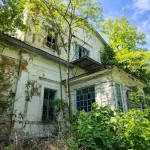
Some places look too peaceful for their history.
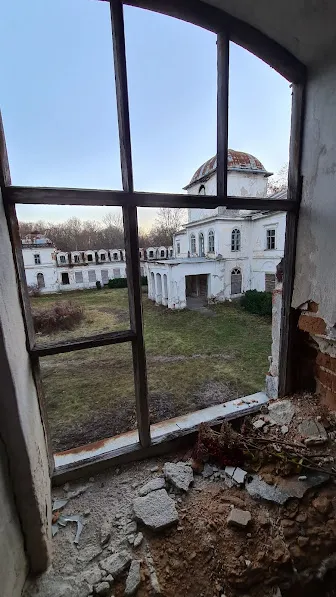
A pond. Old trees. A pale palace in a park.
It’s hard to believe that Pestel, Lorer, Lunin, and the Muravyov-Apostol brothers once gathered right here — drafting plans meant to change the Russian Empire.
But that’s not all. Before the Decembrists, a hetman of Left-Bank Ukraine lived here. Before him, this land was a gift from Hetman Mazepa. And after all of them, Anton Chekhov was a guest here, dreaming of founding a “literary colony.”
Khomutets holds six generations of one and the same land.
General Information
| What? | Description |
|---|---|
| Name | The Muravyov-Apostol Estate (Palace) |
| Location | Khomutets village, Myrhorod district, Poltava Oblast |
| First written mention | 1689 (Mazepa’s grant to the Apostol family) |
| Palace built | ~1770 (under Hetman Danylo Apostol) |
| Rebuilt | 1806 (Ivan Muravyov-Apostol) |
| Style | baroque transitioning into neoclassicism |
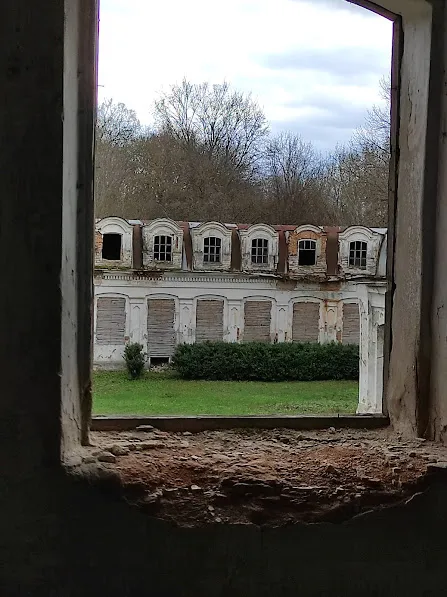
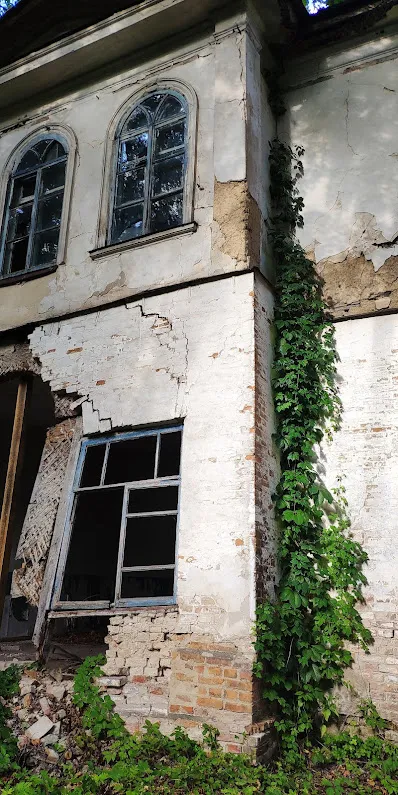
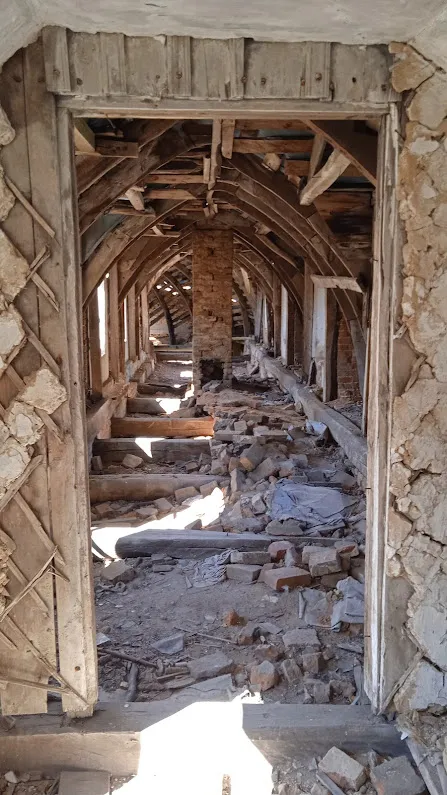
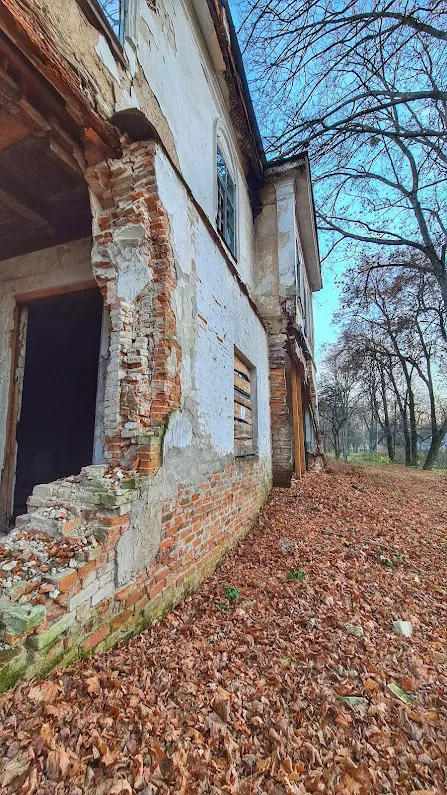
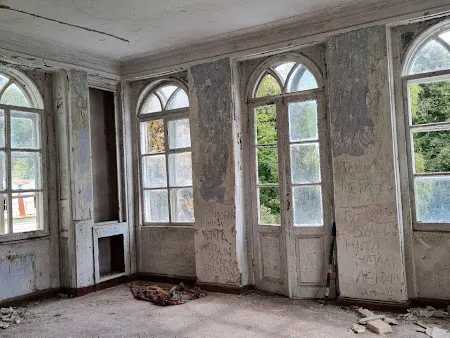
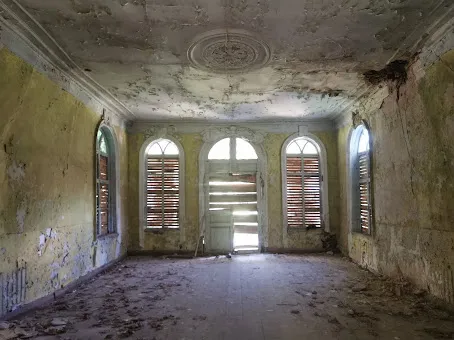
| Current condition | structurally unsafe; museum closed |
| Status | the park is a monument of landscape and garden art of national significance |
From Mazepa to Hetman Apostol
Khomutets didn’t begin with the Decembrists — it’s far older.
In 1689, Hetman Ivan Mazepa granted Khomutets in perpetual ownership to the Apostol family — received at the time by Colonel Petro Apostol.
His son, Danylo Apostol, became Hetman of Left-Bank Ukraine (1727–1734) and turned Khomutets into the family’s ancestral estate. Under him, a wooden palace was built and a park laid out. Traveler and academician Anton Johann Güldenstädt, visiting in 1774, described “a beautiful Ionic palace, a garden, and greenhouses.”
Ivan Muravyov-Apostol and the 1806 Rebuild
In the early 19th century, the estate passed to Ivan Matveyevich Muravyov-Apostol — a writer, historian, and diplomat, a descendant of Danylo Apostol through the female line. His surname merged two families — the Muravyovs and the Apostols.
From 1806, he lived at Khomutets. Under him:
- the palace was rebuilt in neoclassical style
- the park was redesigned from baroque to landscape style
- the estate took on the appearance that survives today
The Decembrists: Khomutets as a Headquarters
Three of Ivan Muravyov-Apostol’s sons — Sergei, Matvei, and Ippolit — became participants in the Decembrist movement.
It was at Khomutets, in the 1820s, that leaders of the Southern Society gathered: Pestel, Lorer, Lunin, and the Muravyov-Apostol brothers. The estate wasn’t just a home — it was where concrete plans took shape.
In December 1825, the brothers led the uprising of the Chernihiv Regiment — an attempt that ended in defeat within days.
The consequences: Sergei was executed by hanging. Ippolit died in battle. Matvei was exiled to Siberia. Their father, Ivan, died in 1851, having outlived all three sons.
After that, the estate emptied out.
Chekhov: “Gogol’s Places” and an Unfulfilled Dream
This is a lesser-known chapter of Khomutets.
Anton Chekhov was a guest here — and, by accounts, was captivated by the “Gogolian places” and the atmosphere of the estate. He dreamed of founding a kind of “literary colony” here. The idea never came to fruition.
A detail that shows Khomutets drew more than just politicians.
Current Condition: Unsafe, But Not Forgotten
During the Soviet period, the palace housed an agricultural vocational school, then a swine-breeding technical college, then a veterinary and zoological technical college. Later, a history museum was set up — but closed due to the building’s unsafe condition.
Today the palace is deteriorating. According to local accounts, furniture belonging to the Muravyov-Apostols — a mirror and a table — was hauled away by an unknown vehicle one night and ended up in private collections.
The park has been declared a monument of landscape and garden art of national significance — it’s in better condition than the building itself.
The Muravyov-Apostol family’s belongings were transferred to museum collections in the early 21st century.
What to See Nearby and How to Fit It Into a Route
Khomutets is in Myrhorod district, between Myrhorod and Lubny.
- Myrhorod (~19 miles / ~30 km) — a spa resort and “Gogol’s town”
- Lubny (~19 miles / ~30 km) — Cossack heritage
Practical Information
- Park admission: free
- Museum: closed (building unsafe)
- Palace: exterior viewing possible; entering is dangerous
- Time needed: 60–90 minutes (park plus exterior viewing of the palace)
- Distance from Poltava: ~62 miles (~100 km) via Myrhorod
How to Get There
- From Poltava: ~62 miles (~100 km) via Myrhorod
- From Myrhorod: ~19 miles (~30 km) on regional roads
- Parking is on the roadside near the estate
Little-Known Details
- Khomutets was granted to the Apostol family by Hetman Mazepa in 1689 — meaning the estate predates any of its architectural buildings.
- Danylo Apostol, Hetman of Left-Bank Ukraine, laid out the park and palace here in the 18th century.
- Ippolit Muravyov-Apostol died in battle during the Chernihiv Regiment uprising — he was about 20 years old.
- Anton Chekhov dreamed of founding a “literary colony” here — and never did. That unfulfilled idea is its own small tragedy tied to the place.
- 18th-century furniture — a mirror and a table — vanished overnight after the museum closed. It may sit in private collections today.
- The estate’s park is a monument of national significance, while the building it surrounds continues to deteriorate without restoration.
Conclusion
The estate at Khomutets holds six layers of time in one place.
Hetman Mazepa. Hetman Danylo Apostol. Decembrists in the drawing room. Chekhov in the park. A swine-breeding college. A structurally unsafe building.
The silence here is genuinely distinct — not an absence of sound, but an absence of the voices that once filled it.