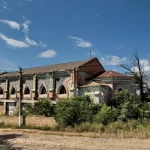
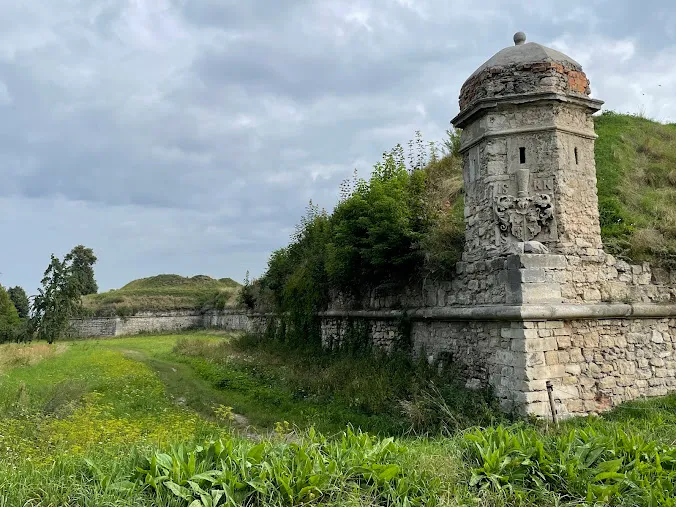
The initials “JSKKSK” are carved into the bastions of Zolochiv Castle.
These are the initials of the patron — Jakub Sobieski, Crown Chamberlain and Starost of Krasnostav. The father of the future Polish king carved his name into the stone in 1634 and added the date.
Three hundred years later, within those same walls, the NKVD executed 647 residents of Zolochiv.
General Information
| What? | Description |
|---|---|
| Name | Zolochiv Castle |
| Address | 1 Zamkova St., Zolochiv, Zolochiv District, Lviv Oblast |
| Distance from Lviv | ~41 miles (66 km) (route E50) |
| Construction | 1634–1636 |
| Commissioner | Jakub Sobieski (father of Jan III) |
| Type | New Dutch bastion system |
| Form | a square, 4 pentagonal bastions |
| Executed by the NKVD | 647 people (June 1941) |
| Prison | from the late 19th century to 1953 (five consecutive regimes) |
| Status | Architectural landmark of national significance; Museum-Reserve, a branch of the Lviv National Academy of Arts |
| Admission | paid |
Father and Builder: Jakub Sobieski, Not Jan
Most tourists know that Zolochiv Castle is associated with the Sobieski family and with Polish King Jan III. But he was not the one who built the castle.
In 1598, Zolochiv was acquired by Marek Sobieski. His son, Jakub Sobieski (1588–1646), decided to replace the outdated fortifications with new ones—in accordance with the advanced requirements of the “New Dutch” bastion system. Construction took place from 1634 to 1636. Jakub left his signature on a stone in the form of an abbreviation of all his titles — and the date “1634.”
Jakub himself died in 1646 — a year before the birth of his son Jan. In other words, the man who built this castle never lived to see his descendant become King of Poland.
Jan III Sobieski (1629–1696) inherited the castle but visited infrequently. From 1674 to 1696, the castle served as a royal residence. It was Jan III who, following the Turkish destruction of 1672, rebuilt the castle using Turkish and Tatar prisoners — and commissioned artisans from abroad for the interior decoration.
Unreadable inscriptions and an unsolved mystery
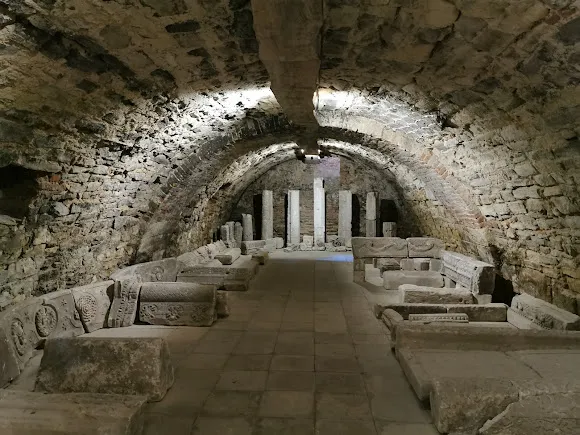
The castle contains stones bearing encrypted inscriptions. They were brought here in 2000 from the neighboring village of Novosilky. The inscriptions date from the late 14th to early 15th centuries.
They have not yet been deciphered.
No one knows what is written there. Perhaps they were used by landowners to mark their boundaries. Perhaps it is something else. The stones are on display in the museum, and the question remains open.
Five Prisons in a Row
After the death of Jan III Sobieski in 1696, the castle gradually lost its importance. It passed from the Radziwills to the Komarnyckis.
At the end of the 19th century, a prison was opened in the castle. Regimes came and went, but the prison remained:
- Austrian prison (late 19th century – 1918)
- Polish prison (1918–1939)
- Soviet NKVD prison (1939–1941)
- Nazi prison (1941–1944)
- Soviet prison again (1944–1953)
Five different state regimes — and all chose the same castle to imprison people.
1941: 647 Names
June 1941. Soviet troops retreated under pressure from the Wehrmacht.
Before the retreat, the NKVD executed 647 residents of Zolochiv who had been imprisoned in the castle. Local residents found the bodies after the Bolsheviks had left.
1995 — During restoration work, a small chapel-monument to the victims of the NKVD was unveiled next to the castle. The creators were architect Vasyl Kamenchyk, sculptor Teodozia Bryzh, and artists Yevhen and Yarema Beznisko. It was built with donations from the residents of Zolochiv.
The chapel is located in a moat—you need to go down to the left of the castle exit and walk a few dozen steps. Every year, ecumenical services and memorial services are held here.
Architecture: Coats of Arms on the Bastions
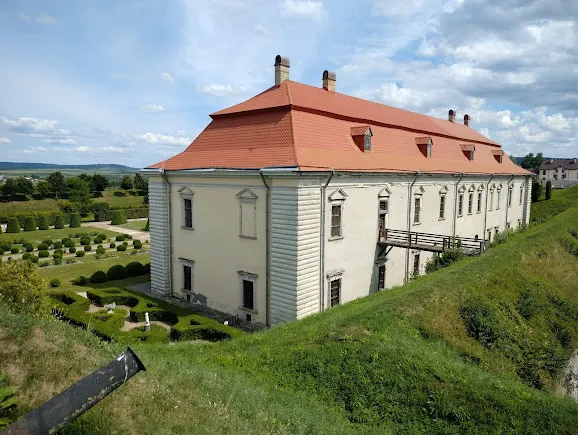
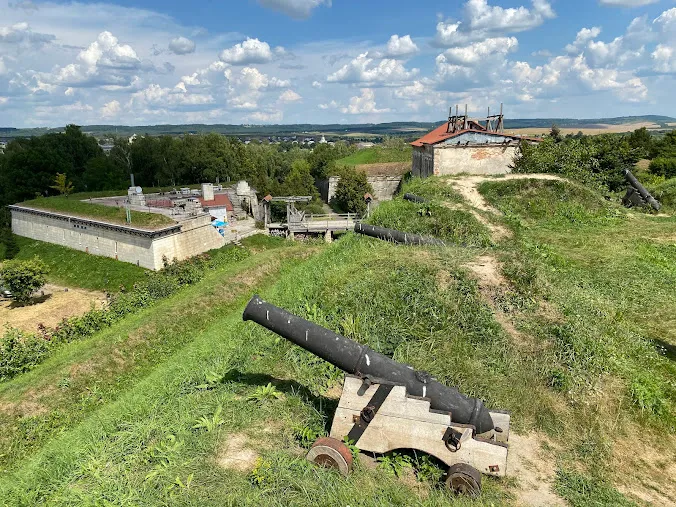
The castle has a square floor plan with four pentagonal bastions at the corners. At the outer corners of the bastions are decorative hexagonal cavalier towers bearing the coats of arms of the Sobieski family and allied families: “Janina,” “Gozdava,” “Ravich,” and “Herburt.”
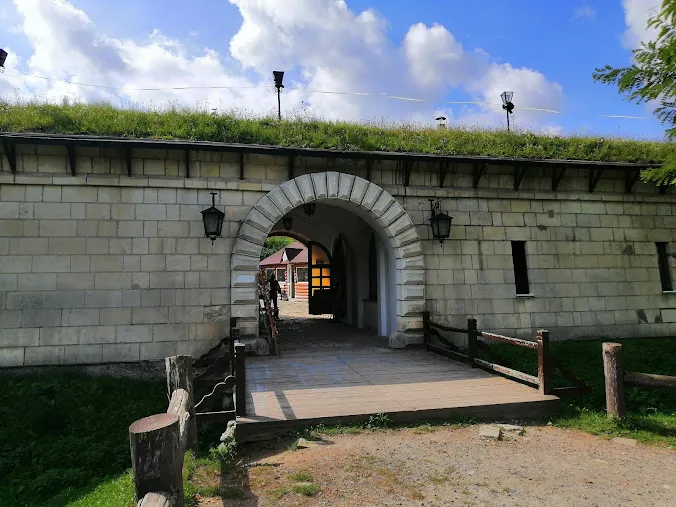
Earthen bastions support the stone walls. The castle has preserved its authentic 17th-century sewage system—a rare occurrence in Ukraine.
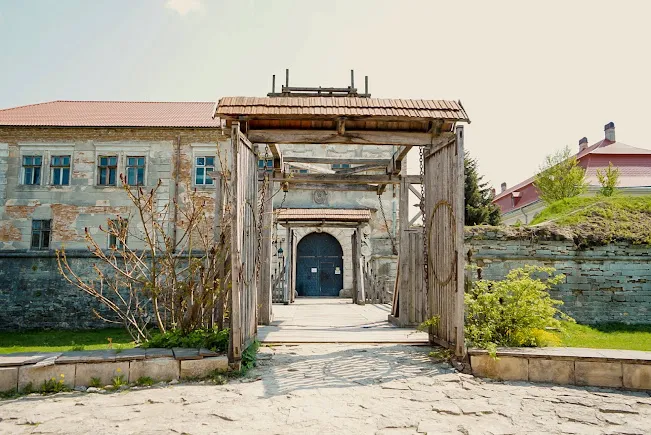
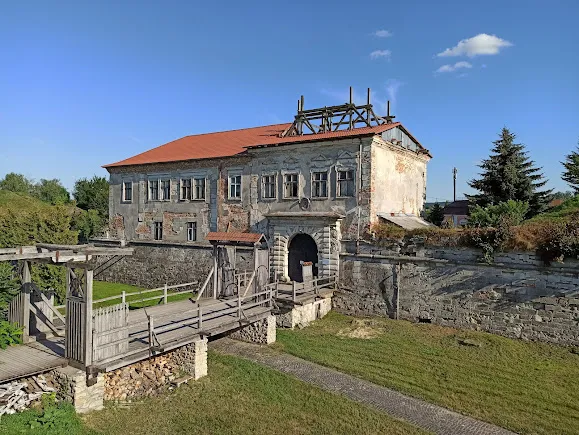
In the courtyard stand the Grand (Eastern) Palace and, separately, the Chinese Palace, which is the subject of a separate article.
Postwar Restoration and Voznytskyi
The prison was closed in 1953. It was replaced by a vocational school. For three decades, young people were educated at the castle.
1986 — The castle was transferred to the Lviv Art Gallery. Director Boris Voznytskyi secured its restoration.
In 1989, restoration work began. The Chinese Palace was the first to be restored. The Grand Palace and the earthen ramparts followed later. In 2007, the ravelin was restored (the earthen ramparts were built by hand).
What Not to Expect
Zolochiv Castle is often seen as “less well-known” compared to Olesko or Pidhirtsi Castles — and so people expect something modest. In reality, it has been well-restored and is rich in history.
But one thing is important: when you leave the castle, don’t head straight to your car. Go down into the moat and walk to the chapel. This isn’t a “tourist attraction” — it’s a place where 647 people were killed.
How to include it in your itinerary
Zolochiv Castle — the third stop on the “Golden Horseshoe of Lviv Region”:
- Olesko Castle (~18 km from Zolochiv) — the oldest, birthplace of Jan III Sobieski
- Pidhirtsi Castle (~20 km) — the most beautiful
- Zolochiv Castle — the most historically significant
The “Golden Horseshoe of Lviv Region” itinerary.
Practical Information
- Address: 1 Zamkova St., Zolochiv
- Distance from Lviv: ~66 km, ~50 min by car
- Admission: paid; two separate tickets — for the castle and the Chinese Palace
- NKVD Chapel: free, in the moat to the left of the exit
- Time for a tour: 1.5–2 hours (castle + chapel)
Conclusion
Jakub Sobieski carved his name into the bastion in 1634 and died without ever seeing his son become king.
Three hundred years later, 647 people were shot in those very walls. The chapel stands in the moat.
Castles carry within them all their inhabitants—both those who carved their initials into the stone and those whose names no one recorded.