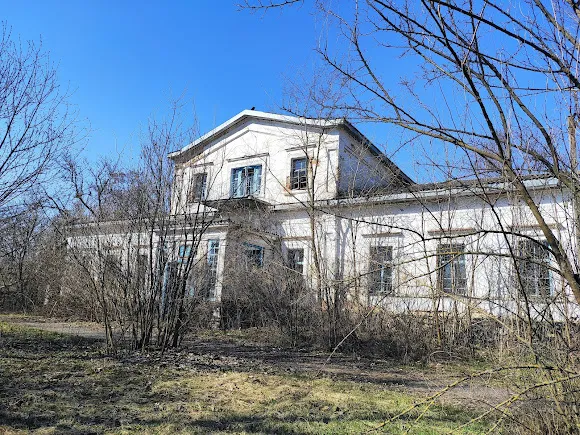
Above the quiet Sula River, in Horoshyne, stands a brick two-story house that once served as the residence of the landowner Hudym-Levkovych. Locals still call it the “manor house.”
But Horoshyne is more than just a place with a derelict estate. It’s one of the oldest villages in the Poltava region, its name appearing as far back as Volodymyr Monomakh’s “Instruction,” among events from the year 1084.
General Information
| What? | Description |
|---|---|
| Name | Hudym-Levkovych Estate |
| Location | Horoshyne village, Obolon rural community, Kremenchuk district, Poltava Oblast |
| Type of site | noble estate, manor house |
| Construction | brick two-story house |
| Period built | 19th century |
| Setting | on the left bank of the Sula River |
Horoshyne: a Place Older Than the Estate
Before getting to the estate, a few words about the place itself.
Horoshyn is mentioned in Volodymyr Monomakh’s “Instruction” (events from 1084) and in a chronicle from 1096 — making it older than most of Ukraine’s well-known castles and estates. In 2008, the village turned 925 years old. Horoshyn and its surrounding hamlets long formed a small, free Cossack town — by an 1859 census, it counted more than 80 hamlets.
In 1744, Empress Elizabeth granted Horoshyn and another village to the landowner Demian Obolonsky. By an 1798 census, the Obolonsky family held 1,509 serfs here. Later, in the 19th century, Horoshyn was bought from the Obolonsky family by the wealthy landowner Hudym-Levkovych, who built a brick two-story manor on the bank of the Sula.
The Estate and Its Fate
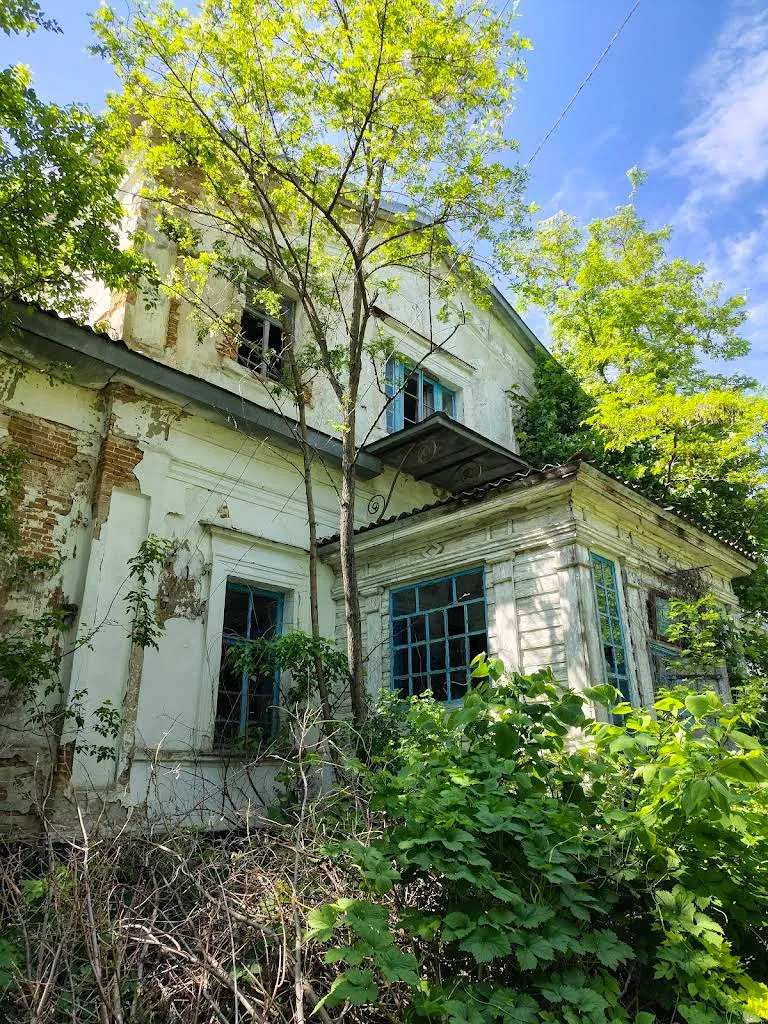
Local history sources preserve relatively little about the Hudym-Levkovych family itself. It’s known the family was fairly wealthy: a brick residence was a rarity for rural 19th-century Poltava region, where most manor houses were built from wood or wattle-and-daub.
The house stands right above the Sula — a standard location for estates: a view over the water, convenient access, and floodplain meadows along the river.
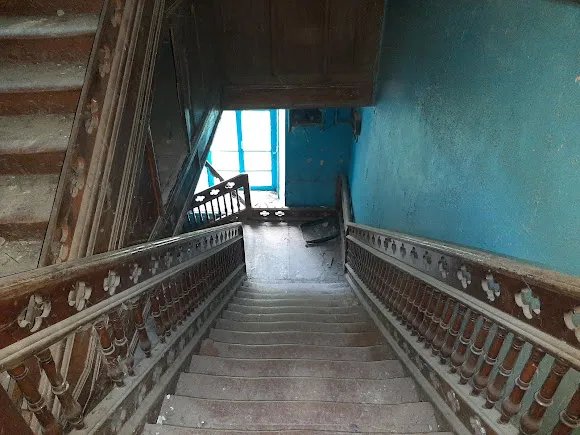
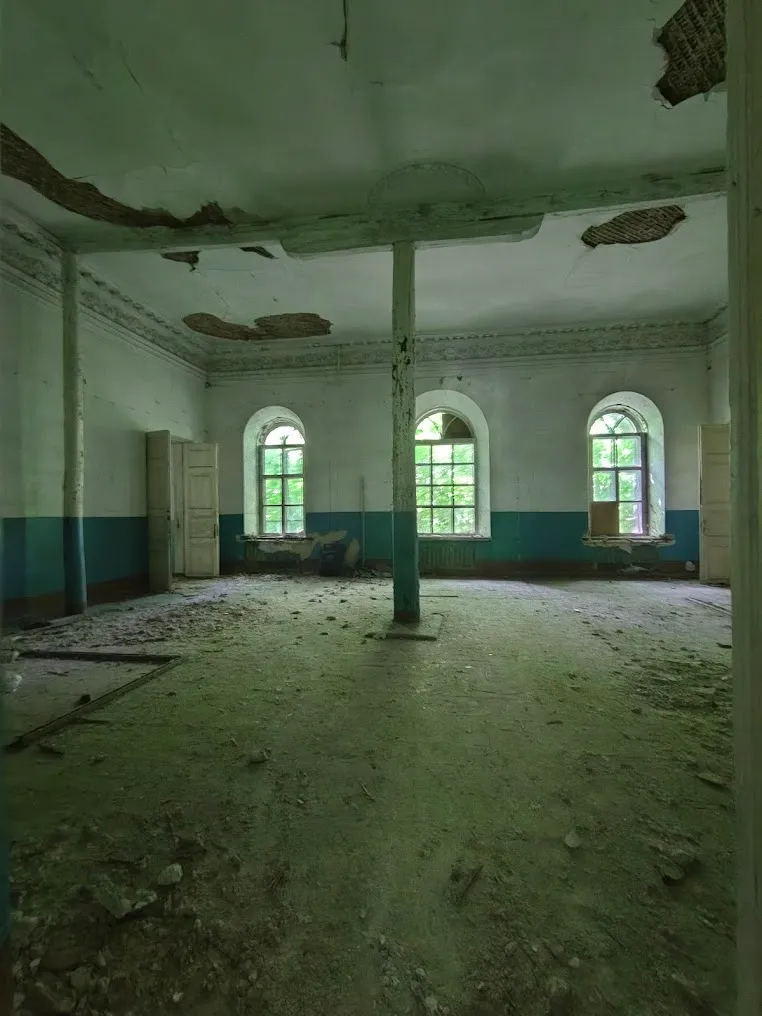
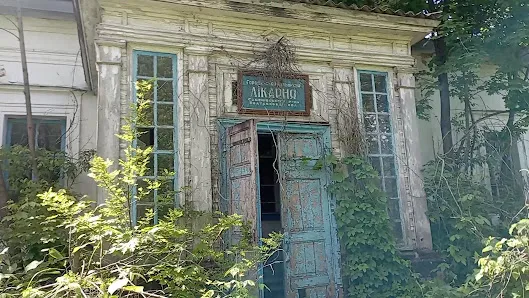
During the Soviet period the estate was converted into a hospital — a typical fate for such buildings. That meant reconstruction, partial additions, and the complete loss of the original interior finishes.
A separate tragedy struck Horoshyne with the construction of the Kremenchuk Reservoir in the 1950s–1960s. Part of the old village was submerged by the waters of the Sula and the Borysfen, and residents were resettled — giving rise to “New Horoshyne” across the river. Old Horoshyne shrank and declined.
What You Can See Today
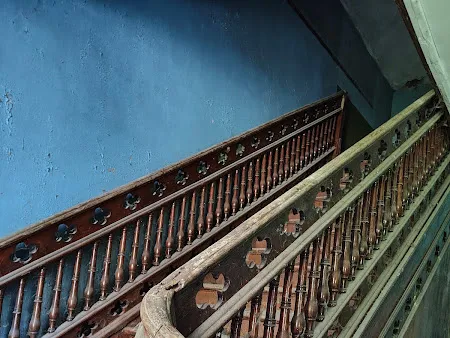
The house survives — still two stories, still brick, still standing above the water. Almost nothing remains of the original interior. The exterior architecture gives a sense of the scale of the original building.
Around it are the remains of a partly overgrown park. The Sula’s floodplain, with its backwaters, oxbow lakes, and lakes, makes the landscape around the estate striking even without any restoration.
Horoshyne itself also has a monument to Ivan Kotliarevsky, the celebrated writer whose home region, the Poltava area, preserves his presence in many places.
What’s Nearby and How to Fit It Into a Route
Horoshyne fits well into a “Road Trips Around the Poltava Region” route as a stop between Kremenchuk and Lubny along the Sula. The river valley here is scenic, and the combination of an ancient Cossack town, a derelict estate, and the banks of the Sula makes for a rich “rural” route.
Practical Information
- Admission: free, the grounds are unfenced
- Facilities: none — bring water and food
- Mobile signal: unstable in the Sula floodplain
- Time needed: 30–60 minutes (house plus the Sula riverbank)
- Best time: spring or early autumn, when the Sula stays within its banks
How to Get There
Horoshyne is in Kremenchuk district, Poltava Oblast.
- From Kremenchuk: ~25 miles (~40 km), via Horishni Plavni or along the Sula — the nearest major landmark.
- From Lubny: ~31 miles (~50 km) south, along the Sula River.
- Village coordinates: 49°22′N, 33°28′E.
- The road to Horoshyne is paved with dirt sections on the final stretch. A regular car can manage it in dry weather.
Little-Known Details
- Horoshyn is one of the oldest settlements in the Poltava region, its name appearing in Monomakh’s “Instruction” under the year 1084: a passage about chasing the Polovtsians past the Khorol River, who had “taken Horoshyn.”
- In the early 19th century, Horoshyn and its hamlets numbered more than 80 hamlets and over 1,500 serfs — effectively a whole town, not just a village.
- The 1960s Kremenchuk Reservoir physically destroyed part of old Horoshyne — some of its history is literally underwater now.
- A brick two-story building in rural 19th-century Poltava region was a sign of substantial wealth: most landowners made do with wood.
- During the Soviet era, the estate served as a hospital — which explains the loss of the original interiors and the partial rebuilding.
Conclusion
The Hudym-Levkovych estate in Horoshyne isn’t the grandest manor in the Poltava region. But Horoshyne as a place is far more interesting than it first appears: one of the oldest settlements on the Left Bank, a Cossack town, the banks of the Sula, and a house that remembers several owners.
For anyone traveling along the Sula or collecting estate locations across the Poltava region, it’s worth the stop.