In 1605, a minor nobleman from Zhovkva — Mykhailo Khmelnytsky, father of the future hetman — entered the service of Ivan Danilovych, the owner of Olesko Castle.
1629 — Jan III Sobieski, the future King of Poland and victor over the Turks at Vienna, was born in that very castle.
One castle. One owner. Two very different futures.
General Information
| What? | Description |
|---|---|
| Name | Olesko Castle (Museum-Reserve) |
| Address | Olesko, Zolochiv District, Lviv Oblast |
| Coordinates | 49°57′55″ N, 24°53′52″ E |
| Hill | 131–164 feet (40–50 meters) above the plain |
| 14th century | the first stone castle |
| Plan template | irregular oval, ~115 × 180 feet (35 × 55 meters) |
| Status | Architectural monument of national significance (No. 404); branch of the Lviv National Art Gallery |
| Admission | paid |
The Oldest in the Lviv Region
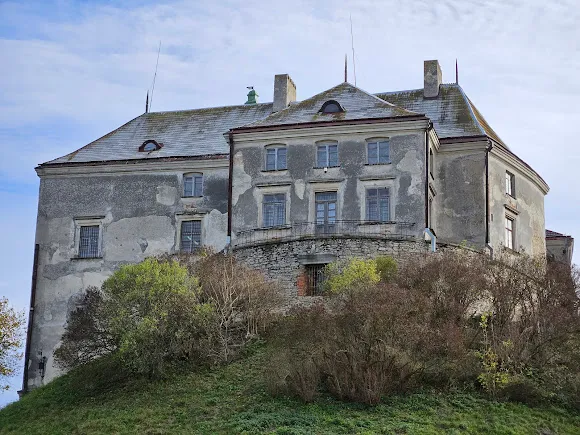
Olesko Castle is the oldest in the Lviv Region and one of the oldest surviving castles in Ukraine. The first stone fortifications date back to the 14th century. The exact date is unknown, but the castle is already mentioned in documents from 1327.
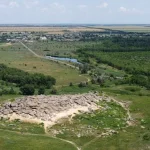
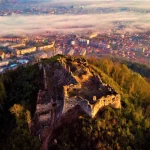
The hill on which it stands is a natural outcrop rising 40–50 meters above a marshy plain. It is visible from a great distance. This is precisely what made the site attractive for fortification: the castle controlled the “Black Road”—an ancient Tatar route used for raids through Podillia.
Danilovich, Khmelnytsky, and Sobieski — all from the same generation
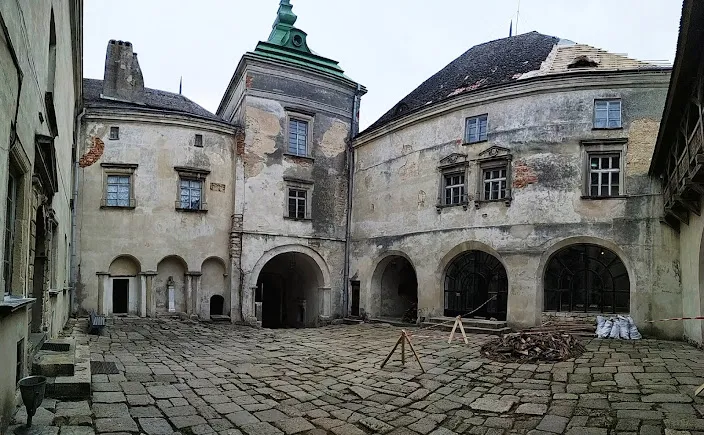
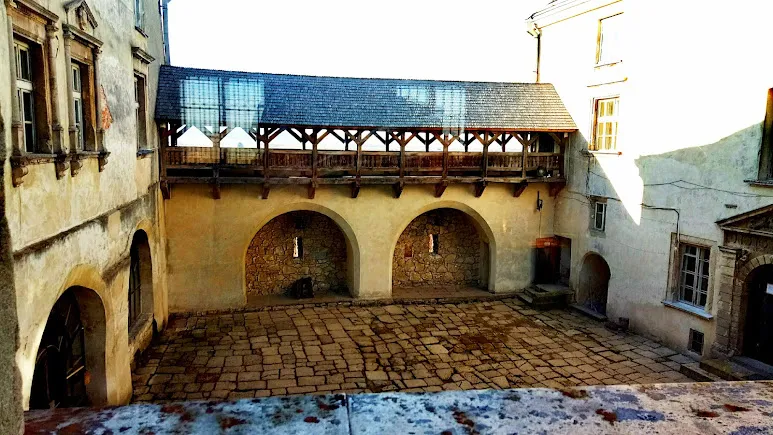
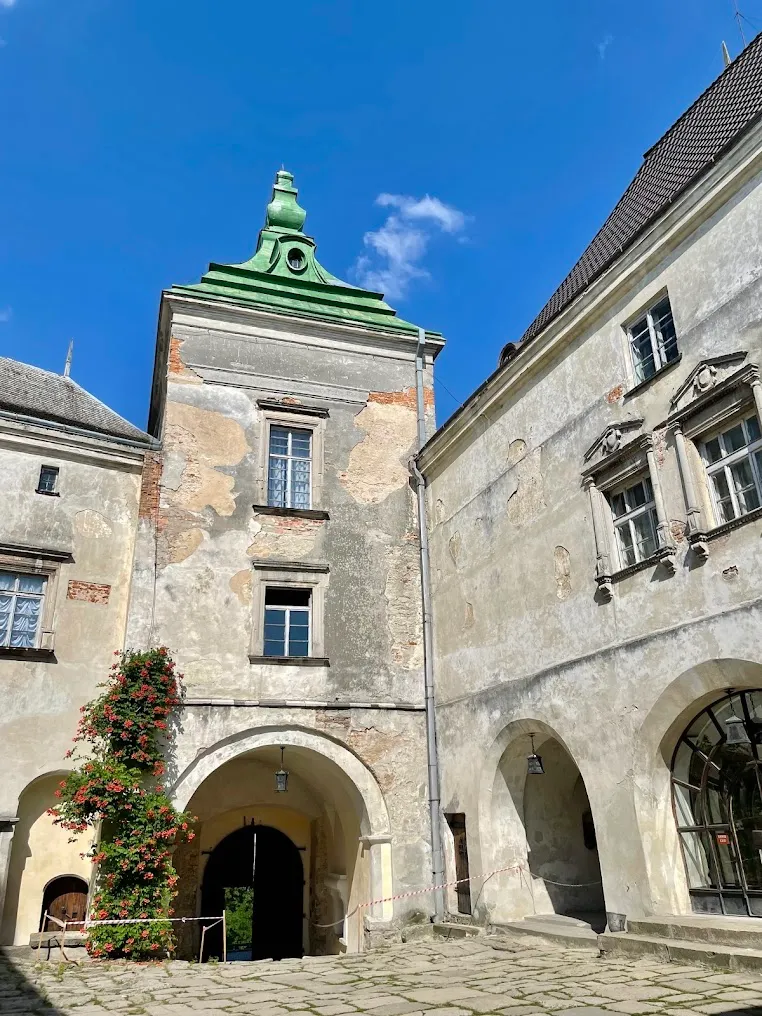
In the early 17th century, the castle was owned by Ivan Danilovich (1570–1628) — a Crown Chamberlain and influential magnate of the Polish-Lithuanian Commonwealth. He built the castle in its nearly modern form: two wings, arched galleries, door portals, and the family coat of arms on the entrance tower. The likely architect was Galeazzo Appiani (Lombardy).
In 1605, Mykhailo Khmel (Khmelnytsky) — Bohdan’s father — entered Danilovych’s service. He served there for several years.
On August 17, 1629, Danilovich’s daughter, Teofilia Sobieska, who had come to visit her mother, gave birth to her son Jan at the castle. During the birth, the garrison was repelling a Tatar attack, and a thunderstorm raged over Olesko. When the newborn was placed on a marble table, the tabletop cracked. Contemporaries concluded: a great warrior had been born.
They were right.
A Common Myth — and an Official Rebuttal
Most descriptions of the castle state: “Jan III Sobieski — owner of Olesko Castle.”
The official website of the Lviv National Art Gallery offers a different version: “Contrary to various hypotheses and claims, Jan III Sobieski did not own Olesko Castle, although it was his family seat.” The castle was purchased by his wife, the French aristocrat Marie Casimire Louise de La Grange d’Arquien, in 1682, after she paid off the debts of the previous owners, the Konetspolski family.
It was she, not he, who oversaw the renovations from 1682 to 1687 and restored the park.
From Ruins to Museum: Voznytsky’s Restoration
After the death of the Zhevusky family in the 19th century, the castle belonged to no one and was of no use to anyone. Fires. The 1838 earthquake. Treasure hunters.
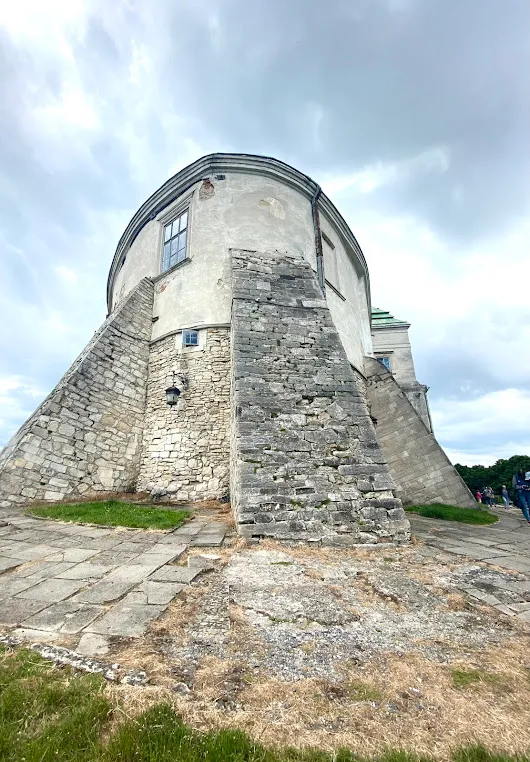
By the early 20th century, it was a complete ruin with no roofs.
1970–1974 — restoration under the direction of Boris Voznytsky, future director of the Lviv Art Gallery. One of the most successful restorations of the Soviet era: the castle was restored to its late 18th-century appearance. The museum opened in 1975.
What’s Inside
The castle is a branch of the Lviv National Art Gallery. The exhibition features:
- sculptures and paintings from the 14th–19th centuries from the gallery’s collection
- furniture, ceramics, weapons, and gold and silver artifacts
- the Jan III Sobieski Hall with portraits and relics
- the dungeons (partially open to the public)
- a rooftop observation deck with a view of the hill and the plain
What Not to Expect
Olesko Castle is the first stop on the “Golden Horseshoe of Lviv Region” route and one of the most visited castles in Ukraine. In the summer and on weekends, tour groups are here practically nonstop. If you want to explore the castle in peace, visit early in the morning on a weekday or in late fall.
What to See Nearby
The “Golden Horseshoe of Lviv Region” — three castles that naturally form a one-day itinerary:
- Olesko Castle (this article) — ~80 km from Lviv
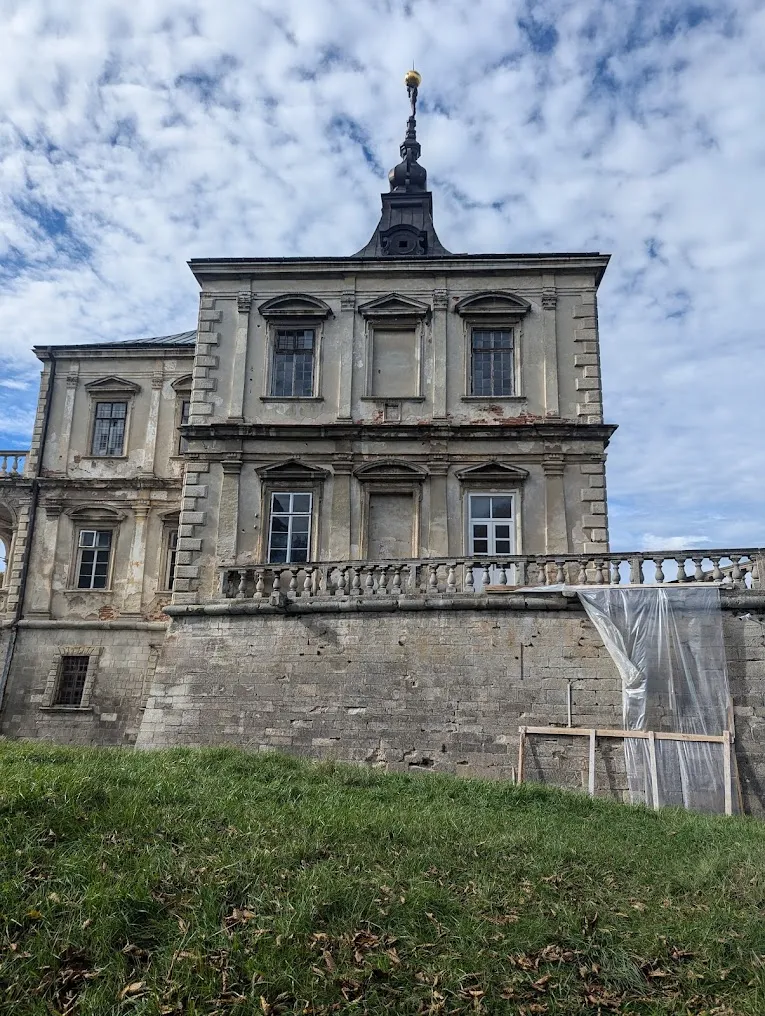
- Pidhirtsi Castle (~20 km) — a Renaissance palace-fortress, one of the most beautiful in Ukraine; currently undergoing restoration
- Zolochiv Castle (~18 km) — less well-known, but featuring unique Chinese and grand palaces
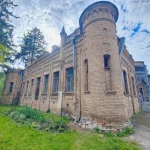
Also in Olesko: the 17th-century Holy Trinity Church (the Danilovych family crypt) and the old 19th-century synagogue (in a state of disrepair).
The “Golden Horseshoe of Lviv Region” route is a classic itinerary through Galicia.
Practical Information
- Address: Olesko, Zolochiv District
- Admission: paid; check current prices
- Hours: Tue–Sun; check for seasonal changes
- From Lviv: ~80 km via Highway E40 (Kyiv–Chop); ~1 hour
- From Zolochiv: ~18 km
- Parking: at the foot of the hill
Conclusion
Olesko Castle gave birth to a Polish king and raised the father of a Cossack hetman. At the same time. Under one roof.
Then it burned, cracked from earthquakes, and stood without a roof for nearly a century.
Now it’s a museum overlooking the plain. And tour groups come one after another.
But at eight in the morning in October—there’s nothing but fog here.