1604. Within the walls of Zalistsi Castle stayed False Dmitry I — a man claiming to be the son of Ivan the Terrible, pretender to the Muscovite throne.
He prepared his march on Moscow from here, backed by Polish king Sigismund III and the castle’s owner, Prince Konstanty Wiśniowiecki — an adventure funded by Polish nobility and Cossacks.
The army that set out from here occupied the Tsardom of Moscow for a year.
General Information
| What? | Description |
|---|---|
| Name | Zalistsi Castle |
| Address | Zalistsi urban-type settlement, Ternopil district, Ternopil Oblast |
| Distance from Ternopil | ~22 miles (~35 km) |
| Built | 1516 (Marcin Kamieniecki) |
| Shape | rectangle, 4 four-story corner towers |
| Material | local sandstone |
| Main owners | Kamieniecki → Mniszech → Wiśniowiecki → Potocki |
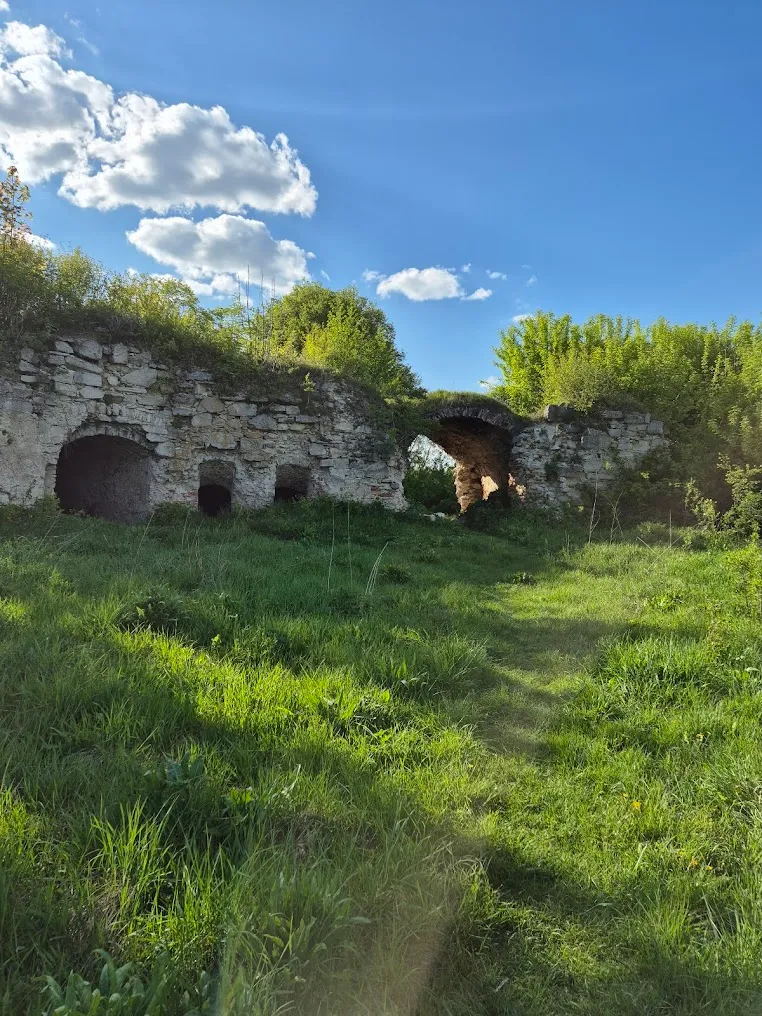
| Condition | one of the worst-preserved castles in the Ternopil region |
| Surviving | wall fragments 5–6.5 ft (1.5–2 m) tall, an underground corridor |
| Status | architectural monument of national significance |
A Marsh as the First Line of Defense
In 1516, Marcin Kamieniecki, Voivode of Podillia, received land from King Sigismund I for his service and chose a site for his castle surrounded by marshes on every side. The natural barrier was reinforced by a water-filled moat and a drawbridge.
The castle was a rectangle with four four-story towers at the corners. The walls ran 197 ft (60 m) in length. Its building material was local sandstone.
In 1520, Zalistsi received Magdeburg Law. The town grew up around the castle.
The castle passed between magnate families: Kamieniecki → Mniszech → Wiśniowiecki → Potocki. Each new owner rebuilt it somewhat — from a defensive fortress toward a lordly residence.
False Dmitry and the March on Moscow
In 1604, Yuriy Otrepiev, known as False Dmitry I, stayed at Zalistsi Castle.
He presented himself as the surviving son of Tsar Ivan the Terrible — and claimed the Muscovite throne. Polish king Sigismund III backed the venture: weakening Muscovy served Polish interests. The castle’s owner, Konstanty Wiśniowiecki, provided shelter and resources.
An army set out from here. In 1605, False Dmitry entered Moscow and became tsar for a year. In 1606, he was killed in a coup.
Zalistsi Castle was the starting point of one of the strangest episodes in early modern Eurasian history.
From Residence to Brewery
After the Potocki family, the castle passed to lesser owners. Its defensive importance was lost, and a series of practical “conversions” followed:
- a cloth factory — within the fortress walls
- a brewery — after the factory
A defensive tower, then a loom, then a beer kettle. Three different eras in a single space.
World War I and the Final Chapter
1914–1918 — the front line passed through Zalistsi. The town was destroyed, the castle damaged.
After 1918 — the fortress began to be dismantled for building material. Local residents took the stone.
After 1939 — Soviet authorities continued the process: the ruins were dismantled for collective-farm construction and roads.
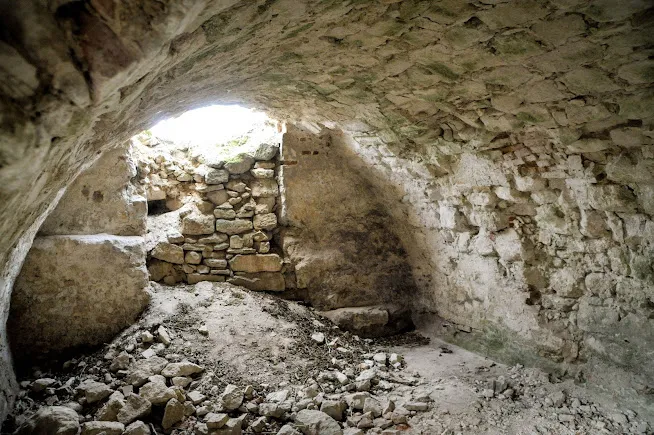
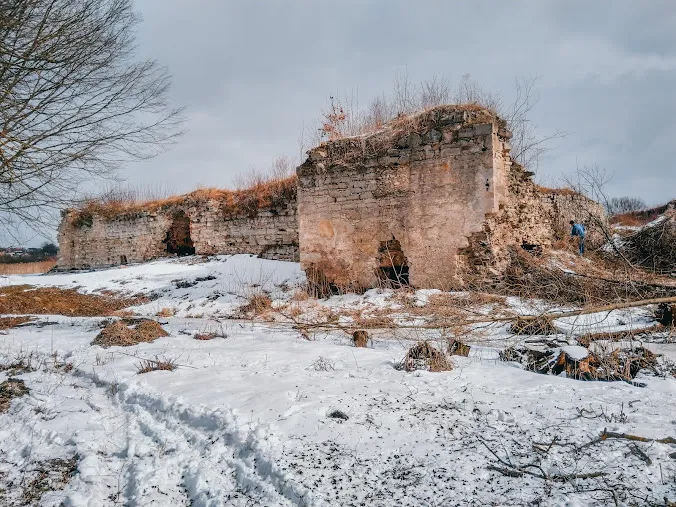
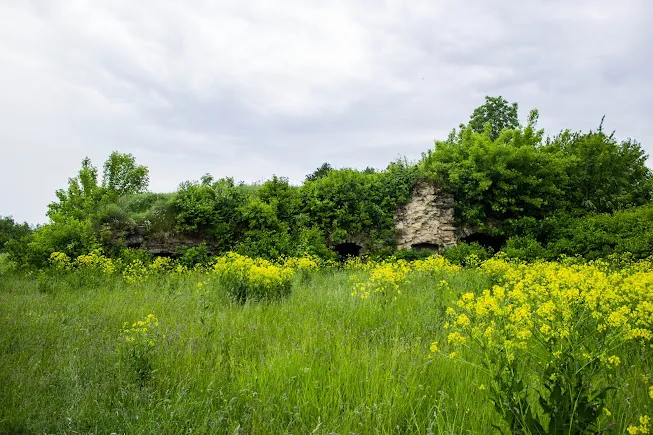
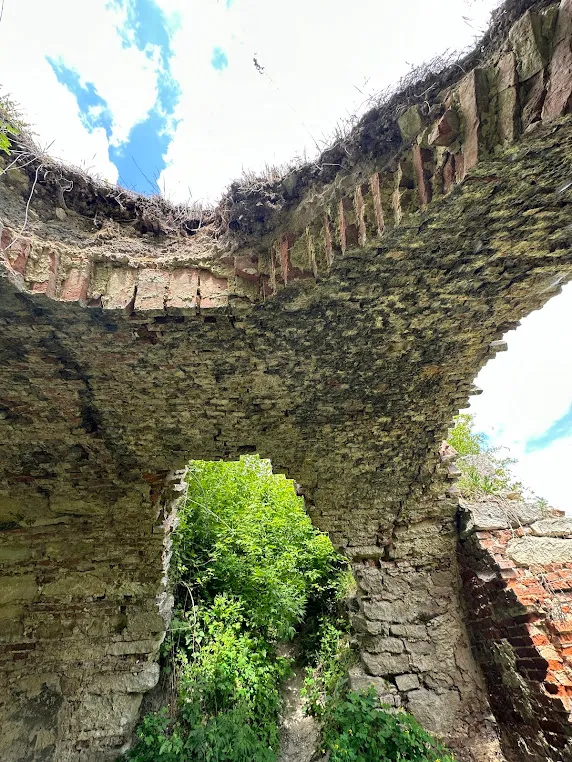
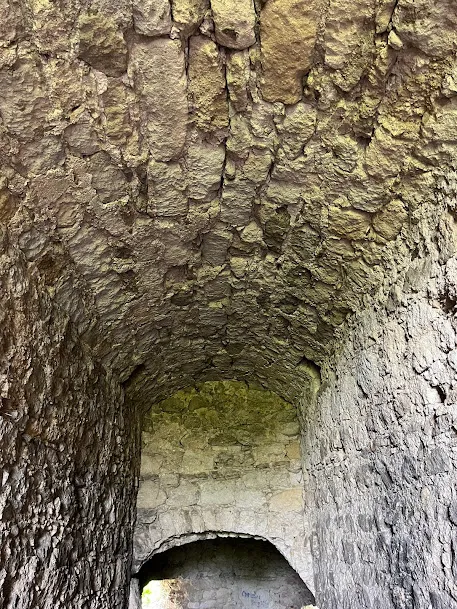
What remains of the castle: fragments of the north and west walls, standing 5–6.5 ft (1.5–2 m) tall, and an underground corridor near the gate.
What Not to Expect
Wikipedia is blunt: “one of the worst-preserved castles in the Ternopil region.”
An empty castle yard. Wall fragments. No towers, no halls. If you’re coming for a “castle” in the usual sense, you’ll be disappointed. If you understand you’re visiting the place from which False Dmitry set out, that’s a different matter.
What to See Nearby and How to Fit It Into a Route
Zalistsi is 22 miles (35 km) from Ternopil, in the Zboriv area.
- Zolochiv Castle (~25 miles / ~40 km) — well restored, the complete opposite of Zalistsi
- Pidhirtsi (~19 miles / ~30 km) — Galicia’s most beautiful Renaissance castle
- Zboriv (~9 miles / ~15 km) — the site of the 1649 Battle of Zboriv and the Treaty of Zboriv
Practical Information
- Admission: free
- Condition: ruins; wall fragments 5–6.5 ft (1.5–2 m), an underground corridor
- Time needed: 15–20 minutes
- From Ternopil: ~22 miles (~35 km) via the R02 highway toward Zboriv
Conclusion
1516 — built on a marsh. 1604 — the False Dmitry set out from here for Moscow. Then, cloth. Then, beer. Then, building material.
What’s left are waist-high walls and an underground corridor.
An architectural monument of national significance.