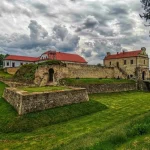
In 2010, Stare Selo Castle was handed to a private investor under a 49-year concession. The terms: bring the monument out of its unsafe condition by 2015, restore one tower by 2013, and open it to the public by the end of 2015.
As of 2025, work has never begun.
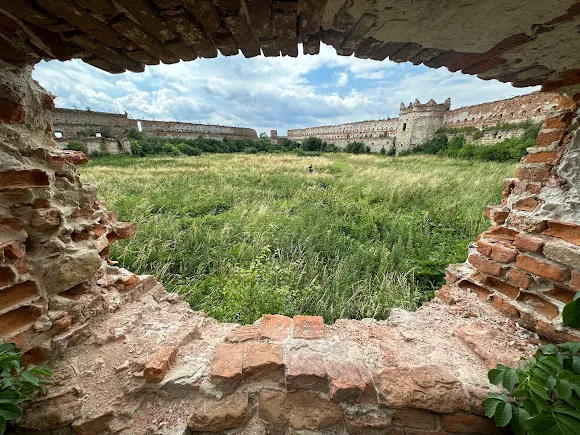
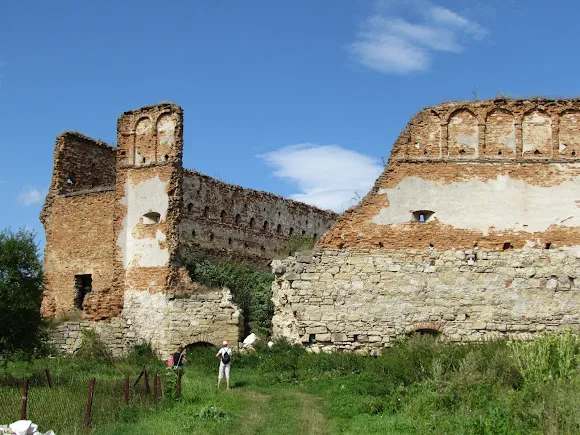
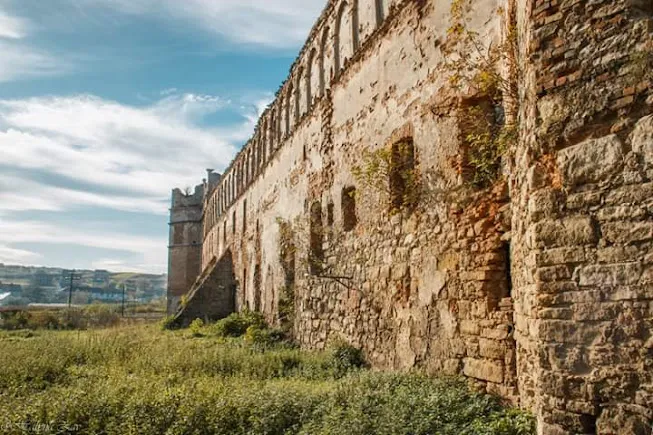
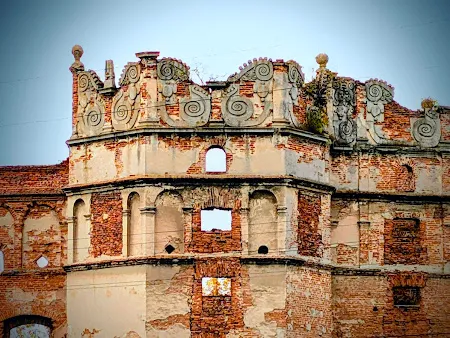
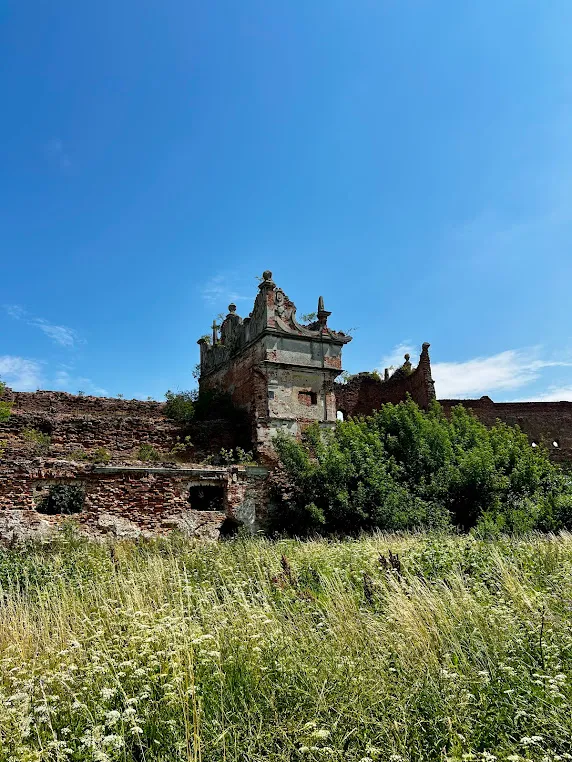
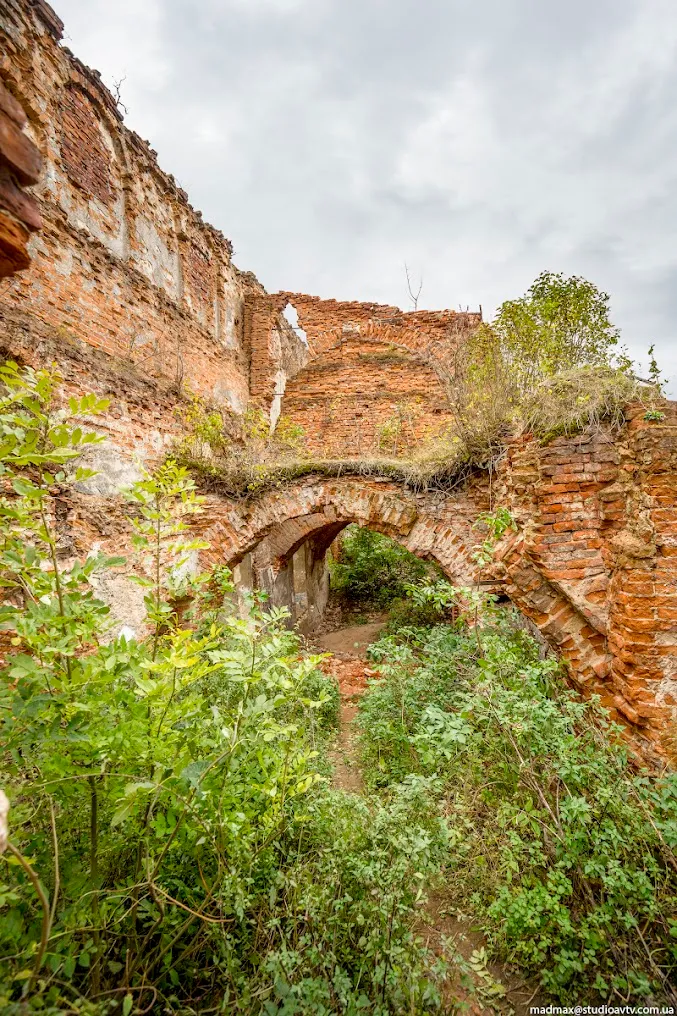
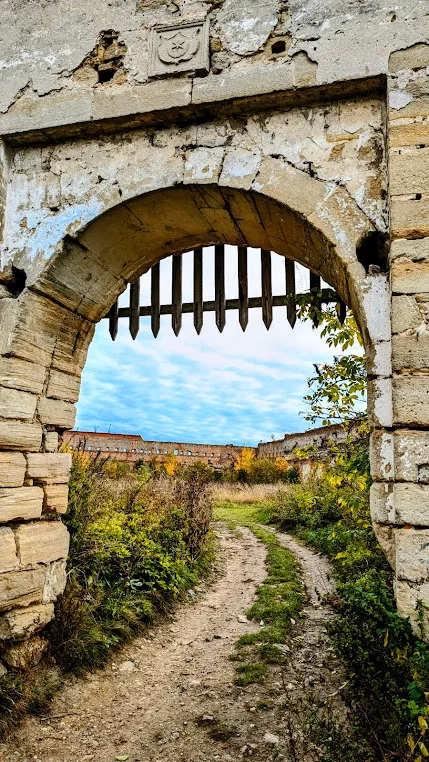
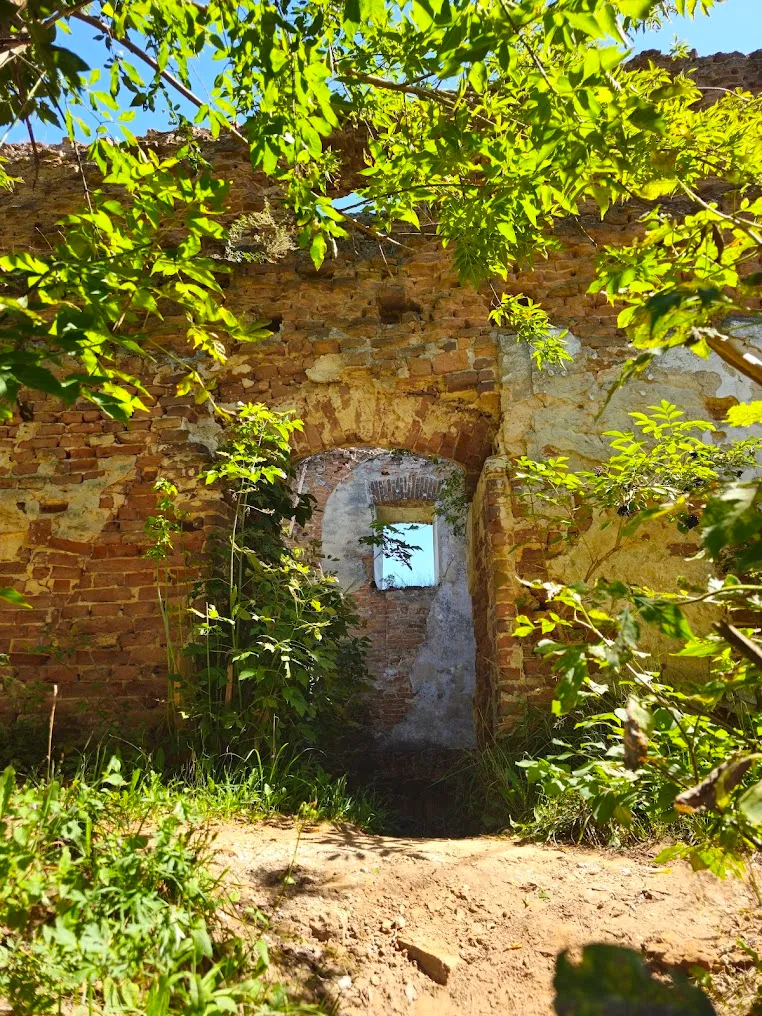
The largest castle in the Lviv region — 2 hectares, walls 8 meters tall, six towers (three surviving) — stands unguarded. Cars drive into the inner courtyard. A nearby railway line shakes the structures with vibration. Graffiti covers the walls.
General Information
| What? | Description |
|---|---|
| Name | Stare Selo Castle |
| Address | Stare Selo village, Pustomyty urban community, Lviv district, Lviv Oblast |
| Distance from Lviv | ~11 miles (~18 km) |
| Area | ~5 acres (2 ha) |
| Shape | an irregular pentagon |
| Wall height | up to 26 ft (8 m) |
| Tower height | up to 52 ft (16 m) |
| Towers | 6 (3 survive) |
| First stone fortress | 1584–1589 (the Ostrogski family) |
| Rebuilt | 1642 (Zasławski-Ostrogski) |
| Last owner | Alfred Potocki |
| Concession | since 2010, for 49 years; restoration never begun |
| Status | architectural monument; free admission |
Milk, Eggs, and the Tatar Road
The “Tatar (Wallachian) Road” to Lviv passed through Stare Selo. Without fortifications here, death was certain: in 1498, the Ottomans attacked, burned houses, killed people, and took the rest captive.
The first wooden castle appeared in 1448. It didn’t save the village from 1498.
In 1553, the Stare Selo estate was given as a dowry to Sofia Tarnawska, marrying Wasyl Konstanty Ostrogski. The Ostrogski family were the most prominent dynasty of Rus’ at the time. It was they who would build the stone castle.
1584–1589 — the first stone fortress. The likely architect: Ambrozii Prykhylnyi. Following an old tradition, milk and eggs were added to the mortar. Locals believe that’s the secret behind the walls’ durability — they still stand today.
The first fortress didn’t survive the Tatar invasion.
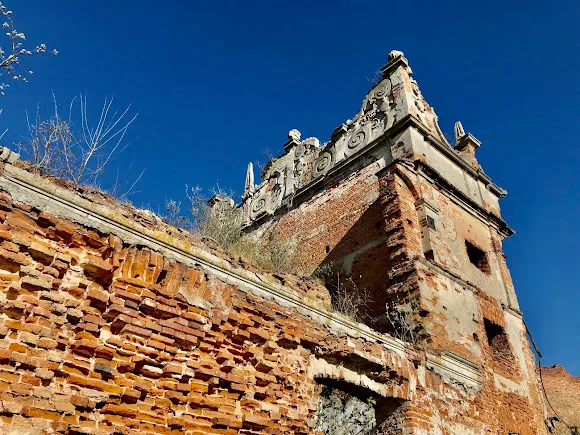
In 1642, Władysław Dominik Zasławski-Ostrogski rebuilt the castle in the late East European Renaissance style. His coat of arms appears on the largest tower. The castle gained 6 towers, with firing slits every 20 ft (6 m) — upper ones for hand weapons, lower ones for cannons.
Size and Shape: Why It’s Unlike the Others
Stare Selo Castle is the largest by area in the Lviv region. 5 acres (2 ha) — half a standard city block. Its shape is an irregular pentagon: not a classic square or rectangle, but a plot curved to fit the terrain.
Walls 26 ft tall. Towers up to 52 ft. Firing slits around the perimeter every 20 ft. By scale, it was one of the most powerful fortresses in Galicia in its time.
From Fortress to Brewery
18th century — the castle passes to the Lubomirski family, then to the Sieniawski family. Adam Mikołaj Sieniawski moves the town arsenal here from Lviv — the castle regains military significance.
After Sieniawski’s death in 1726, the estate passes to his daughter Maria Sophia, through whom it passes to the Czartoryski family, and later to the Potocki family.
Alfred Potocki — the last private owner — converted the castle into a brewery. A beer hall, a distillery, grain storage. The defensive structure became an industrial site.
Decline followed.
2010 and 49 Years of Nothing
In October 2010, the castle was handed over on a 49-year concession. Promises were made: the unsafe condition eliminated by 2012, one tower restored by 2013, the site opened to the public by 2015.
As of 2025 — no work whatsoever. Admission is free and unguarded. There’s no security. Cars drive into the courtyard. The nearby railway shakes the walls with vibration. Graffiti covers the walls.
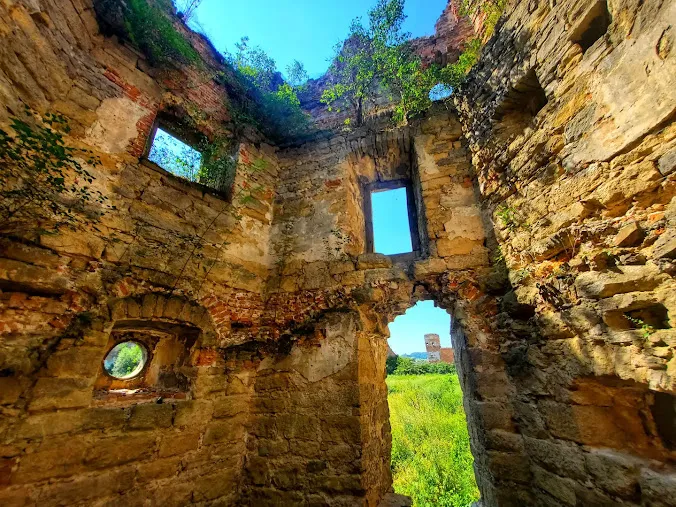
Three of six towers survive. An outer icehouse is structurally unsafe, but still standing.
What Not to Expect
No tourist infrastructure at all — no guides, no ticket booth, no café. These are open ruins, freely accessible.
And don’t expect “coziness”: the castle stands right beside the railway. When a train passes, you hear it and feel it.
What to See Nearby and How to Fit It Into a Route
Stare Selo is 11 miles (18 km) from Lviv, a convenient stop between the city and the Golden Horseshoe:
- Davydiv (~3 miles / ~5 km) — a small botanical park
- Olesko Castle (~25 miles / ~40 km) — the first stop on the Golden Horseshoe of the Lviv Region
- Pidhirtsi Castle (~34 miles / ~55 km) — the second stop
If you’re heading to the “Golden Horseshoe” from Lviv, Stare Selo Castle makes a natural stop along the way.
Practical Information
- Admission: free
- Security: none
- Condition: structurally unsafe; exterior viewing relatively safe, entering the towers is dangerous
- Time needed: 20–40 minutes
- How to get there: from Lviv via the H-09 highway toward Davydiv; before Vidnyky, turn right toward Stare Selo (~11 miles / ~18 km)
- Rail: Stare Selo station — several trains a day from Lviv
Conclusion
The largest castle in the Lviv region stands 11 miles from the city, handed to an investor for 49 years in 2010, and still hasn’t been restored.
The milk and eggs in the mortar have held up better than the concession agreement.