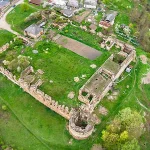
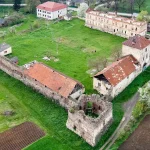
Between 1602 and 1605, Krzysztof Zbaraski, while in Venice, commissioned architect Vincenzo Scamozzi to design a new castle.
Scamozzi took the job. He published the design in his treatise “The Idea of a Universal Architecture” (Venice, 1615). He never once visited Zbarazh.
Construction began in 1612. Krzysztof died in 1627 — without seeing it finished. His brother Jerzy died in 1631 — also without seeing its completion. The castle, built from a published book, passed to another family entirely.
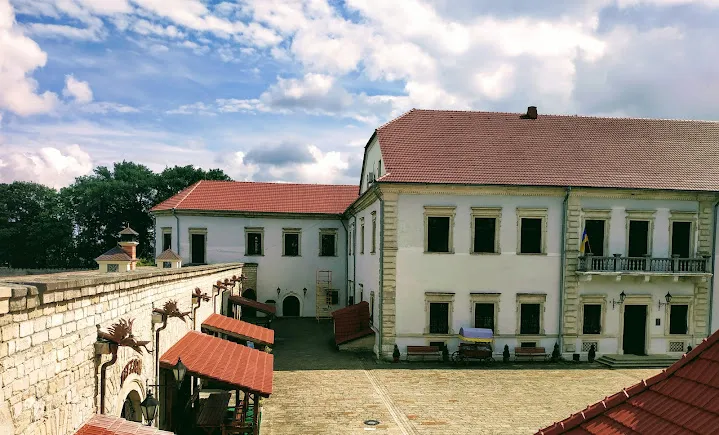
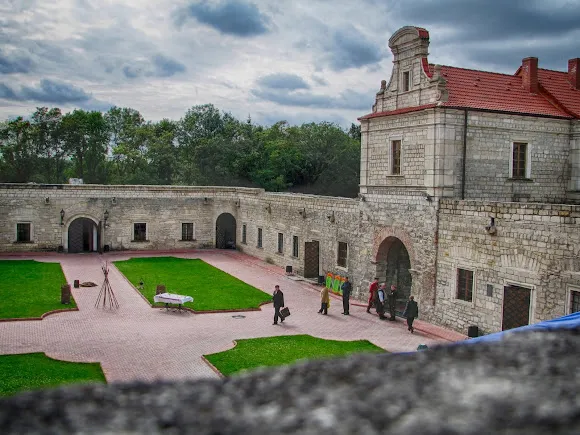
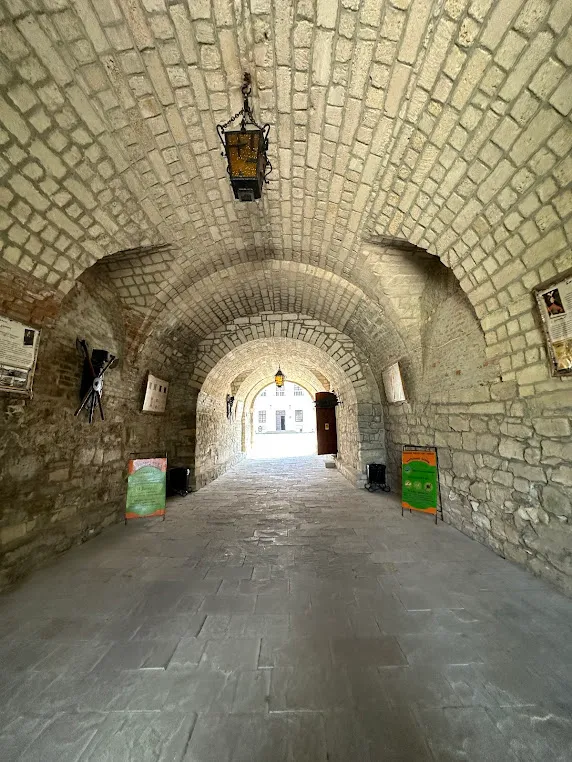
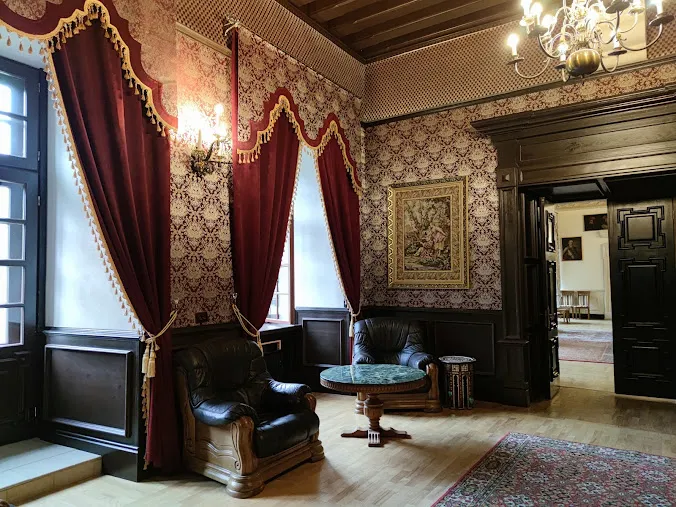
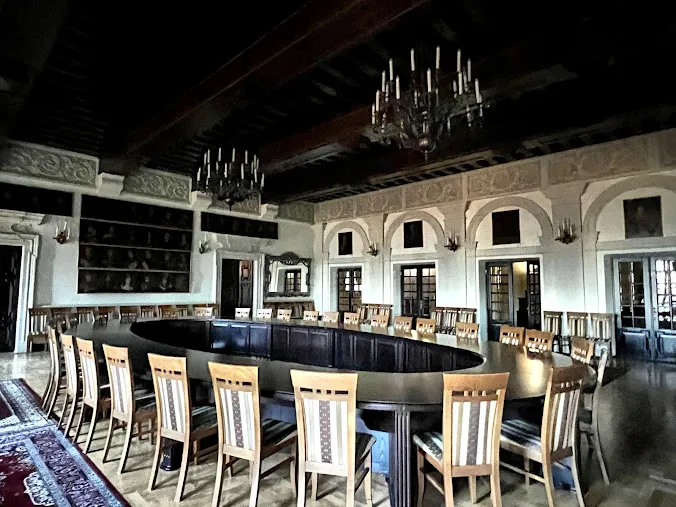
General Information
| What? | Description |
|---|---|
| Name | Zbarazh Castle |
| Address | 1 Zamkova St., Zbarazh, Ternopil district, Ternopil Oblast |
| Built | 1612–1631 |
| Commissioned by | the brothers Krzysztof and Jerzy Zbaraski |
| Architect | Vincenzo Scamozzi (Venice); the work was carried out by Andrea dell’Aqua, likely with H. van Peen |
| Type | bastion-type palace-fortress |
| Well | 197 ft (60 m) |
| Key event | the 1649 siege — Khmelnytsky’s 100,000-strong army held out three months; the garrison never surrendered |
| Status | architectural monument of national significance; a museum |
| Admission | paid |
Three Phases of One Castle
Zbarazh Castle was built in three clearly defined phases — each belonging to different people.
1612–1627 — Krzysztof Zbaraski begins the palace. A square plan, an inner courtyard, bastions at the corners — all following Scamozzi’s treatise, adjusted for the real terrain. The base is stone, the upper section unfired brick. A 197-ft (60 m) well cut into rock. Krzysztof dies — the palace unfinished.
1627–1631 — Jerzy Zbaraski surrounds the unfinished palace with walls and moats, folding it into the town’s broader fortification system. Jerzy is the last of the Zbaraski line. He dies in 1631. The family line ends.
1631–1649 — the Wiśniowiecki family inherits the castle. Jeremi Wiśniowiecki and his son Dmitri surround it with massive earthen ramparts, rebuild the towers for artillery, and add casemates. The fortress becomes one of the most powerful in Podillia.
This is a good illustration of how castles actually came to be: not one architect and one patron, but three generations of different decisions.
The 1649 Siege: Seven Weeks, Mice, and Diplomacy
June 30 – August 14, 1649 — a 100,000-strong Cossack-Tatar army under Bohdan Khmelnytsky laid siege to Zbarazh Castle. Inside: between 9,000 and 15,000 Polish soldiers under the command of Jeremi Wiśniowiecki.
Seven weeks. Cossacks dug underground passages, trying to blow up the walls. The defenders responded with counter-tunnels. Cannons pounded the walls. A mobile “wagon fort” system allowed firing from close range.
Ivan Bohun was wounded here; Nestor Morozenko died here. Cossack and Polish engineers waged a parallel underground war — in darkness, by touch.
But the garrison never surrendered.
Khmelnytsky used a trick: he left part of his forces at the walls for appearances and marched out to meet the Polish relief army. The Battle of Zboriv followed — the Poles were routed. But the Crimean khan switched sides. Khmelnytsky signed the Treaty of Zboriv — unfavorable to the Cossacks.
The castle was never taken by storm. It held out. But the price of peace proved bitter.
Sienkiewicz and “With Fire and Sword”
Most people know Zbarazh through Henryk Sienkiewicz’s novel “With Fire and Sword” (1884) — one of the most celebrated 19th-century Polish novels. Sienkiewicz set key scenes here: the defense, the underground fighting, the negotiations.
Thanks to the novel, Zbarazh entered Polish cultural memory as a symbol of heroic resistance. For Ukrainians, 1649 means the Battle of Zboriv and Khmelnytsky’s victory. The same year, the same fortress — two different memories.
What Came After
1675 — an Ottoman army under Ibrahim Shishman Pasha captured and destroyed the castle. It was rebuilt.
Mid-19th century — a sugar refinery operated within the castle, run by General Bem. The most unexpected chapter of its history.
1896 — a fire in the palace.
Interwar period — rebuilt with funds from the Polish public.
World War II — ruined again.
Soviet period — restoration, a museum.
What’s Inside Today
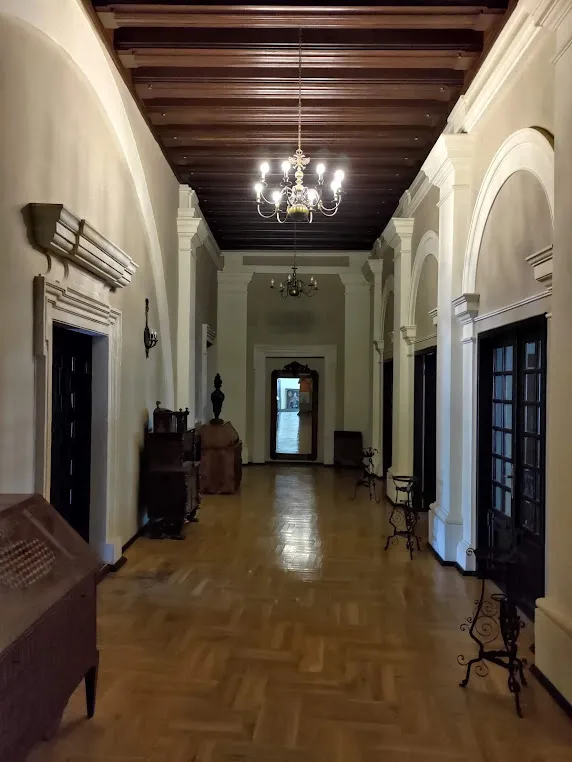
Zbarazh Castle is a state historical-cultural reserve:
- the main palace building with museum halls
- casemates — partly open for viewing
- underground chambers with the 197-ft well
- bastions and earthen ramparts
- a park surrounding the castle
Every summer, the “Siege of Zbarazh” festival reenacts the events of 1649, with cavalry, cannons, and a medieval camp.
What Not to Expect
A quiet visit during the festival. It’s a large public event. If you’re planning to attend the reenactment, expect crowds and arrive early.
If you want the castle without people, come on a weekday in early autumn.
What to See Nearby and How to Fit It Into a Route
Zbarazh is in Ternopil district, ~16 miles (~25 km) from Ternopil.
- Ternopil (~16 miles / ~25 km) — a town with its own castle and pond
- Kremenets Castle (~44 miles / ~70 km) — on a steep hill, a stunning panorama
- Pochaiv (~56 miles / ~90 km) — the Dormition Lavra
Practical Information
- Address: 1 Zamkova St., Zbarazh
- Distance from Ternopil: ~16 miles (~25 km)
- Admission: paid; confirm current price
- The “Siege of Zbarazh” festival: annually in summer; dates on the reserve’s website
- Time needed: 1.5–2 hours (castle, park, and casemates)
Conclusion
The castle was commissioned in Venice, built from a book, and both patrons died before it was finished.
Then came Khmelnytsky with a hundred-thousand-strong army. Seven weeks, underground warfare, hunger — and still, it wasn’t taken.
Then came a sugar refinery.
That’s Zbarazh.