The mountain the castle stands on is called “Mount Bona” — after Queen Bona Sforza, wife of Polish king Sigismund I.
Queen Bona never once visited Kremenets.
She managed the castle remotely from 1536 to 1556, carried out its reconstruction through subordinates, kept a garrison there — and lived in Kraków. The name stayed. She never did.
General Information
| What? | Description |
|---|---|
| Name | Kremenets Castle (the castle on Mount Bona) |
| Address | Mount Bona, Kremenets, Ternopil district, Ternopil Oblast |
| Elevation | 1,302 ft (397 m) above sea level |
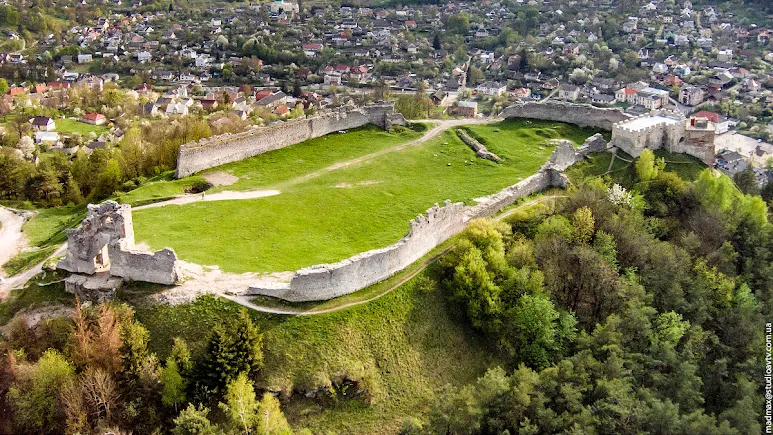
| Inner bailey | 213 × 443 ft (65 × 135 m) — a narrow summit plateau |
| Material | local limestone |
| First written mention | 1064 (or 1073) |
| The Mongols under Batu | 1240–1241 — never took it |
| Destroyed by its own prince | 1261 (under Burundai’s ultimatum) |
| Bona Sforza | 1536–1556 — never visited |
| Well | 262 ft (80 m) — never reached water |
| Status | architectural monument of national significance; free admission |
A Thousand Years, and Not a Single Successful Storm
The first written mention comes from 1064 (or 1073): a local boyar handed the castle to the Polish king Bolesław II. A wooden fortress on a narrow plateau — controlling the Volhynian trade route.
In 1226, the Hungarian king Andrew II tried to take the castle. He couldn’t.
Between 1240 and 1241, the Mongol-Tatar horde under Khan Batu approached Kremenets. They saw the mountain — and moved on. The castle was never stormed.
In 1255, Khan Kuremsa also tried. He also failed.
In 1261, the Mongol commander Burundai issued an ultimatum: the Volhynian prince Vasylko Romanovych had to destroy his own fortifications, or face war. The prince chose the former. The castle was dismantled — not because it was defeated, but because its own lord decided so.
That detail says a lot: the one time Kremenets Castle “fell,” its own owner destroyed it.
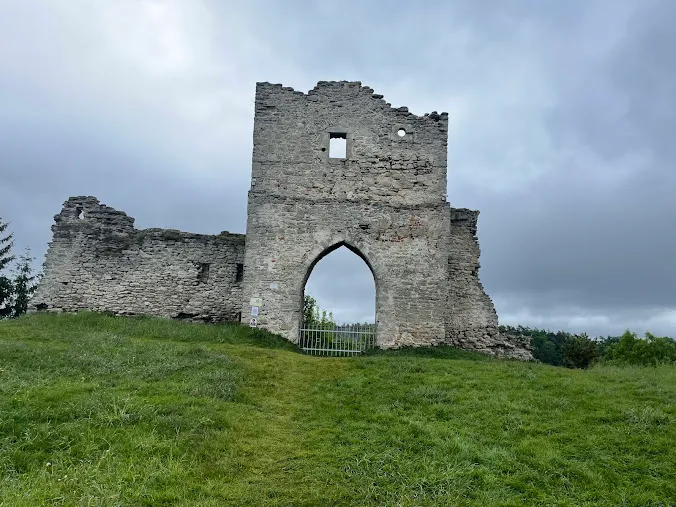
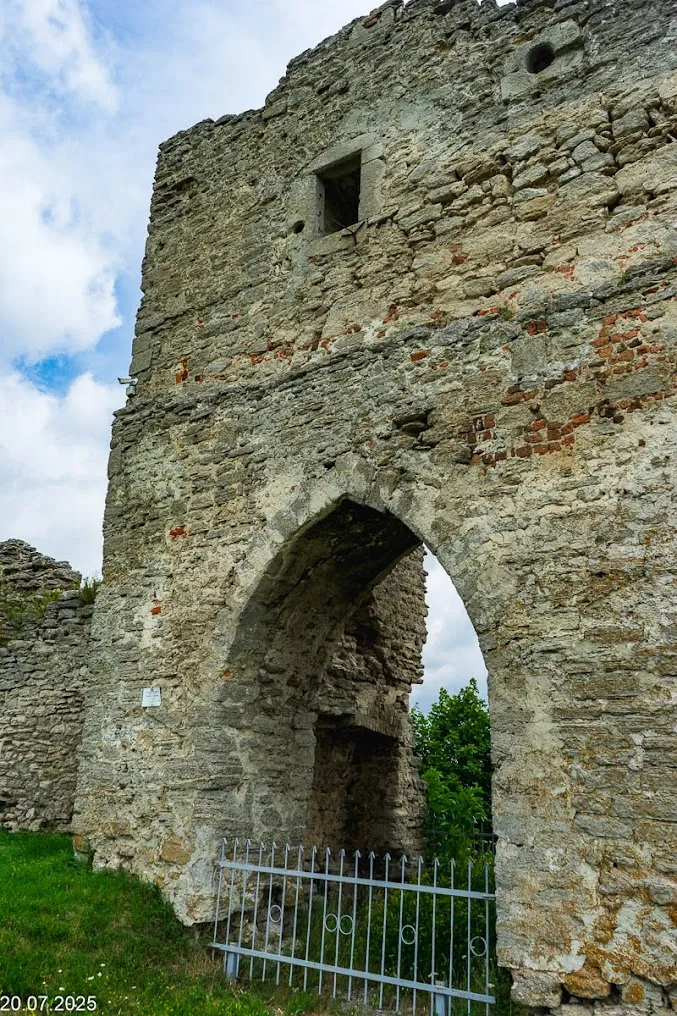
14th–15th centuries — rebuilding and reinforcement. From 1321, Poland and Lithuania pull the castle back and forth between them. In the 15th–16th centuries — new walls, the gate-tower called the Noble Tower, and an attempt to dig an 80-meter well into the rock. Water was never reached — cisterns collected rainwater instead.
Bona Sforza: Managing From a Distance
Bona Sforza d’Aragona (1494–1557) — Duchess of Milan, Neapolitan princess, wife of Polish king Sigismund I. One of the most influential women in Renaissance Europe.
In 1536, Sigismund I granted her Kremenets Castle along with the surrounding villages.
Bona managed the castle for 20 years — and never once visited. Through her officials, she carried out a reconstruction: new towers, reinforced walls, chambers, a guardhouse, food and gunpowder stores, an arsenal. A garrison. Cannons on the walls.
In 1556, Bona left Poland and returned to Italy. The castle passed to the Polish crown.
In 1563, Kremenets Castle finally lost its strategic value: Poland and Lithuania united into the Polish-Lithuanian Commonwealth, and a border fortress was no longer needed in its old location.
Decline: Faster Than It Seems
In 1648, a Cossack detachment captured the castle. Legend attributes this to Maksym Kryvonis, but sources don’t confirm his personal involvement.
1648–1651 — damage during the Khmelnytsky uprising.
In 1675, an Ottoman army destroyed the castle for good.
After that — ruin. No restoration followed.
In 1781, the ruins were visited by Polish king Stanisław August Poniatowski. By then, the castle had already been abandoned for over a century.
In 1816 and 1818, the writer Julian Niemcewicz visited twice. He described what he saw and wrote about it.
Since then, the castle has been an object of tourist interest rather than a defensive site.
What’s There Today
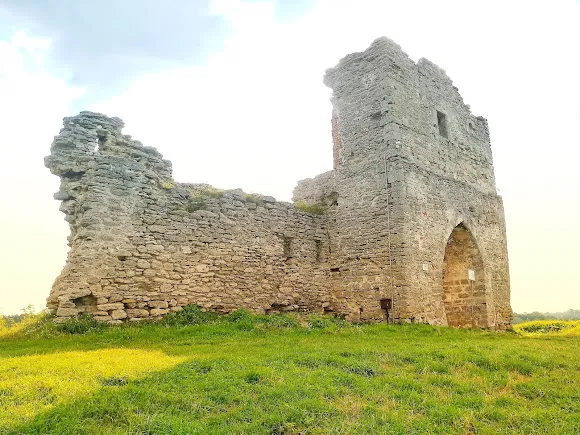
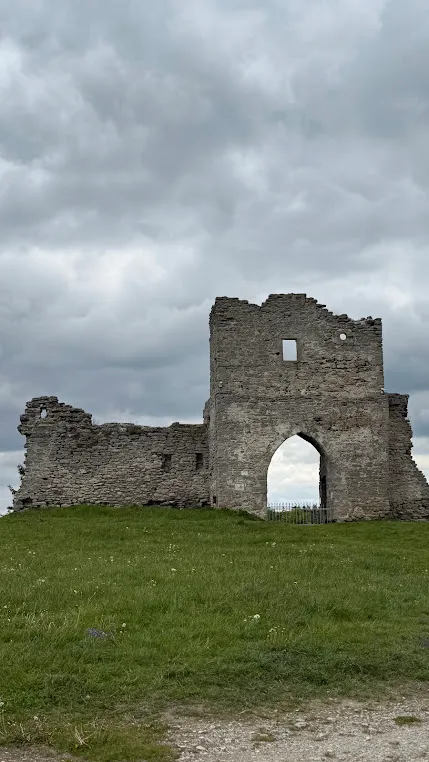
The castle is a ruin. What survives:
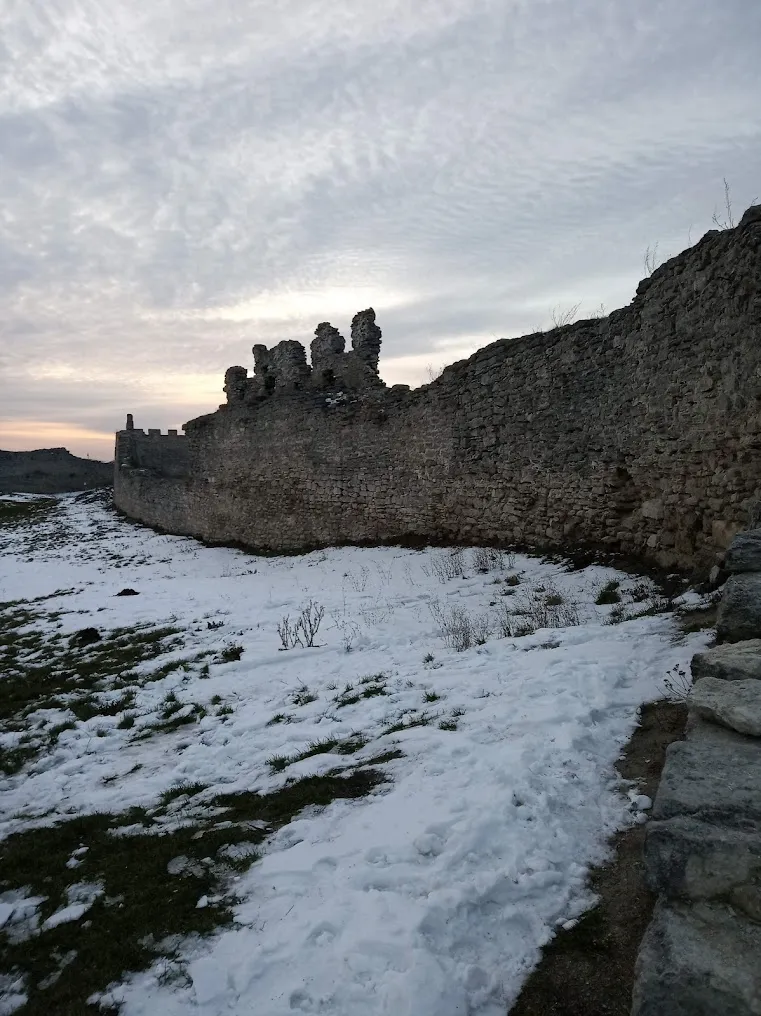
- fragments of walls around the perimeter of the plateau
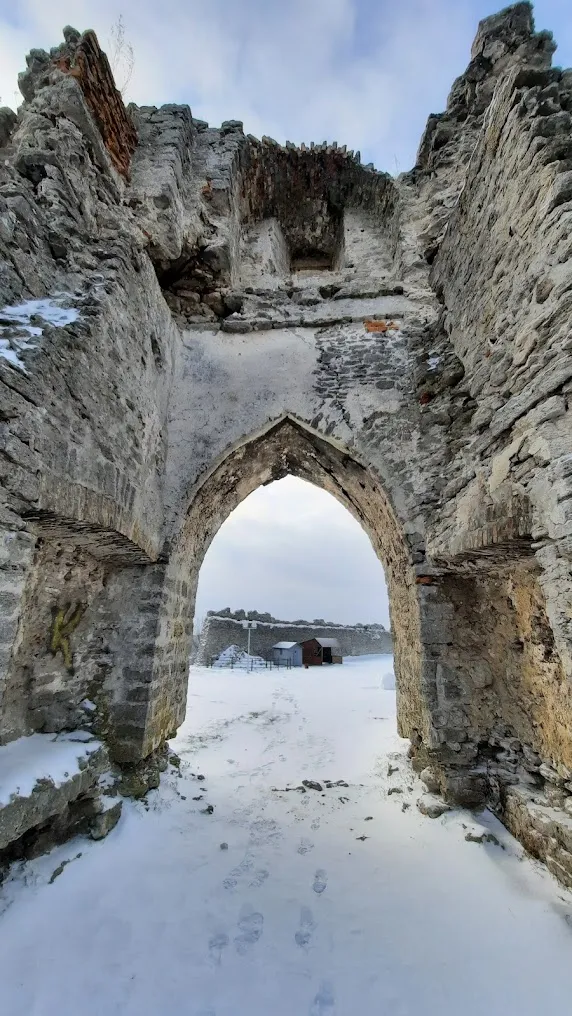
- remains of the Noble Tower
- the outline of the inner bailey (213 × 443 ft)
- a trail to the summit from several points in town
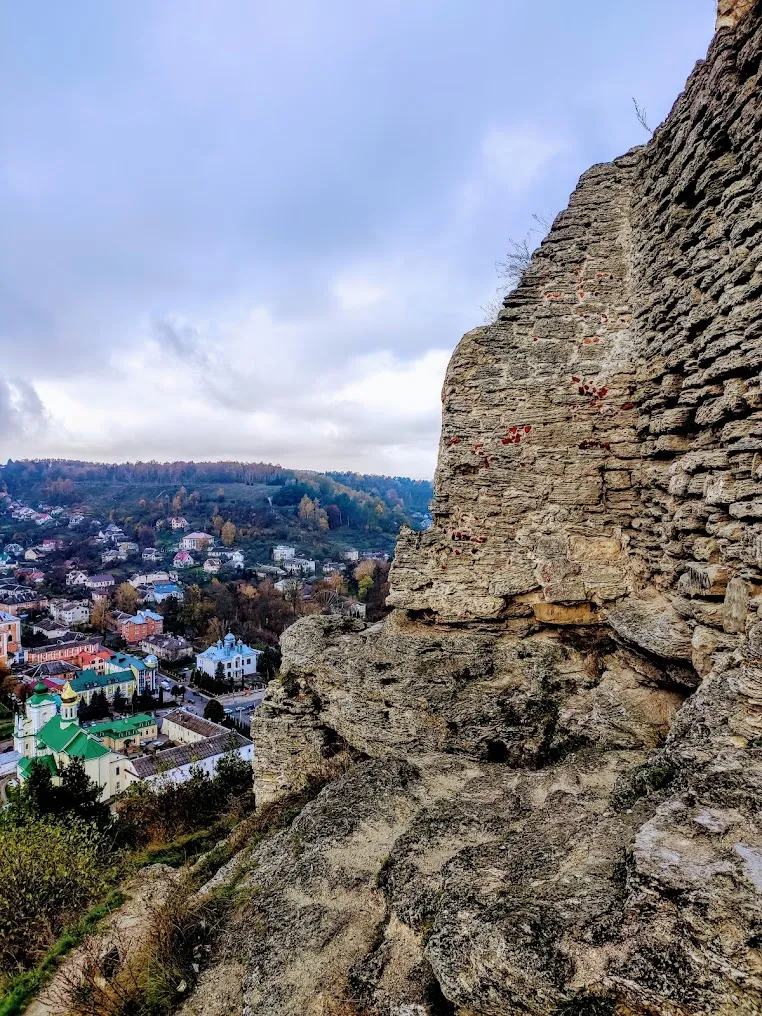
From the summit: a panorama of Kremenets and the Kremenets Mountains. That’s the main reason to climb.
What Not to Expect
The climb is serious. The mountain is steep, and the trail isn’t for casual footwear. There are stairs, but this isn’t a leisurely park walk.
Inside: an open plateau. No museum halls, no interpretive plaques, no ticket booth. Just walls and sky.
What to See in Kremenets and Nearby
Kremenets is a rich town even without the castle:
- the Epiphany Monastery (17th century) — on the mountain’s slope, the town’s main baroque structure
- the Jesuit Collegium (18th century) — later the Kremenets Lyceum, where Juliusz Słowacki once taught; now a pedagogical university
- the house where Juliusz Słowacki was born — the celebrated Polish poet
- Dubenska Street — the old town layout
From Kremenets, a natural route continues to Pochaiv (~16 miles / ~25 km) and Zbarazh (~44 miles / ~70 km). Or the other direction — Dubno (~31 miles / ~50 km).
Practical Information
- Admission: free
- Climb: via a trail from town; ~20–30 minutes on foot
- Footwear: hiking or sturdy closed shoes
- Time on the mountain: 30–60 minutes
- From Ternopil: ~37 miles (~60 km) via the R46 highway; ~50 min
- From Rivne: ~44 miles (~70 km); ~1 hour
Conclusion
The Mongols bypassed Kremenets Castle in 1241 and moved on. Twenty years later, other Mongols forced its own lord to destroy it himself.
Bona Sforza managed it for 20 years and never once visited. Her name stayed.
The well was cut 80 meters into the rock, and water was never reached.
The castle stands on a mountain 397 meters high. It looks the part.