Kaolin is a white, soft clay. It is used to make ceramics, paper, pharmaceuticals and cosmetics.
In Hlukhivtsi in Vinnytsia region it has been extracted for more than 100 years. And the quarry is one of the largest in Eastern Europe.
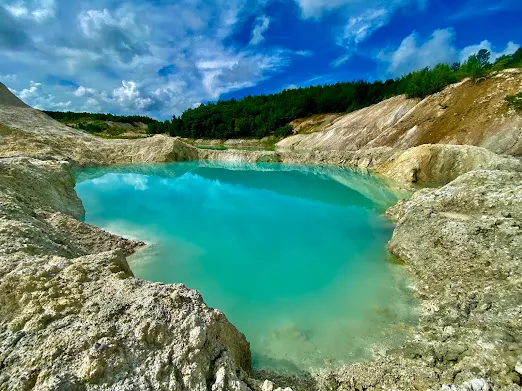
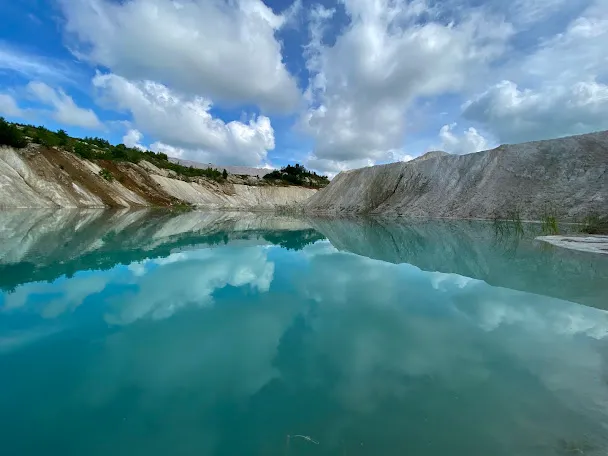
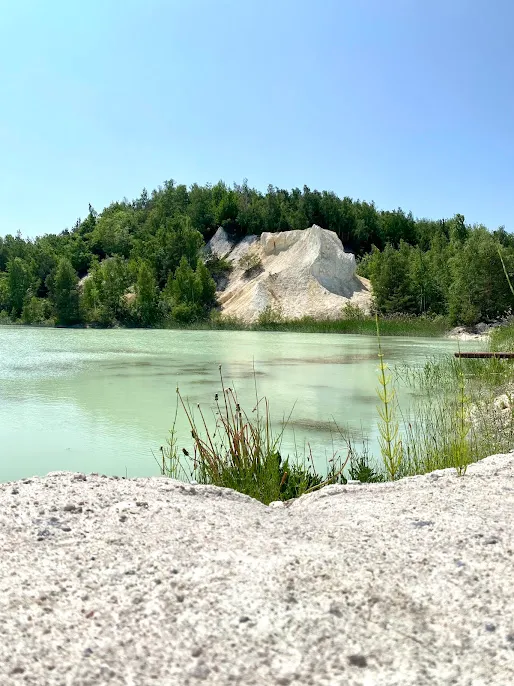
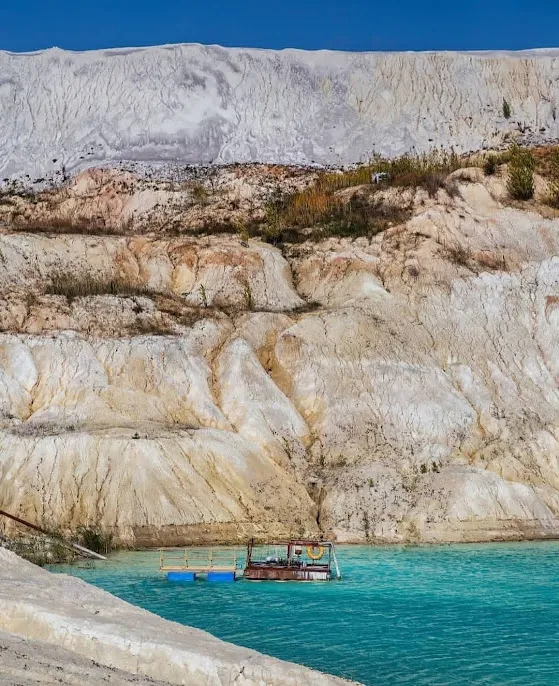
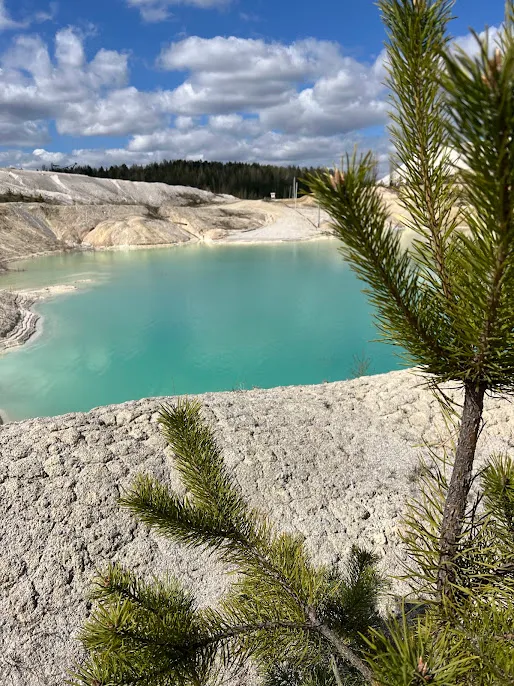
What looks like an exotic beach with white sand and blue water is in fact an active industrial site.
Which is why swimming is forbidden. But admiring and photographing — is allowed. And that fully justifies the trip.
General Information
| What? | Description |
|---|---|
| Name | Kaolin Quarry (Hlukhivets Quarry) |
| Address | village of Hlukhivtsi, Kozyatyn district, Vinnytsia oblast |
| Distance from Vinnytsia | ~68 miles (~110 km) |
| Distance from Kozyatyn | ~15 miles (~25 km) |
| Year extraction began | 1905 |
| Operator | AKW Ukrainian Kaolin Company (Quarzwerke Gruppe, Germany) |
| Annual output | 240,000+ tonnes of kaolin |
| Export | over 50 countries |
| Swimming | prohibited (active production site) |
| Visiting | Saturdays and Sundays only (weekdays: closed to the public) |
What Is Kaolin and Why the Quarry Looks So Unusual
Kaolin is a fine-grained white primary clay with minimal impurities. Main mineral: kaolinite. Used in:
- porcelain and ceramic manufacturing
- paper industry (coating layer)
- cosmetics and pharmaceuticals
- electrical engineering
The Hlukhivets deposit is one of the largest and oldest kaolin deposits in Ukraine.
Why the Water Is Blue and the Bank Is White
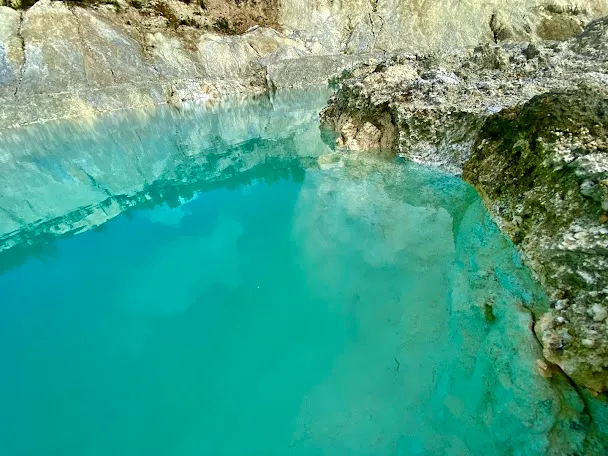
The walls and banks of the quarry are pure white clay (kaolin). When washed by water and illuminated by light, the clay colours the water a sky-blue.
An additional effect: depth and angle of lighting intensify the hue. The real colour is genuinely impressive, though slightly less vivid than in most photographs.
One “museum” giant rotary excavator still stands at the quarry edge — a relic of Soviet industry.
Important: Weekends Only
Because the quarry is active, visitors are not admitted on weekdays. Come on Saturday or Sunday.
Practical Information
- Visiting: Saturday and Sunday; closed on weekdays
- Entry: free (on weekends)
- Swimming: strictly prohibited
- Time on site: 30–60 minutes
Conclusion
Over 100 years of extracting white clay.
Making ceramics, paper and cosmetics for 50 countries.
Side effect: the quarry looks like an otherworldly beach.
Cannot swim. Worth visiting.