Seeing the plot on the steep slope above Bankova St., a colleague of Horodetsky’s told him bluntly: “Forgive me, but you must be out of your mind! Only a madman would come up with an idea like that.”
Horodetsky built the house anyway. He invited his colleagues to the housewarming. Ten years later, he mortgaged the building to cover debts from a safari in Kenya. He never managed to pay it back.
That’s the real biography of Kyiv’s most famous building — no legends about a daughter or a curse required.
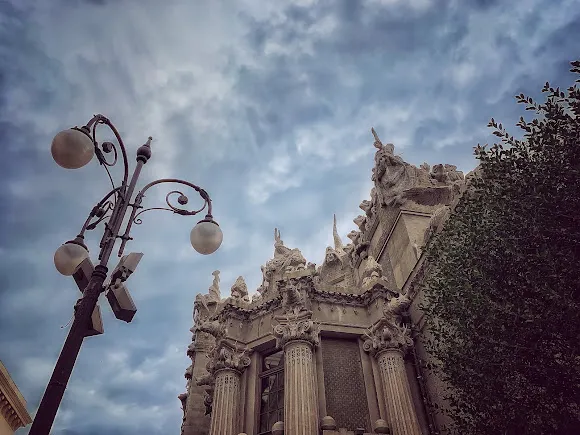
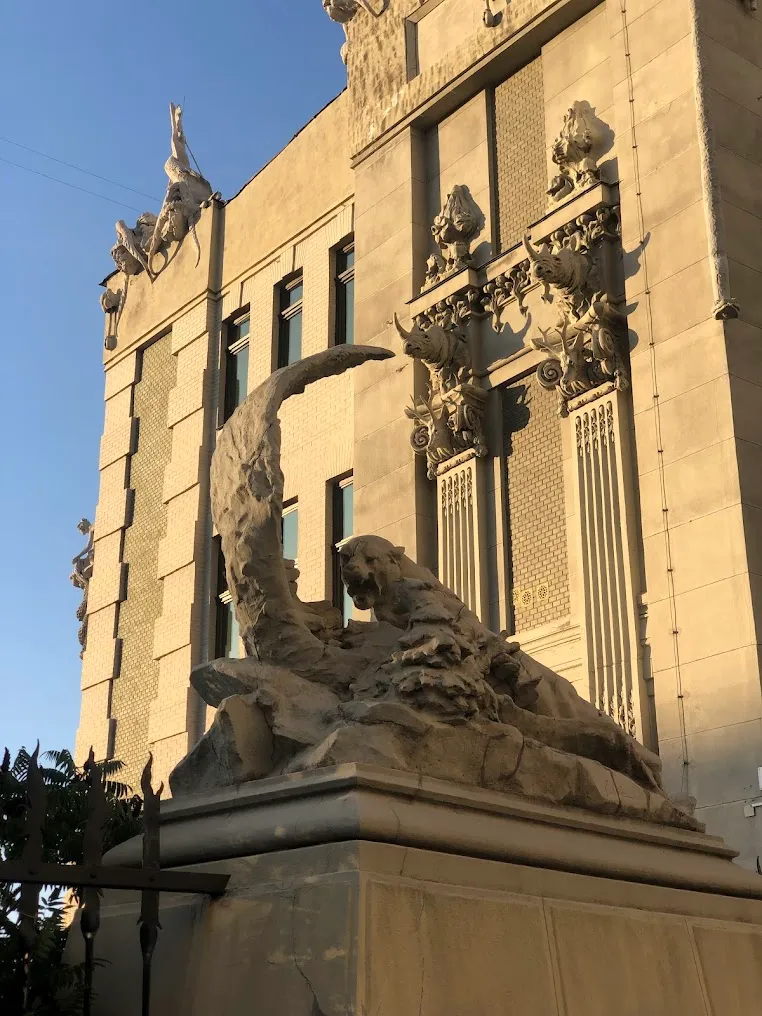
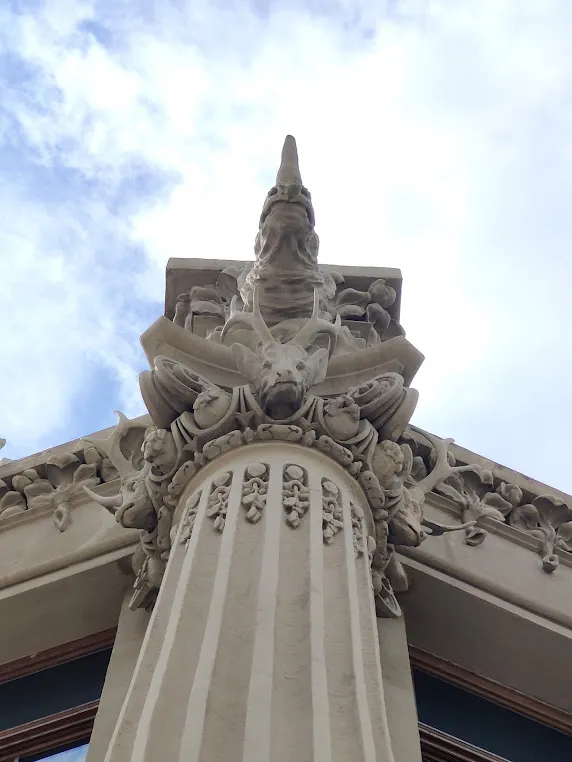
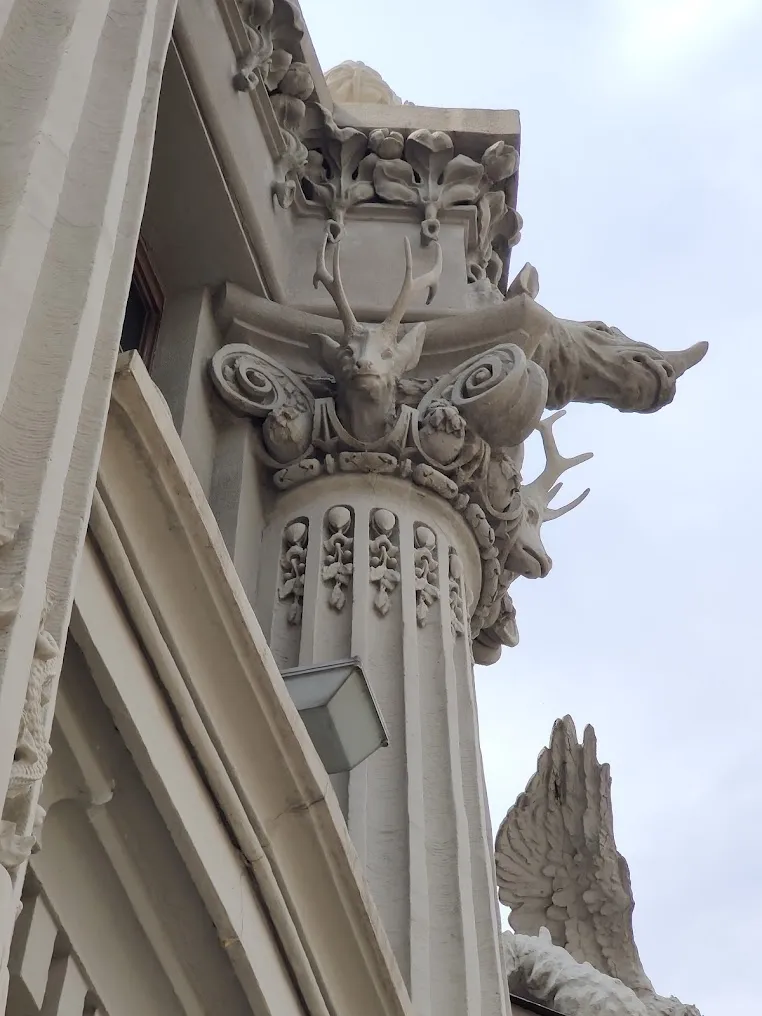
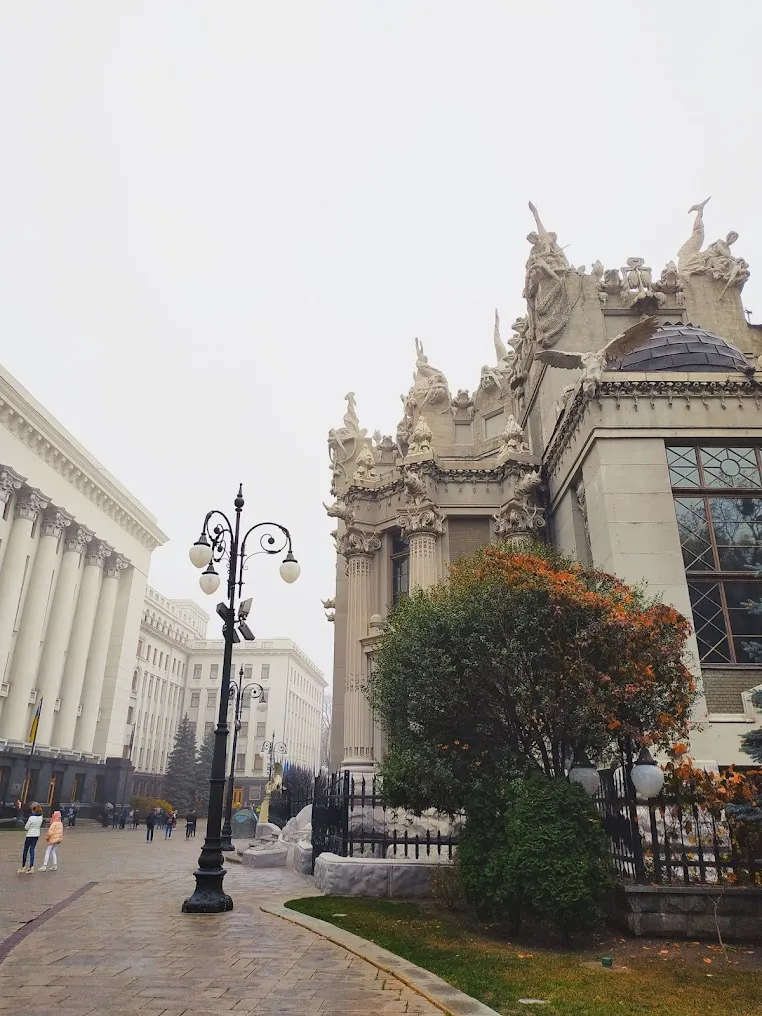
General Information
| What? | Description |
|---|---|
| Name | Horodetsky House (popularly known as the “House with Chimaeras”) |
| Address | 10 Bankova St., Kyiv |
| Built | 1901–1903 |
| Architect | Vladyslav Horodetsky |
| Sculptures | Elio Sala (Milan) — after Horodetsky’s own sketches |
| Structural engineering | Anton Straus (bored concrete piles — the first of their kind in the Russian Empire) |
| Material | concrete |
| Floors | 3 on the Bankova St. side / 6 on the Franko Square side |
| Status | architectural monument of national significance; official residence for state guests |
| Admission | exterior free; interior only by prior-booked guided tour |
Three Reasons It Looks the Way It Does — None of Them “Romance”
First: a bet. The plot, on a steep slope above a ravine, was considered unfit for construction. Horodetsky wagered his colleagues that he’d build there anyway. To pull it off, engineer Anton Straus drove 50 concrete piles more than 16 ft (5 m) deep — the first project of its kind in the Russian Empire.
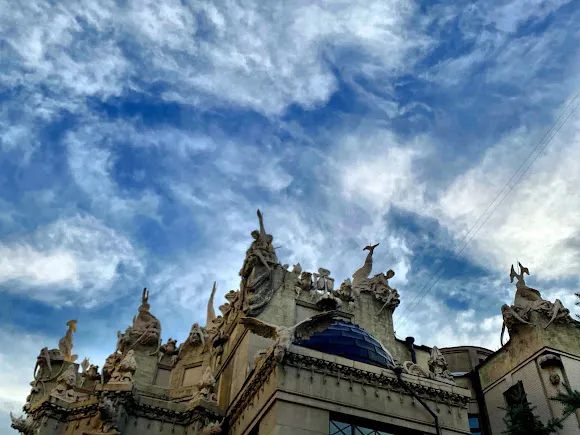
Second: advertising. The original design had no sculptural decoration. Horodetsky added the animals later — partly under an arrangement with the owners of the “Faur” cement plant: a building covered in life-size concrete sculptures became the best possible advertisement for the new material. Once construction finished, orders at the cement plant jumped sharply.
Third: hunting. Horodetsky was a passionate hunter and traveler. The animals on the façade are his African and Asian trophies, rendered in concrete. Elephants serve as downspouts. Rhinoceroses are built into the walls. Frogs sit on the roof. All of it is a real bestiary belonging to one specific person, not an abstract fantasy.
Who Actually Made It: Three People, Not One
The façade carries a signature: “E. Sala. 1902.” Elio Sala was a Milanese sculptor and Horodetsky’s regular collaborator. He also decorated the Art Museum and St. Nicholas’s Cathedral in Kyiv. His brother, Eugenio Sala, painted the interiors.
Anton Straus was a mining engineer who invented the bored-pile technology he later patented in the United States. Without him, the building couldn’t have physically stood on this slope.
This legendary building is always associated with Horodetsky’s name alone, but it wouldn’t exist without these two other specialists. A Pole, a German, and an Italian — over ten years of collaboration, they built half of early 20th-century Kyiv’s most notable architecture.
What’s Inside — and Why It’s Hard to Get In
Inside: painted decoration, marble, wood carving, majolica fireplaces. In the dining room, the ceiling and walls display the owner’s entire hunting catch: birds, fish, crabs, fruit. The main vestibule looks like the ocean floor. On the staircase, a column with a dolphin; on the railing, an eagle tearing apart a lion.
There were seven apartments. Each took up an entire floor, with 6–10 rooms. Horodetsky’s own architecture office was in the basement.
Today, the building serves as the official residence for receiving state guests. Tours run, but only by prior booking and in organized groups. You can’t just walk in. If you want to see the interior, check the current tour schedule well in advance.
How Horodetsky Lost It
Horodetsky lived in his own house for ten years.
In 1911, he went on a safari in Africa. The trip drained his finances. In 1912, he mortgaged the house to a bank. In 1913, it was bought by the Beet-Sugar Refining Company. Horodetsky was never able to buy it back.
In 1920, he left for Poland. Sala returned to Milan. Straus’s fate after 1917 is unknown.
The house that began as a bet ended as another African hunting trip — only this time, Horodetsky lost.
What to See Nearby
Bankova is the government quarter, and the neighborhood matches:
- the Mariinskyi Palace and Park — a 5-minute walk; worth seeing if you haven’t already
- Ivana Franka Square — right beside the house
- Mykhailivska Square and the Golden Gate — a 15–20 minute walk through the center
Practical Information
- Exterior viewing: free, around the clock
- Interior: guided tours only, booking required in advance
- Metro: Khreshchatyk or Arsenalna stations — a 10–15 minute walk
- By car: parking in the zone is restricted; the underground lots on Khreshchatyk or in Lypky are a better bet
- Time for exterior viewing: 20–30 minutes
- Time for a tour: ~1.5 hours
Conclusion
The House with Chimaeras isn’t a fairy-tale dream or an architectural manifesto. It’s the result of specific decisions: winning a bet, advertising concrete, putting African animals on a Kyiv façade. And then selling it all to fund the next safari.
Horodetsky got what he wanted. Just not the house.