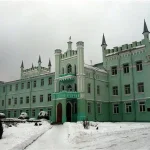
1683. The Polish army under Grand Crown Hetman Stanisław Jabłonowski took part in the Battle of Vienna. They won.
Jabłonowski returned home with an icon of the Virgin Mary the “Victorious” — it had accompanied him on all his campaigns.
In 1691, he built a castle on the banks of the Dniester and named it Mariiampil, after that icon.
The hetman built the fortress as an act of thanks for Vienna.
General Information
| What? | Description |
|---|---|
| Name | Mariiampil Castle |
| Address | 3 Halytska St., Mariiampil urban-type settlement, Halych district, Ivano-Frankivsk Oblast |
| Built | 1691 |
| Commissioned by | Stanisław Jabłonowski, Grand Crown Hetman of Poland |
| Name origin | the icon of the Virgin Mary “the Victorious,” the hetman’s battle icon |
| Style | French fortification school |
| Shape | rectangle, bastions at the corners, moat on two sides |
| Walls | 6.5–10 ft (2–3 m) thick |
| Arboretum | 1690, the oldest in Precarpathia |
| Condition | fragments of ruins; palace now used as a hospital; the park survives |
After Vienna: the French School on the Dniester
Jabłonowski built to the model of the French fortification school — the same tradition developed in France by Sébastien de Vauban. A rectangle with bastions at the corners, a moat on two sides (the other sides protected by the steep banks of the Dniester), a drawbridge, and a gate in the north wall. The walls are 6.5–10 ft (2–3 m) thick.
It wasn’t the French school because the French were invited — it was because that school was considered the most advanced of the second half of the 17th century. Jabłonowski knew what he was doing: he had just won one of the era’s greatest battles.
The fortress had four defensive towers, two entrance gates, a residential building, and garrison barracks.
The 1690 Arboretum — the Oldest in Precarpathia
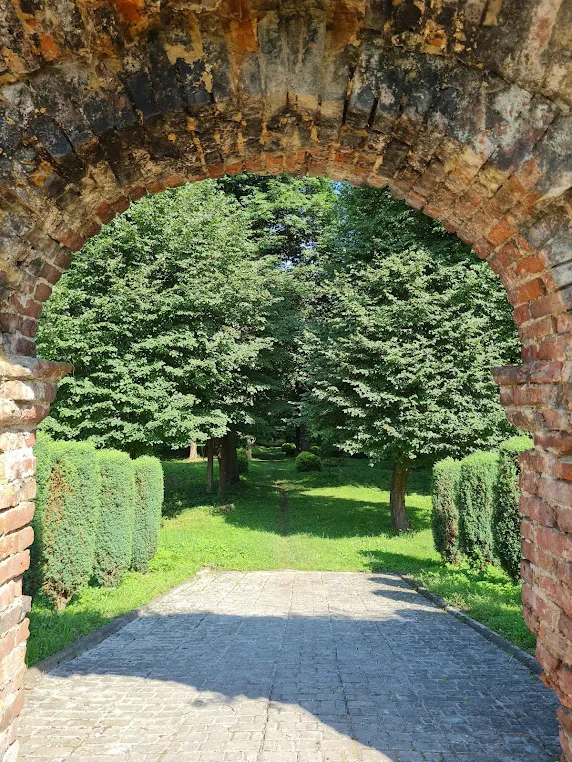
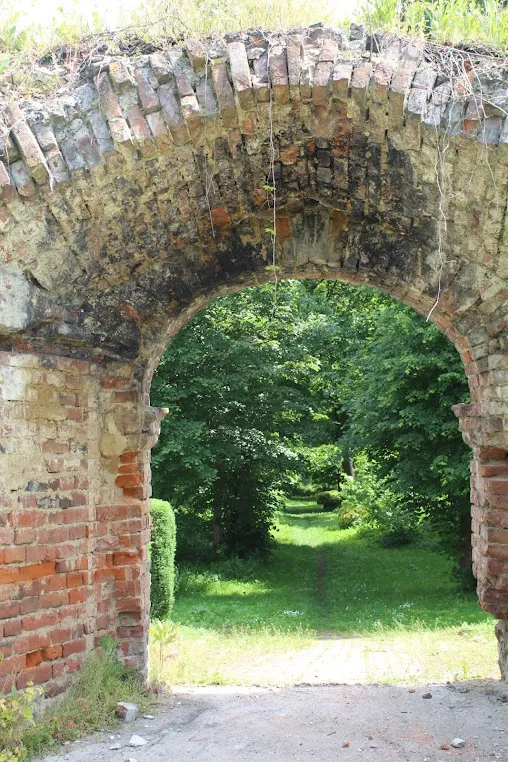
Alongside the castle, in 1690–1691, a park was laid out on the fortress’s eastern edge. Today it’s the oldest arboretum in Precarpathia.
Its organizing axis is a linden alley. Most of the old lindens were cut down in 1919 by soldiers, in the middle of fighting.
Among the park’s trees is a 600-year-old oak (82 ft / 25 m tall, with a girth of 20.5 ft / 6.24 m). In July 1920, Symon Petliura rested beneath it, while his troops were operating in the region at the time.
In 2012, the Ivano-Frankivsk Oblast Council granted the tree the status of a botanical monument of nature, naming it “Symon Petliura’s Oak.”
The oak is 200 years older than the castle.
The Capuchin Monastery and Prison
Next to the castle stands a Capuchin monastery with an 18th-century church.
After secularization, it was converted into a prison.
The pattern of “monastery turned prison” appears in other castles in this series, but here it’s especially striking: the Capuchins, a strict monastic order that lived in poverty, followed by a prison within the very same walls.
What’s Left of the Castle
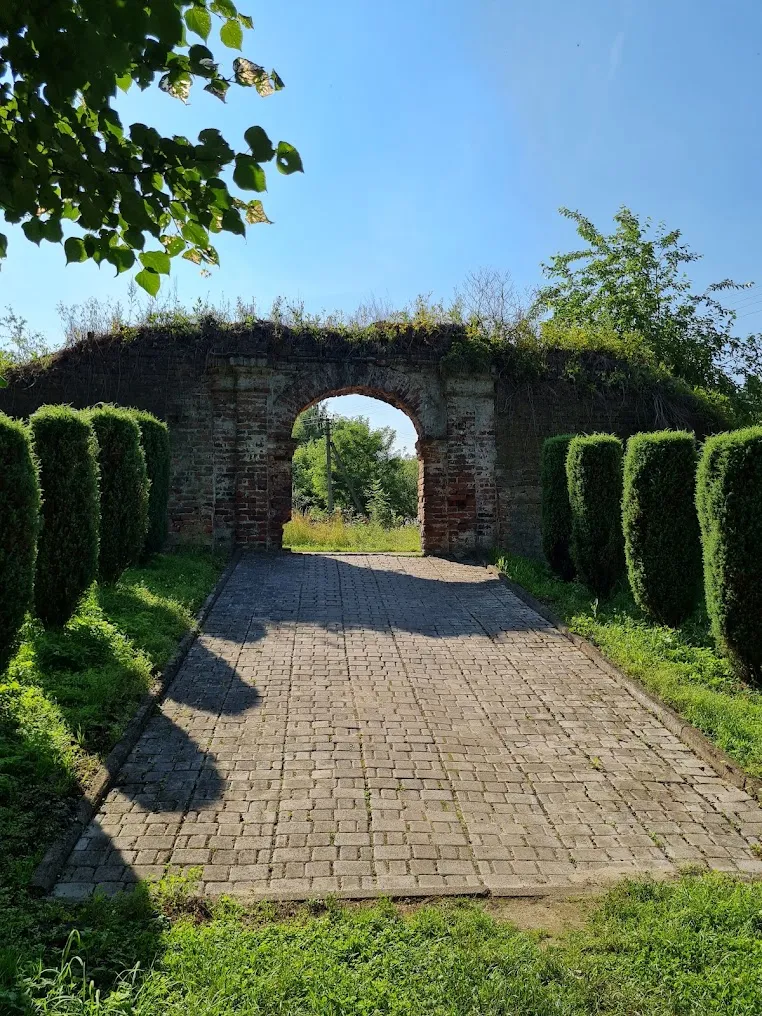
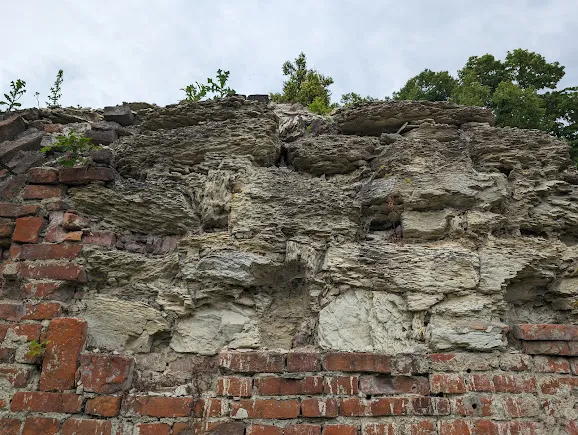
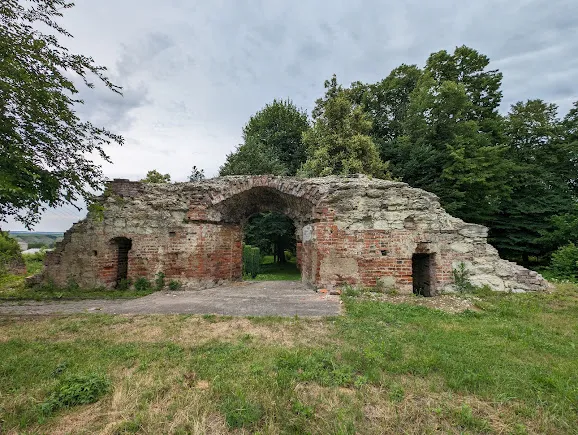
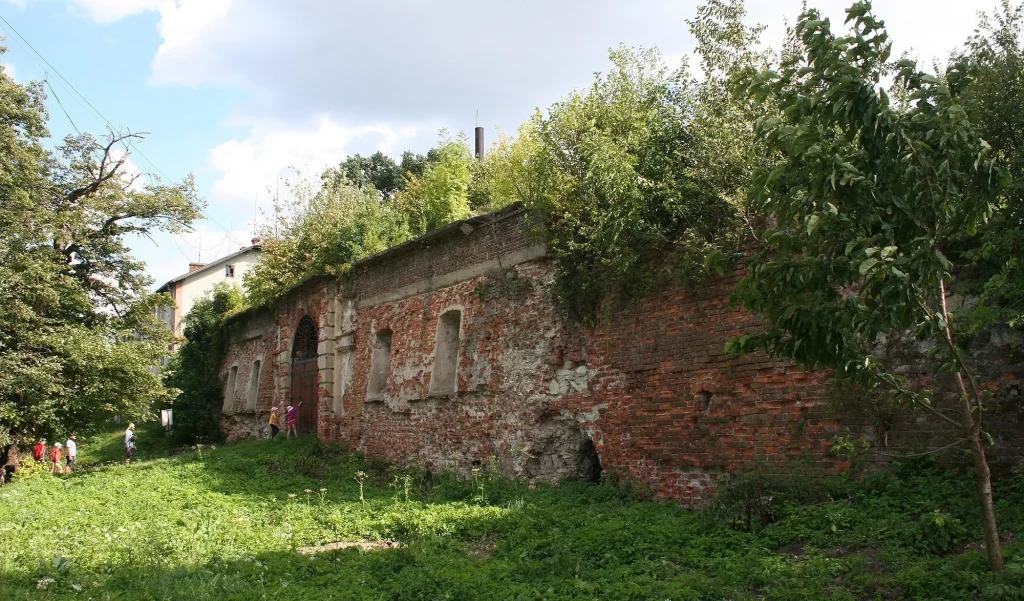
Very little remains of the fortification structures: fragments of towers, gates, and barracks. Part of the defensive structures were dismantled to build a new palace — which survives today and is used as a hospital.
The most valuable survivors from Jabłonowski’s estate are the arboretum and the oak.
What Not to Expect
The castle itself barely exists — only fragments remain. But the arboretum, Petliura’s Oak, and the nearby monastery are real, tangible sites.
What’s Nearby and How to Fit It Into a Route
Mariiampil is in Halych district, about 22 miles (~35 km) from Ivano-Frankivsk.
- Halych (~6 miles / ~10 km) — the ancient capital of the Principality of Halych-Volhynia, with churches from the 12th–14th centuries
- Shevchenkivskyi Hai in Halych (~6 miles / ~10 km) — a burial mound necropolis and the Dormition Church
- Burshtyn (~12 miles / ~20 km)
Practical Information
- Admission: free (ruins and park)
- Arboretum: accessible
- Hospital in the palace: an active facility, not open to visitors
- Monastery-prison: check current status
- Time needed: 30–60 minutes (park, oak, and ruins)
- From Ivano-Frankivsk: ~22 miles (~35 km)
Conclusion
Jabłonowski fought at the Battle of Vienna. He won. He came home with an icon.
He built a castle and named it after that icon.
An oak grew nearby. Six hundred years later, Petliura rested beneath it.
Of the castle, only fragments remain. The oak still stands.