The castle in Bilokrynytsia came to Count Oleksandr Voronin not through inheritance or construction, but through a public auction in 1866 — after the previous owner, Oleksandr Kolonna-Chosnowski, was repressed by Muscovite authorities for taking part in the 1863 Polish uprising and died shortly after. The estate was sold off, and a Russian nobleman from Kursk Governorate, a confidential advisor to the Kyiv governor-general, bought 4,500 desiatinas of land and the castle for 27,000 rubles.
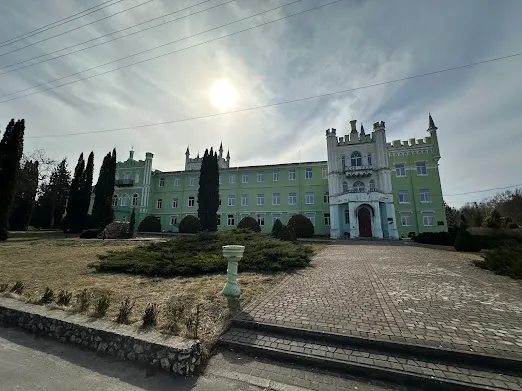
The building itself had already outlived far more than a single change of ownership: a Tatar raid in 1603, several fires, and a century of decline through owner neglect — before it reached Voronin, who restored and expanded it in a Neo-Gothic style, complete with towers and battlements.
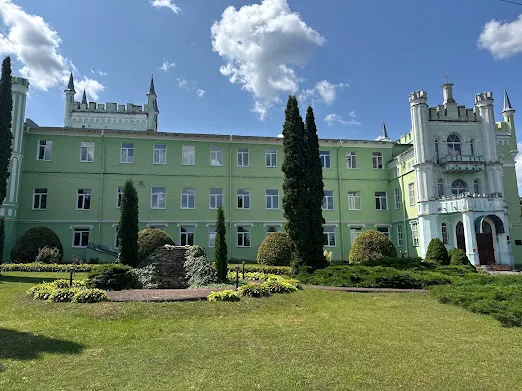
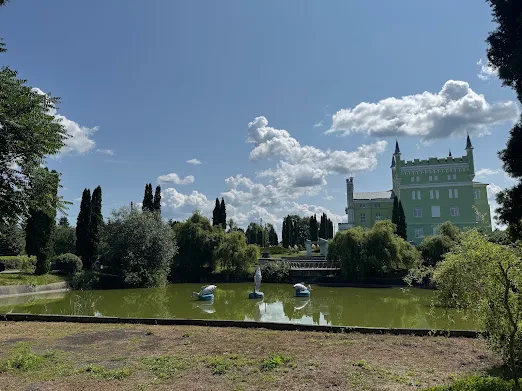
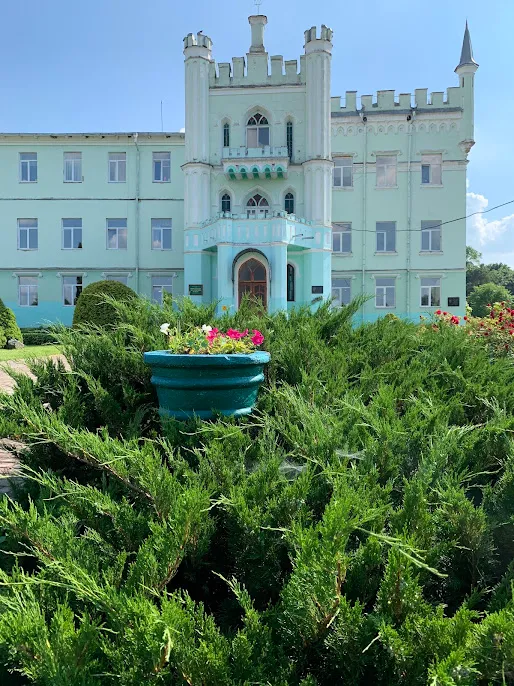
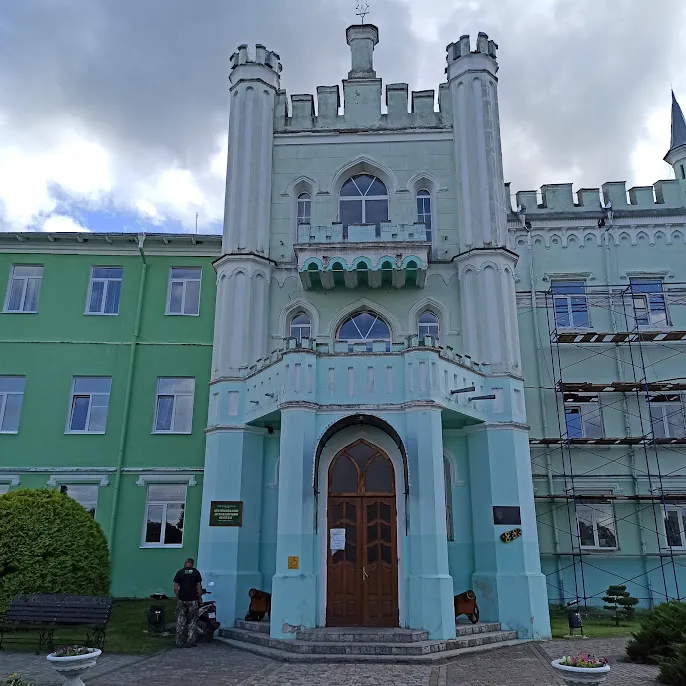
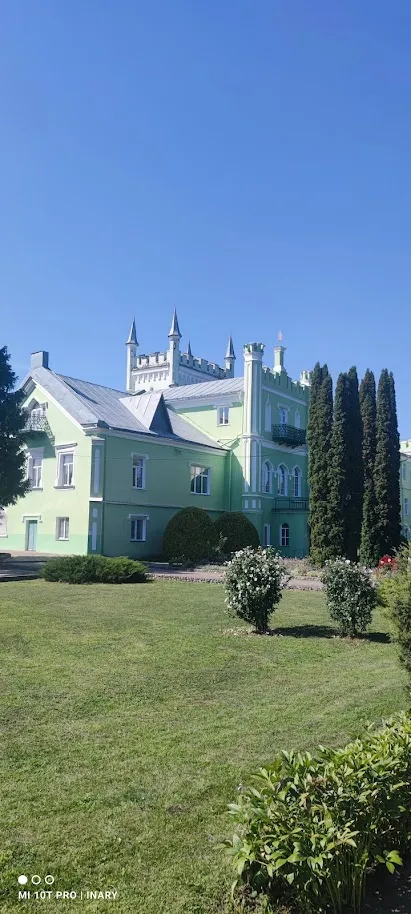
General Information
| What? | Description |
|---|---|
| Name | Voronin Castle (Bilokrynytsia Palace) |
| Address | Bilokrynytsia village, Kremenets Raion, Ternopil Oblast |
| Founded | Castle — 17th century; current appearance — 1866–1890s |
| Commissioned by | Final rebuild commissioned by Count Oleksandr Voronin |
| Form/Towers | Two battlemented towers, a Neo-Gothic entrance gate, remnants of a moat |
| Material | Brick, stone |
| Condition | Fair, building in active use |
| Status | Locally significant architectural landmark |
| Entry | Active educational institution (Kremenets Forestry College) |
The Legacy the Count Left Behind
Dying in 1890, Voronin willed the estate and a substantial sum toward founding an agricultural school for peasant children — a school that operated from 1895 until World War II. I think this final act of philanthropy doesn’t erase how the estate came into his hands in the first place: one owner’s generosity doesn’t make the previous owner’s repression any less real.
The Mazepa Legend
A local tradition holds that the castle survived every catastrophe thanks to the blessing of Hetman Ivan Mazepa. There’s no way to verify this, but the legend’s sheer persistence says something telling about how locals make sense of a building that, by rights, should have vanished back in the 17th century.
What Not to Expect
Don’t expect authentic 17th–18th-century interiors: most of what you see today is Count Voronin’s late-19th-century rebuild, and the original decor was lost during earlier centuries of decline. The castle is an active college, so free access to the interior depends on the school’s schedule.
What to See Nearby and How to Fit It Into a Route
- Kremenets — the raion center, with Mount Bona and its own castle ruins, just a few kilometers from Bilokrynytsia.
- Vyshnivets Palace — roughly 22 miles (~35 km), another major estate in Ternopil Oblast.
- Zbarazh Castle — roughly 28 miles (~45 km), one of the region’s best-known fortresses.
Practical Information
- Entry: limited, since the building is an active college; the adjacent arboretum grounds are more freely accessible
- How to get there: a short drive or minibus ride from Kremenets, just a few kilometers
- Time needed: 1–1.5 hours, including the arboretum
- Special conditions: confirm access in advance, since the building doesn’t operate as a museum
Conclusion
The castle in Bilokrynytsia survived not because of any one owner, but through a chain of chance and other people’s tragedies — from a Tatar raid to the repression of 1863 — and it’s that continuity, not the Mazepa legend, that best explains why the building is still standing.