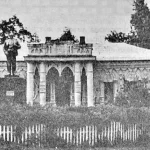
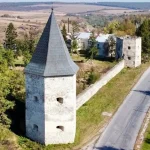
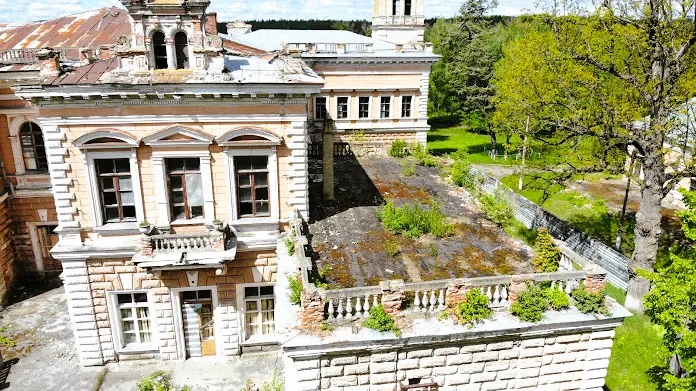
The two-story palace in Kyianytsia, just 10.5 miles (17 km) from the Russian border, survived the 1917 revolution, two world wars, and the entire Soviet period without major losses. In April 2026, it did not survive the Russian-Ukrainian war: shelling completely destroyed the roof and a wing of a building local architects considered one of the finest landmarks in the Sloboda region.
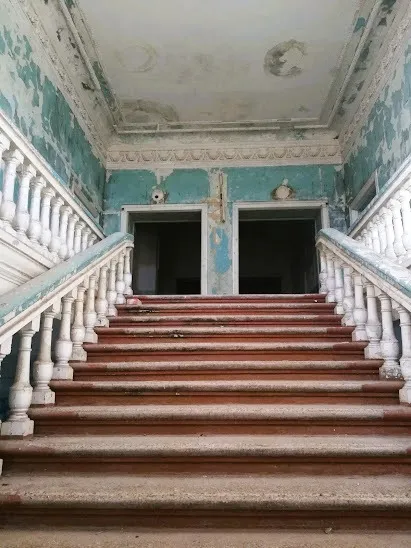
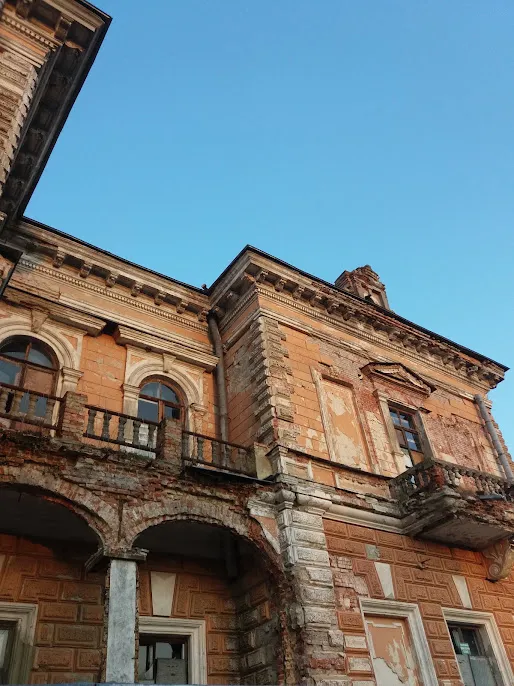
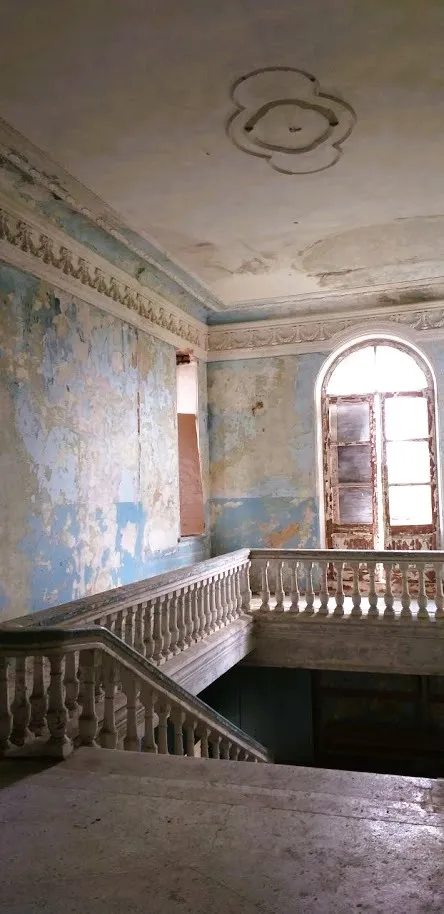
The Neo-Renaissance palace was known for its handmade details: stucco ornamentation, grand staircases, balustrades, window pediments, and rusticated facades — all crafted by hand rather than cast in series. The estate’s park once held over a hundred species of trees and shrubs, and at the start of the 20th century it housed one of the largest private vehicle fleets in Kharkiv Governorate.
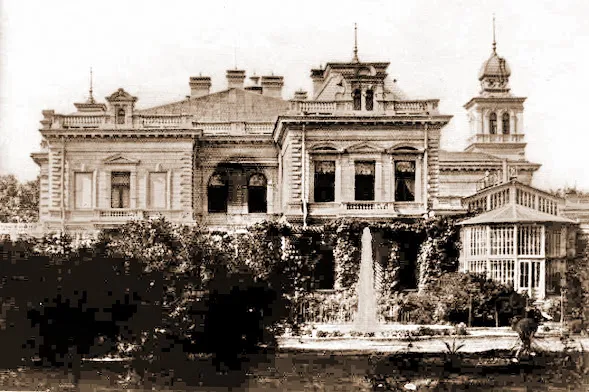
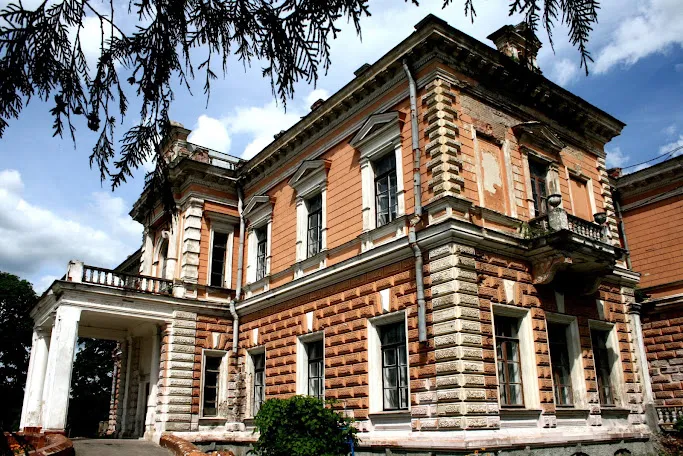
⚠️ Active Frontline Zone
Kyianytsia and the entire Yunakivka hromada sit in a combat zone along the Sumy border: the area has repeatedly come under shelling and partial evacuation, and parts of neighboring villages in the hromada fell into contested “grey zones” during 2025–2026. Visiting is impossible and dangerous. This article is documentary and informational in nature.
General Information
| What? | Description |
|---|---|
| Name | Kharytonenko-Lishchynsky Palace |
| Address | Kyianytsia village, Yunakivka Hromada, Sumy Raion, Sumy Oblast |
| Founded | Late 19th – early 20th century |
| Commissioned by | The Kharytonenko sugar-magnate family; the estate later became linked to the Lishchynsky family |
| Form/Details | Neo-Renaissance, stucco ornamentation, grand staircases, balustrades, window pediments, rustication, facade cornices |
| Material | Brick, handcrafted decorative stucco |
| Condition | Damaged by shelling in April 2026 — roof and one wing destroyed |
| Status | Architectural landmark, at risk of total loss |
| Entry | Inaccessible — active combat zone |
What a Century of Catastrophes Didn’t Destroy
I think the most telling fact about this palace isn’t its architectural style or its early-20th-century car fleet — it’s that the building withstood a revolution, two world wars, and Soviet rule, but couldn’t withstand shelling fired from just a few kilometers away, across the border of the country the shell came from.
What Survived and What Was Lost
Apart from the original staircase, almost none of the palace’s authentic interior decor had survived to the present day — what visitors saw before April 2026 was mostly the facades and park ensemble. Those are exactly the elements the shelling damaged most.
What Not to Expect
Don’t expect to be able to visit, or even safely approach, the estate: this isn’t an abandoned site — it’s an actively shelled area where civilian evacuations are underway. This article documents the landmark in its current, largely destroyed state — not as a tourist destination, but as evidence of what the Russian-Ukrainian war is destroying, including things that survived two world wars.
What to See Nearby and How to Fit It Into a Route
This section is intentionally left blank: the area around Kyianytsia is a combat and evacuation zone, and recommending routes or nearby stops here would be irresponsible and dangerous.
Practical Information
This section is intentionally left blank for the same reason: any practical visitor information would be inappropriate and dangerous in an active combat zone.
Conclusion
The palace in Kyianytsia is a reminder that a landmark’s age or protected status offers no defense against war: a building that withstood more than a century of Ukraine’s catastrophes was damaged now, just kilometers from the border the threat came from.