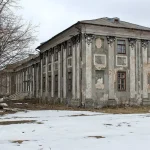
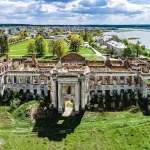
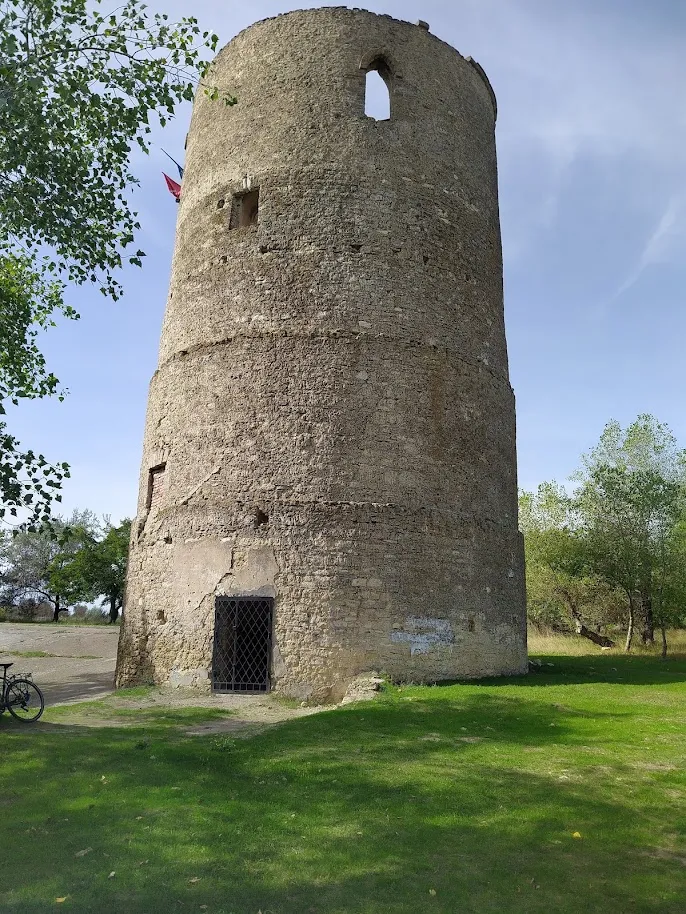
Vytautas’s Tower survived where almost nothing else from the Lithuanian era in southern Ukraine did — not through preservation for history’s sake, but through a practical conversion into a water tower. In the late 19th century, Prince Petro Trubetskoy, owner of the local estate, added a fourth tier to the watchtower and installed a water tank for his winemaking operation — that practical function, not any heritage-protection status, is what kept the structure standing to this day.
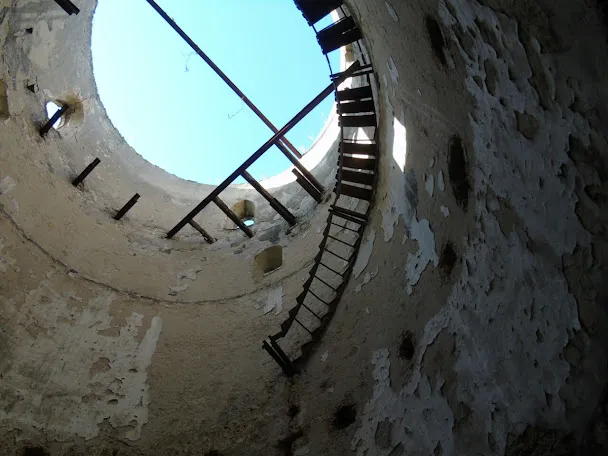
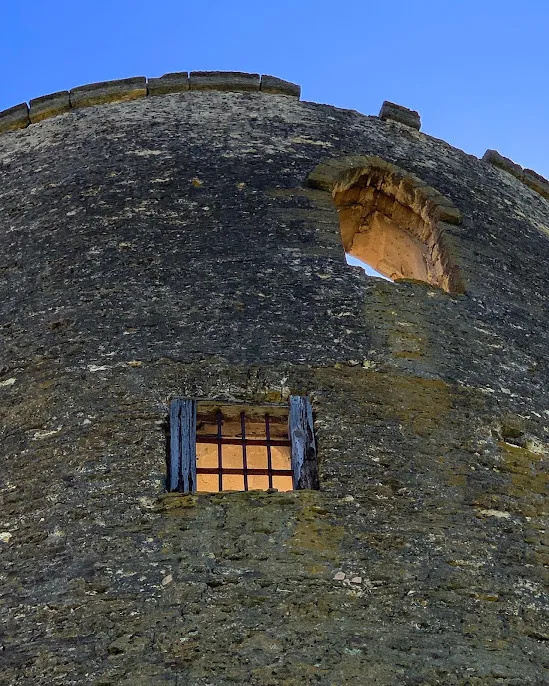
Built in the late 14th century, when the southwestern part of present-day Ukraine was under the rule of Grand Duke Vytautas of Lithuania, the tower served as a watch post overseeing Tavan Island — a major customs point on the Dnipro, now submerged beneath the Kakhovka Reservoir. The round structure, about 66 ft (20 m) tall and built of local limestone, has thicker walls at the base and thinner ones higher up, a typical medieval fortification solution.
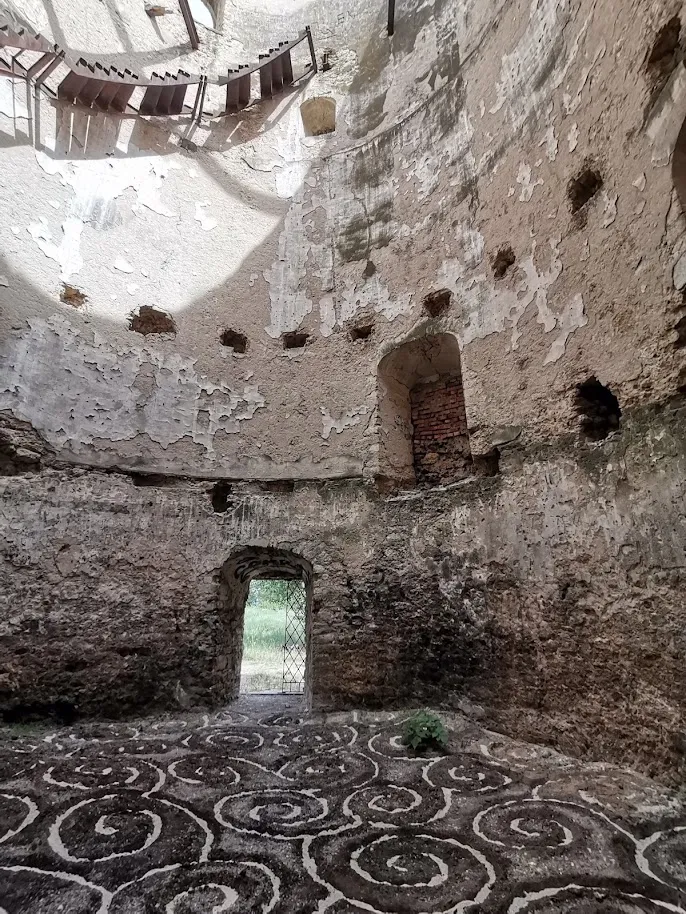
⚠️ Active Frontline Zone
Vesele village in Kherson Oblast, where the tower stands, was under Russian occupation from February 24 to November 11, 2022, and after liberation remains a frontline settlement on the right bank of the Kakhovka Reservoir: of the nearly 2,600 residents who lived there before the war, just over a hundred remain, and infrastructure has been largely destroyed by daily shelling. Visiting is impossible and dangerous. This article is documentary and informational in nature.
General Information
| What? | Description |
|---|---|
| Name | Vytautas’s Tower |
| Address | Vesele village, Nova Kakhovka City Hromada, Kakhovka Raion, Kherson Oblast |
| Founded | Late 14th century |
| Commissioned by | Watchtower of the Grand Duchy of Lithuania era; water-tower conversion by Prince Petro Trubetskoy (late 19th century) |
| Form/Details | Round tower about 66 ft (20 m) tall, walls thicker at the base, thinner higher up |
| Material | Local limestone |
| Condition | Listed as a preserved architectural landmark as of the last known data; current condition unknown due to combat |
| Status | Cultural heritage landmark of national significance |
| Entry | Inaccessible due to active combat and occupation of the opposite left bank |
The Function That Saved the Landmark
I think this tower’s history is a compelling example of how practical use preserves architecture better than official protected status ever could: until the 1880s it was a watch post, then a water tower right up until the Kakhovka hydroelectric station was built in the 1950s, and only after its water tank was removed did it become a purely architectural landmark, with no practical use left.
A Landmark for Cossacks Coming for Salt
Vytautas’s Tower served as an informal landmark for Cossacks traveling to Tavan Island for salt — a detail linking this Lithuanian-era fortification to the much later Cossack period of the same region.
What Not to Expect
Don’t expect current photos or any way to visit: Vesele is a frontline settlement facing daily threats from shelling across the Kakhovka Reservoir from the occupied left bank. This article documents the landmark based on available historical sources, not its current condition, which cannot be safely verified.
Conclusion
Vytautas’s Tower has survived the Lithuanian era, the Cossack period, the construction and destruction of the Kakhovka hydroelectric dam, and the full occupation of its own village — and it remains a landmark whose future, like Vesele’s own, depends on what happens next along the frontline on the opposite bank of the reservoir.