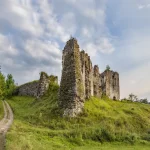
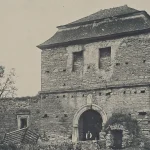
1637. The earliest surviving description of Novozaslavsky Castle: a palace of eleven rooms and six chambers.
The chambers — with windows set in lead and Venetian glass panes.
In the 17th century, on the Volhynian borderlands — Venetian glass in the windows. Not a sign of accessibility, but a sign of who the Zaslavsky family were.
General Information
| What? | Description |
|---|---|
| Name | Novozaslavsky Castle and Sangushko Palace |
| Address | city of Iziaslav, Iziaslav district, Khmelnytska oblast |
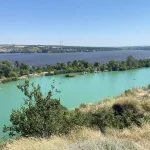
| Location | promontory at the confluence of the Ponora and Horyn rivers |
| First mention | 1579 (Novy Zaslav) |
| Zaslavsky castle | 2nd half of the 16th century |
| 1637 description | gatehouse + palace with 11 rooms + 6 chambers with lead-framed Venetian windows |
| Sangushko Palace | 1754–1770 (for Barbara Sangushkova) |
| 1746 | visited by Polish King August III Friedrich |
| Status | architectural monument; ruins |
Two Towns and a New Castle
Iziaslav stands where the Horyn receives the Ponora. In the 16th century there were two towns on opposite banks:
- Old Zaslav (and the Old Zaslavsky Castle — a separate article) — on the right bank
- New Zaslav — on the left, founded by princes Janusch and Mykhailo Zaslavsky around 1579
New Zaslav developed rapidly: within a few years it received Magdeburg rights. Simultaneously the Zaslavskys built a new castle on the promontory — a strategically superior position with more modern fortifications.
1637: A Description With Windows
The earliest preserved description: 1637. The castle consists of a masonry gatehouse and a palace with 11 rooms and 6 chambers with lead-framed windows and Venetian glass panes.
In the second half of the 17th century New Zaslav fell into decay and “appeared to be a wasteland without upkeep.”
The Sangushkos and the Revival
18th century — the Sangushko family undertook the revival.
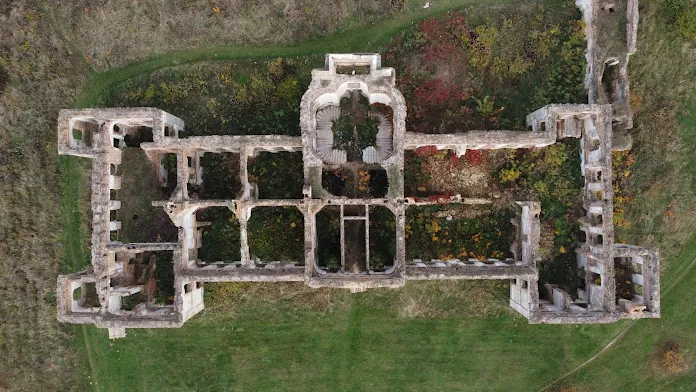
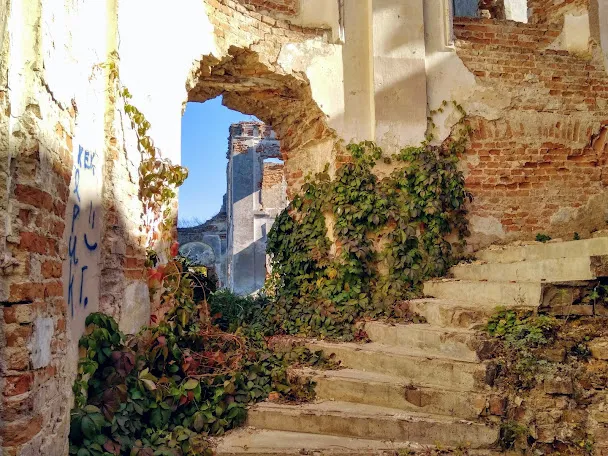
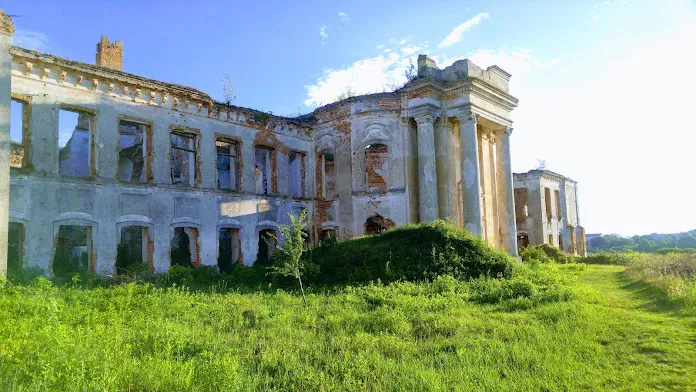
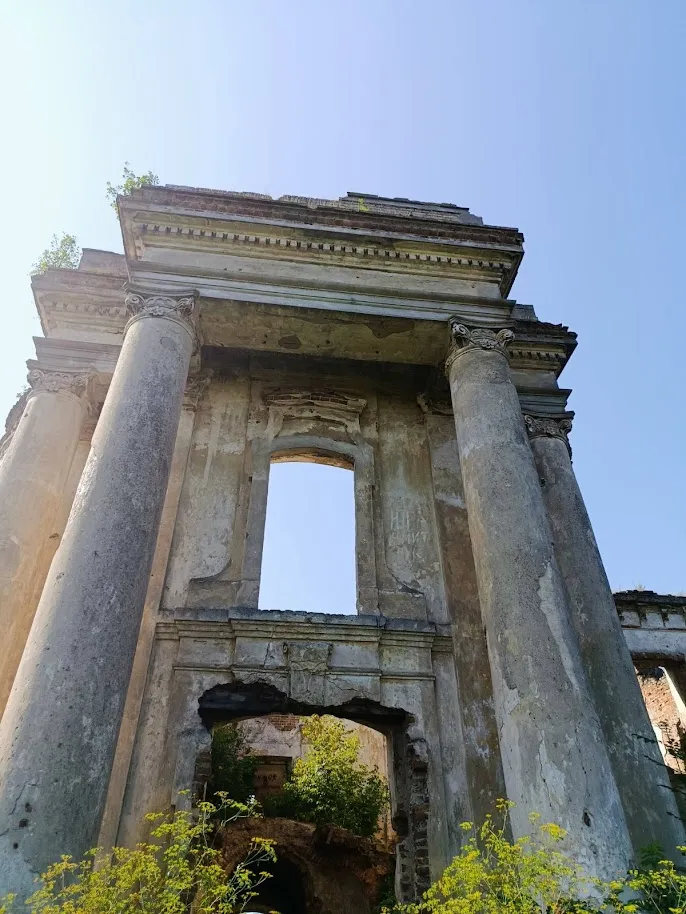
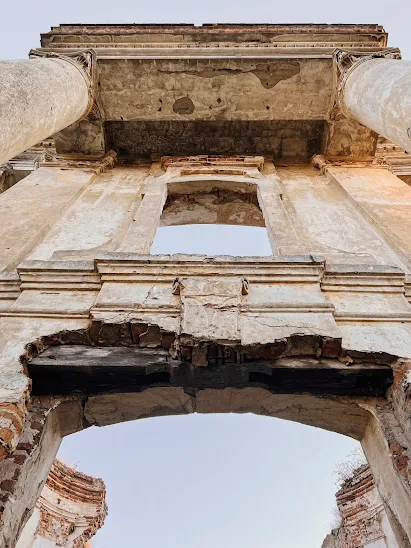
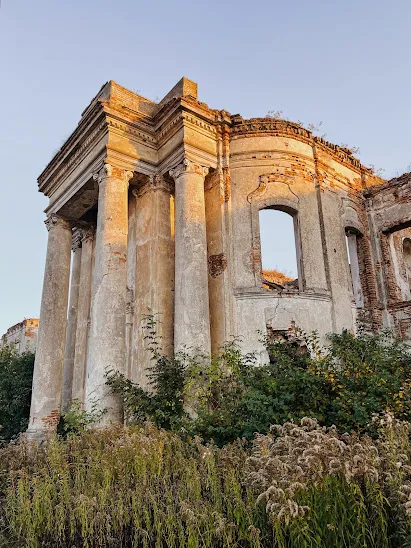
Reconstruction was led first by Prince Pavlo Karl Sangushko, then his descendants. In 1754–1770 a Baroque palace for Princess Barbara Sangushkova was built as a private residence and administrative centre for the family’s Volhynian estates.
The palace: the ground floor for the family’s private use; the second floor representational. Inside — an oval vestibule with monumental stairs leading up to the reception halls.
1746 — while the palace was still under construction — Polish King August III Friedrich visited New Zaslav.
Napoleon Orda painted the castle complex for his album.
1852 and Decline
1852 — the Sangushkos removed their valuables from the castle. Gradual decline followed.
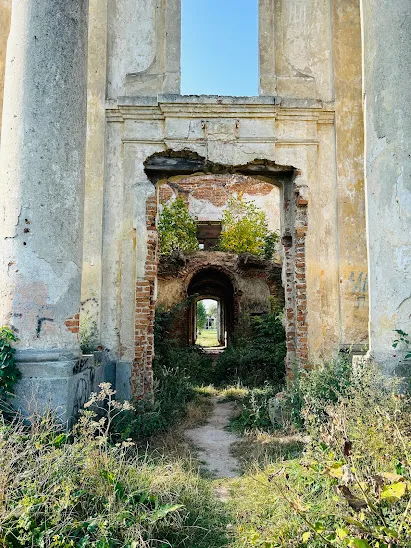
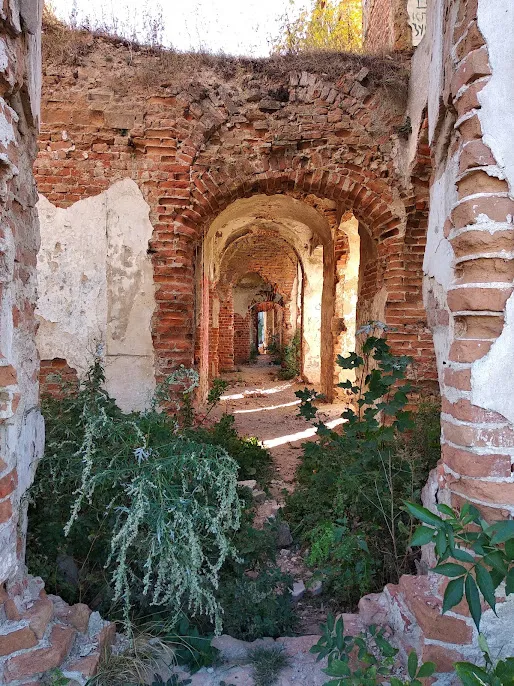
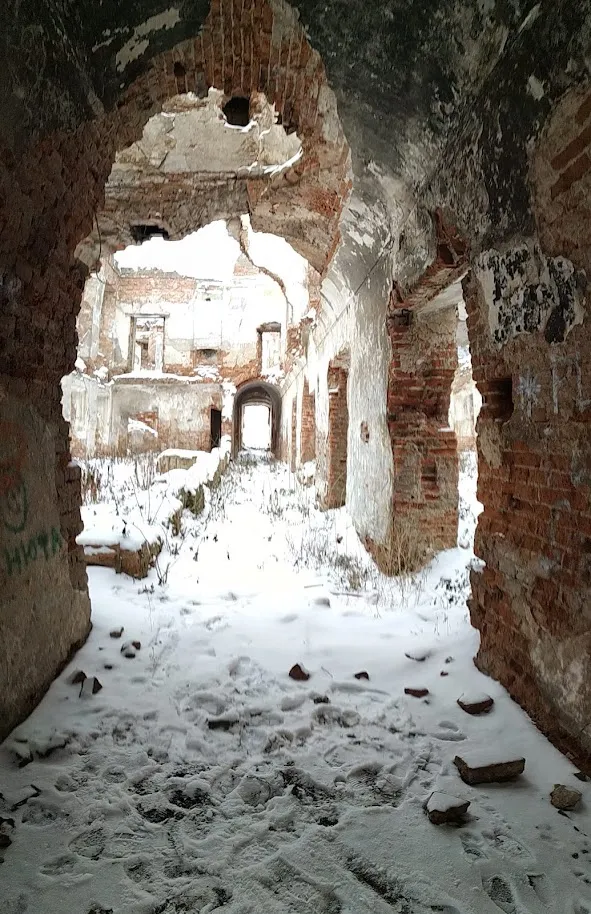
Today — ruins of the complex.
Practical Information
- Entry: free (ruins)
- Condition: ruins of the palace complex
- Time on site: 20–40 minutes
- From Khmelnytskyi: ~60 miles (~100 km)
Conclusion
The Zaslavskys founded the town and castle in 1579.
In 1637 — windows in lead with Venetian glass.
Then decline. Then the Sangushkos, a baroque palace, a Polish king.
Then the valuables were removed — and ruins again.
Napoleon Orda painted it. It looked better then.