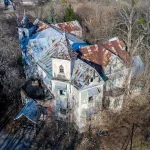
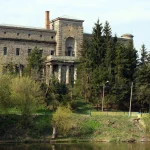
Cannonballs from an 1854 bombardment by an Anglo-French squadron are still lodged in the walls of the Vorontsov Palace in Odesa — a physical trace of the Crimean War that no one has removed in more than a century and a half. That’s not the only war this building has survived: according to city officials, the palace has been shelled three times — during the Crimean War, World War II, and again in 2022 during Russia’s full-scale invasion.
When Count Mykhailo Vorontsov learned of the 1854 bombardment, his first order wasn’t to save the architecture — it was to save the rare book collection housed in the palace, a detail that reveals what he considered most valuable in his own home better than any description of the facade could. The palace was designed by architect Francesco Boffo, the same man who created the famous Potemkin Stairs.
General Information
| What? | Description |
|---|---|
| Name | Vorontsov Palace |
| Address | Prymorskyi Boulevard, Odesa |
| Founded | 1826–1828 |
| Commissioned by | Count Mykhailo Vorontsov, governor-general of Novorossiya |
| Architect | Francesco Boffo |
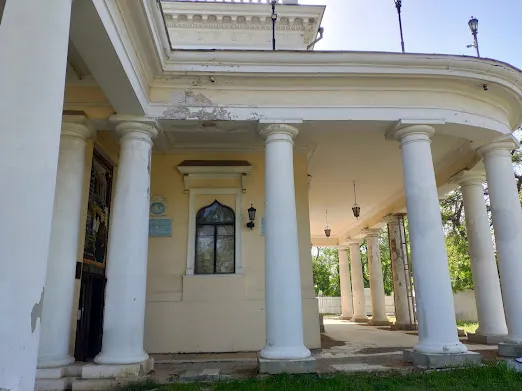
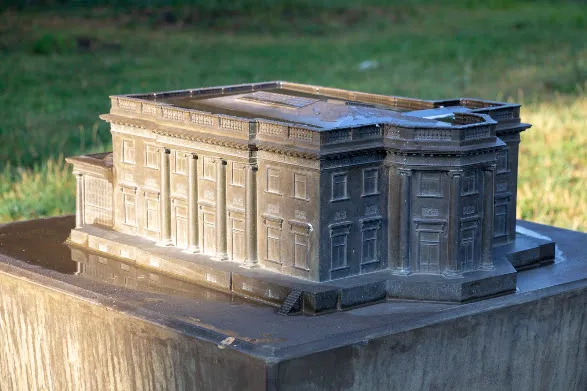
| Style | Classicism with Moorish-style elements |
| Material | Stone |
| Condition | Damaged during shelling in 2022; restoration paused due to the war |
| Status | 19th-century architectural landmark |
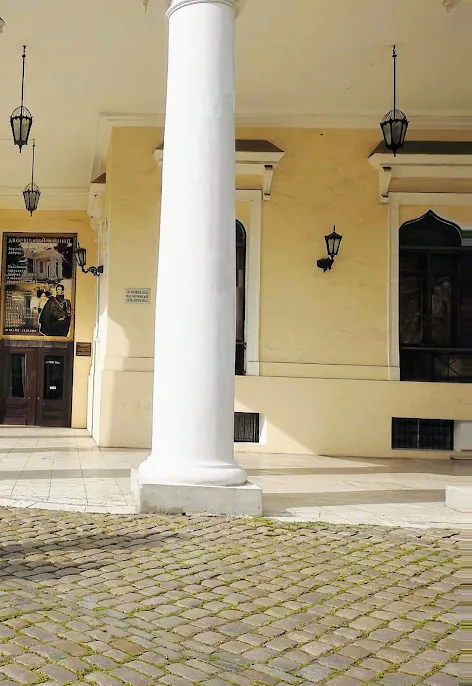
| Entry | Partially active institution (Palace of Creativity for Children and Youth) |
From a Governor-General’s Residence to a Palace of Pioneers
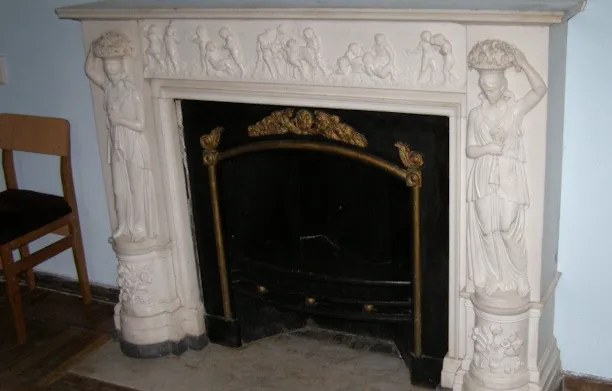
I think the most telling part of this palace’s story isn’t the Crimean War or the Moorish ornamentation — it’s 1936, when the Soviet Council of People’s Commissars ordered the halls of this former aristocratic residence turned into a Palace of Pioneers: the first New Year’s celebration for Odesa’s children in the Ballroom symbolized the palace’s shift from imperial luxury to Soviet pedagogy. That educational function partly continues today.
Losses That Can’t Be Undone
During World War II, the mothballed complex suffered heavy losses — the Orlovsky building, which housed the technical department, was leveled entirely. Part of the prewar decor was lost forever, even after postwar restoration efforts.
What Not to Expect
Don’t expect a completed restoration: research and documentation for restoring the palace were carried out, but the war interrupted funding — money now goes toward emergency stabilization and housing reconstruction rather than large-scale restoration projects. Some of the prewar decor visitors see is a modern imitation, not original.
What to See Nearby and How to Fit It Into a Route
- The Potemkin Stairs — by the same architect, a few minutes’ walk along the boulevard.
- The Odesa Opera House — the city’s main architectural landmark, nearby.
- The Sea Terminal — the endpoint of a boulevard walk from Prymorska Street.
Practical Information
- Entry: part of the complex operates as an educational institution; access to certain areas may be limited
- How to get there: on foot along Prymorskyi Boulevard from central Odesa
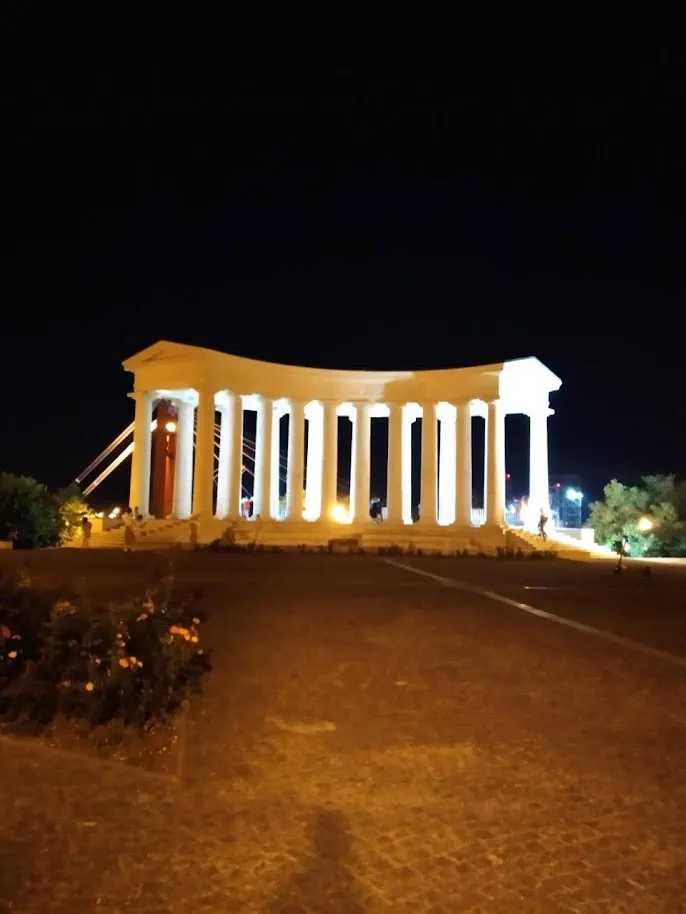
- Time needed: 30–45 minutes, viewing the exterior and colonnade
- Special conditions: be mindful of wartime rules and possible access restrictions during air raid alerts
Conclusion
The Vorontsov Palace is a landmark carrying physical traces of three different wars on its walls, and each one left something behind that can never be restored back to the way it looked on its first day in 1828.