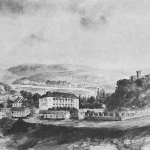
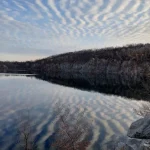
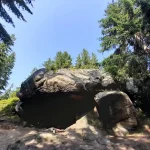
In the south of Odesa Oblast, where the steppe breaks off above the water, lie the remains of a city more than two and a half thousand years old.
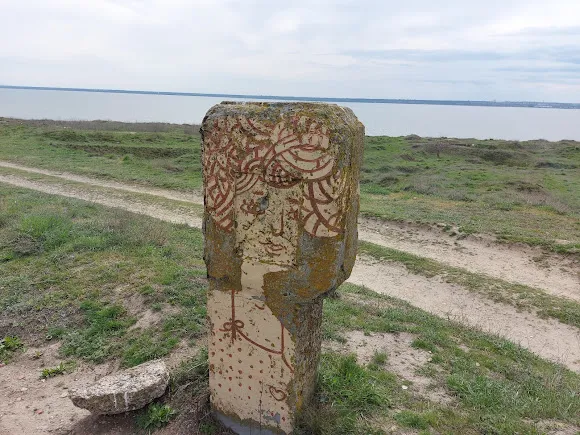
Nikonion has no walls, columns, or visitor pavilions. What it has is hills, grass, wind, and a bluff above the estuary. But it was here, in the 6th century BC, that Ionian Greeks founded a polis — with quarters, streets, defensive walls, and a market of its own.
Most of the city already lies underwater. What’s left is in front of you.
General Information
| What? | Description |
|---|---|
| Name | Nikonion hillfort (Ancient Greek: Νικώνιον; Latin: Niconium) |
| Location | Roksolany village, Ovidiopol district, Odesa Oblast |
| Type of site | archaeological monument, ancient Greek city |
| Founded | last third of the 6th century BC |
| End of habitation | 4th century AD (with a gap in the 3rd–1st centuries BC) |
| Site area | just over 7 acres (3 ha) (surviving portion) |
| Status | archaeological monument of national significance (Cabinet of Ministers of Ukraine Resolution No. 1761, dated December 27, 2001) |
How Nikonion Came to Be
The city was founded by settlers from Ionia, the Greek region on the coast of present-day Turkey. Ionians were the ones who, in the 6th–5th centuries BC, actively colonized the entire northern Black Sea coast — Olbia, Tyras, Chersonesus. Nikonion became one of these outposts: a small polis on the border between the Greek and Scythian worlds.
The city’s name most likely comes from its oikist — the founder of the colony. Sources don’t record who exactly that was.
The city’s peak came in the second half of the 5th to the 4th century BC. That’s when the defensive structures were built, and the city traded with Ionia, Attica, the Greek islands, and neighboring Black Sea centers — Istria and Olbia. Its residents grew wheat, barley, and millet, and kept vineyards and livestock.
Destruction, Revival, and the End
Around the last third of the 4th century BC, the city was attacked. Most researchers link this destruction to the campaign of Zopyrion — a general of Alexander the Great who marched against the Scythians. The city didn’t disappear at once: it was rebuilt after the destruction, but its decline continued. In the 2nd–1st centuries BC, Galatian and other barbarian raids effectively ended the classical polis.
In the 1st–4th centuries AD, a settlement was revived on the same site — larger in area, but far less studied by archaeologists.
What Survives Today
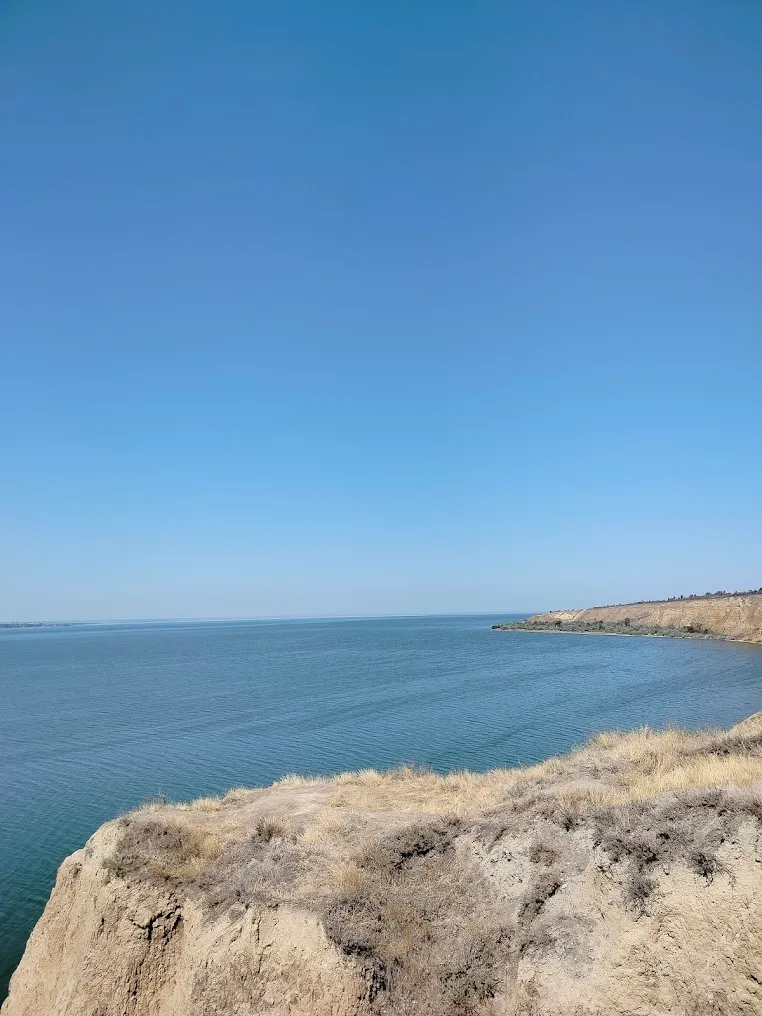
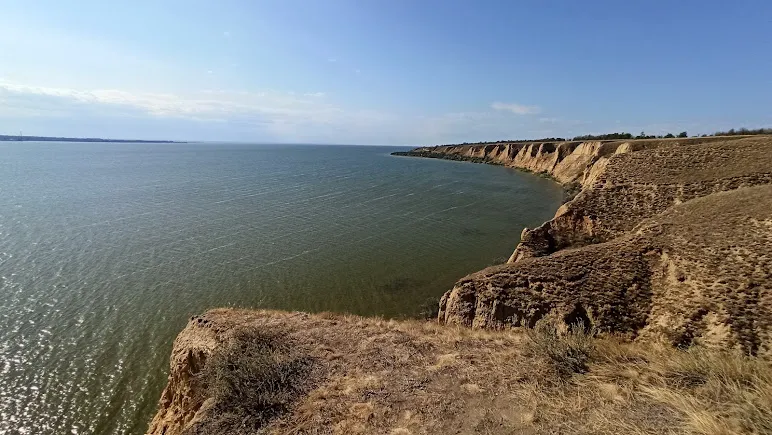
A large part of Nikonion has already been destroyed by coastal erosion: the estuary has been eating away at the bluff for millennia, and the city’s lower terraces have gone under water. Only the upper terrace remains.
Excavations have uncovered:
- remnants of a defensive wall that surrounded the city from the north, east, and south;
- foundations of dwellings — initially dugouts, and from the 5th–4th centuries BC, above-ground houses of Greek type but with cellars;
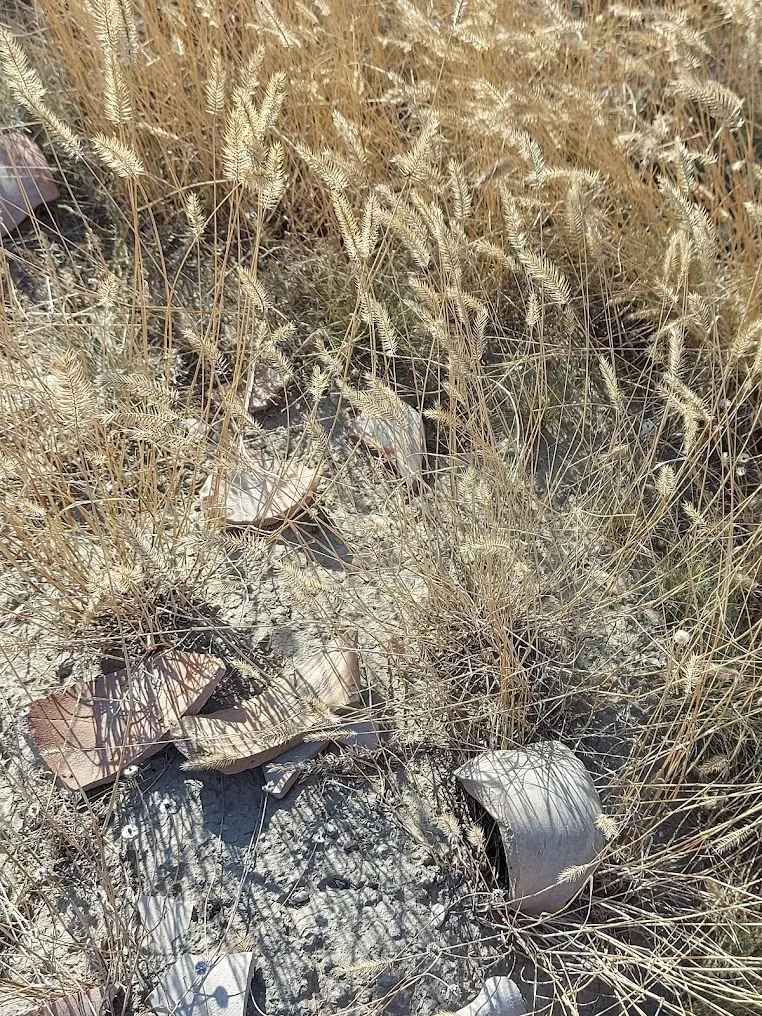
- a street about 11 ft (3.5 m) wide, paved with river pebbles and pottery fragments, found in the southwestern part of the site;
- citizens’ land plots ranging from roughly 2.5 to 11 acres (1–4.6 ha) east of the city (based on aerial survey data).
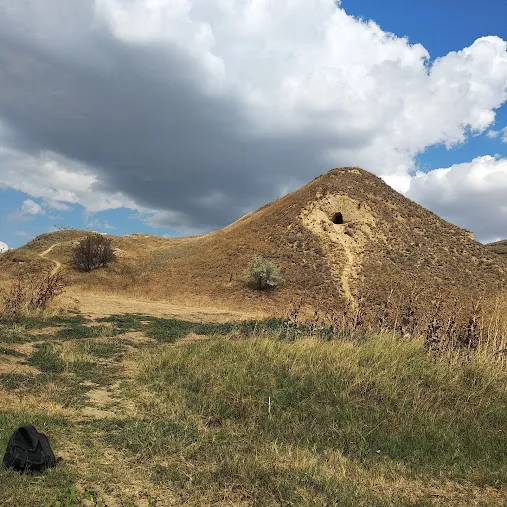
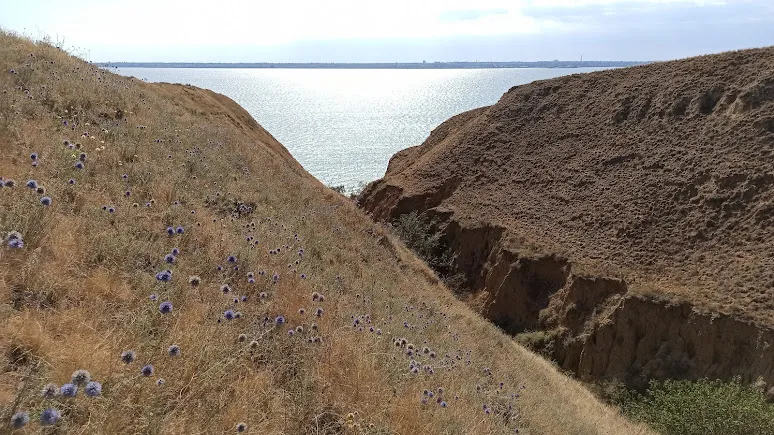
Without context, the site looks modest: hills, grass, a bluff. But once you know that a street ran here and a wall once stood — the landscape starts to read differently.
Artifacts in the Museum
The most famous find from Nikonion is the marble bull, now held at the Odesa Archaeological Museum. That museum still conducts excavations here — its expedition works the site regularly. If you’re planning a trip to Roksolany, it’s worth stopping at the Odesa Archaeological Museum (4 Lanzheronivska St.) before or after — you can see finds from Nikonion there in the context of the wider ancient Black Sea world.
The Feel of the Place
Almost no legends have grown up around Nikonion. Maybe because it didn’t vanish suddenly, but slowly — as slowly as the estuary eats away at the bluff.
There’s no mystical effect here. There’s something else: a sense of the scale of time that’s hard to get in a museum. You’re standing on the same shore where, 2,500 years ago, someone was unloading amphorae of wine. The sky and the water are the same ones.
What to See Nearby and How to Combine the Trip
Besides the site itself, Roksolany has striking scenery: a steep estuary shoreline, cormorant colonies, wild beaches. That alone is worth the stop.
The trip pairs well with Bilhorod-Dnistrovskyi (Akkerman Fortress, ~25 miles/~40 km to the west) or Shabo (a winery, ~28 miles/~45 km away). The “Dniester Panoramas of Ukraine” route covers exactly this region — Nikonion fits naturally into it as a starting point.
The “Ancient Sites of Ukraine for Road Trips” route is another obvious fit for this location.
Little-Known Details
- Nikonion most likely belonged to the Delian League in the 5th century BC — meaning it paid tribute to Athens and was part of a larger Mediterranean-wide system.
- Coins that circulated in the city bear the name of the Scythian king Skyles, a ruler known for secretly living by Greek customs. Nikonion appears to have been one of the places where the Greek and Scythian worlds literally overlapped in everyday life.
- The site’s discovery in the 1840s caused a “minor sensation” among local historians of the time — and excavations here haven’t stopped since.
- The surviving portion of the site covers just over 7 acres (3 ha). For comparison, that’s less than four football fields. The city was small even by ancient standards.
Practical Information
- Admission: free, open around the clock
- Facilities: none — bring water, food, and sun protection
- Mobile signal: available, but unstable on the bluff
- Time needed: 1–2 hours (the site plus the estuary shore)
When to Go
The best seasons are May–June and September. In July–August the shore gets hot and windy, and bright sunlight makes it harder to make out the remains. After rain, the ground on the bluff turns slippery — stay clear of the edge.
How to Get There
Roksolany is in Ovidiopol district, about 19–22 miles (30–35 km) from Odesa (not 31 miles/50 km, as is sometimes claimed).
- From Odesa: take the road toward Ovidiopol, then continue either through Ovidiopol or directly via rural roads to Roksolany. GPS navigation handles it reliably.
- The last stretch is a mix of paved road and dirt sections. A regular car can manage it in dry weather.
- Park on higher ground, away from the edge of the bluff — the soil there is unstable.
Conclusion
Nikonion isn’t an attraction or a spectacle. It’s a place for those interested not in a “backdrop of antiquity” but in the plain fact that a city once stood here, on this bluff above the estuary. People were born and died here, traded, fought wars, rebuilt after destruction — and eventually vanished along with the shoreline itself.
If you’re already heading this way — toward Bilhorod-Dnistrovskyi or Akkerman — it’s worth stopping here. Even for an hour.