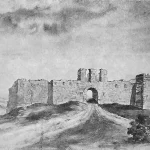
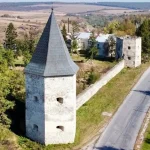
The castle’s founder named it “Korab” (Ship). A rectangular structure amid ponds and marshes — and there is indeed something ship-like about this image: a fortress in the midst of a watery expanse.
In 1675, the Turkish-Tatar army approached Pomoryany. The garrison assessed the situation — and exited through an underground passage into the forest. Without a fight. They simply left.
The castle was ransacked. The owner — Jan III Sobieski, King of Poland — spent 25,000 gold coins on its reconstruction. Pomorany was one of his favorite residences.
General Information
| What? | Description |
|---|---|
| Name | Pomoryany Castle (“The Ship”) |
| Address | Bohuna Street, Pomoryany, Zolochiv District, Lviv Oblast |
| The First Castle | 1340–1350 (Mykola Svynka, wooden) |
| Stone Castle | Second half of the 16th century (Jan of Senna) |
| Form | rectangle, corner towers, inner courtyard |
| Defense | ditches filled with water on three sides, ponds, swamps |
| Jan III Sobieski | favorite residence; 25,000 gold coins for reconstruction |
| 1918 | the proclamation of the West Ukrainian People’s Republic at the castle |
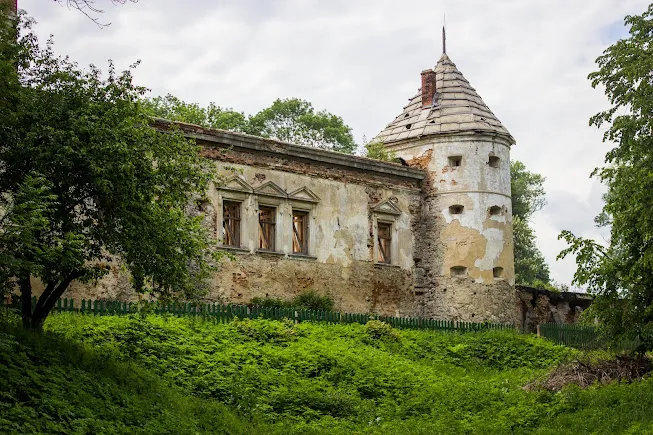
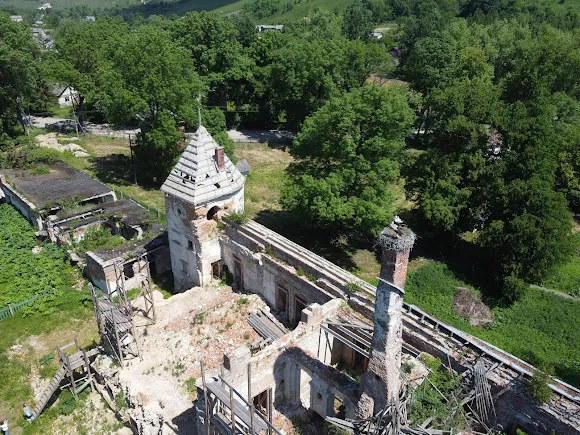
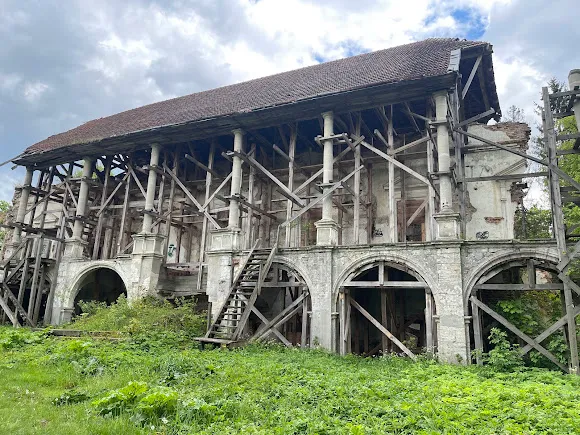
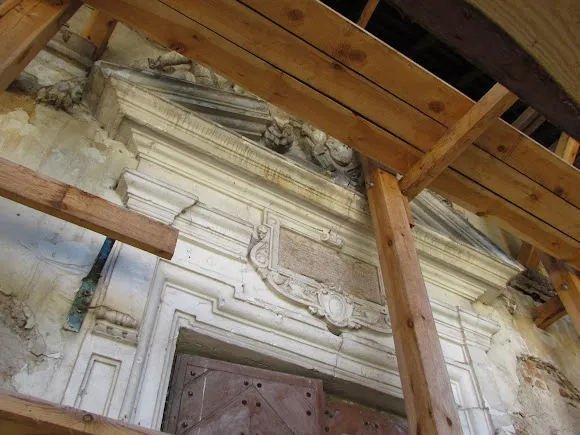
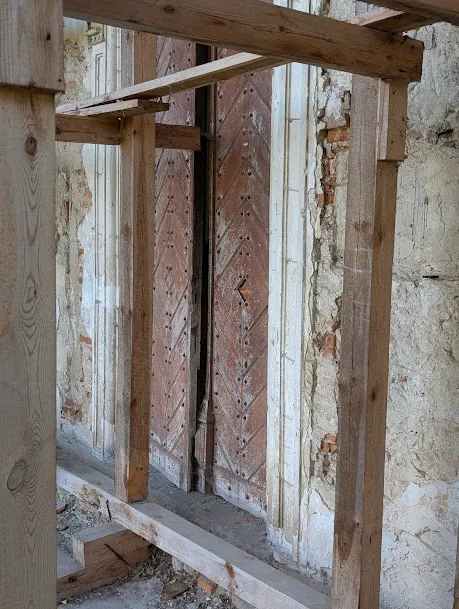
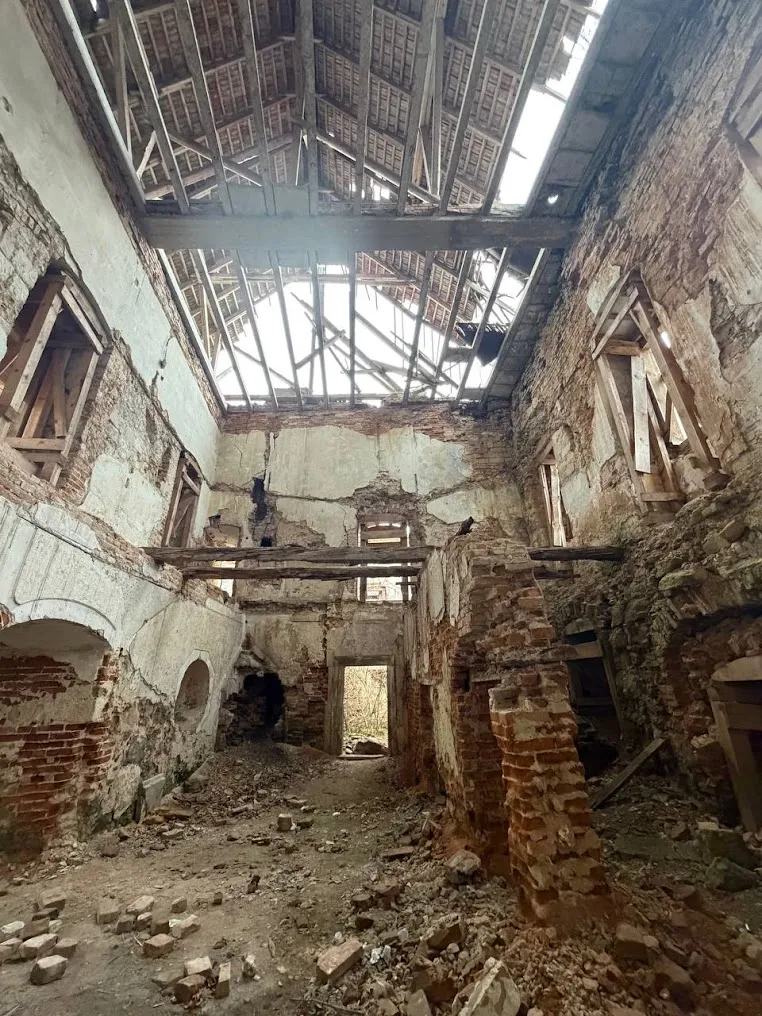
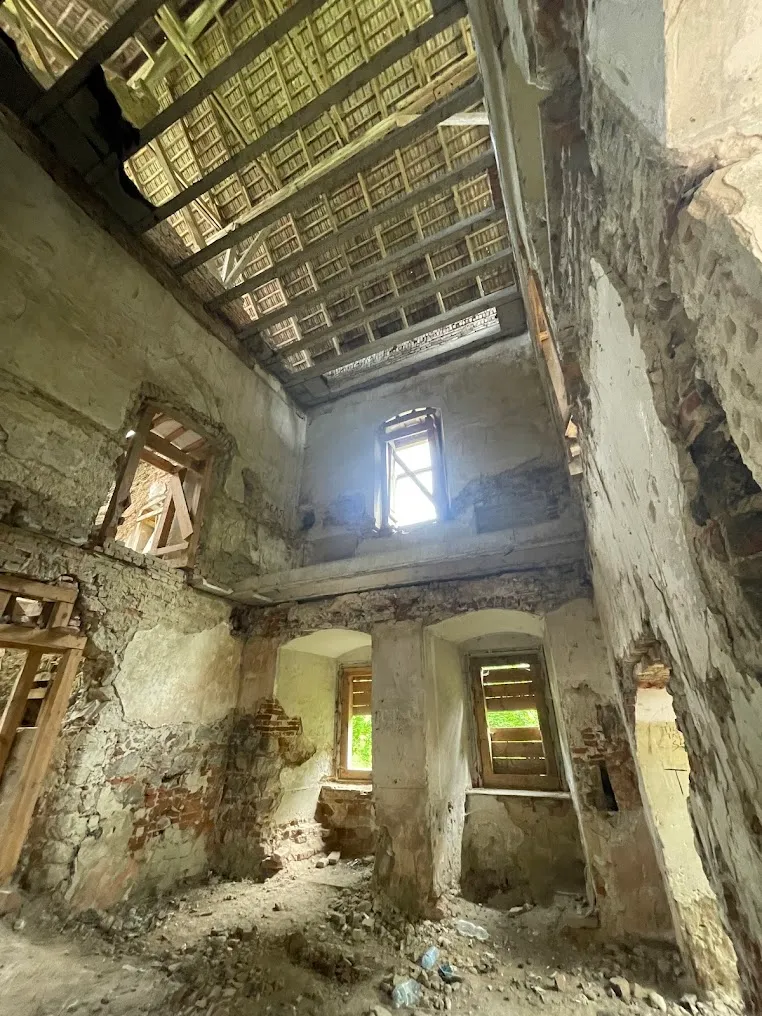
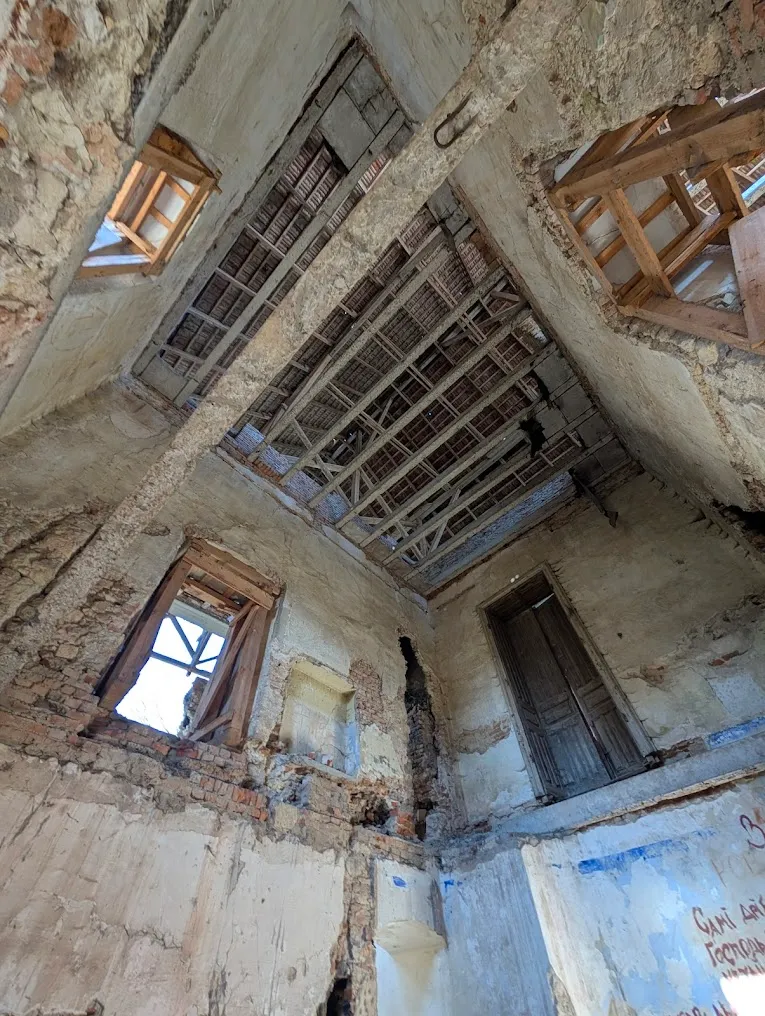
| Condition | two buildings and a round tower, in a state of disrepair |
| Status | architectural landmark of national significance |
From the Svynkas to the Senyavskys: Seventy Owners Over Six Centuries
1340–1350 — The nobleman Mykola Svynka builds the first wooden castle. In a document from 1497, he is still listed as the “heir and owner of the village and castle of Pomoryan.”
1462 — the castle passes to the Kerdeys. Their descendant, Sigismund Kerdey, dies defending against a Tatar attack in 1498. He was killed in battle while defending his own castle.
2nd half of the 16th century — Jan of Senna, Voivode of Podolia, builds a stone castle on the site of the wooden one. The very same one that stands to this day.
Later: the Senyavski family (the same ones who held Medzhybizh for 200 years), Jan III Sobieski, the Rzhevski family, the Prusinski family, the Potocki family, and the Soviet authorities.
Tactics of 1675: An Underground Passage Instead of a Defense
1672 — The Turks captured Zolochiv Castle. Pomoryany held out.
1675 — The Turkish-Tatar army was advancing on Lviv. It approached Pomoryany.
The garrison assessed the situation — and, using an underground passage, made its way to the forest, retreating to Svirzh Castle. The castle was abandoned without a fight.
The Turks ravaged the fortress.
Jan III Sobieski immediately rebuilt the castle for 25,000 gold pieces — and significantly strengthened the fortifications. Pomoryany became one of his favorite residences. The castle withstood all Tatar attacks from 1687 to 1695 — now with Sobieski’s fortifications.
The tactics of 1675, though shameful, proved practical: the castle survived, the garrison survived. Sobieski returned and rebuilt it.
November 1, 1918: The West Ukrainian People’s Republic
The most unexpected chapter in the castle’s history.
On the night of November 1, 1918, Pomoryany became one of the first towns where Ukrainian soldiers disarmed the Austrian garrison. The West Ukrainian People’s Republic (ZUNR) was proclaimed in the castle.
A few weeks later, Polish forces captured the city. The ZUNR lasted about a year.
But the first night — from Pomoryany Castle.
The Soviet Era and the Current State
After 1945, Pomoryany became the district center. The Soviet authorities “took over” the castle: first the district committee of the Communist Party, then various government agencies. The interiors were destroyed.
Today — two two-story buildings and a round corner tower. The south building houses an open gallery. The condition is critical: “horrible,” according to the Great Ukrainian Encyclopedia description.
Surrounding it is a neglected park.
What Not to Expect
The state of disrepair is no exaggeration. An exterior inspection is relatively safe. Entering the buildings is dangerous.
The castle is in need of major restoration. Enthusiasts have been trying to draw attention to it for decades.
How to include in your itinerary
Pomoryany — 30 km from Zolochiv, Zolochiv District.
- Zolochiv Castle (~30 km) — well-restored
- Olesko Castle (~40 km) — birthplace of Jan III Sobieski
- Pidhirtsi (~35 km) — the most beautiful Renaissance castle
Jan III Sobieski — a figure who connects Olesko (where he was born), Pidhirtsi (owner after the Konetspolskys), Pomoryany (favorite residence), and Zolochiv (through his wife). If you’re planning a “Sobieski Route,” Pomoryany is a must-see.
It fits into the “Golden Horseshoe of Lviv Region” route as an extended version of the horseshoe.
Practical Information
- Admission: Free
- Condition: Disrepair; exterior viewing only
- Viewing time: 20–40 minutes
- From Zolochiv: ~30 km
- From Lviv: ~80 km via Highway E50
Conclusion
They called it “The Ship.” The garrison retreated through an underground passage. Sobieski spent 25,000 and returned.
Then came the ZUNR for one November night.
Then came the district committee.
Two walls remain standing. The gallery is open.