1673. The Turks held Zvanets Castle. The Polish king Jan III Sobieski — the same man who was born at Olesko Castle — came to take it back.
He took it back. But in doing so destroyed the fortifications — so the Turks could not use them again.
1684. The same pattern: Sobieski recaptures Zvanets from the Turks. Destroys it again.
A castle that had survived several sieges was ultimately destroyed by its own king — twice. Not out of hostility, but out of tactical necessity.
General Information
| What? | Description |
|---|---|
| Name | Zvanets Castle |
| Address | village of Zvanets, Kamianets-Podilskyi district, Khmelnytska oblast |
| Location | left bank of the Dniester, promontory at the confluence of the Zvanets river, the Zhvanchyk river and the Vilshanka stream |
| Distance from Kamianets | ~6 miles (~9 km) |
| First fortifications | 15th century |
| Form | pentagonal, 6 towers (17th century) |
| Key event | Zvanets Siege 1653 — Khmelnytsky vs. the Polish army |
| Destroyed by | Jan III Sobieski in 1673 and 1684 (while liberating from the Turks) |
| Status | national architectural monument; ruins |
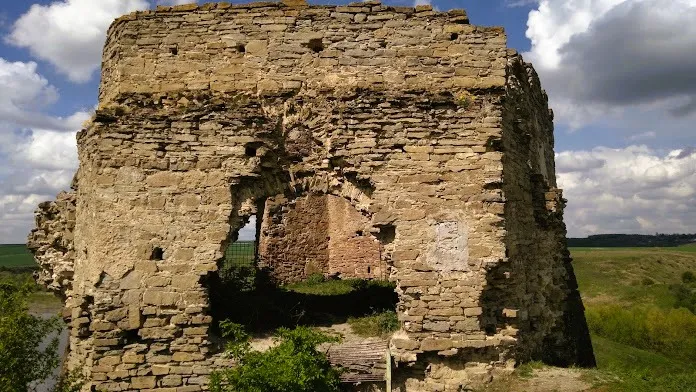
| What survives | one pentagonal tower |
The Site and Its Logic
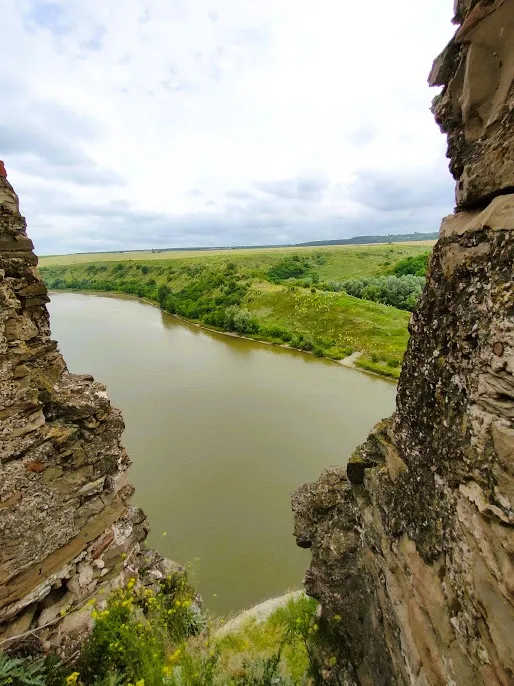
Zvanets is a cliff above the Dniester — more precisely, above the point where the Zvanets river (Zhvanchyk) and the Vilshanka stream flow into the Dniester. Three waterways, three natural lines of defence. This is where the castle grew.
In the medieval period Zvanets was a major strategic strongpoint: between Kamianets-Podilskyi (~6 miles / ~9 km) and Khotyn (~19 miles / ~30 km). Whoever held this cliff controlled the corridor along the Dniester.
In its time the castle rivalled the Kamianets-Podilska Fortress in scale.
The Pentagon and Six Towers
15th century — first fortifications. Possibly only one stone tower at the outset — the northern one.
16th century — the castle rebuilt as a pentagonal fortress.
17th century — stone-and-earthen ramparts and massive walls added. The fortress now has six towers. The owner is Valentiy Kalynovsky, the Crown Hetman — and he lives here in person.
1653: Khmelnytsky and the Betrayal of the Crimean Khan
October–December 1653 — the Zvanets Siege: one of the decisive engagements of the Khmelnytsky Uprising.
Bohdan Khmelnytsky, together with the Crimean Tatar horde, encircled the Polish army at Zvanets. The siege lasted months. The Poles were on the brink of capitulation.
But the Crimean Khan Islam III Giray acted as he had at Zboriv and Berestechko: he conducted separate negotiations with the Poles and withdrew, effectively saving them. Khmelnytsky was forced to sign the Treaty of Zvanets on far worse terms than he could have dictated.
The castle survived. Poland survived. The Cossacks were again betrayed by their ally.
Sobieski Destroys It Twice
1672 — the Turks seize Podilia under the Treaty of Buchach. Zvanets comes under Ottoman control.
1673 — Jan III Sobieski retakes Zvanets. During or after the liberation he demolishes the fortifications — so the castle cannot serve as a Turkish stronghold.
1684 — a second liberation. Demolition again.
The strategic logic is clear. But the castle gains little from it.
1768–1769: The Bar Confederation and the End
1768 — the Turks and Tatars seize Zvanets for the last time.
1769 — the fortress becomes a stronghold of the Bar Confederation — the same Polish uprising that began in Bar and led to the First Partition of Poland.
After this — permanent decline.
1844 — the Russian Empire purchased the castle with ambitious plans: to transform it into a large new military fortress. The plans were never realised.
The castle began to be dismantled for building materials.
What Survives
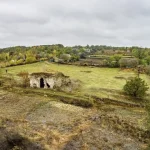
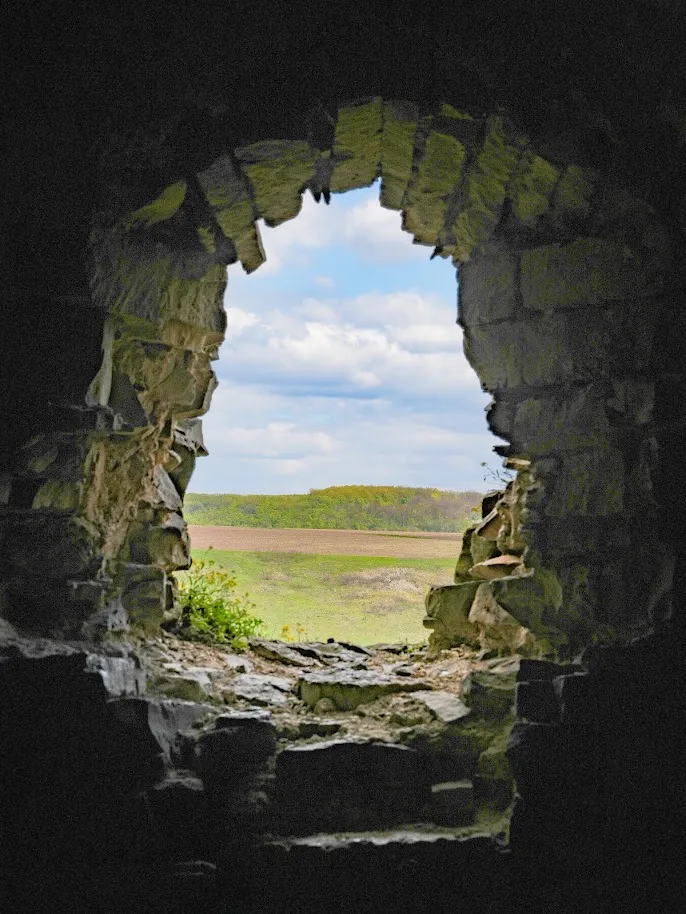
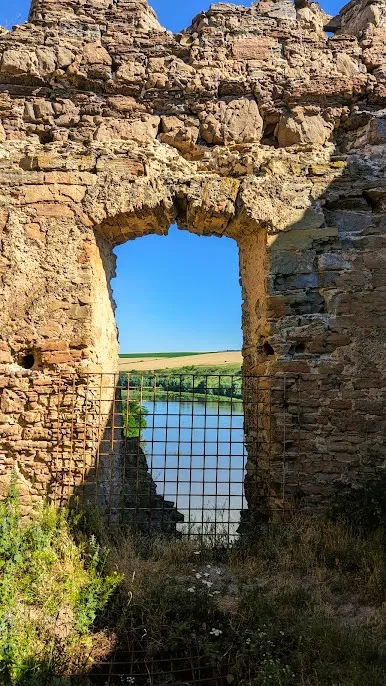
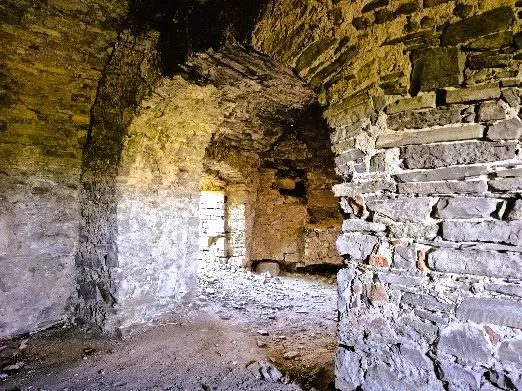
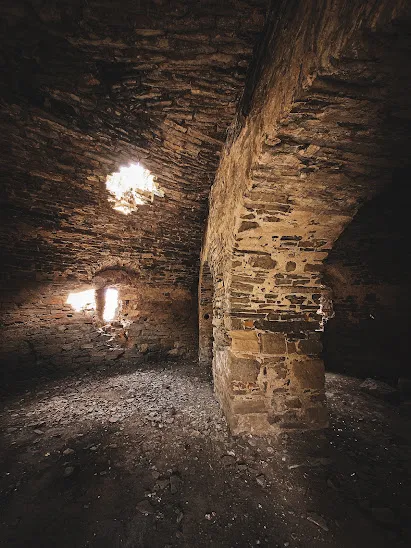
Of the six towers — one. A pentagonal tower on the cliff above the Zhvanchyk. Well preserved relative to the rest. It looks considerably better than everything around it.
Napoleon Orda painted the castle in the 1870s — and his drawing shows how much still existed then. The difference between then and now is striking.
What Not to Expect
There is no castle here — there is a tower. One of six. But the cliff and the setting are powerful in themselves.
And very close by: Kamianets-Podilskyi is 6 miles (9 km) away and Khotyn is 19 miles (30 km) — the best-preserved fortresses in this part of Podilia.
How to Include It in a Route
Zvanets — ~6 miles (~9 km) from Kamianets-Podilskyi.
- Kamianets-Podilska Fortress (~6 miles / ~9 km) — essential stop
- Khotyn (~19 miles / ~30 km) — one of the best-preserved fortresses in Ukraine
- Panivtsi (~9 miles / ~15 km) — castle + kirche + ghost bridge
Part of the Road Trip through the Fortresses of Podilia route.
Practical Information
- Entry: free
- Condition: one tower + fragments of walls
- Time on site: 20–30 minutes
- From Kamianets: ~6 miles (~9 km)
- Navigation: village of Zvanets, Kamianets-Podilskyi district
Conclusion
Khmelnytsky came with an army and a khan. The khan sold out to the Poles. The treaty was signed on the wrong terms.
Then Sobieski came — twice — and destroyed the castle while saving it from the Turks.
Then Russia bought it, made plans, did nothing.
One tower stands.