The French traveler Dalairac visited in the 17th century and wrote that the castle could hold up to three thousand troops and had “every mark of a powerful fortress.”
This isn’t a small family stronghold. It’s a major fortress on a strategic route, rebuilt across four centuries by six different magnate families.
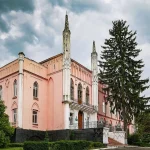
In 1996, a convent resumed operating in the castle’s palace. It’s still active today.
General Information
| What? | Description |
|---|---|
| Name | Yazlovets Castle |
| Location | Yazlovets village, Chortkiv district, Ternopil Oblast |
| First fortifications | 14th century (the Buczacki family) |
| Stone construction | 1436–1448 (Teodoryk Buczacki) |
| Pentagonal shape | with a moat, a tower, and Gothic details |
| Capacity | up to 3,000 soldiers (according to Dalairac) |
| Six families | Buczacki, then Jazłowiecki, then Sieniawski, then Koniecpolski, then Potocki, then Lubomirski |
| 1863 | transferred to the convent of Marcelina Darowska |
| Status | part of the “Castles of Ternopil Region” reserve; an active convent occupies the palace |
From the Buczacki Family to Six Dynasties
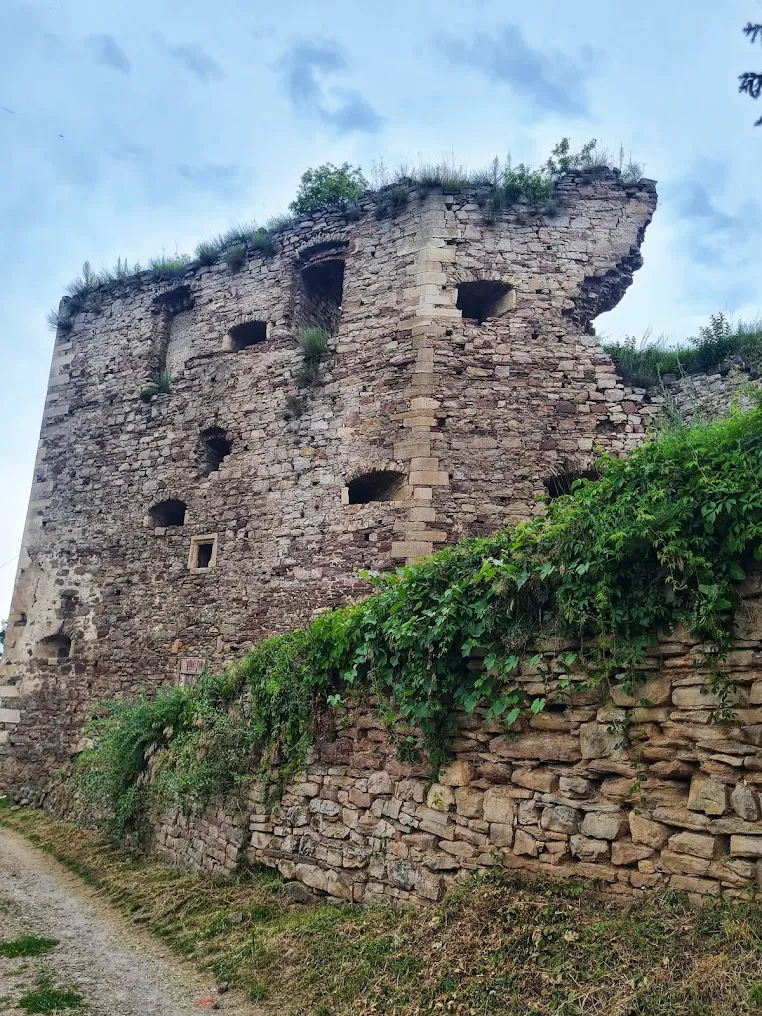
In the 14th century, the first fortifications appeared on the hill. In 1436, Teodoryk Buczacki-Jazłowiecki built a stone castle: a rectangular tower, an enclosed courtyard, and a gate in the north wall with a drawbridge.
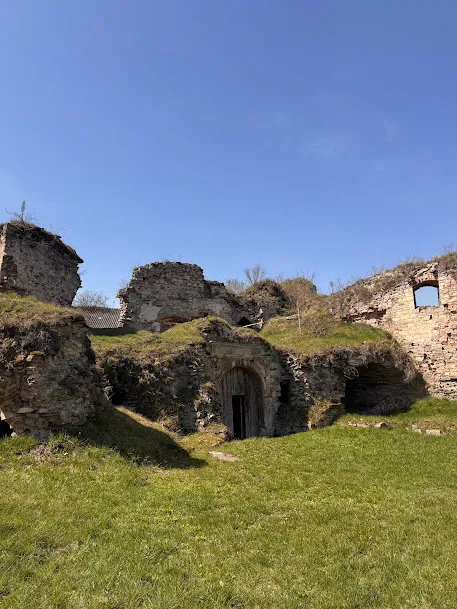
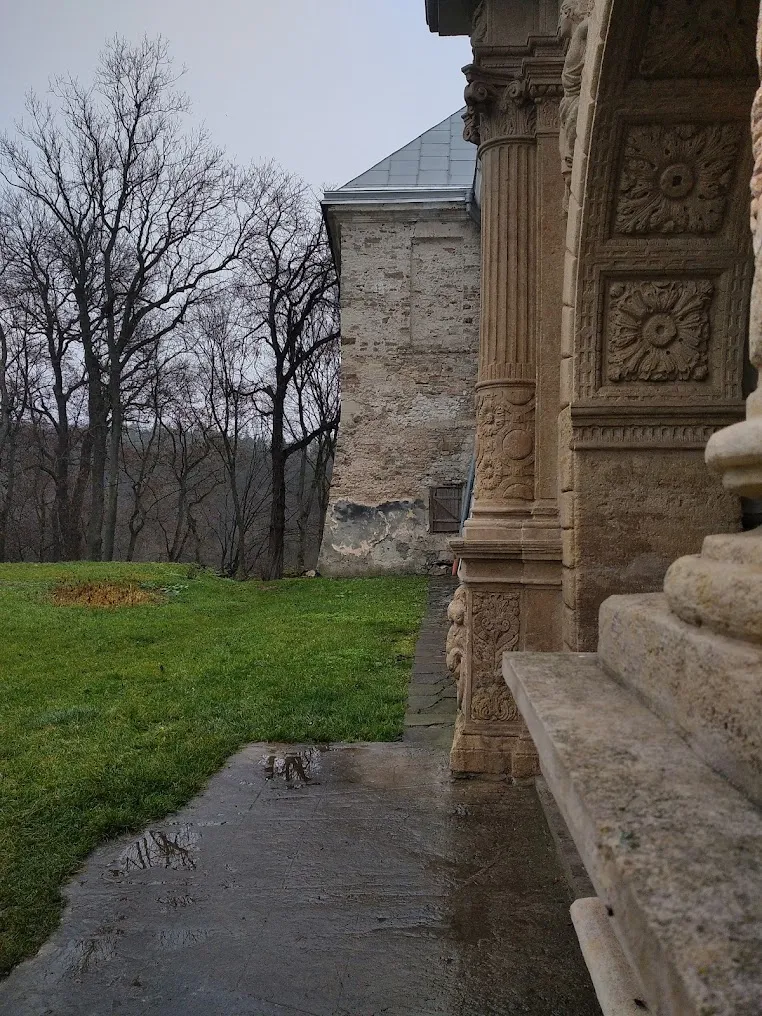
The walls are built of local sandstone in shades ranging from red to gray-green. Architectural details are carved from white limestone. In front of the wall, a moat was cut into the rock.
The Buczacki family produced descendants who took the name “Jazłowiecki,” after the castle — not the other way around. The same pattern applies elsewhere: Panivtsi gave its name to the Panivetsky family, and Ostroh to the Ostrozky family.
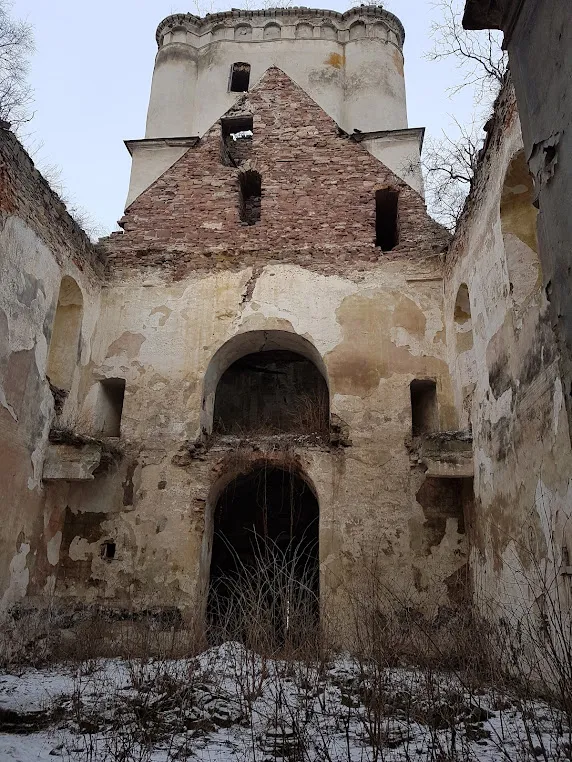
In 1550, Jerzy Jazłowiecki, Grand Crown Hetman of Poland, expanded the castle: he divided the courtyard in two, built a large defensive tower on the southwest side, and added new residential wings.
Jerzy Jazłowiecki was one of the most successful Polish commanders of his time, without a single lost battle. But the castle didn’t stay in his family: after his death, a conflict among his sons led to Yazlovets passing to the Koniecpolski family.
Later, Koniecpolski (the same man who, with Beauplan, built Pidhirtsi and Brody Castles) added new fortifications. The Potocki and Lubomirski families completed the chain of magnate owners.
1672 and 3,000 Soldiers
Between 1648 and 1657, during Khmelnytsky’s War of Liberation, the castle withstood several sieges.
In 1672, the Ottoman invasion overwhelmed it. After it was captured, the castle served as a prison for Ottoman and Moldavian captives — another unexpected function. Yazlovets went into decline.
It was around this time that the traveler Dalairac recorded that the castle could hold up to three thousand soldiers. For comparison, the Khotyn Fortress could hold 20,000 to 25,000.
A Convent in the Palace, and Marcelina Darowska
In 1863, Krzysztof Błażowski transferred the castle to the Congregation of the Sisters of the Immaculate Conception of the Blessed Virgin Mary. The order’s founder, Marcelina Darowska, was beatified by Pope John Paul II in 2007. Her tomb, in the castle’s crypt, has become a pilgrimage site.
Soviet authorities closed the convent in 1945 and expelled the sisters.
In 1996, the convent resumed operating in the castle’s palace.
Today in Yazlovets, pilgrims and tourists coexist: some come for Darowska’s tomb, others for the medieval walls.
What’s There Today
The Upper and Lower Castles both survive, in varying condition. Part of the walls and towers remain intact. The palace attached to the castle is occupied by the convent.
The tomb of Blessed Marcelina Darowska lies in the crypt.
The convent’s garden is open to visitors.
What Not to Expect
Free access to the entire castle grounds. The convent is an active religious site: some areas are open only to pilgrims or with the abbess’s permission. The outer walls and ruins remain freely accessible.
How to Fit It Into a Route
Yazlovets is 16 miles (25 km) from Buchach, 40 miles (65 km) from Ternopil.
- Buchach (~16 miles / ~25 km) — a castle, the Meretyn town hall, and Agnon
- Chortkiv (~12 miles / ~20 km) — a castle and the old town
- Skala-Podilska (~22 miles / ~35 km) — a castle and ruins above the Zbruch
Fits into the “Road Trip Through the Fortresses of Podillia” route.
Practical Information
- Exterior viewing: free
- Palace/convent: check with the convent (pilgrimage visits may be possible)
- Darowska’s tomb: in the crypt, for pilgrims
- Time needed: 30–60 minutes (castle, ruins, and garden)
- From Buchach: ~16 miles (~25 km)
Conclusion
Six magnate families. A French traveler recorded: “three thousand soldiers.”
The Ottomans took it in 1672. Then it became a prison for Ottoman captives themselves.
Then came a convent. Then Soviet authorities closed it. Then it became a convent again.
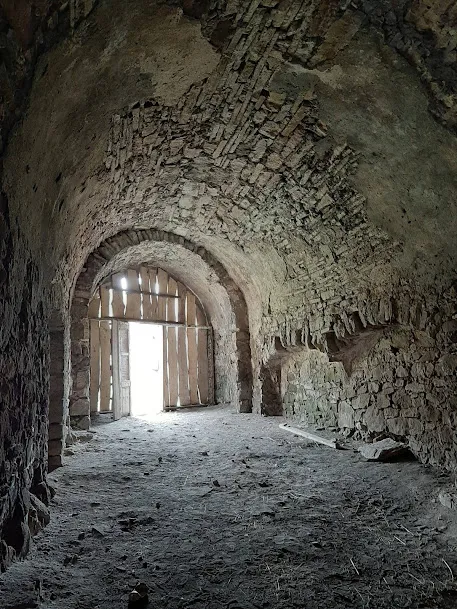
A beatified nun’s tomb now lies in a crypt that once stored weapons.