In villages, it’s usually not palaces that disappear. It’s the useful things — the ones that worked every day.
Benchyk’s Mill is exactly that kind of building. But it hasn’t disappeared.
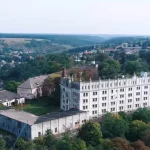
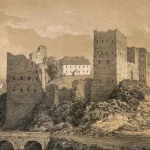
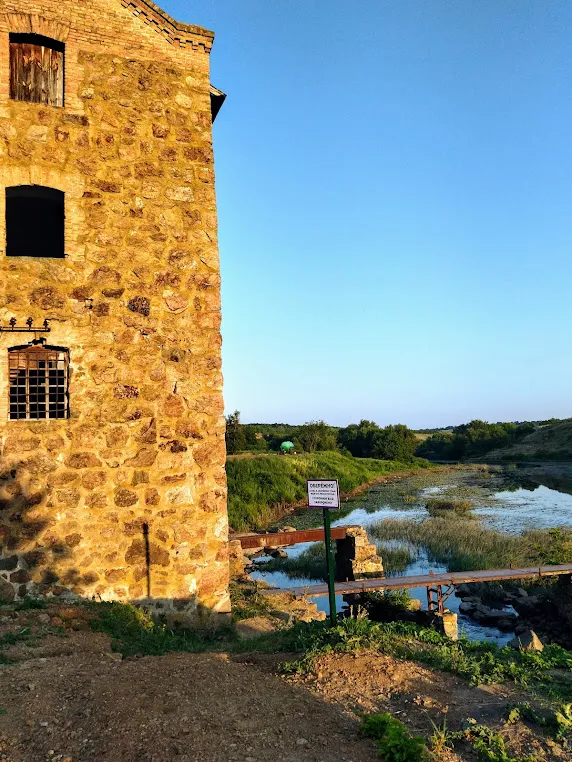
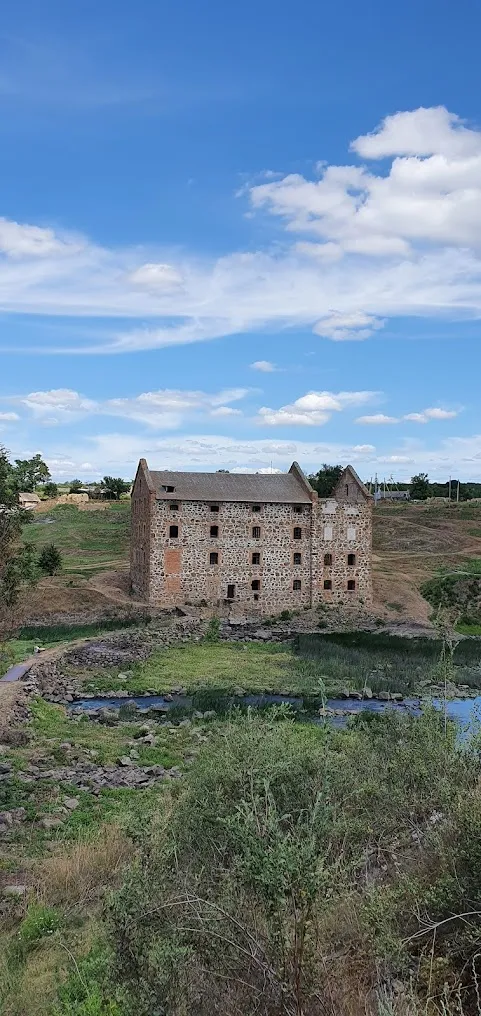
It has stood on the bank of the Syniukha for more than 130 years — and, frankly, looks less like “mill ruins” than a small granite fortress. Which is strange enough on its own.
General Information
| What? | Description |
|---|---|
| Name | Benchyk’s Mill |
| Location | Ternivka village, Novoarkhanhelsk district, Kirovohrad Oblast |
| Coordinates | 48.496815°N, 30.749016°E |
| River | the Syniukha |
| Type | water mill |
| Built | early 20th century (some experts say 19th century; construction took ~10 years) |
| Material | rubble stone (granite) |
| Height | 3 stories on the bank side, 4 on the river side |
| Current status | private property since 2018; a lavender field has been planted around it |
Who Was Benchyk, and Why Ten Years
No document records the owner’s full name or the exact construction date. But local tradition and archives point to the following.
The mill was commissioned and financed by a local patron surnamed Benz (locally pronounced “Benchyk”). The surname could be Jewish, Romanian, or Hungarian — all three are found in the region.
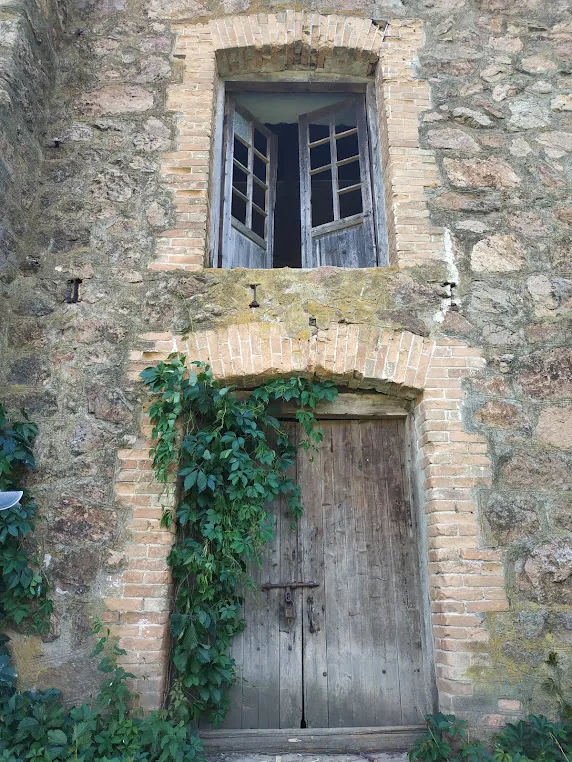
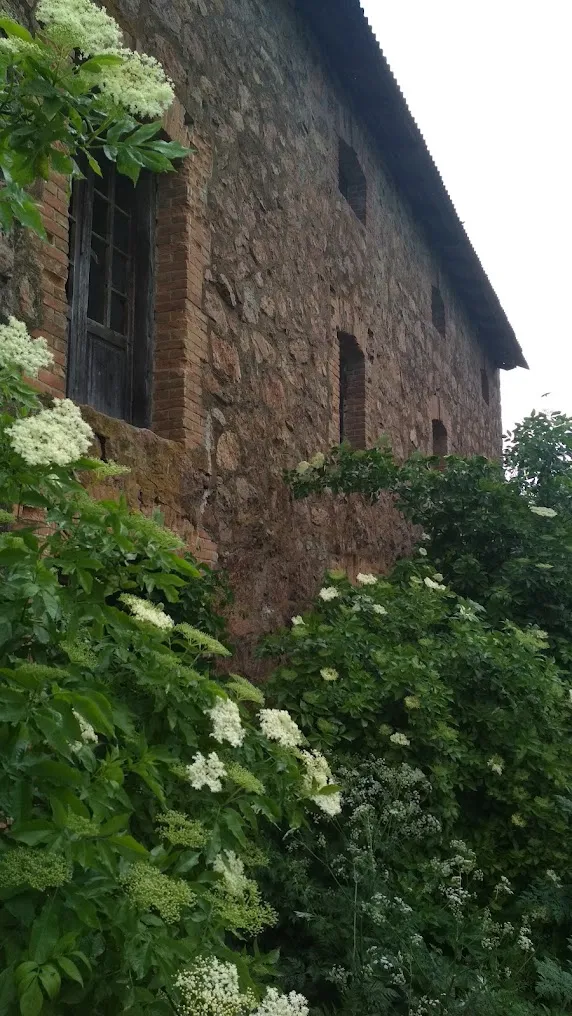
German engineers, working alongside local residents, built it over roughly 10 years. Not because it was small — because it was large. The walls are about a meter (3.3 ft) thick. The granite is the same stone that outcrops along the banks of the Syniukha and Yatran throughout the valley.
Once the mill was running, grain came not just from Ternivka but from all the surrounding villages and towns — its service area exceeded that of today’s Novoarkhanhelsk district. Polish merchants passed through too: chance finds of 18th-century Polish coins in the surrounding fields point to lively trade.
How It Worked
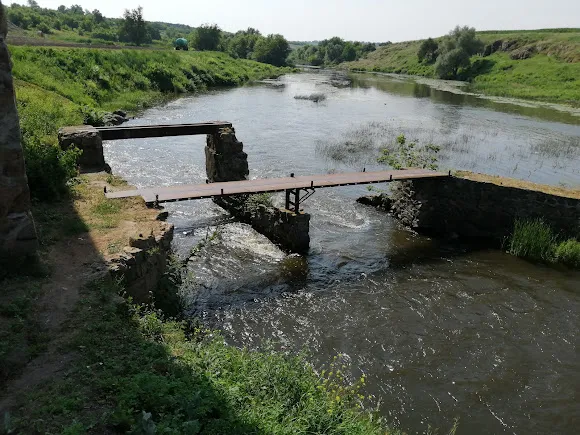
A dam on the Syniukha blocked the river’s flow and channeled the water into a wide stone chute. There, horizontal wheels (“proto-turbines”) turned under the pressure of the current and drove the millstones.
Grain was loaded on the top floor, descended, was fed to the millstones, and ground. The finished flour was carried out on rail carts at the level of the second floor.
The wheels are long gone. But the millstones that once pumped the water still stand by the mill — after a hundred years of work.
Why It Looks Like a Castle
The reason is simple: the asymmetry of the riverbanks.
The banks of the Syniukha here are uneven — one is much higher than the other. So on the bank side, the mill has three stories, while on the river side, where the terrain is lower, it has four. Add to that thick granite walls a meter across, narrow windows, and stone ledges.
The result: a building everyone describes as a “castle,” not a “grain building.”
After 1917, and Up to Today
Soviet authorities nationalized the mill. Until the 1930s, both the mill and a grain shop still operated here. Then it was forgotten. Weeds grew up around it, and an informal dump appeared.
In 2018, the mill and the surrounding plot passed into private ownership. The new owners immediately set to work cleaning up and leveling the grounds.
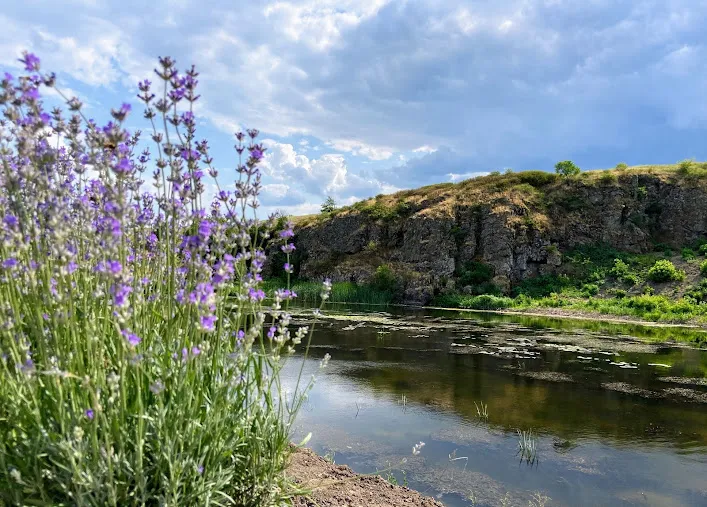
In October 2019, lavender was planted on the slope around the mill. Today it’s a full-fledged lavender field, with its own Instagram account (@benchykiv_mlyn). It blooms in summer, and lavender products are sold on site.
That’s how an industrial ruin became a pilgrimage site for photographers and lovers of botanical scenery.
The Syniukha Valley: What’s Nearby
The mill isn’t the only reason to visit Ternivka.
The Syniukha valley here forms a “mini-canyon”: rocky banks, outcrops of the Ukrainian Shield, and a clear riverbed. Locals call one formation the “White Rock” — which, by travelers’ accounts, is actually more black than white, though the name has stuck.
Crossing the dam near the mill takes you to the right bank, from where you can reach the confluence of the Syniukha and the Yatran — by local accounts, one of the most beautiful views in the area.
How to Fit It Into a Route
Ternivka, in Novoarkhanhelsk district, is a convenient stop between Holovanivsk and the E-95 highway.
Route to Ternivka: E-95 highway (Kyiv–Odesa) → Holovanivsk → Davydivka → Perehonivka → Ternivka. The road alternates between cobblestone and asphalt.
In the village itself: from the central square, turn right and follow the long street along the terrace above the Syniukha. The mill is past the barrier, on the right.
Fits into the “Industrial Landscapes of Ukraine” route.
Practical Information
- Coordinates: 48.496815, 30.749016
- Admission: check with the owners (private property since 2018; they have an Instagram and website)
- Lavender: blooms April–June
- Time needed: 30–60 minutes (mill plus a walk along the valley)
- Lavender products: sold on site
Little-Known Details
- The original material is granite, not brick — rubble stone from local outcrops of the crystalline shield, which explains both its strength and its “castle” appearance.
- Ten years of construction is remarkable for a utility building.
- 18th-century Polish coins, found in the surrounding fields, are physical evidence confirming trade with Polish merchants.
- Three stories on the bank side, four on the river side — not a “special design,” but simply the unevenness of the banks.
- Ternivka is a former Cossack winter camp — the Zaporozhians chose their sites wisely.
- The millstones that once pumped water still stand by the mill today.
Conclusion
Benchyk’s Mill isn’t a “wow location.” That’s exactly why it feels real.
It’s a good illustration of something simple: history isn’t only palaces and counts. Sometimes it’s an old granite building by the water that once fed an entire village. And the lavender around it is there because someone decided this place hadn’t finished its work yet.