A town once stood here: Chervonohorod. Then the town disappeared.
The Dzhuryn River, which had almost fully looped around the hill holding the castle, shifted to a different course. Why is uncertain — there are three competing explanations: an Ottoman rock demolition during a siege, 19th-century construction work, or simply natural changes in the riverbed.
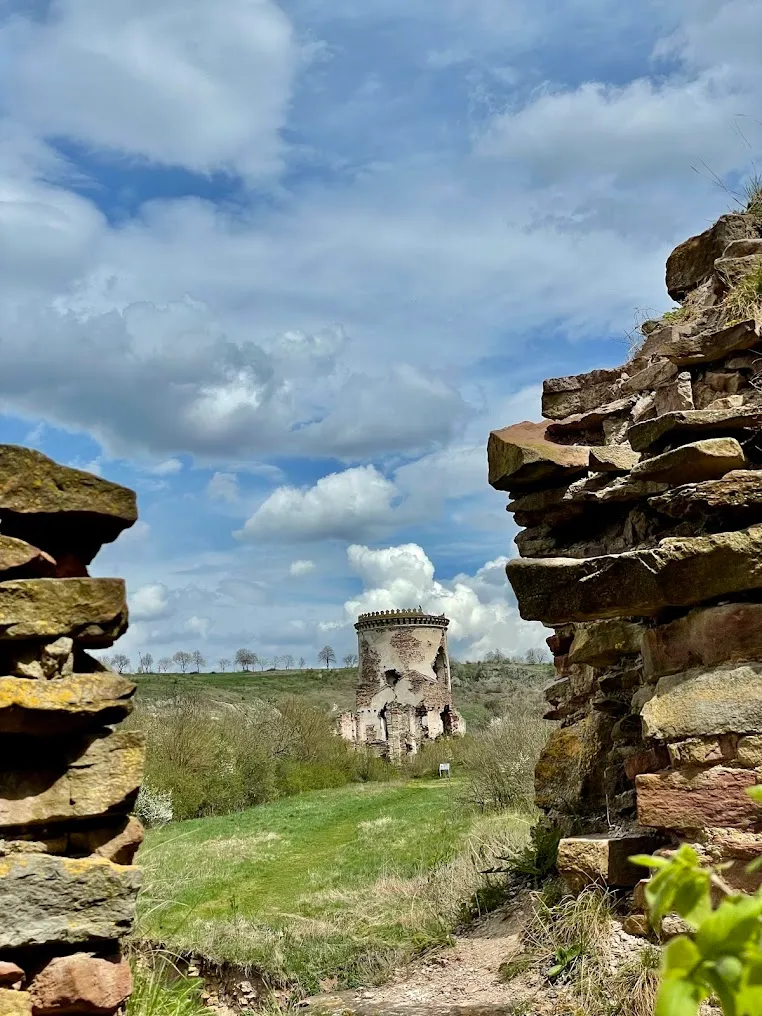
Now the hill holds only the ruins of a castle-palace. The old riverbed around it is dry. The town is gone. The river moved on. What’s left is canyon scenery and vertical walls of red sandstone.
General Information
| What? | Description |
|---|---|
| Name | Chervonohorod Castle (also Chervonohradskyi; Latin: Castrum Rubrum) |
| Location | the Chervone tract, Nyrkiv village, Chortkiv district, Ternopil Oblast |
| Setting | a steep hill in a bend of the Dzhuryn River, a deep canyon |
| First mention | 1351 (the Bychowiec Chronicle) — a wooden castle of the Koriatovych princes |
| Rebuilt as a palace | early 19th century (Julian Poniński the Younger) |
| Palace architect | Julian Zachariewicz (Lviv) |
| Material | local red sandstone |
| Nearby | the 52-ft (16 m) Dzhurynsky Waterfall |
| Condition | ruins, without roofs or floors |
| Status | architectural monument; part of the “Castles of Ternopil Region” National Reserve |
The Vanished Chervonohorod
The 9th century may, by some accounts, have seen the first fortifications here. More reliably, 1351: the Bychowiec Chronicle mentions “Cherleny Horodok” (Latin: Castrum Rubrum, “Red Castle”). The Koriatovych princes built a wooden castle.
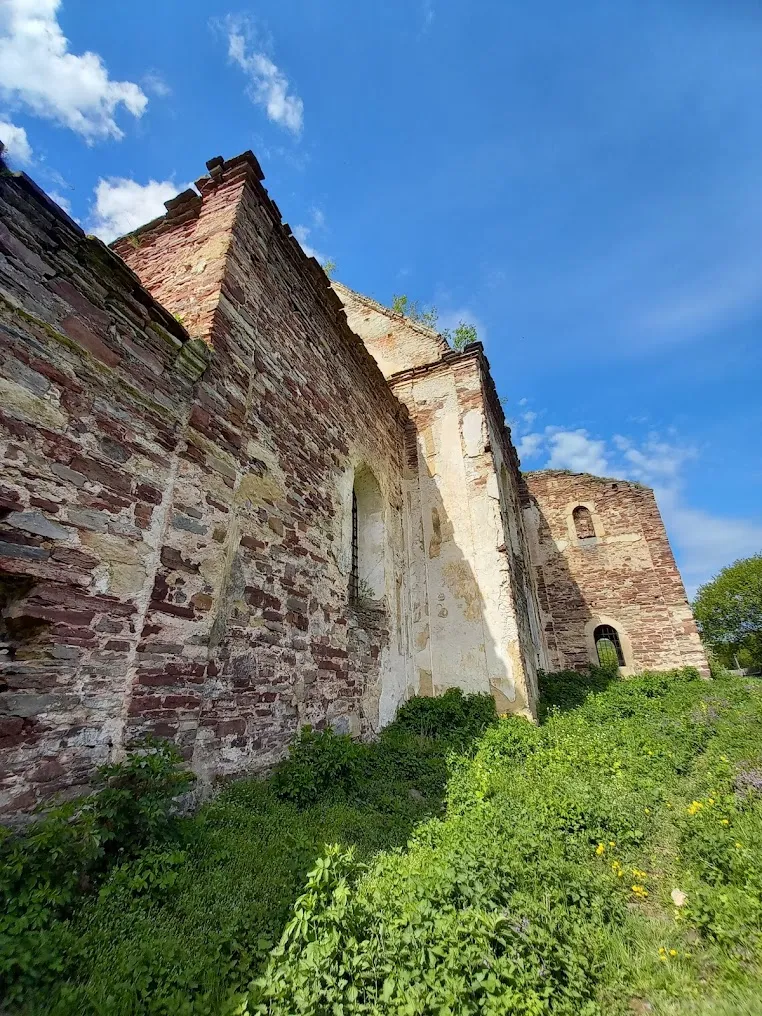
The name comes from the color of the local sandstone, which really is red — after rain, the soil takes on a bright reddish tint.
In 1538, Tatars destroyed the wooden castle.
A town called Chervonohorod existed nearby for a time, but gradually vanished. Today there’s no trace of it left: no streets, no foundations, no documents about its decline. It simply disappeared.
The Castle and the River’s Loop
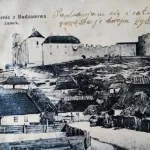
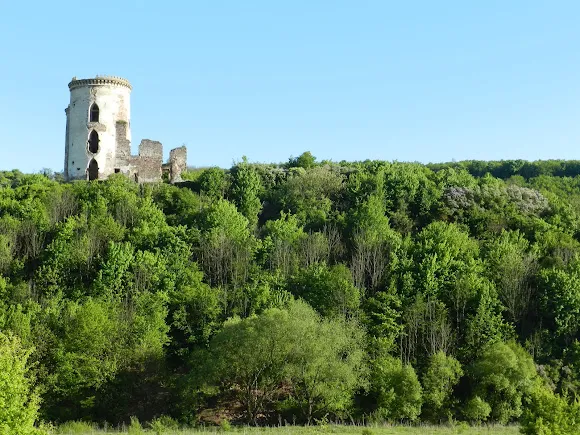
The hill on which the castle stands was surrounded on three sides by the Dzhuryn River. More precisely, it used to be: the river formed an almost closed loop, providing natural protection no weaker than a moat.
But then the river shifted to a different course. The old riverbed around the hill became a dry canyon.
When and why remain uncertain, with three competing explanations:
- Ottoman janissaries, during a siege, blew up the rock to divert the river — an act that supposedly triggered the formation of the Dzhurynsky Waterfall.
- Construction work during the castle’s 19th-century conversion into a palace altered the local hydrology.
- A natural shift in the riverbed, with no human involvement.
None of these has been definitively confirmed. But the waterfall is real, standing exactly where the Dzhuryn “broke out” of its old loop.
The Poniński Family and Architect Zachariewicz
After a long medieval chain of owners — the Koriatovych, Herburt, and Potocki families — the castle passed to the Poniński family in the 19th century.
Julian Poniński the Younger decided to transform the defensive castle into a pseudo-Gothic palace. He appointed Julian Zachariewicz as architect — a well-known Lviv architect, designer of the Lviv Polytechnic and restorer of St. George’s Cathedral.
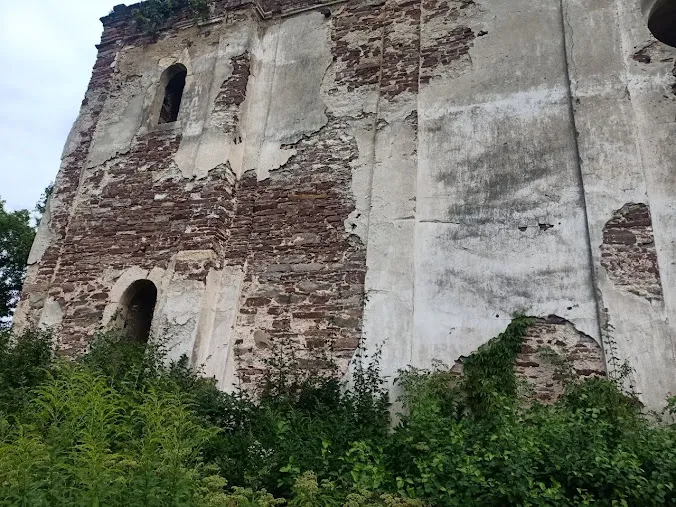
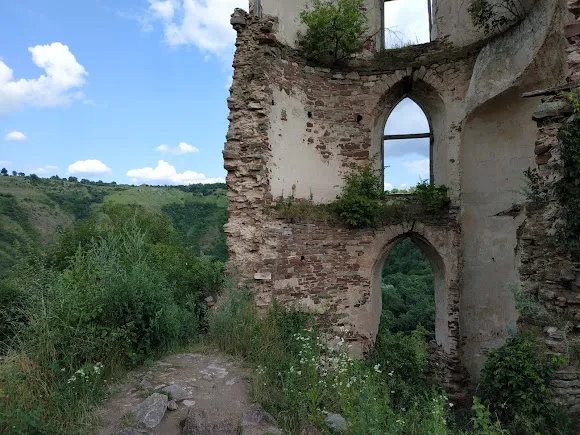
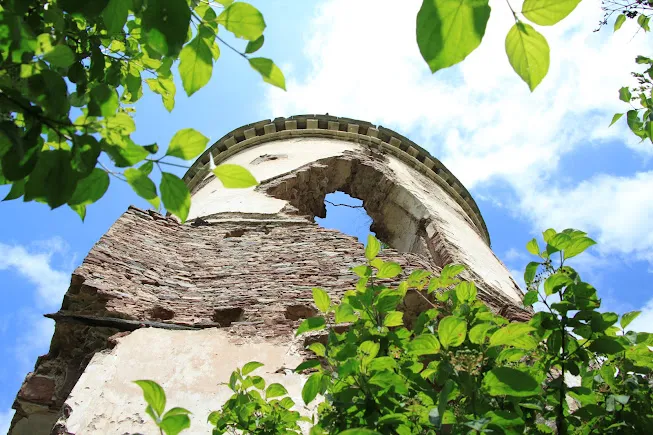
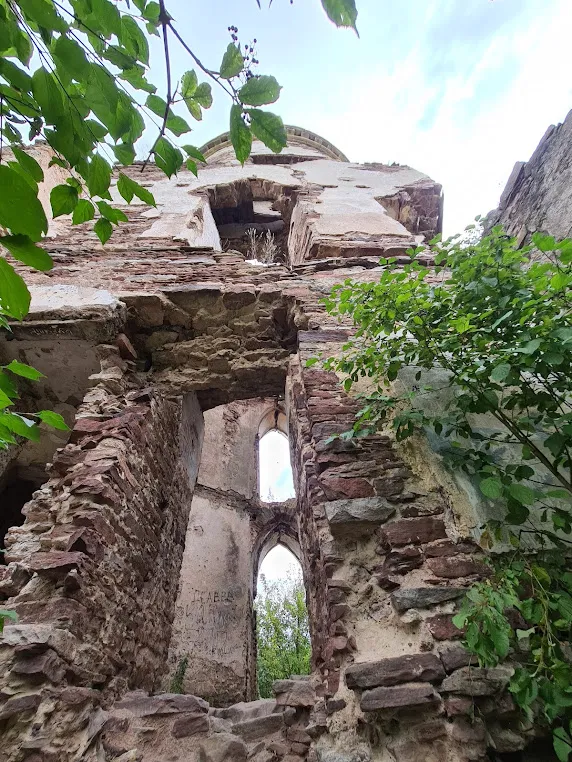
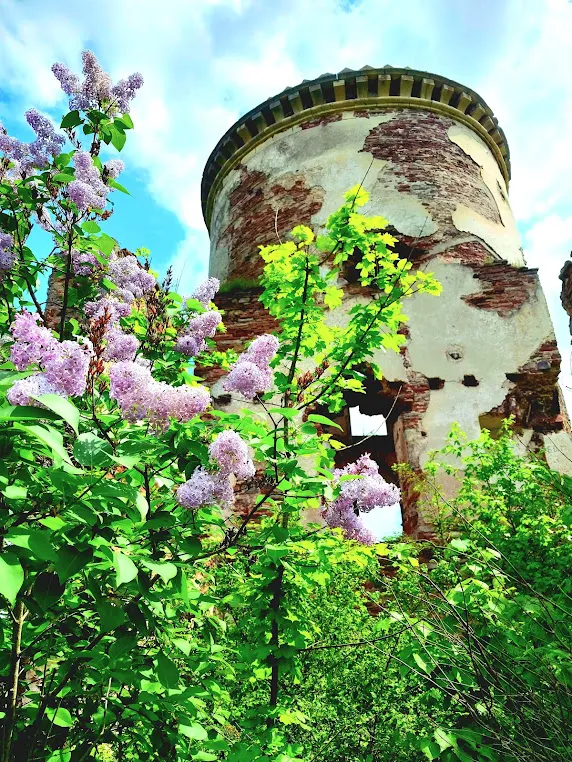
The palace was built between 1859 and 1880. Below, the remains of the 17th-century medieval castle survive; above, new Gothic decoration was added: crenellated parapets, pointed-arch windows, and towers. A Church of the Assumption of the Virgin Mary and the Poniński family chapel stand nearby.
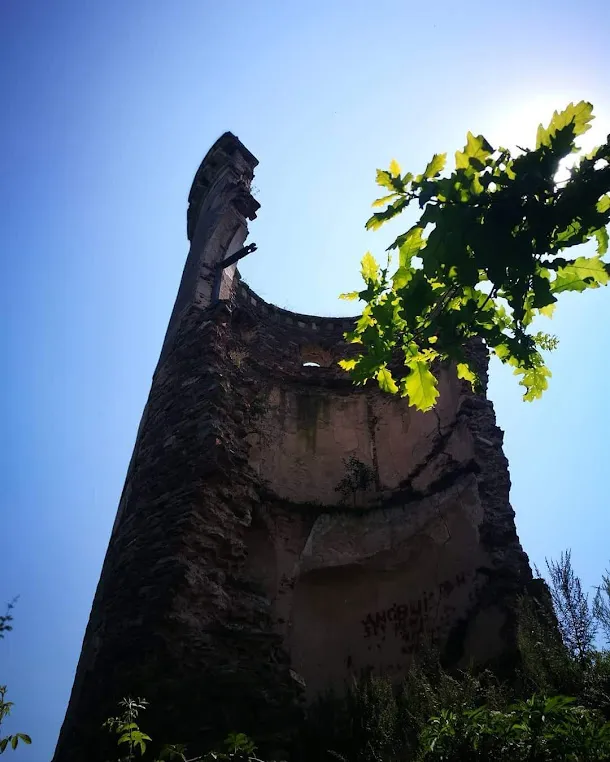
After 1939, the site fell into neglect, leaving only ruins.
What’s There Today
The ruins of the castle and palace: four walls without roofs or floors. Fragments of Gothic decoration. Windows looking out over the canyon.
Nearby are the ruins of the church and the Poniński family chapel.
The Dzhurynsky Waterfall (52 ft / 16 m) is about a 10-minute walk away.
What Not to Expect
A restored palace or a museum. What’s here are open ruins with no infrastructure at all. But the setting itself — a hill in a dry canyon, red sandstone, and views over the surrounding slopes — is worth the trip on its own.
How to Fit It Into a Route
Nyrkiv is 22 miles (35 km) from Chortkiv, 34 miles (55 km) from Ternopil.
- Dzhurynsky Waterfall (~10 minutes from the castle) — the largest lowland waterfall in Ukraine
- Buchach (~22 miles / ~35 km) — the Meretyn town hall and castle ruins
- Kamianets-Podilskyi (~50 miles / ~80 km) — if planning a full day
Fits into the “Road Trip Through the Fortresses of Podillia”.
Practical Information
- Admission: free
- Condition: ruins, no infrastructure
- Time needed: 30–60 minutes (castle, waterfall, and chapel)
- From Chortkiv: ~22 miles (~35 km)
- Footwear: hiking shoes; the slopes are steep
Conclusion
The town disappeared. The river shifted course. A palace that took 20 years to build has stood roofless for 80.
What’s left are ruins, red rock, and a nearby waterfall.
Nature here seems to have decided ruins suit it better than a palace.