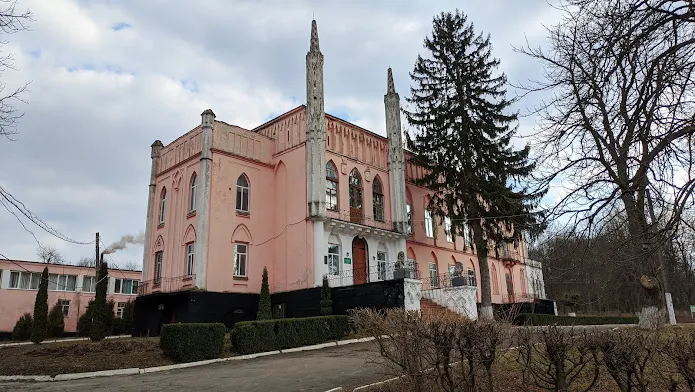
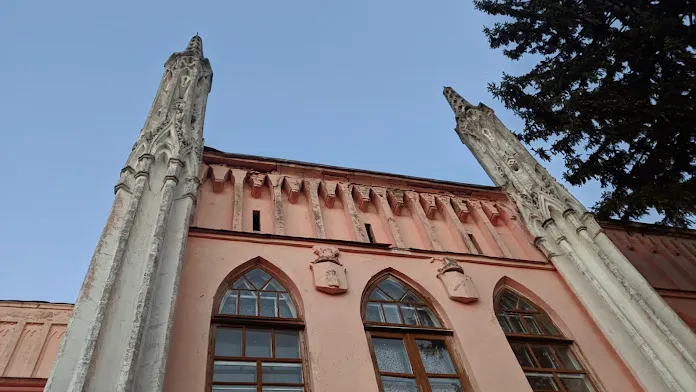
Ihnatii Vitoslavskyi, a Polish nobleman and crown quartermaster, built one of Ukraine’s rarest examples of Neo-Gothic architecture in Cherniatyn — a palace with crenellated cornices, pinnacles, and stone lions guarding the entrance. But his family didn’t lose the estate to decline or debt: in 1863, Vitoslavskyi took part in the Polish uprising against the Russian Empire, and the estate was confiscated by the crown as punishment. Confiscated estates couldn’t legally be sold back to Poles, so in 1865 Cherniatyn passed to the Russian noble Lvov family.
Built in the 1830s, the palace drew inspiration from English castles — a rarity in central Ukraine, where Neo-Gothic architecture on this scale is almost nowhere else to be found.
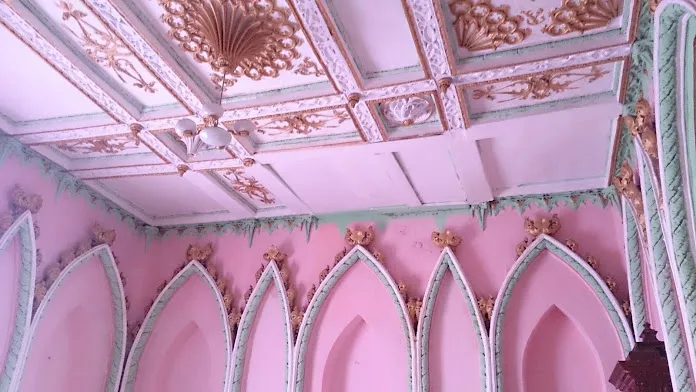
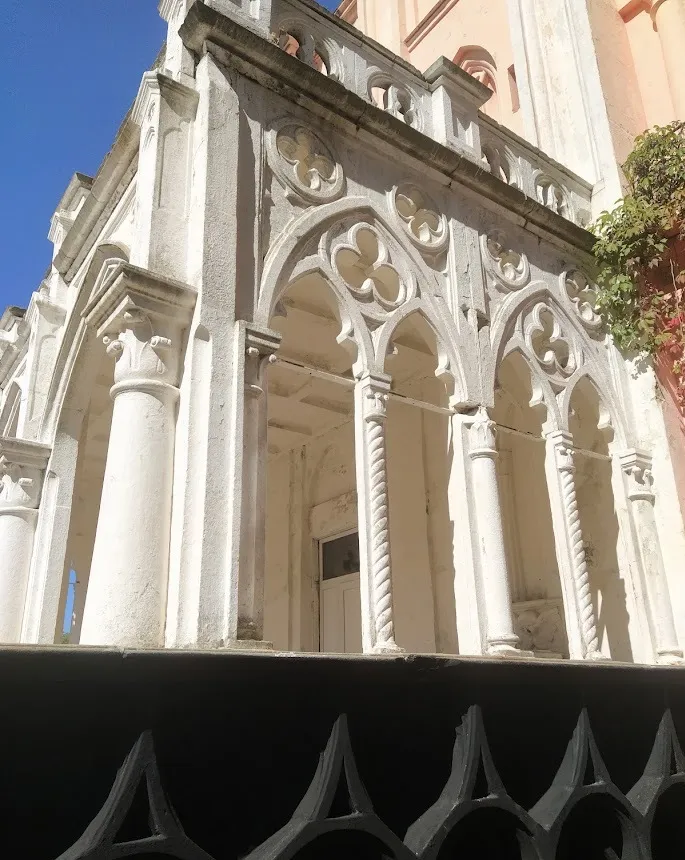
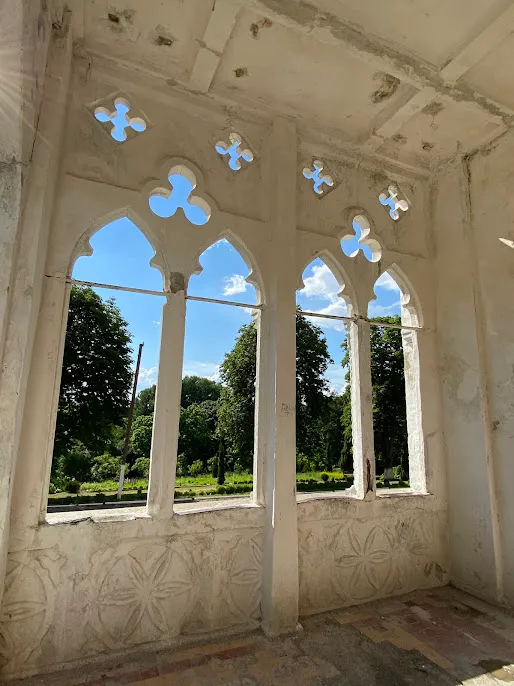
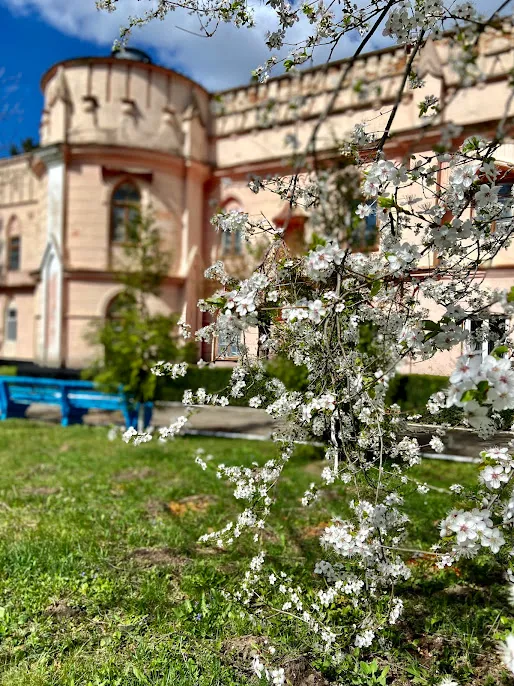
General Information
| What? | Description |
|---|---|
| Name | Vitoslavsky-Lvov Palace (Cherniatyn Palace) |
| Address | Cherniatyn village, Zhmerynka Raion, Vinnytsia Oblast |
| Founded | 1830s |
| Commissioned by | Ihnatii Vitoslavskyi |
| Form/Details | Neo-Gothic pinnacles, crenellated cornices, stone lions with heraldic shields at the entrance |
| Material | Brick, stone |
| Condition | Fair, building in active use |
| Status | Architectural landmark |
| Entry | Active educational institution (Cherniatyn College of VNAU) |
Confiscation as Part of the History
Vitoslavskyi paid the highest price a nobleman of his time could pay for joining an uprising — the estate his family had built. I think this detail matters more than the architectural style itself: the Neo-Gothic towers here aren’t just a romantic fashion, they’re evidence of how unstable land ownership was for Right-Bank Polish nobility in the second half of the 19th century.
What the Lvovs Added
The new owners expanded the building in the 1860s but deliberately preserved its Neo-Gothic style — a rare case where a change of ownership didn’t damage architectural integrity. The heraldic crests on the stone lions at the entrance were destroyed during the Soviet period, though the sculptures themselves remain in place.
What Not to Expect
Don’t expect an empty museum piece: college students still study inside, so viewing the interiors depends on the school’s schedule, not a tourist timetable. The original heraldic crests on the lions are gone — what you’ll see today are the sculptures without their coat-of-arms details.
What to See Nearby and How to Fit It Into a Route
- Zhmerynka — the raion center, about 10 miles (~16 km).
- Mateikove Station — a commuter-rail stop on the Zhmerynka–Mohyliv-Podilskyi line, about 2 miles (~3 km).
- Bar — a historic town with its own fortress, a popular pairing for a combined route with Cherniatyn.
Practical Information
- Entry: limited, since the building is an active college; some sources report interior visits are possible, but this depends on the school’s schedule
- How to get there: travel to Vinnytsia, then a minibus to Cherniatyn, or a commuter train to Mateikove Station
- Time needed: 1–1.5 hours
- Special conditions: confirm access in advance, since the building doesn’t operate as a museum
Conclusion
The palace in Cherniatyn is a rare example of Neo-Gothic architecture in central Ukraine, preserved in a paradoxical way: first through confiscation over an uprising, and then through more than a century of continuous use as an educational institution.