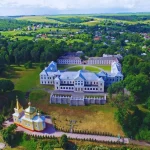
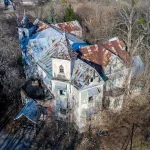
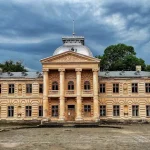
Every castle in Zakarpattia stands on a hill.
Serednie Castle stands on flat ground, amid vineyards.
This isn’t about watching over a strategic route from a height. It’s a square tower keep in the middle of a flat valley between Uzhhorod and Mukachevo — and it’s the only surviving example of Romanesque style anywhere in Ukraine.
Two unique claims. Neither one connected to the Knights Templar.
General Information
| What? | Description |
|---|---|
| Name | Serednie Castle |
| Address | Serednie urban-type settlement, Uzhhorod district, Zakarpattia Oblast |
| Setting | on flat ground between Uzhhorod and Mukachevo (the only Zakarpattia castle like it) |
| Keep | 61 × 54 ft (18.6 × 16.5 m), 66 ft (20 m) tall, walls 8.5 ft (2.6 m) thick |
| Style | Romanesque (12th–13th centuries) |
| Distinction | the only Zakarpattia castle on flat ground; the only surviving Romanesque keep in Ukraine |
| Main owners | the Drugeth family, then disputes, then the Pálóczi family, then Dobó, then the Rákóczi family |
| Cellars | 15th century, linked to the Pálóczi and Dobó families; “Leanka” wine is still made here |
| Condition | ruins of two stories; restored in 2002–2003 |
| Admission | free |
Why on Flat Ground
Most Zakarpattia castles controlled mountain passes and gaps, hence the need for elevation. Serednie stands in the flat part of the Latorytsia valley, and its logic is different: control of the road between two major fortresses.
Whoever held Serednie controlled the route from Uzhhorod Castle to Palanok in Mukachevo.
A Romanesque Keep, and What That Means
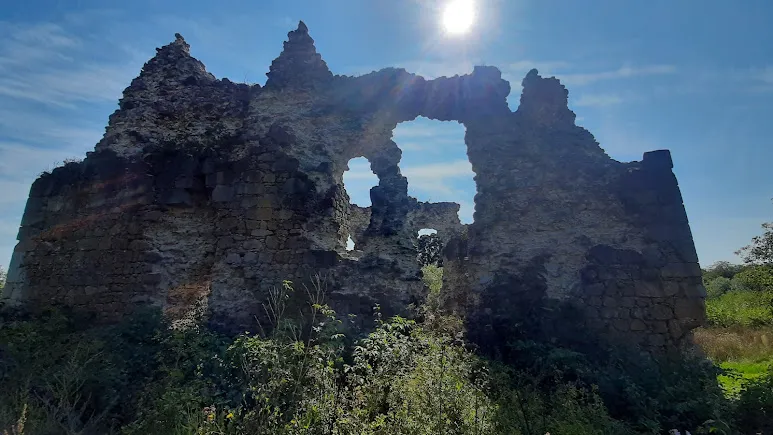
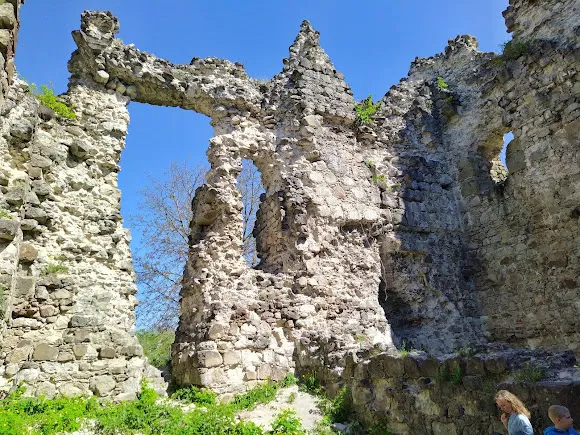
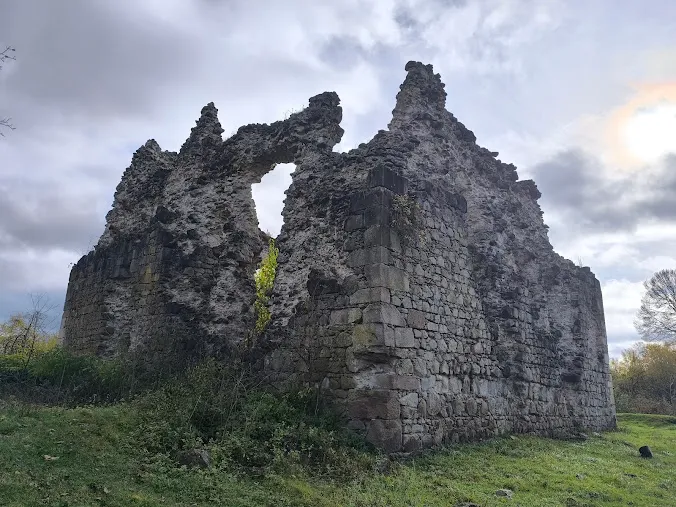
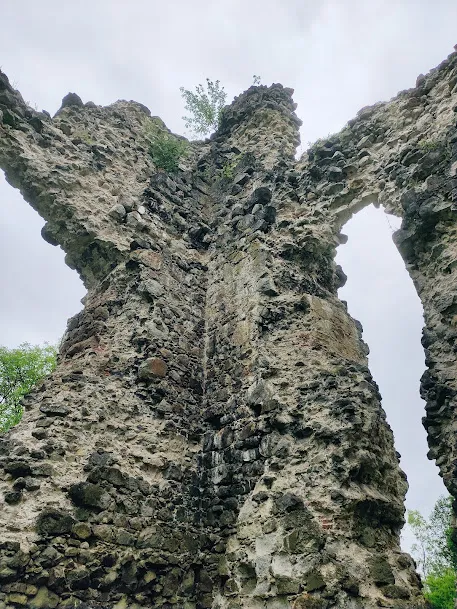
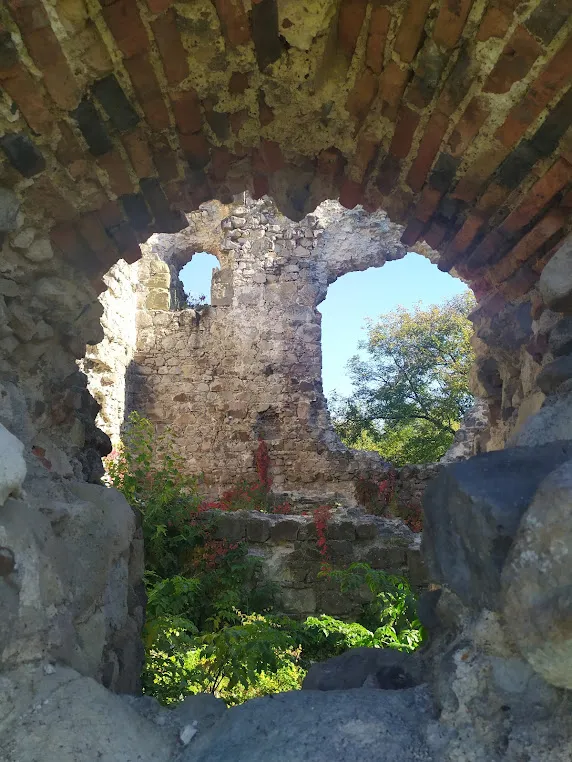
Serednie Castle isn’t a castle in the traditional sense — it’s a tower keep: a single massive square structure, 61 × 54 ft (18.6 × 16.5 m), 66 ft (20 m) tall, with walls 8.5 ft (2.6 m) thick.
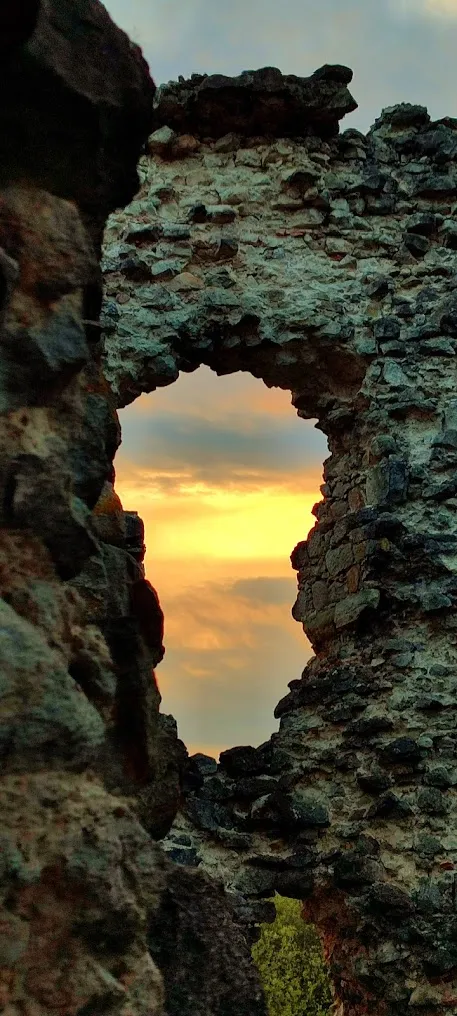
Its style is Romanesque: arched windows, massive stone, minimal decoration, maximum strength. Romanesque architecture belongs to the 11th–13th centuries. This unfinished-looking example is the only one of its kind surviving in Ukraine.
Around the keep was a system of ramparts and moats: an initial line of earthworks, reinforced by a stone wall with cylindrical corner towers. Almost nothing survives of these outer fortifications.
István Dobó and Ottoman Prisoners of War
The castle’s most notable owner was István Dobó, hero of the legendary 1552 defense of Eger against the Ottomans. He inherited Serednie from his family and turned the castle into a serious fortress.
The construction workforce came from thousands of Ottoman prisoners of war, whom Dobó used as forced labor. The same man who had repelled the Ottoman assault on Eger expanded his castle using the hands of the men he had defeated.
Under his ownership, Serednie experienced its greatest flowering: viticulture developed, the fortifications were strengthened, and the estate prospered.
15th-Century Wine and “Leanka”
Next to the castle are ancient 15th-century wine cellars, connected to the aristocratic Pálóczi and Dobó families.
Winemaking in Serednie has a documented history from the 17th century, when local wines were exported to Europe.
Today, the “Leanka” winery produces wine here. In other words, the cellars that once stored wine for Dobó are still in business today, though under a different label.
The Templars: a Legend Without Documents
The official tourist description from the Zakarpattia regional administration states: “according to legend, it was built in the 12th century by the monk-knights of the Order of the Temple.”
No documents confirm the presence of the Templars in Zakarpattia. The Templar order operated mainly in the Holy Land and France; their presence at the level of a castle in Serednie, within the Kingdom of Hungary, is unconfirmed.
The building’s Romanesque style invited associations with crusading orders, and the legend took hold. But it remains a legend, not a fact.
Decline After Rákóczi
Between 1703 and 1711, during the uprising of Ferenc II Rákóczi, Serednie found itself caught between the holdings of two warring sides — Uzhhorod Castle and Mukachevo Castle. The castle was destroyed.
Decline followed, with no restoration.
In the 20th century, excavation and preservation work took place. Between 2002 and 2003, the exterior walls were restored.
Today: ruins of two stories, with the third almost entirely destroyed.
What Not to Expect
A “Templar castle” is a striking name without any documentary basis. Don’t expect crosses or knightly artifacts.
But the Romanesque keep, unique in Ukraine, and the 15th-century wine cellars, are real.
What to See Nearby and How to Fit It Into a Route
Serednie sits roughly halfway between Uzhhorod and Mukachevo, about 19 miles (~30 km) from each.
- Uzhhorod Castle (~19 miles / ~30 km) — well preserved, with a museum
- Palanok Castle, Mukachevo (~19 miles / ~30 km) — the largest castle in Zakarpattia
- Saint Miklós Castle, Chynadiiovo (~7 miles / ~12 km) — preserved thanks to an artist named Bartos
- Wineries of the Berehove district (~25 miles / ~40 km)
An ideal route: Uzhhorod, then Serednie, then Chynadiiovo, then Mukachevo — four castles and wine in a single day.
Practical Information
- Admission: free
- Condition: ruins; two stories relatively stable
- Time needed: 20–40 minutes
- From Uzhhorod: ~19 miles (~30 km) via route M06
- From Mukachevo: ~19 miles (~30 km) via the same route
Conclusion
The only castle on flat ground. The only Romanesque one in Ukraine. Wine in cellars dating to the 15th century.
The Templars are a legend. Dobó and his Ottoman prisoners of war are a documented fact.
The vineyards around it are still there.