In 1492, right when Columbus had just reached America, Konstanty Ostrozky began building a stone castle above the Ikva River.
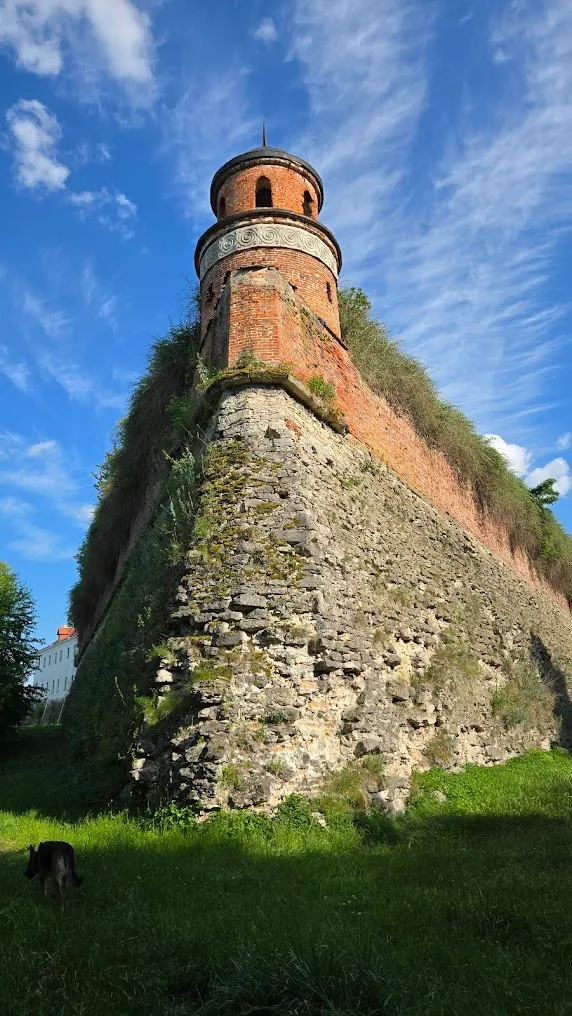
Over the next five centuries — through Tatar sieges, Cossack uprisings, Swedish campaigns, the Napoleonic wars, and two world wars — the castle was never captured by storm.
Not for lack of trying.
General Information
| What? | Description |
|---|---|
| Name | Dubno Castle (Castle of the Ostrozky Princes) |
| Address | 7A Zamkova St., Dubno, Rivne Oblast |
| First fortifications | 14th century (wooden, built by Fedir Ostrozky) |
| Stone castle | 1492 (Konstanty Ostrozky) |
| Type | bastion fortress-residence |
| Cannons | 73 (in its best years) |
| Main owners | Ostrozky → Zasławski → Sanguszko → Lubomirski → Baryatinsky |
| Architect | Henryk Ittar (Malta) — rebuilding for the Lubomirski family |
| Status | architectural monument of national significance; State Historical-Cultural Reserve |
| Admission | paid |
Why It Was Never Taken
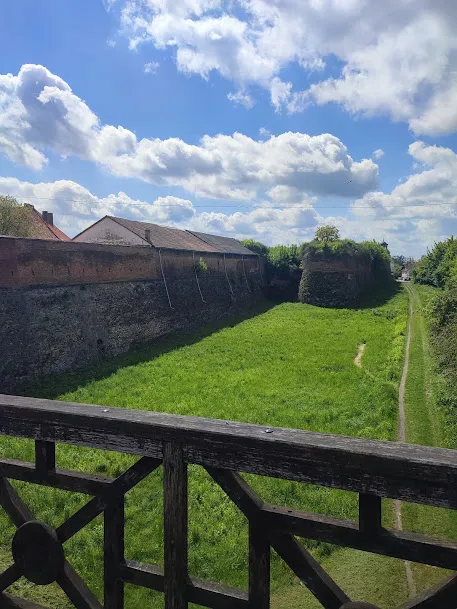
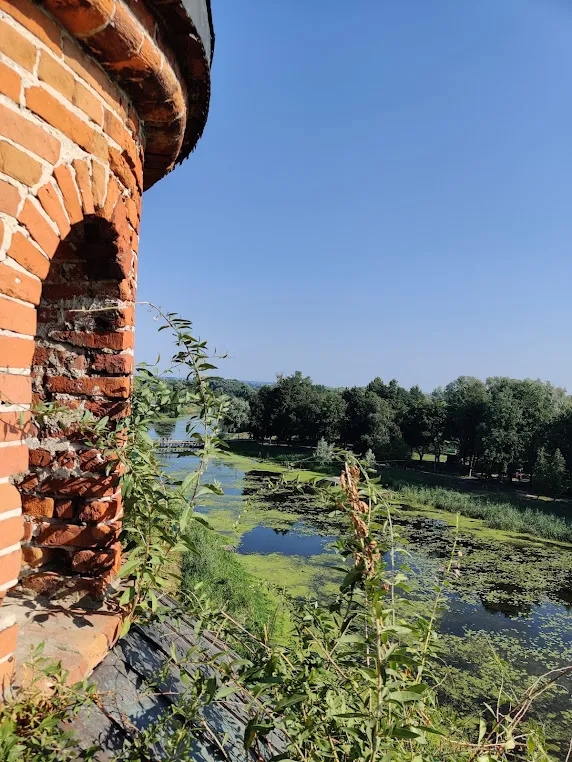
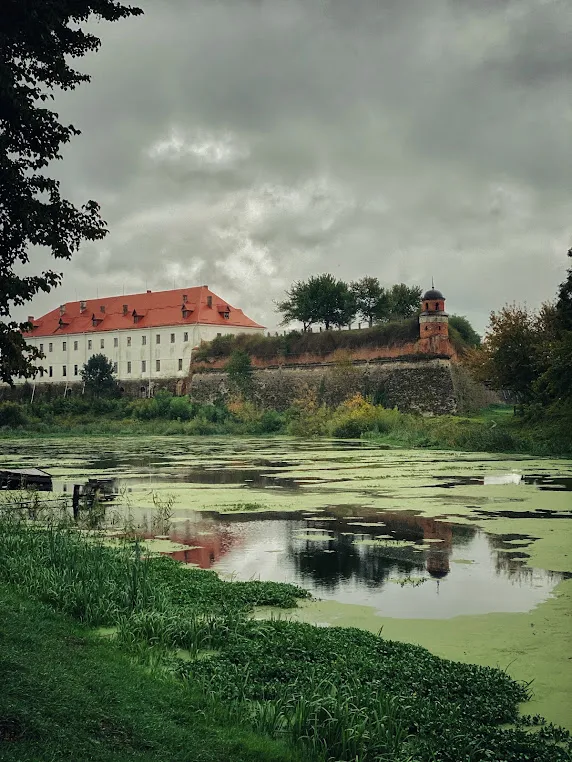
The castle was built on the spit at the confluence of the Ikvytsia and the Ikva — water protected it on several sides. The marshy floodplain made cavalry approaches impossible.
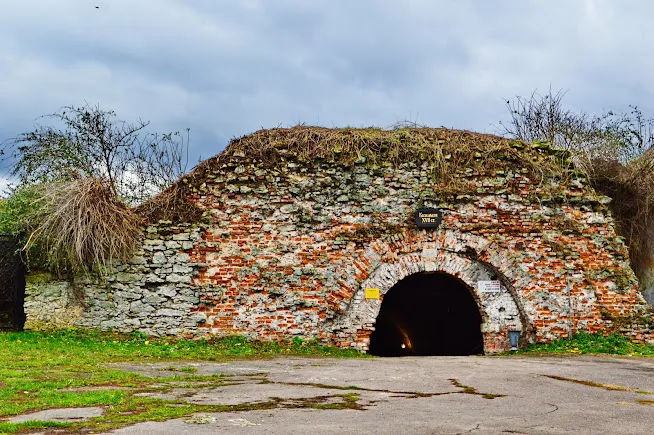
But natural defense was only half the answer. The Ostrozky family built wide underground passages beneath the castle, stocked with supplies capable of sustaining a long siege. Enemies would camp for months beneath the walls, hoping hunger would force surrender. It never did.
73 cannons kept every approach under fire. Plus the castle had its own foundry in the courtyard — it manufactured its own weapons.
Two Palaces Facing Each Other
Inside the castle courtyard stand two palaces, built by different families in different eras.
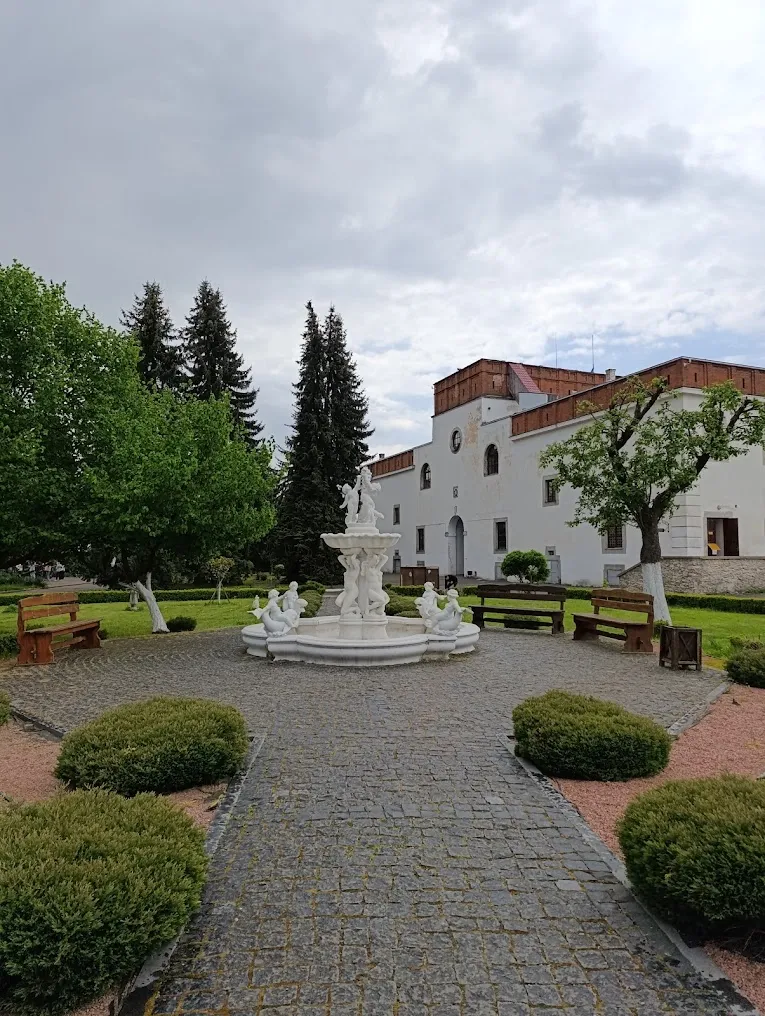
The Ostrozky Palace — in the southern part of the courtyard, 17th–18th centuries. Modest on the outside, but with a geometric ornament in an “oriental style” running around the façade’s perimeter — an influence of the Renaissance East, typical of Volhynian magnate architecture. Beneath the palace lie deep cellars that once held the archives of the Ostrozky, Zamoyski, Koniecpolski, and Czartoryski families.
The Lubomirski Palace — opposite, in the northern part, 18th century. Built once the fortress no longer needed to be a fortress, but a palace: a grand banquet hall, a ballroom, stucco work by Domenico Merlini (architect of Warsaw’s Łazienki Palace). That stucco survives today.
The architect for the Lubomirski rebuild was Henryk Ittar of Malta — one of the most sought-after architects among the Polish nobility of the time.
Two families, two palaces, two styles, two centuries apart — all within one courtyard.
Gogol and Card Debts
Gogol set the key events of “Taras Bulba” beneath the walls of Dubno Castle. Thanks to that, even people with no interest in architecture know the fortress by name.
The underground chambers where Gogol “hid” his characters are real. They genuinely stored lard, honey, grain, and weapons. They genuinely could shelter a large number of people.
The end of the magnate era was mundane. Marceli Lubomirski sold the family estate over card debts — to a gold magnate from the Urals named Yakovlev. He passed it to his son. The son sold it to Elizaveta Baryatinskaya. By the late 19th century, the castle was bought by the state treasury.
Then came Soviet soldiers. Then ruins. Then restoration and a museum.
What’s Inside Today
The castle is actively developed as a tourist complex:
- two palaces with permanent exhibitions (weapons, coins, everyday life, Ostrozky treasures)
- torture dungeons — with mannequins and explanations
- a “room of laughter” — a distorting-mirror attraction
- archery in the castle courtyard
- theatrical performances and medieval reenactments in season
Keep this in mind: Dubno is a lively tourist attraction, not a quiet archival castle. On summer weekends, it’s loud and crowded here.
What Not to Expect
If you’re looking for an “untouched” castle with an atmosphere of forgotten decay, this isn’t Dubno. There’s active commercialization here, tour groups, animators, and all the trappings of a popular destination.
If you want to see the bare walls and feel the scale, come early in the morning or on a weekday outside the season. The castle feels completely different then.
What to See Nearby
Dubno has decent heritage beyond the castle:
- the Lutsk Gate (16th century) — the entrance tower of the old town fortifications
- the Exaltation of the Cross Monastery on the opposite bank of the Ikvytsia
- a 19th-century synagogue in the old town
From Dubno, a natural route through the Rivne region includes Tarakaniv Fort (~28 miles / ~45 km) and Olyka Castle (~22 miles / ~35 km). Together, three castle complexes from different eras in a single day.
Practical Information
- Address: 7A Zamkova St., Dubno
- Admission: paid; confirm current prices
- Hours: daily; confirm seasonal times
- Minibuses from the station: No. 1, 11, 15, or 17 to the “Ploshcha” stop
- From Rivne: ~28 miles (~45 km), ~40 min by car
- From Lutsk: ~40 miles (~65 km), ~55 min by car
Conclusion
Five centuries — and not a single successful siege. Then card debts, a gold magnate from the Urals, Baryatinskaya, Soviet soldiers.
Gogol described the underground chambers in his novella. Merlini’s stucco work remains on the walls. Two palaces still stand facing each other.
The castle still hasn’t surrendered — it just lets everyone in now.