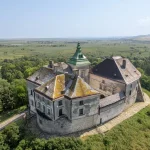
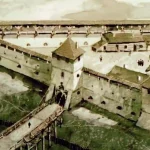
Bohdan Khmelnytsky’s Cossack army could not take Yahilnytsia Castle.
Only in 1655 did a joint Ukrainian-Muscovite force under the command of Buturlin finally overcome the fortress. And then — through treachery within the garrison, not by assault.
One of the strongest fortresses in Podilia fell not to the enemy’s strength, but to the defenders’ weakness.
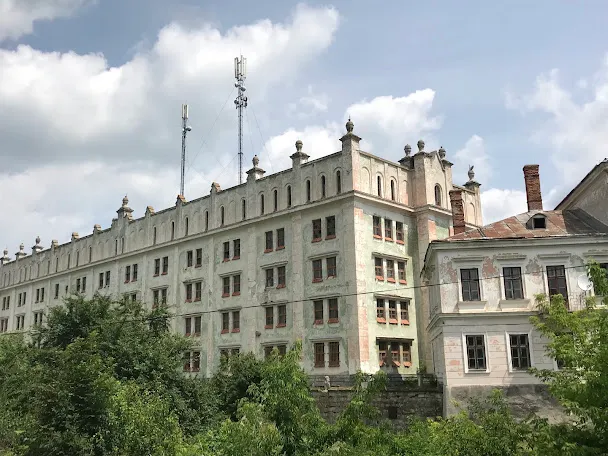
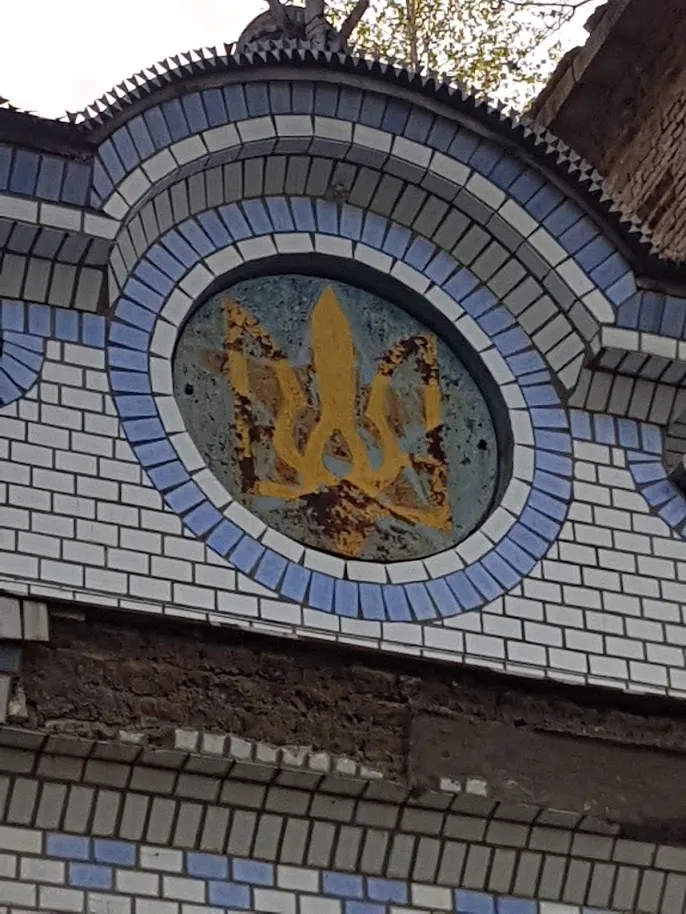
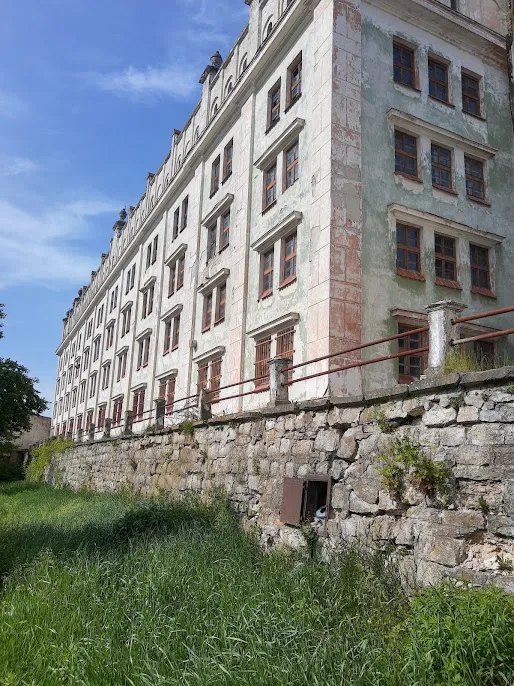
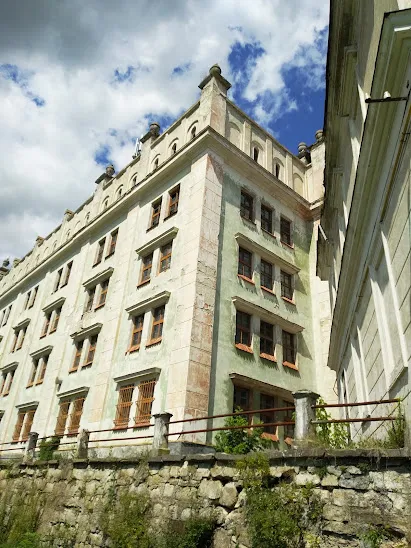
General Information
| What? | Description |
|---|---|
| Name | Yahilnytsia Castle (Castle of the Lanckoronskis) |
| Address | village of Nahirianka (formerly Yahilnytsia), Chortkiv district, Ternopilska oblast |
| Construction | 1630 |
| Builder | Stanisław Lanckoroński, Crown Field Hetman |
| Plan | pentagonal, corner towers |
| Material | dressed stone |
| 1655 | taken through treachery in the garrison (not by assault) |
| 19th century | tobacco factory (Austrian authorities) |
| 20th century | tobacco fermentation plant |
| Status | national architectural monument |
Lanckoroński and “the Strongest Fortress in Podilia”
1630 — Stanisław Lanckoroński, Crown Field Hetman, ordered the construction of a stone castle on the Cherkaska river, replacing an earlier wooden structure.
A regular pentagonal plan. Corner defensive towers. The inner ward was built up around its perimeter with utility buildings whose outer walls served as the defensive curtain. Main entrance: from the north side. Dressed-stone walls of exceptional quality. The castle was regarded as one of the finest and strongest fortresses in Podilia.
Two Legends of the Name
There are two stories about the name “Yahilnytsia.”
First: the name derives from Polish King Kazimierz Jagiellończyk, who camped here in the 15th century.
Second: from the Tatar word “yahel” — “it burns.” The cry the Tatars gave during assaults when the defenders poured boiling tar on them.
Neither is documented. But the second is more vivid.
Khmelnytsky Failed; Buturlin Succeeded Through Treachery
During the Liberation War, Khmelnytsky’s Cossack forces stormed Yahilnytsia Castle — and withdrew.
1655 — the army of the Muscovite boyar Vasyl Buturlin, together with Cossack detachments, took the fortress. But — “through treachery in the garrison”, not by force of arms.
1672 — the Turks seized it during the great Ottoman occupation of Podilia.
1684 — Jan III Sobieski stopped here on his way back from his campaign against Kamianets.
The Tobacco Factory and “Smoke over Yahilnytsia”
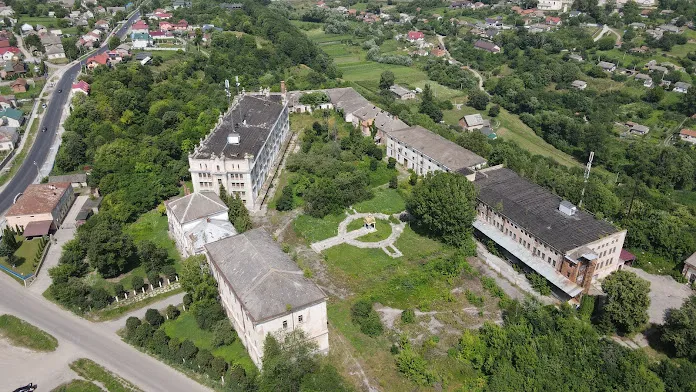
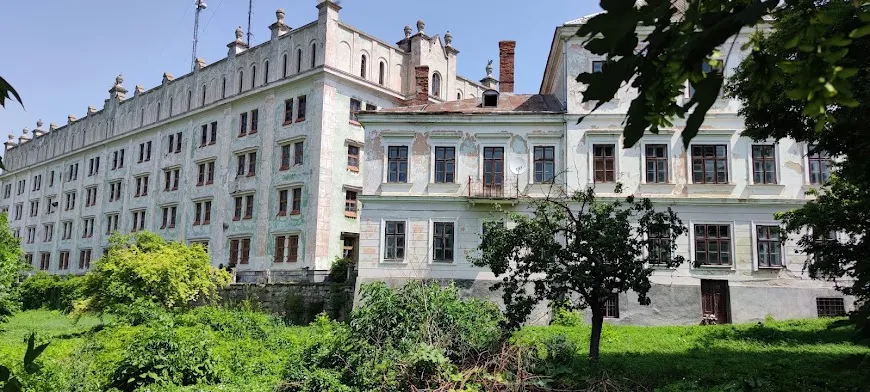
19th century — the Austrian authorities carried out a reconstruction and established a tobacco factory in the castle.
Soviet rule replaced it with a tobacco fermentation plant.
After independence — a private owner. The enterprise declined.
From medieval fortress to tobacco workshops — an unusual trajectory among the castles in this series.
Where It Is Today
An important detail: Yahilnytsia Castle is not located in Yahilnytsia but in the neighbouring village of Nahirianka. The old town of Yahilnytsia was divided by the Cherkaska river into two settlements. The castle ended up on the Nahirianka side.
Practical Information
- Entry: confirm locally (part of the complex is private)
- Condition: walls, vaulting, cellars — varies
- Time on site: 30–60 minutes
- From Ternopil: ~45 miles (~70 km)
Conclusion
The strongest in Podilia. Khmelnytsky withdrew.
Buturlin took it — through treachery.
Jan III Sobieski slept here — on the way from Kamianets.
The Austrians opened a tobacco factory.
The tobacco too ran out in the end.