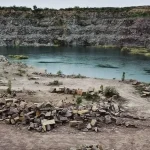
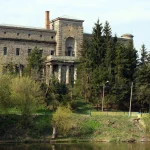
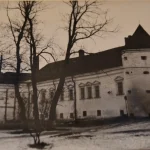
In Sutkivtsi there are two objects. One is ruins. The second is still standing — and has no equivalent anywhere in Ukraine.
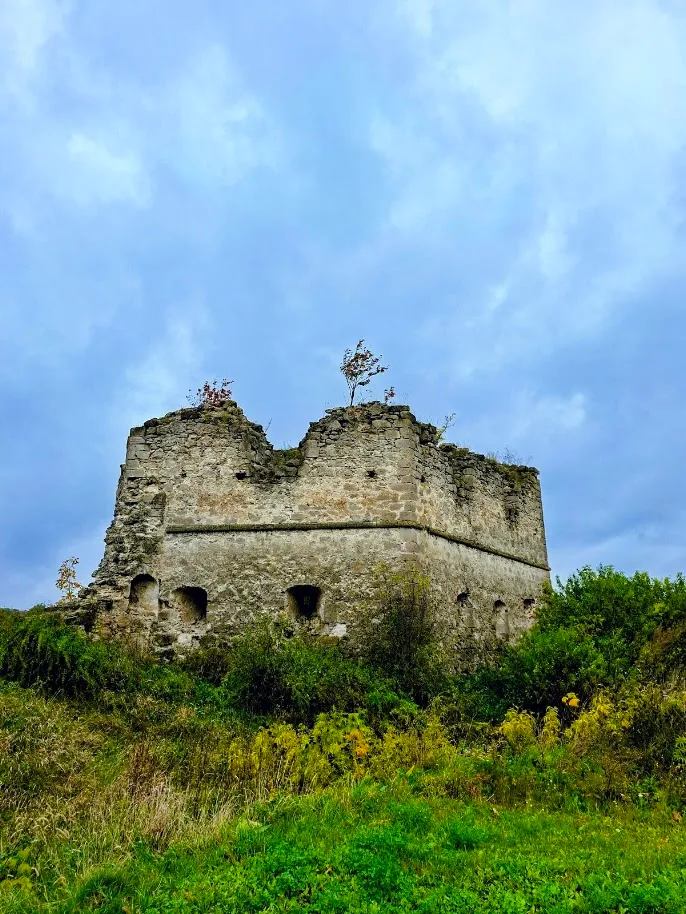
The Pokrovska church-fortress is a structure that is simultaneously a church and a castle keep. The combination is unique: not “a church beside a castle,” not “a chapel within the walls,” but a single building fulfilling both functions. From the base to the top — one solid mass of stone, with arrow slits and a dome.
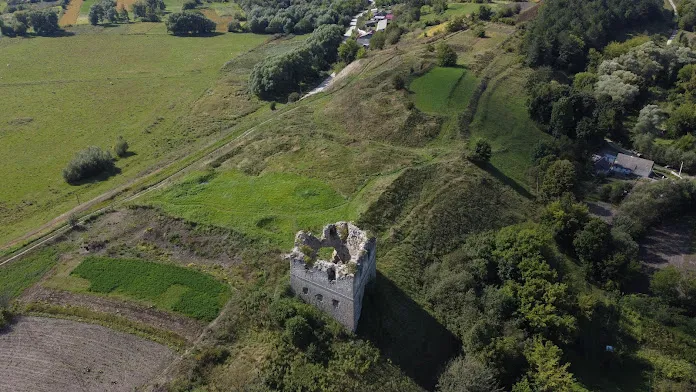
The castle alongside it is ruins. But the church still stands.
General Information
| What? | Description |
|---|---|
| Name | Sutkovetsky Castle and the Pokrovska Church-Fortress |
| Address | village of Sutkivtsi, Yarmolynetskyi district, Khmelnytska oblast |
| Distance from Khmelnytskyi | ~25 miles (~40 km) |
| Castle | 15th–17th century (Fedir Sutkivsky → Balaban → Hrabiankas) |
| Church-fortress | second half of the 15th century (the Sutkivsky family) |
| Castle dimensions | 230 × 200 ft (70 × 60 m) |
| Towers | pentagonal, four-tiered, at the corners |
| Moats | 50 ft (15 m) wide (north-west and south-east sides) |
| Status | national architectural monument |
| Entry | free |
Khotko Kroat and the Sutkivsky Family
The family’s origin: 1407 — the Grand Duke of Lithuania, Vytautas, granted these lands to a Hungarian by birth, Khotko Kroat, for loyal service. Khotko’s grandson — Fedir — took his surname from the land and became Fedir Sutkivsky.
He founded the castle in the first half of the 15th century as a strongpoint on the Kuchmansk Trail — one of the principal Tatar raid routes into Podilia and Volhynia.
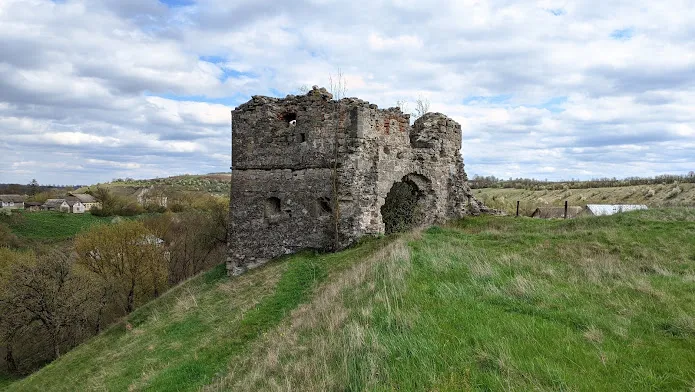
On an elongated promontory above a river valley: natural protection on three sides, and moats 50 ft (15 m) wide on two sides. A rectangle of 230 × 200 ft (70 × 60 m), with pentagonal four-tiered towers of bastion type at the corners, connected by fighting galleries along the perimeter walls.
The Church-Keep: Why Nothing Like It Exists
Around the same time — or slightly later — the Sutkivsky family built the Pokrovska church-fortress. The exact date is the second half of the 15th century.
In its architecture and floor plan, this structure has no equivalent in Ukraine.
At first glance it is impossible to tell it is a church. A massive stone volume, arrow slits, a severe appearance without ornament. But inside — a sacred space.
Originally the building served a purely defensive function — a fortress on the Tatar raid road. In 1476 it was converted into a church — and both functions merged into one.
Balaban and the End of the Defensive Role
1567 — the Tatars destroyed the castle during one of their raids. It was rebuilt soon after.
1623 — the last male Sutkivsky died. Ownership passed to Oleksandr Balaban, the Vinnytsia starost, through his marriage to Barbara Sutkivetska. He rebuilt several towers: arrow slits were widened into windows, and the castle began its transformation from fortress to residence.
By the 17th century Sutkovetsky Castle had definitively lost its defensive function.
Tadei Hrabianka: a Freemason With Cosmic Plans
In the late 17th century Sutkivtsi passed to the Hrabianka family. The new owners rebuilt the castle as a residential manor.
But one of the Hrabiankas — Tadei — deserves a separate paragraph.
In his youth he studied in Paris, where he became captivated by alchemy, esotericism and Freemasonry. Hrabianka founded Masonic lodges in several European cities: Warsaw, Berlin, Avignon, London. He dreamed of restoring the Polish-Lithuanian Commonwealth and creating a new world empire.
This is the same family that lived in a ruined Podilian castle while simultaneously planning the reorganisation of Europe.
What Survives Today
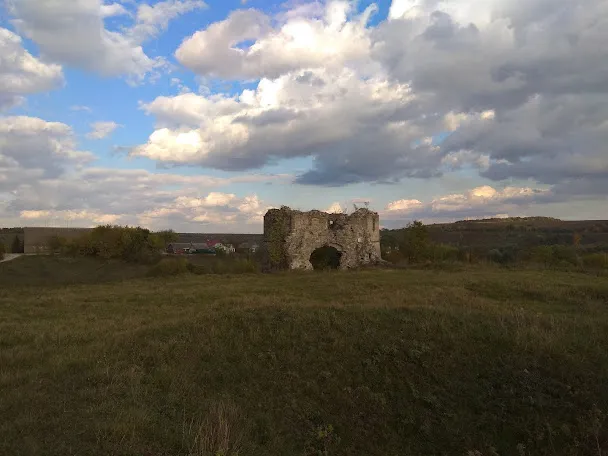
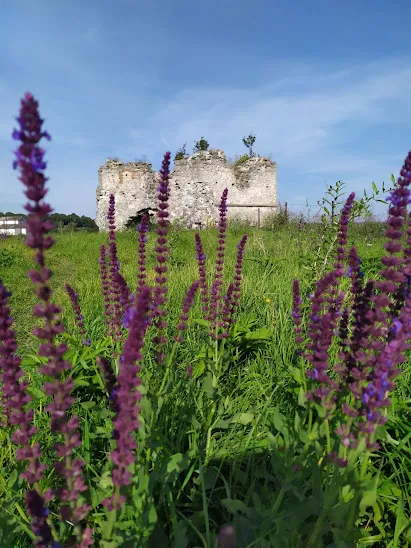
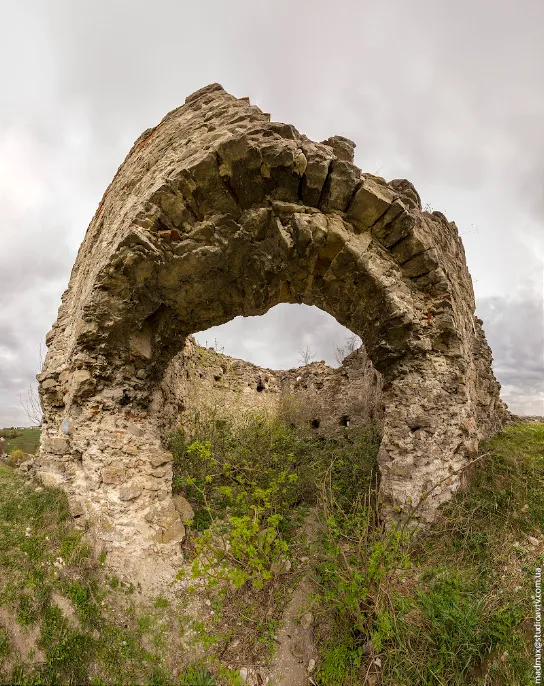
The castle: ruins of the palace on a hill above the Ushytsia valley. Fragments of walls and towers. The outlines can still be read.
The church-fortress: active. Services are held. This is the best-preserved and most important object of the complex.
Both are within a few minutes’ walk of each other.
What Not to Expect
Sutkivtsi is not a “castle” in the conventional sense. The castle ruins are fragmentary. But the church-fortress is worth the trip in its own right: it is unique, still in use, and looks exactly as a 15th-century structure without recent restoration should look.
What to See Nearby and How to Include It in a Route
Sutkivtsi — ~25 miles (~40 km) from Khmelnytskyi, Yarmolynetskyi district.
- Medzhybizh (~30 miles / ~50 km) — the Senyavsky castle and the tomb of the Baal Shem Tov
- Kamianets-Podilskyi (~45 miles / ~70 km) — 11 towers and the Smotrych canyon
- Skala-Podilska (~25 miles / ~40 km) — the castle above the Zbruch
Part of the Road Trip through the Fortresses of Podilia route.
Practical Information
- Entry: free (both objects)
- Church: active; visitors welcome
- Time on site: 30–60 minutes
- From Khmelnytskyi: ~25 miles (~40 km)
Conclusion
Khotko Kroat came from Hungary and received the land from Vytautas.
His grandson built a castle on the Tatar trail and a church that is a fortress.
Balaban turned the arrow slits into windows. Hrabianka went to Paris to found Masonic lodges.
The church still stands and holds services.
The castle does not.