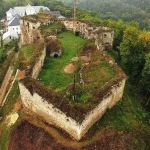
Locals in Ozarynivtsi show visitors their fortress and call it “the Turkish fortress.”
But the Ottomans never built it here. They only destroyed it.
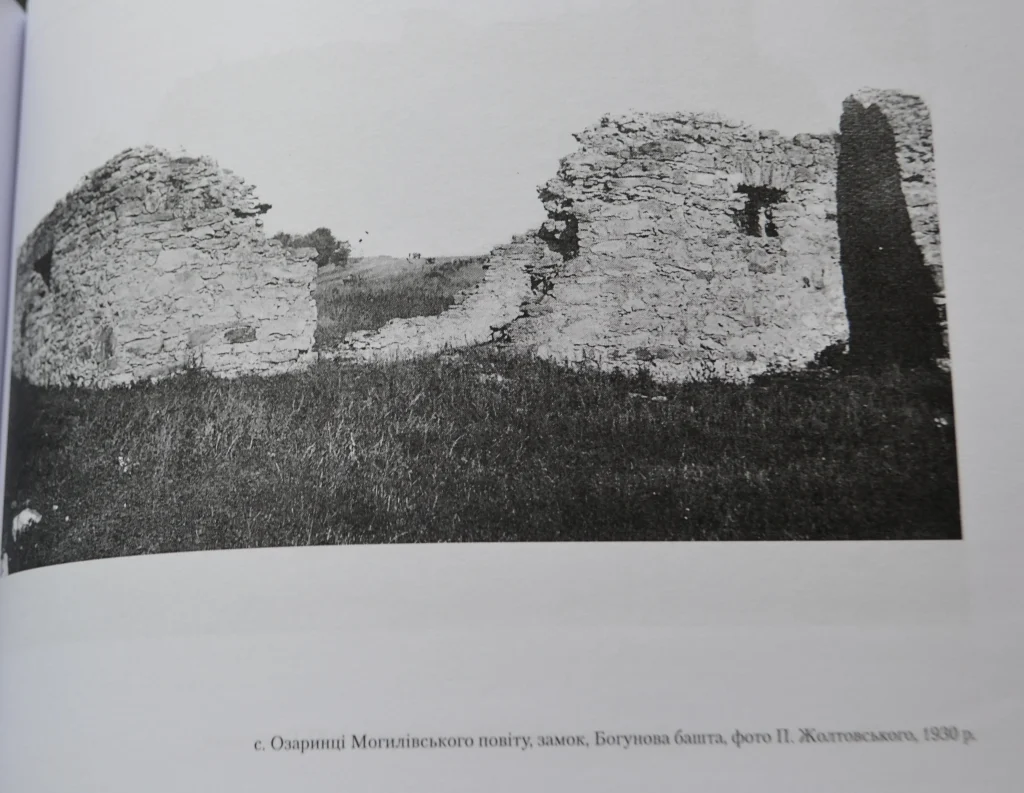
The castle was built in 1657 by Cossacks — according to historian Antonovych, under the leadership of Mohyliv colonel Ostap Hohol, an ancestor of the writer Nikolai Gogol. It was built to defend against Ottoman and Tatar raids along the Volosky Road, one of four main Tatar routes through Podillia.
In 1690, the Ottomans finally came and destroyed the castle.
In 1699, it was rebuilt.
General Information
| What? | Description |
|---|---|
| Name | Ozarynetske Castle |
| Address | Ozarynivtsi village, Mohyliv-Podilskyi district, Vinnytsia Oblast |
| Setting | on the steep right bank of the Nemyia River |
| Built | completed 1657 (some versions suggest an earlier start) |
| Builder | Ostap Hohol, Mohyliv colonel (per Antonovych); an alternative version credits Ivan Bohun |
| Shape | square, 180 ft (55 m) per side, ~0.7 acres (0.3 ha) |
| Destroyed | 1690 (by the Ottomans) |
| Rebuilt | 1699 |
| Folk name | “the Turkish fortress” |
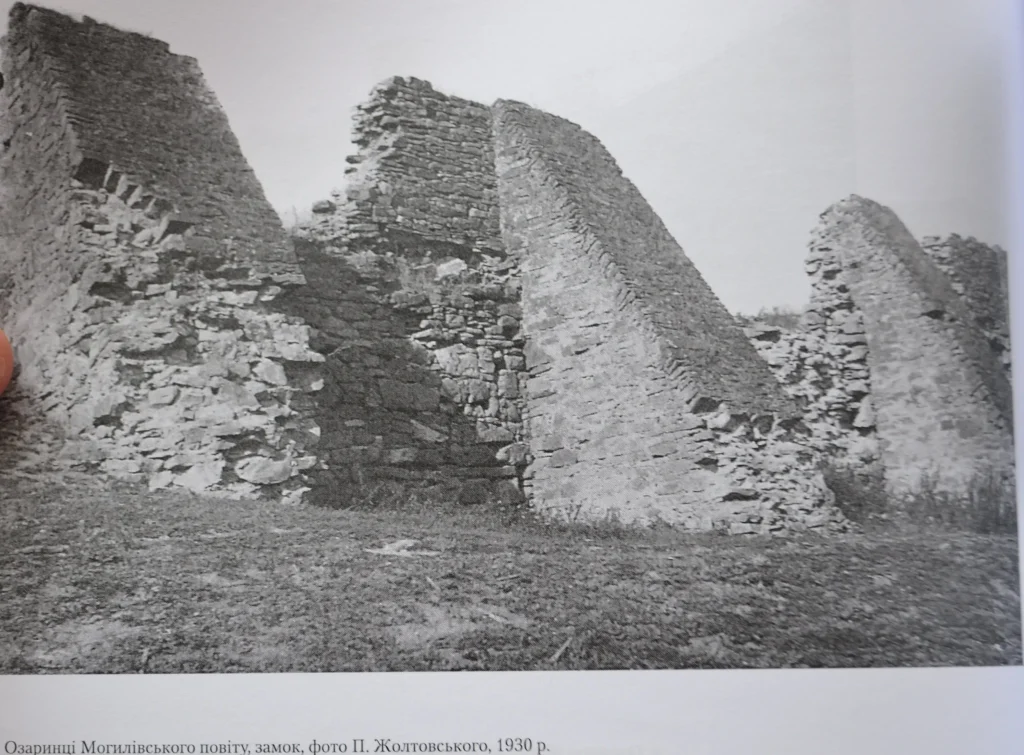
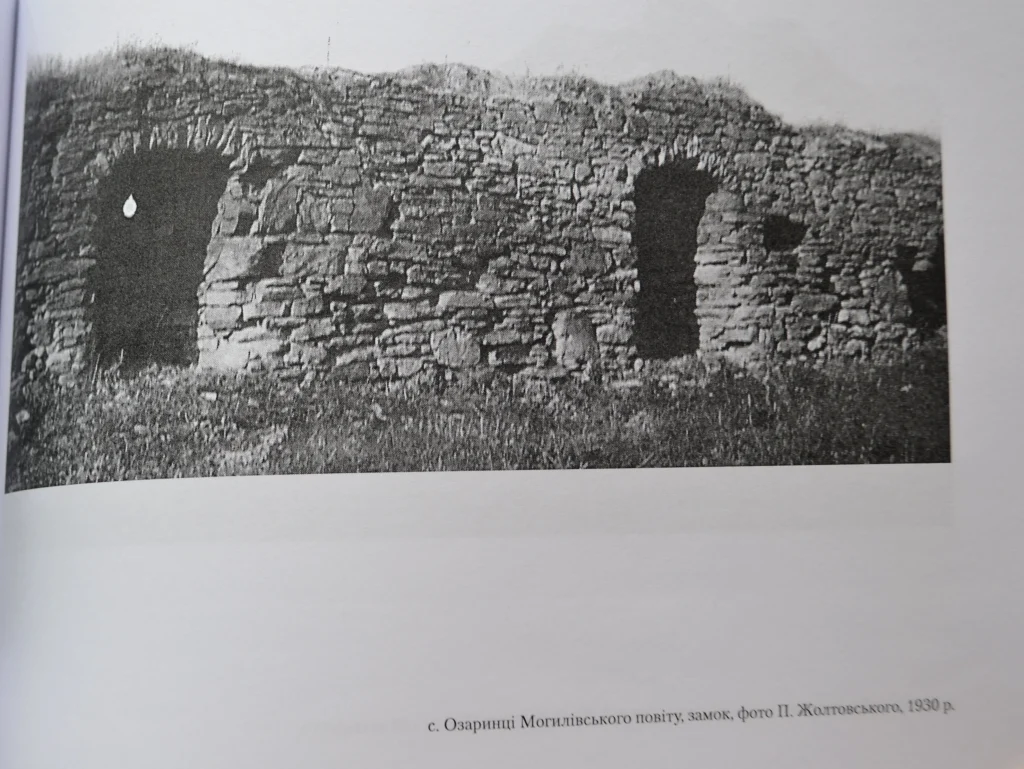
| Condition | ruins, gradually overgrown with grass |
The Volosky Road and the Logic of the Site
Ozarynivtsi stands where the Volosky Road crossed the Nemyia River — one of four major Tatar routes through the Podillia steppe. Whoever controlled the crossings controlled the safety of entire districts.
Even before the castle, settlements of the Trypillia and Cherniakhiv cultures stood on this site. Fuel and trade were scarce here — but the topography was excellent for defense: a steep bank above the river.
1431 — the first written mention of Ozarynivtsi. Polish king Władysław Jagiełło recorded the village as belonging to Świętosława, for 50 hryvnias.
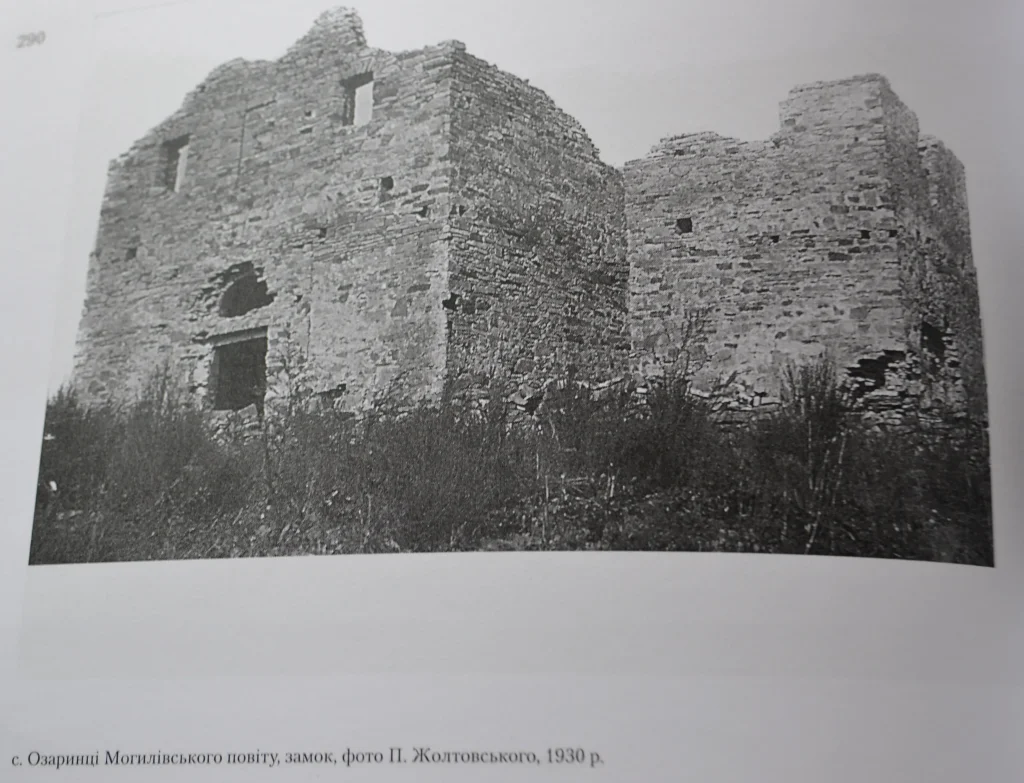
1657 — according to different accounts, the Cossacks of either Ostap Hohol (Nikolai Gogol’s ancestor) or Ivan Bohun completed a stone fortress: a 55×55 m (180×180 ft) square. A two-story gate tower stood at the center of the south wall. An octagonal tower (round on the inside) occupied the northwest corner.
Hohol or Bohun: an Open Question
Who actually built the castle remains a live debate.
According to Antonovych: construction was completed by Ostap Hohol, Mohyliv colonel, whom the Polish king put in charge of Podillia. He also commanded a number of villages and fortresses across the region.
By another account: the castle was built by Ivan Bohun, one of the most distinguished Cossack commanders, who was actively reinforcing Podillia’s defenses at the same time.
Both versions have documentary grounding. There’s no definitive answer.
1690: Destruction. 1699: Rebuilding
In 1690, during a devastating raid by Ottoman forces, Ozarynivtsi was burned and the castle destroyed.
In 1699, under the Treaty of Karlowitz, Podillia returned to Poland. The castle was rebuilt.
But not for long. Through the 18th century, the castle gradually lost its significance — the borders had shifted, and a fortress here was no longer needed.
Bread in the Ruins
One of the castle’s later owners converted the remains into a grain storehouse. A defensive fortress, turned into a food warehouse. Eventually even that function was abandoned.
Local residents began taking stone from the walls for their own buildings — standard practice for neglected structures, but it accelerated the castle’s collapse.
Today, what remains of the castle:
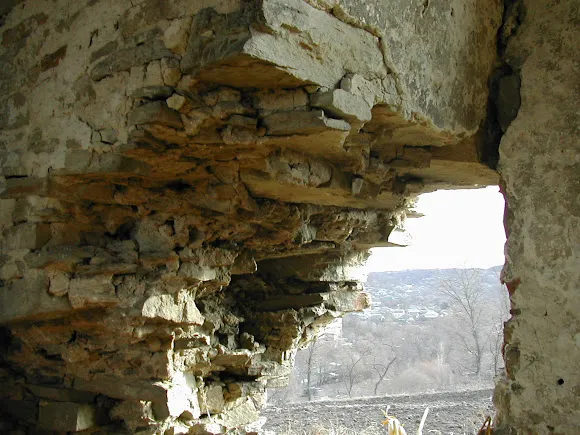
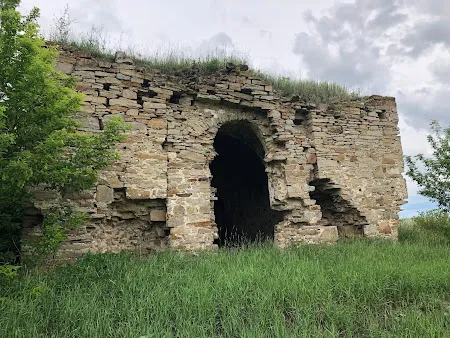
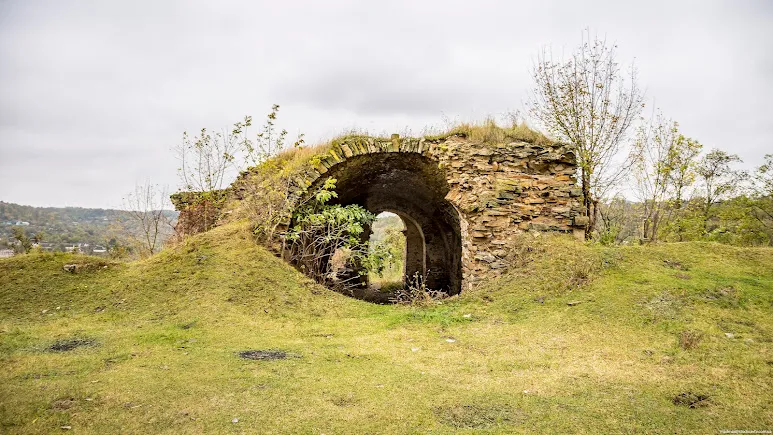
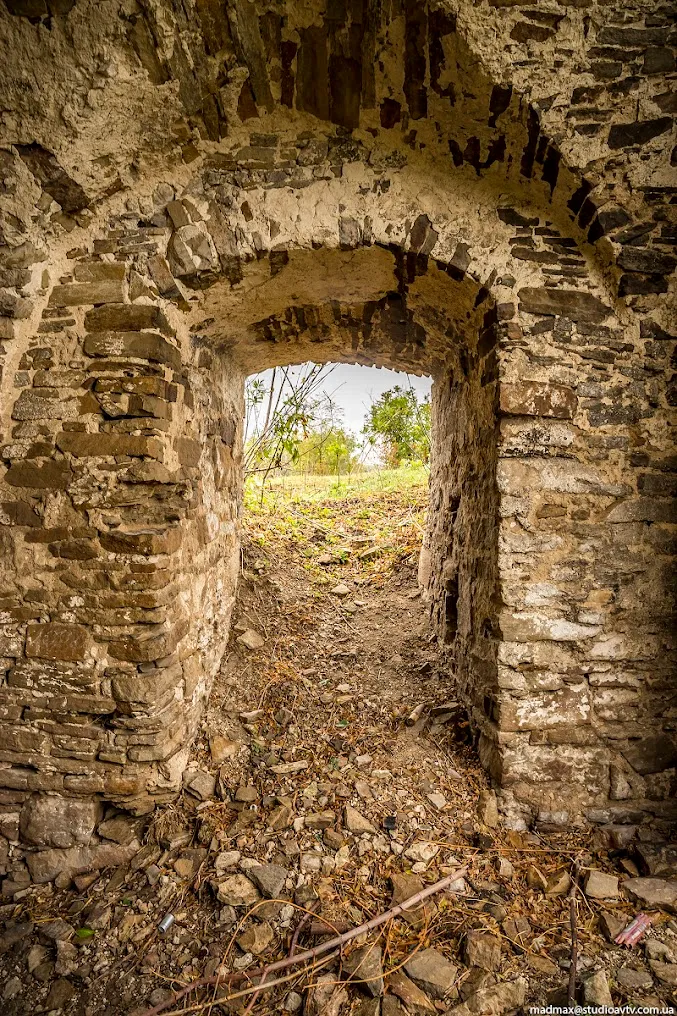
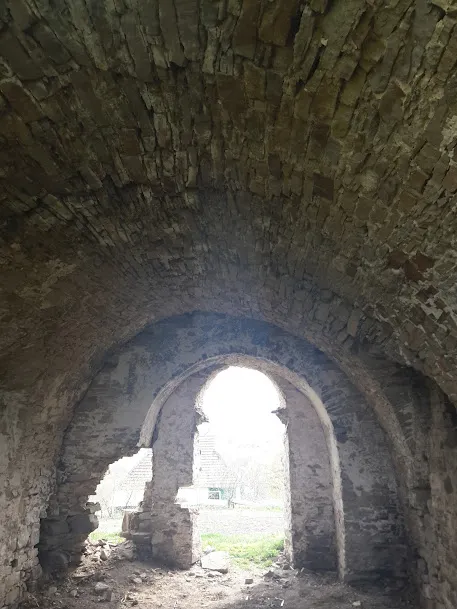
- fragments of the gate tower’s walls (the two-story lower tier)
- traces of the foundation of the octagonal tower in the northwest
- the rest lies under grass and soil
What Not to Expect
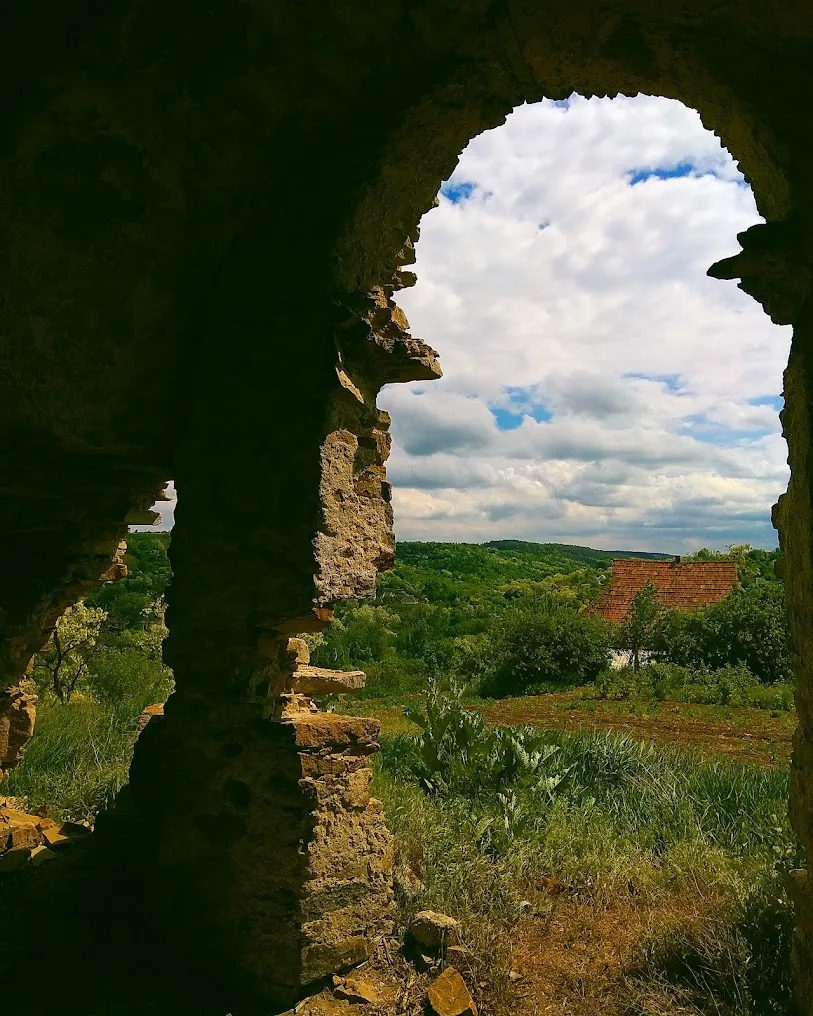
This isn’t a tourist site. The ruins of Ozarynetske Castle are overgrown with grass and gradually being reclaimed by the earth. No fence, no explanatory signs, no security.
Worth the trip only for those specifically researching 17th-century Cossack fortresses of Podillia — or who want to see a castle slowly returning to the ground.
What Else Is in Ozarynivtsi
Despite the castle’s ruined state, the village itself is worth a look:
- the 17th-century castle church — beside the ruins, better preserved
- the Protection of the Mother of God Church (1856) — across the road
- ruins of an 18th-century synagogue — Ozarynivtsi was a typical Jewish shtetl; three synagogues once stood here, two destroyed in the pogroms of the 1920s, one surviving in ruins
- ancient settlements spanning from the Paleolithic through the Trypillia culture to the Cossack era, all on the same plot of land
How to Fit It Into a Route
Ozarynivtsi is in Mohyliv-Podilskyi district, ~81 miles (~130 km) from Vinnytsia.
- Mohyliv-Podilskyi (~12 miles / ~20 km) — a town on the Dniester, with a bridge and embankment
- Busha (~22 miles / ~35 km) — a cave temple and pagan shrine, one of the strangest landmarks in the Vinnytsia region
- Murafa (~25 miles / ~40 km) — Jan Zamoyski’s fortress
Practical Information
- Admission: free
- Condition: ruins under grass; only the gate tower partially stands
- Time needed: 15–20 minutes
- From Mohyliv-Podilskyi: ~12 miles (~20 km)
- From Vinnytsia: ~81 miles (~130 km)
Conclusion
The Cossacks built it to defend against the Ottomans.
The Ottomans destroyed it. The Cossacks rebuilt it. Then it stored bread. Then it was dismantled for stone.
Now it’s overgrown with grass, and locals point to it as “the Turkish fortress.”
Memory, too, is a kind of ruin. But in its own way, an accurate one.