In 1716, Peter I granted the village of Sokyryntsi to the Galagan family — as a reward for treason. Colonel Hnat Galagan of Pryluky switched sides to the Muscovite tsar during Mazepa’s uprising, and that betrayal became the foundation of an estate Chernihiv Oblast is now proud of. The palace that survives today was built by Hnat’s great-grandson, Pavlo Hryhorovych Galagan, between 1823 and 1829, designed by architect Pavlo Dubrovsky.
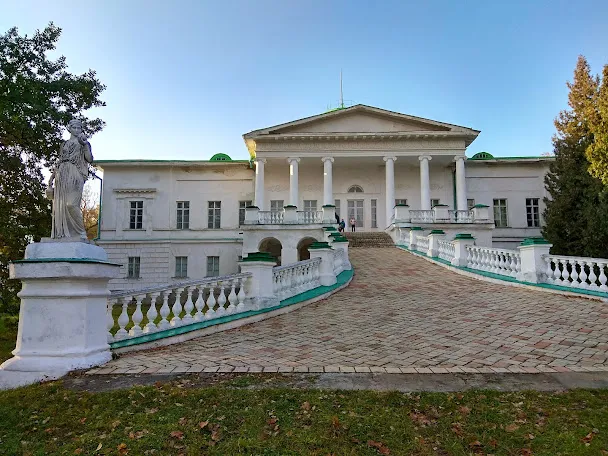
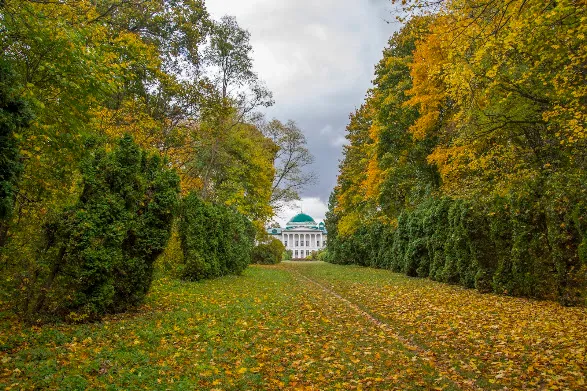
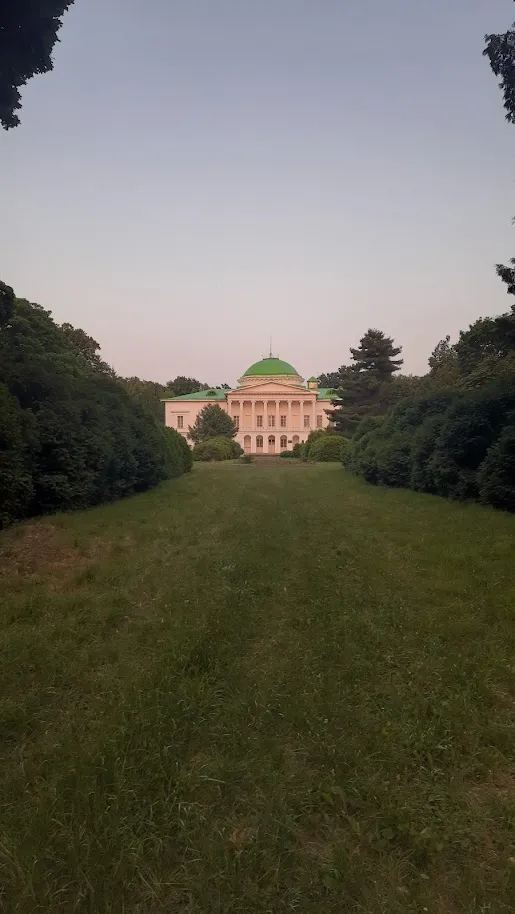
Pavlo Hryhorovych himself lived in the finished mansion only briefly: he died in 1834, just five years after construction ended, having spent much of that time abroad for medical treatment. The Empire-style palace — a two-story brick building with a large decorative dome and six-column porticoes — has outlasted its first owner by nearly two centuries.
General Information
| What? | Description |
|---|---|
| Name | Galagan Palace (Sokyryntsi Palace) |
| Address | Sribne Hromada, Chernihiv Oblast, village of Sokyryntsi, Sadova St. 16 |
| Built | 1823–1829 |
| Commissioned by | Pavlo Hryhorovych Galagan |
| Architect | Pavlo Dubrovsky |
| Style | Empire (Neoclassical) |
| Material | Brick, plaster |
| Condition | Fair, building in active use |
| Status | National architectural landmark; the park holds state-level landscape-monument status |
| Entry | Park grounds — free; palace — active school, access is limited |
From Betrayal to Ukrainophilia
The Galagan family’s story reads almost like a fable with an inverted moral. Hnat Galagan, the estate’s founder, went down in history as a traitor — the man who handed over rebelling Cossacks to the Muscovite army. Three generations later, his descendant Hryhorii Pavlovych Galagan became one of the most dedicated Ukrainian philanthropists and cultural figures of his time: he bought the blind kobzar Ostap Veresai out of serfdom, arranged concerts for him, and supported him financially for life. The estate hosted guests such as Panteleimon Kulish, Mykola Kostomarov, and Taras Shevchenko.
I think this internal contradiction within the family — from betrayal to genuine Ukrainophilia — is more interesting than any architectural detail of the palace, and an article about Sokyryntsi without it would be nothing more than a description of a facade.
The Architecture, and What’s Left of It
At the time of construction the palace had roughly 60 rooms and served as the family’s entertainment residence. Inside was a painting and weapons collection contemporaries valued at hundreds of thousands of dollars. After the 1917 revolution the family emigrated to France (a granddaughter of the last Galagan married Count Lamsdorf), and the art collection became the foundation of the Chernihiv Art Museum named after H. Galagan — meaning the estate’s main treasures today should be sought in Chernihiv, not in Sokyryntsi.
The Park and the Ostap Veresai Memorial Room
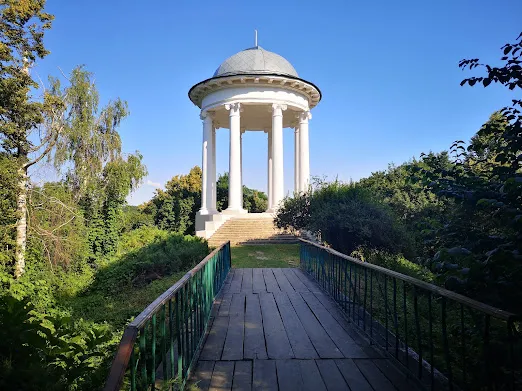
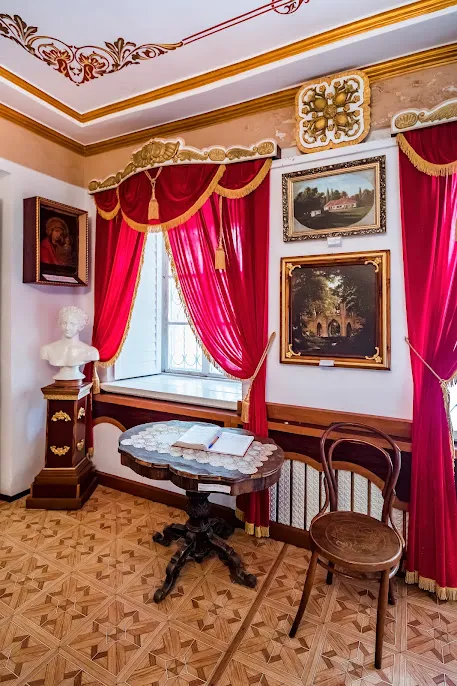
Sokyryntsi Park received state-level landscape-monument status in 1972. Its formal section, with the main avenue, adjoins the palace directly; the landscape section slopes down toward a pond. Inside the palace, a memorial room is dedicated to Ostap Veresai, who is buried on the estate grounds.
The Soviet Era and Today
In 1920 an agronomy school opened inside the palace, later becoming an agricultural technical college and vocational school. Today the building houses the Sokyryntsi Vocational Agricultural Lyceum — meaning it has continued serving an educational purpose for more than a century, rather than standing empty as a museum piece.
What Not to Expect
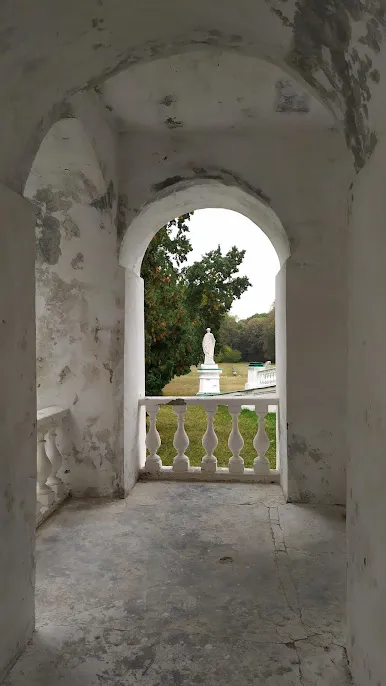
Don’t expect an open-air museum with free access to the interiors: the palace is an active school building, and viewing the inside requires prior arrangement rather than a standard tourist visit. The original painting and weapons collection no longer remains on site — it moved to Chernihiv. Some park structures and centuries-old tree alleys fell into disrepair as early as the 1920s, so the grounds feel more like the atmosphere of a half-forgotten estate than a manicured palace-and-park ensemble.
What to See Nearby and How to Fit It Into a Route
- Trostianets Arboretum — about 12 miles (~20 km), a 19th-century landscape-park monument founded by Ivan Skoropadsky.
- Kachanivka National Historical and Cultural Reserve — roughly 28–31 miles (~45–50 km), another Chernihiv Oblast estate with its own palace and park.
- Pryluky — about 19 miles (~30 km), the historic center of a former regimental town.
Practical Information
- Entry: park grounds — free; palace viewing — by prior arrangement with the lyceum (an active educational institution)
- How to get there: take the Kyiv–Sumy highway, turn off toward Sokyryntsi, then continue 3 miles (~5 km) to the village
- Time needed: 1–1.5 hours (park and memorial room)
- Special conditions: the palace interiors are not freely open to visitors — this is not a museum in the conventional sense
Conclusion
The Galagan Palace in Sokyryntsi is valuable less for its dome and porticoes than for what it reveals about a family that moved, across three generations, from betrayal to Ukrainian patriotism. The estate’s main collection now lives in Chernihiv, and the palace itself still serves an educational, not a museum, function.