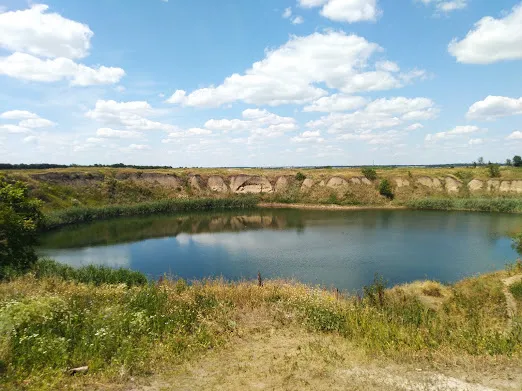
The Salt Lake in Kharkiv Oblast isn’t a natural body of water — it’s the result of an industrial accident. In 1962, drillers near Antonivka village in Kehychivka Raion were sinking a gas well, hoping to find gas and oil deposits beneath a salt dome several kilometers down. Instead, gas pressure destroyed the well structure, the ground began to collapse, and a crater roughly 200 ft (60 m) across opened up where the drilling rig had stood — taking the equipment down with it.
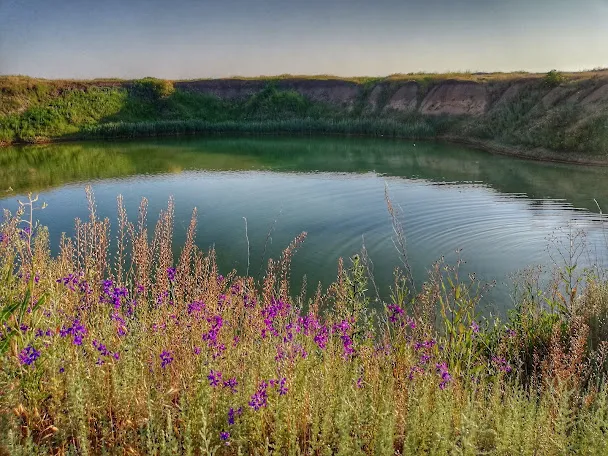
The crater gradually filled with groundwater, which slowly dissolved the underground salt deposits — and that’s how a lake formed whose water gets compared to the Dead Sea.
General Information
| What? | Description |
|---|---|
| Name | Salt Lake (Antonivka Lake) |
| Location | Antonivka village, Kehychivka Settlement Hromada, Kharkiv Oblast |
| Coordinates | 49.321496, 35.813732 |
| Type | Man-made salt lake (crater from a blown drilling well) |
| Size/Depth | Diameter roughly 280 ft (~85 m), area over 65,900 sq ft (~6,100 m²); exact maximum depth unknown |
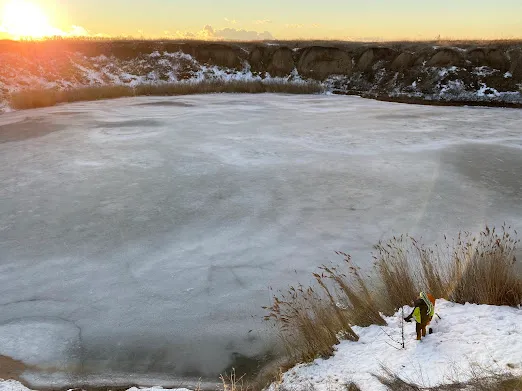
| Temperature | Does not freeze in winter |
| Status | Unofficial natural landmark, no protected status |
Why the Water Is Salty
The ground beneath this area holds not only gas deposits but salt deposits as well. As groundwater filled the crater, it slowly dissolved that salt, and the lake became salty enough that a person floats almost without effort — the effect that earns it Dead Sea comparisons. I think the lake’s industrial origin — not some legend or natural phenomenon — is exactly what makes this story worth telling: a blown well rarely leaves behind something this photogenic.
What the Lake Is Like Today
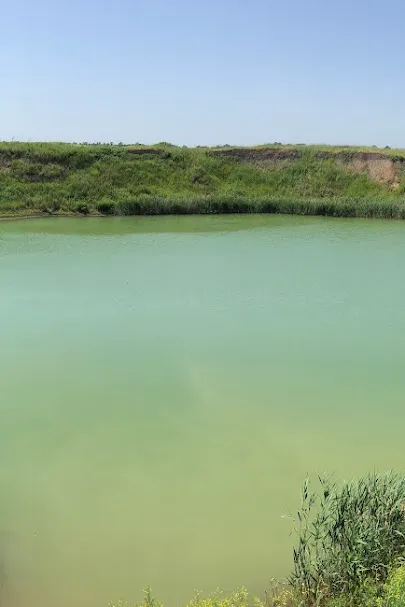
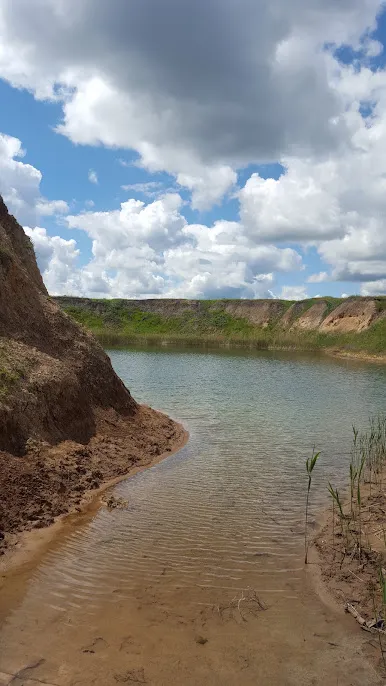
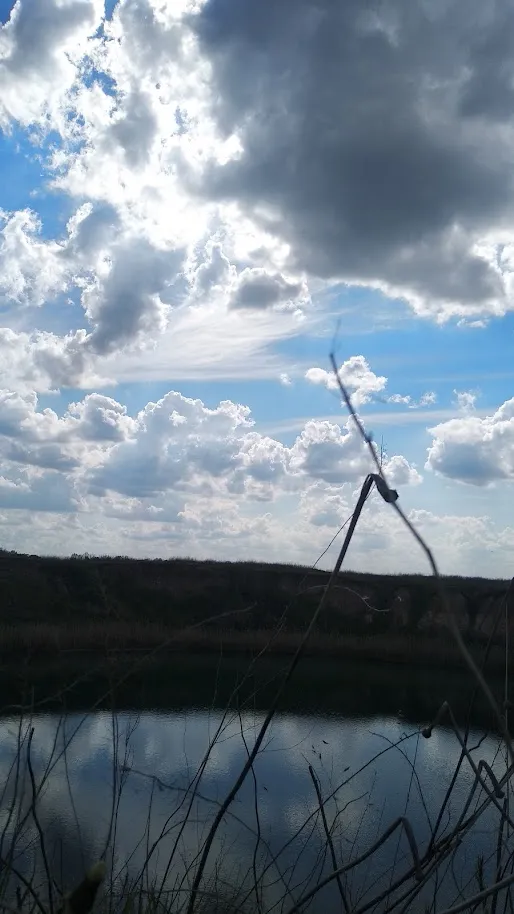
Over recent decades the lake has been gradually desalinating: salt concentration is dropping, though the water is still salty enough to keep you afloat with little effort. According to various accounts, part of the 1960s drilling equipment remains at the bottom.
What Not to Expect
Don’t expect a groomed beach or swimming infrastructure — the maximum depth has never been officially measured, so enter the water with caution. This is a quiet, non-touristy spot in the usual sense: an industrial anomaly worth visiting deliberately, not as a standard beach outing.
What to See Nearby and How to Fit It Into a Route
- Kehychivka — the hromada’s settlement center, the nearest town with transport connections.
- Krasnohrad — a nearby raion town with its own historic center.
- Kharkiv — the oblast capital, about 87 miles (~140 km) away.
Practical Information
- Entry: free
- How to get there: commuter train or bus from Kharkiv to Kehychivka, then on to Antonivka village; a car is easier
- Time needed: 30–60 minutes
- Special conditions: maximum depth is not officially measured — swim cautiously; the site sees few visitors
Conclusion
The Salt Lake in Antonivka is a rare case where a 1962 industrial accident didn’t leave behind a contaminated site, but a body of water people now compare to the Dead Sea.