The town of Bar was once called “Riv,” after the Riv River that flowed past it.
In 1537, Queen Bona Sforza bought this land and built a new stone fortress. She renamed the town Bar, after Bari, her family’s hometown in Apulia, near Naples.
That’s how a stretch of Ukrainian Podillia came to be named after a southern Italian port city.
In 1768, in this same town, Polish nobles proclaimed the Bar Confederation — an uprising against Russia and the king’s reforms. It ended with the First Partition of Poland in 1772.
The castle stood at the center of both events.
General Information
| What? | Description |
|---|---|
| Name | Bar Castle (the Bar fortress) |
| Address | 7 V. Buniakovskoho St., Bar town, Bar district, Vinnytsia Oblast |
| First fortifications | 14th century (the Koriatovych princes, a wooden fortress called “Riv”) |
| Stone fortress | 1537 (Bona Sforza) |
| Renamed | 1537: “Riv” to “Bar,” after Bari in Apulia |
| Shape | square, with bastions at the corners |
| Evliya Çelebi | called it “a truly mighty fortress” |
| Bar Confederation | proclaimed in Bar in 1768 |
| Condition | fragments of walls and towers |
| Admission | free |
From “Riv” to Bar: Bona Sforza
In the 14th century, the Lithuanian Koriatovych princes built the first fortifications on the left bank of the Riv River. The area and the small town were called “Riv.”
Tatar raids followed again and again: 1452, 1453, 1457, 1469, 1474, 1478, 1489, 1490, 1494, 1498. Each time, the town was rebuilt.
In 1518, King Sigismund I married Bona Sforza — the same queen who later held Kremenets Castle, and, just as with that castle, never once visited it. She received several estates from her husband.
In 1537, Bona bought Riv, built a new stone fortress, and renamed it “Bar.” A copper plaque in Latin, noting Bona’s patronage of the town, was mounted on the main tower.
By a charter of privileges dated November 24, 1537, she exempted residents from taxes for 8 years, in light of the destruction caused by Tatar raids.
“The Gate of Polish Ukraine” and Evliya Çelebi
Throughout the 17th century, Bar Castle, together with the Berdychiv fortress, was known as “the gate of Polish Ukraine.”
The Turkish traveler and writer Evliya Çelebi visited Bar and left a note: “Stone Bar is truly a mighty fortress.” He didn’t storm it — he simply looked, and wrote.
In 1648–1649, during Khmelnytsky’s War of Liberation, the Cossack colonel Maksym Kryvonis captured the castle. The chronicler Samiilo Velychko recorded: besides the great plunder that fell to Kryvonis’s army, they took many cannons and a vast quantity of supplies at Bar, and even captured someone from the Potocki family.
In 1672, the Turkish army captured Bar. The town and castle went into decline.
1768: The Bar Confederation
On February 29, 1768, a group of Polish magnates and nobles proclaimed the Bar Confederation in Bar — an armed alliance against Russia and against King Stanisław August Poniatowski.
The confederates believed Russia’s influence over Poland had grown too great, and they wanted to restore independence.
The result: Russia crushed the confederates. In 1772, the First Partition of Poland took place, dividing the country between Russia, Prussia, and Austria. Poland lost a large portion of its territory.
The Bar Confederation is considered one of the main causes of that partition.
It all started at the castle.
What Remains Today
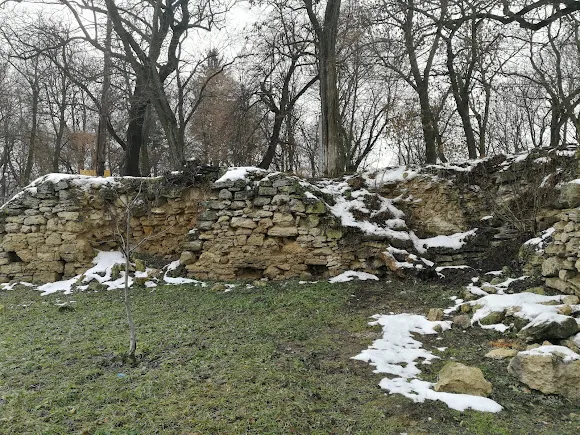
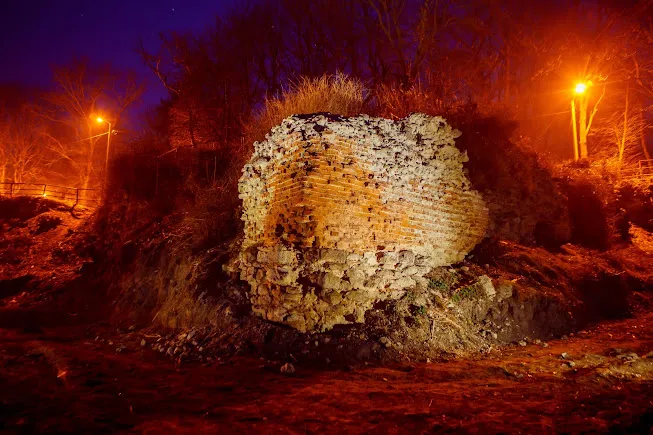
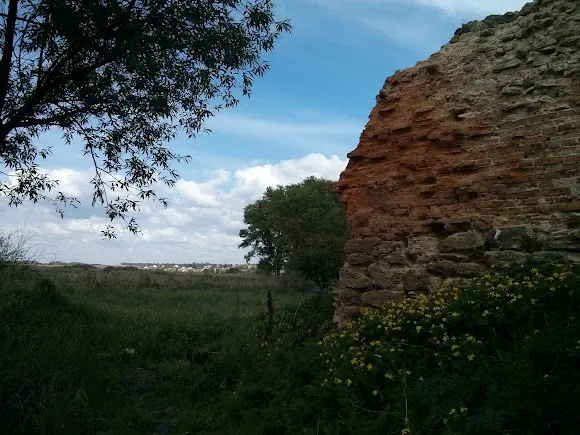
Fragments of walls and towers survive from the fortress. The outlines of the bastions are still visible. The castle stands in the central part of town, not on a hill or a cliff, but amid the town’s buildings.
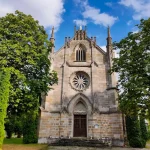
Nearby is a Dominican monastery (17th–18th centuries) and a church, both better preserved than the castle.
What Not to Expect
There’s no intact castle here. Fragments of walls scattered through the town are all that remains of the “gate of Polish Ukraine.” But Bar itself is a small town with several interesting sacred sites.
How to Fit It Into a Route
Bar is in Bar district, about 75 miles (~120 km) from Vinnytsia.
- Medzhybizh (~37 miles / ~60 km) — the Sieniawski castle and the grave of the Baal Shem Tov
- Kamianets-Podilskyi (~62 miles / ~100 km) — 11 towers and the Smotrych canyon
- Khmilnyk (~37 miles / ~60 km) — a castle and a spa resort
Fits into the “Road Trip Through the Fortresses of Podillia” route.
Practical Information
- Address: 7 V. Buniakovskoho St., Bar town
- Admission: free
- Condition: fragments of walls; exterior viewing only
- Time needed: 15–20 minutes (castle) plus 30 minutes (town)
- From Vinnytsia: ~75 miles (~120 km)
Conclusion
Lithuanian princes built “Riv.” Bona Sforza rebuilt it and renamed it after her hometown of Bari.
The Turks took it in 1672. The nobility proclaimed a confederation there in 1768. The Poles lost part of their country in 1772.
Of the castle, only fragments of walls remain.
But the town’s name still comes from the Apulian port city where the queen was born.