According to one version of events, mining of the pegmatite deposit at Yelyseiivka began as early as the German occupation during World War II — meaning the minerals photographers admire from drone shots today were extracted for the occupying authorities’ needs long before the quarry became a protected natural landmark.
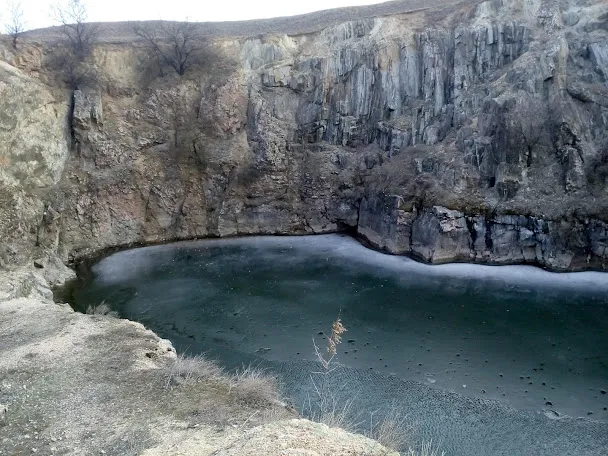
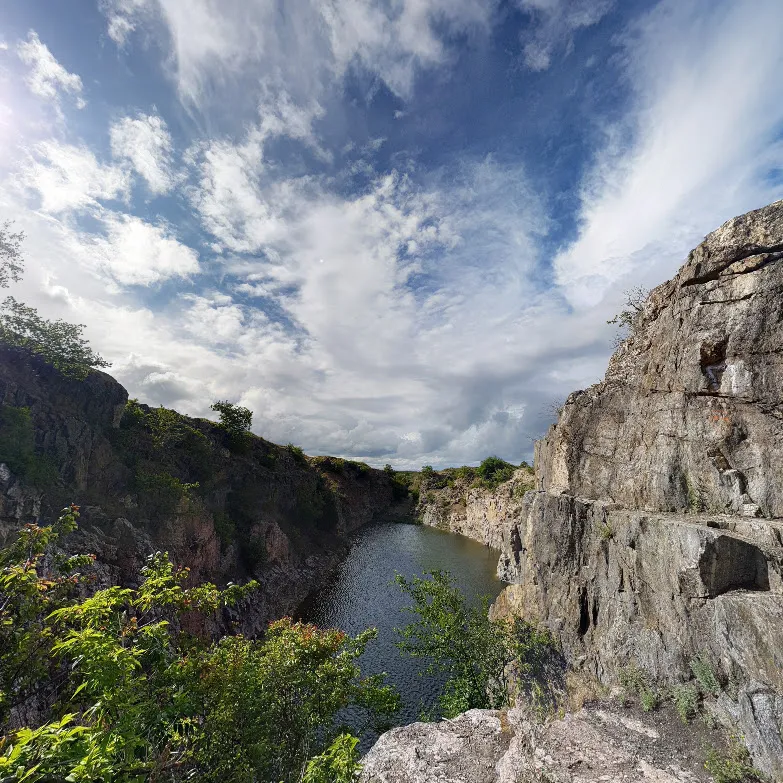
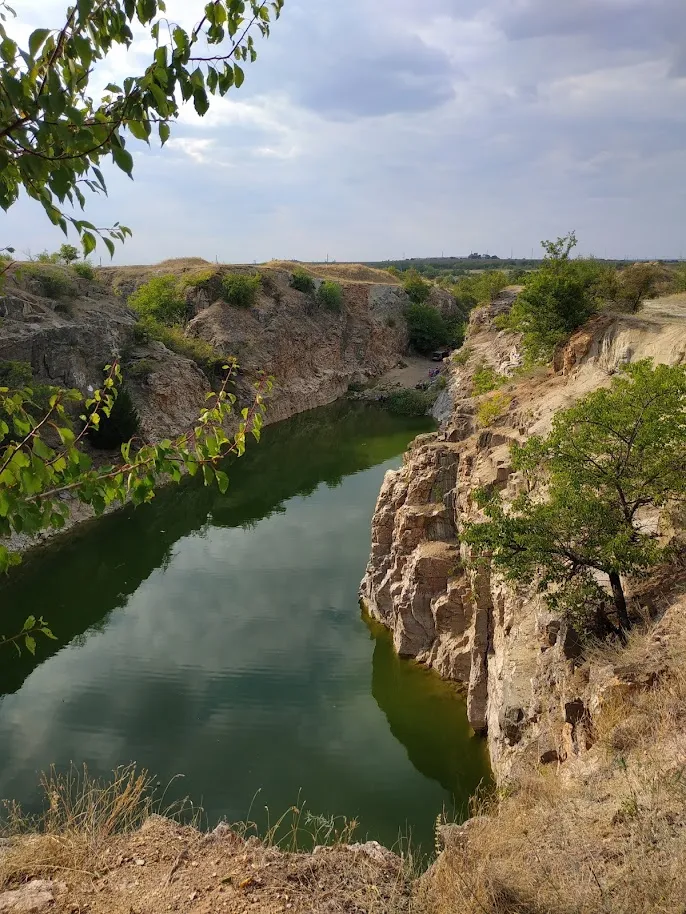
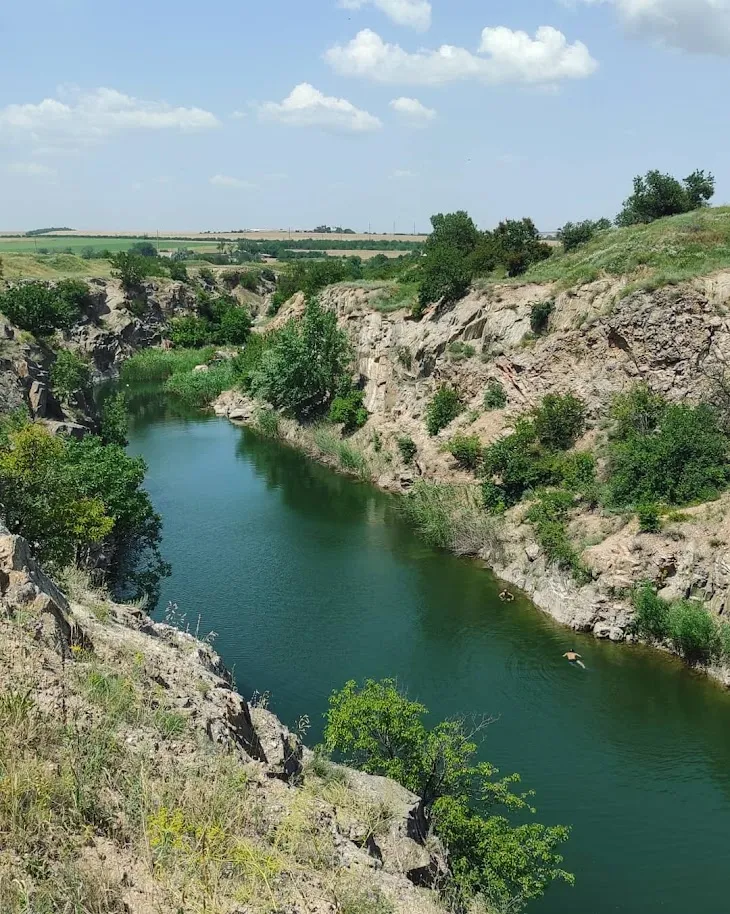
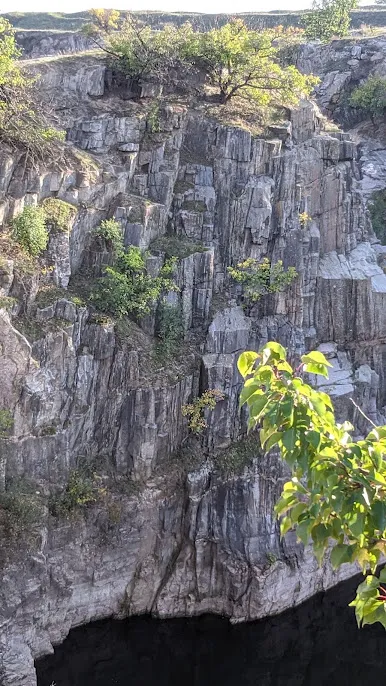
Extraction of beryl, tantalite, cassiterite, lepidolite, and other minerals continued until 1972, when mining stopped and groundwater filled the pits. That’s how two lakes formed, 59 and 79 ft deep (18 and 24 m), surrounded by sheer cliffs 98–131 ft (30–40 m) high. The quarry itself holds more than 150 rock and mineral varieties over a billion years old.
⚠️ TEMPORARILY OCCUPIED TERRITORY
Yelyseiivka Quarry is located in Prymorskyi Raion, Zaporizhzhia Oblast, temporarily occupied by Russia since 2022. Visiting is impossible and dangerous. This article is documentary and informational in nature.
General Information
| What? | Description |
|---|---|
| Name | Yelyseiivka Pegmatite Quarry |
| Location | Yelyseiivka village, Prymorskyi Raion, Zaporizhzhia Oblast |
| Coordinates | Prymorskyi Raion, Zaporizhzhia Oblast, near the Sea of Azov coast |
| Type | Flooded pegmatite quarry, protected natural landmark |
| Size/Depth | Area 12 acres (5 ha); two lakes 59 and 79 ft deep (18 and 24 m), shores 98–131 ft (30–40 m) high |
| Temperature | Not documented |
| Status | Locally protected natural landmark since 1972; territory occupied since 2022 |
Scientific Value Under Threat
I think the most important part of this quarry’s story isn’t its mineral diversity, impressive as it is — it’s that the site gained protected status back in 1972, under Soviet rule, and remained accessible to researchers and visitors for nearly half a century, until occupation made that accessibility impossible.
A Place Without Infrastructure
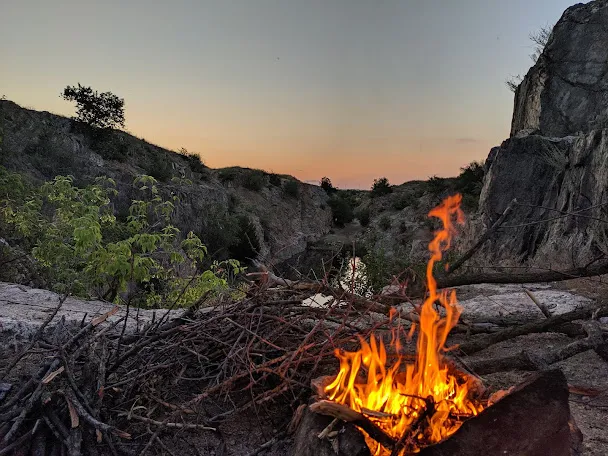
Even before the occupation, the quarry had almost no built infrastructure — just natural cliffs, water, and minerals reflected in sheer stone walls. That absence of intervention is exactly what made it popular with locals and photographers.
What Not to Expect
Don’t expect any way to visit the quarry: the territory is occupied, and any practical visitor information here would be inappropriate. This article preserves a documentary record of the landmark until it returns to Ukrainian control.
Conclusion
Yelyseiivka Quarry is a natural landmark whose scientific and touristic accessibility lasted half a century, from gaining protected status in 1972 to occupation in 2022 — and whose future remains unknown for as long as the occupation continues.