In the small town of Olyka stands a castle whose scale has nothing to do with the size of the settlement around it.
But once you learn it once held 365 rooms — one for every day of the year — and that one of its owners had his own portrait cast in pure silver — the scale starts to make sense.
This was built by people for whom modesty wasn’t on the list of virtues.
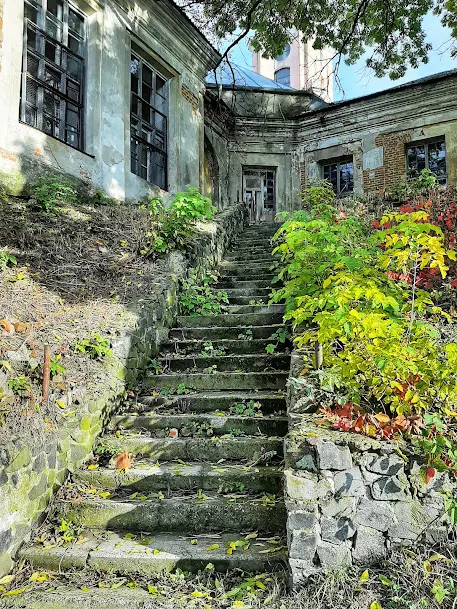
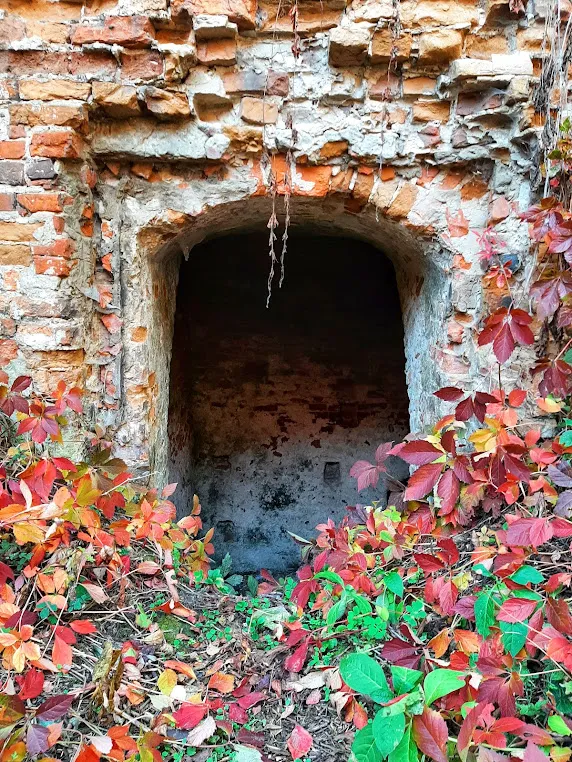
General Information
| What? | Description |
|---|---|
| Name | Olyka Castle (Radziwiłł Castle) |
| Location | Olyka urban-type settlement, Lutsk district, Volyn Oblast |
| Coordinates | 50°72′N, 25°82′E |
| Founded | 1558 (Mikołaj Radziwiłł “the Black”) |
| Area | ~6.7 acres (2.7 ha) |
| Rooms | 365 |
| Type | bastion fortress-residence |
| Distinction | one of the first, or the first, square bastion castle on the territory of present-day Ukraine |
| Status | architectural monument of national significance; a branch of the Volyn Regional Museum (since 2021) |
Who, and Why
In 1547, the Radziwiłłs received Olyka from Emperor Charles V and made it their entail — an indivisible estate passed down only to the eldest male heir. They introduced Magdeburg Law here.
In 1558, Prince Mikołaj Radziwiłł “the Black” began building a stone castle. The idea wasn’t just a fortress — it was a fortress-residence: a place from which one family would hold influence over an entire region.
The castle had 365 rooms — one for every day of the year. This wasn’t incidental. It was a display of power.
One later owner reportedly ordered his own portrait cast in pure silver — probably the most precise metaphor for who the Radziwiłłs were.
Ukraine’s First Bastion Fortress
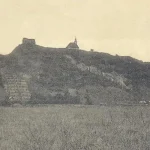
Olyka Castle is one of the first square bastion-type castles on the territory of present-day Ukraine.
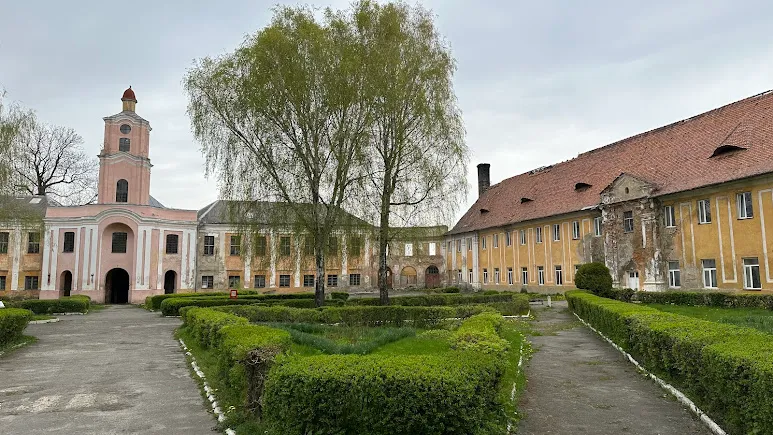
Shape: nearly a perfect square, 328 × 394 ft (100 × 120 m) — about the size of a football field. Bastions with watchtowers stood at all four corners. A moat and earthen fortifications completed the defenses.
The fortress became a model for similar fortifications built in other towns of the Polish-Lithuanian Commonwealth.
Between 1591 and 1648, the castle withstood numerous sieges — and was never taken by storm. Khmelnytsky’s Cossacks captured the town of Olyka during the Khmelnytsky uprising, but the castle held. In 1702, Swedish soldiers looted the town, but again the castle itself remained intact.
Evolution: From Fortress to Residence
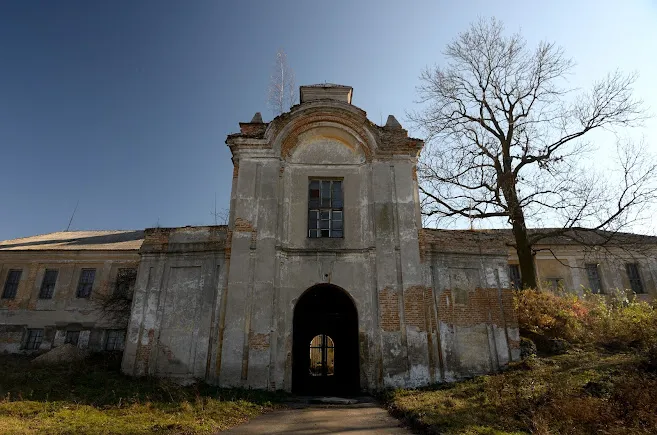
Between 1737 and 1755, Michał Kazimierz “Rybeńko” Radziwiłł carried out a reconstruction. A three-story palace appeared, and the entrance gate was crowned with a two-tiered clock tower — the castle’s most recognizable feature.
In 1760, Russian troops captured and looted the castle.
In 1883, at the initiative of Ferdinand Friedrich Radziwiłł, a 30-year renovation began. It was led by architect Zygmunt Gorgolewski — the same architect who designed the Grand City Theatre in Lviv (today the Lviv Opera).
The End of an Era: 1939
In 1939, Janusz Franciszek Radziwiłł, the last owner, left the castle and was arrested by Bolshevik authorities.
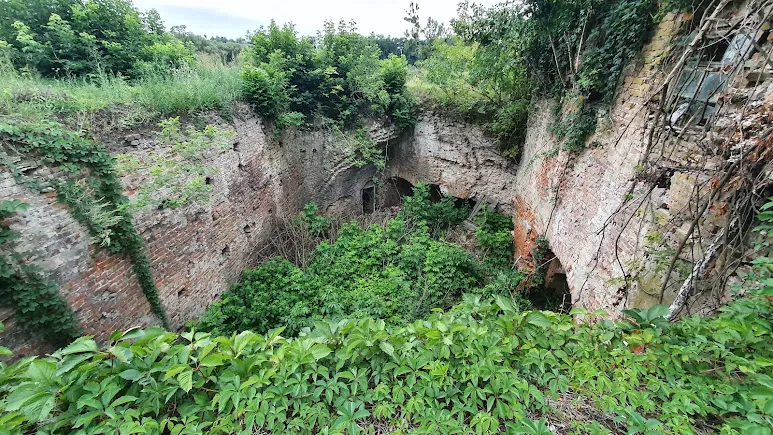
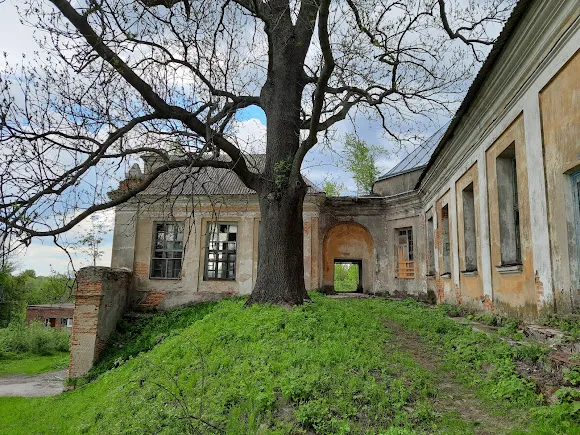
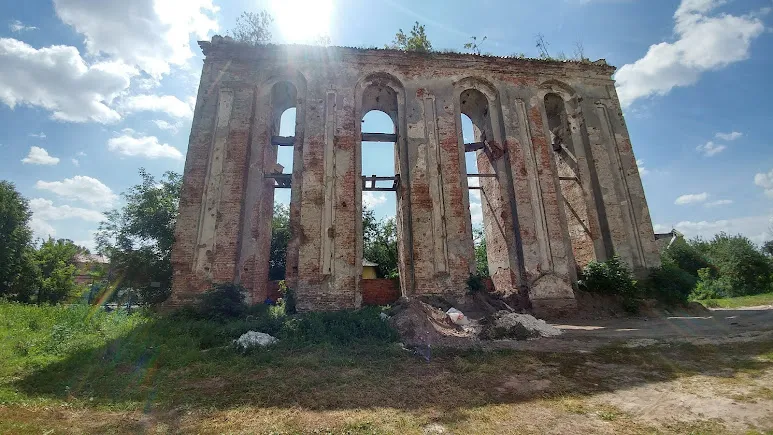
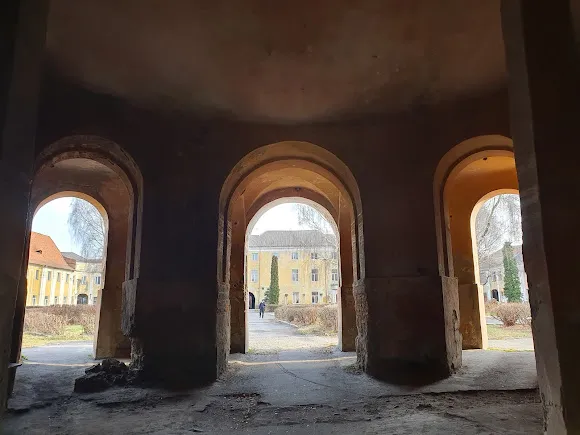
During World War II, the palace and most of the buildings burned. Ceilings and roofs collapsed. Only the walls and the first-floor vaulting, along with the bastions, survived.
After 1945, a horse-breeding farm briefly operated here, and from the mid-1950s, the Volyn Psychiatric Hospital No. 2, which remained until 2021.
On July 1, 2021, the castle was transferred to the Volyn Regional Museum.
The Underground Chambers: Legend and Reality
According to tradition, beneath the castle lies an extensive network of underground passages leading to churches, to the river, and to various corners of Volyn. One version holds that the passages served for secret movement and evacuation.
Part of the underground network remains unexplored. What’s confirmed: there are corridors connecting the bastions.
What Else Is in Olyka
The castle isn’t the only landmark:
- Holy Trinity Collegiate Church (“the Collegiata”) — built on the order of Albrecht Radziwiłł, in baroque style, by architects Benedetto Molli and Giovanni Malverna; the façade bears sculptures of four saints; in need of restoration
- Sts. Peter and Paul Church
- the old town layout
What to See Nearby and How to Fit It Into a Route
Olyka is 22 miles (35 km) from Lutsk. A logical route: Lutsk → Olyka → Rivne, or Lutsk → Olyka → Kremenets → Ostroh.
Practical Information
- Exterior viewing: free
- Museum: a branch of the Volyn Regional Museum — confirm current hours (restoration and opening are ongoing)
- Time needed: 30–60 minutes (castle plus church)
- From Lutsk: 22 miles (35 km), paved road
- Parking: by the castle
Little-Known Details
- 365 rooms — one for every day of the year. This isn’t legend; it’s a documented fact.
- The silver portrait of one of the Radziwiłłs is one of the symbols of the family’s “limitless” power.
- The 1883 restoration architect, Zygmunt Gorgolewski, was the same man who built the Lviv Opera House. A specialist of that caliber was brought in for Olyka.
- The castle was never taken by storm until the mid-17th century — not by Tatars, not by Swedes.
- 1939 marked the end of the Radziwiłłs in Olyka. After the fire, only the walls and first-floor vaulting survived.
- The psychiatric hospital in the castle operated from the 1950s to 2021 — 70 years. Gradual restoration began once it was handed over to the museum.
- Olyka was received from Charles V in 1547 — the same Charles V who warred with Francis I and hunted down Luther. It turns out the Volhynian Radziwiłłs had direct contact with the most powerful monarch of the Reformation era.
Conclusion
Olyka Castle isn’t a “pretty ruin.” It’s the materialized scale of a family that held this corner of Volyn for 400 years.
365 rooms. A silver portrait. The architect of the Lviv Opera brought in for its restoration.
And a psychiatric hospital for 70 years. Then, a museum.
There aren’t many places like this in Ukraine.