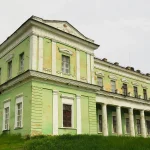
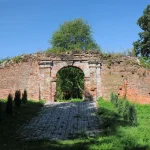
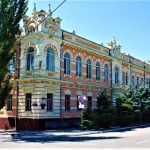
Between 1925 and 1933, the Tarnovsky Palace in Kachanivka housed the Vorovsky children’s commune — and, according to accounts, the children played with bones dug up from the former owners’ family crypt. That’s not the only detail that clashes with Kachanivka’s reputation as a symbol of refinement: an estate that once hosted Shevchenko, Gogol, Vrubel, and Repin went on, after the revolution, to survive looting, a state orphanage, a military unit, and a neurological spa — and only received reserve status in 1981.
The palace-and-park ensemble was founded in the 1770s by Count Petro Rumiantsev-Zadunaisky, a favorite of Catherine II, and reached its peak from 1824 under the Tarnovsky family — sugar magnates and patrons of the arts whose guestbook of signatures reads like an encyclopedia of 19th-century Ukrainian culture.
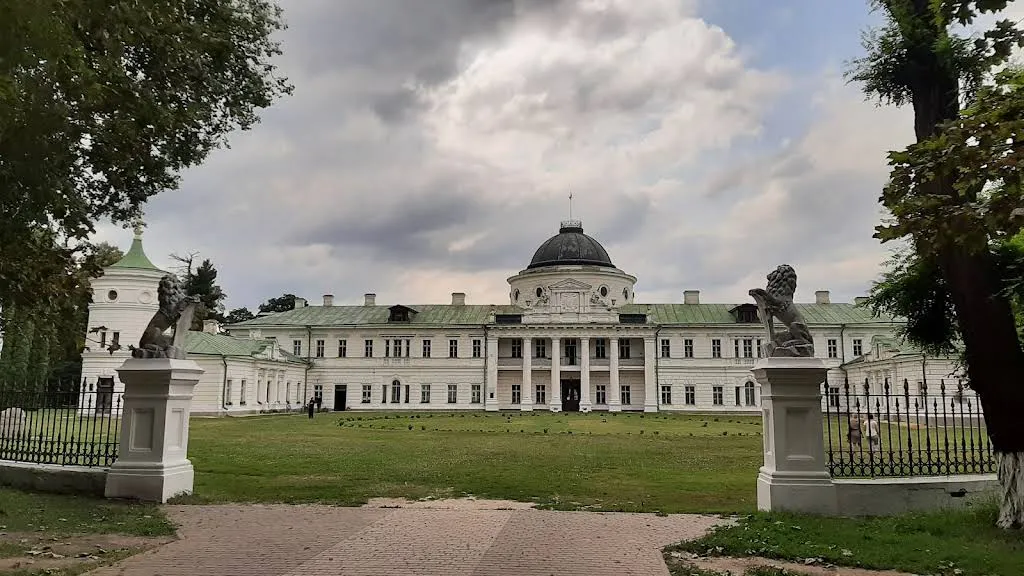
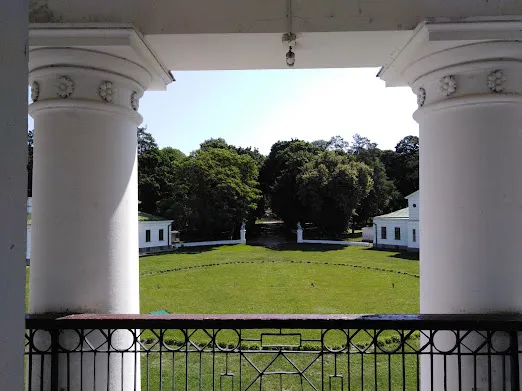
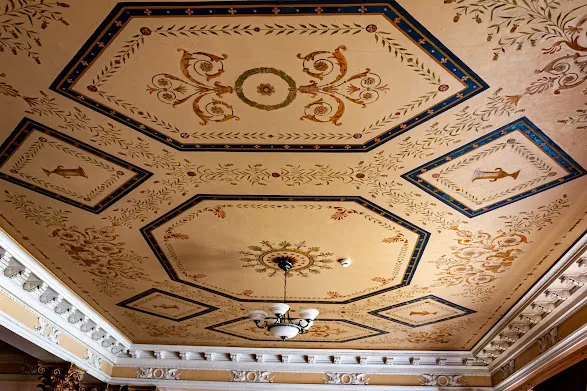
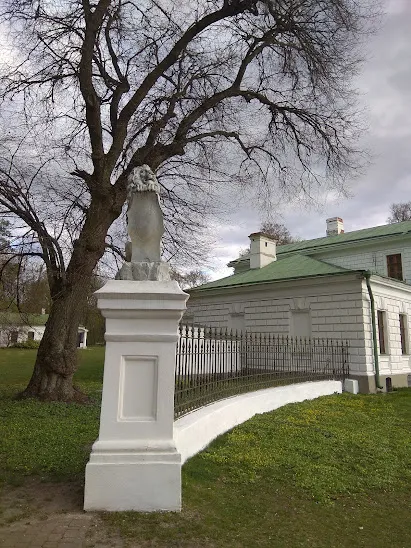
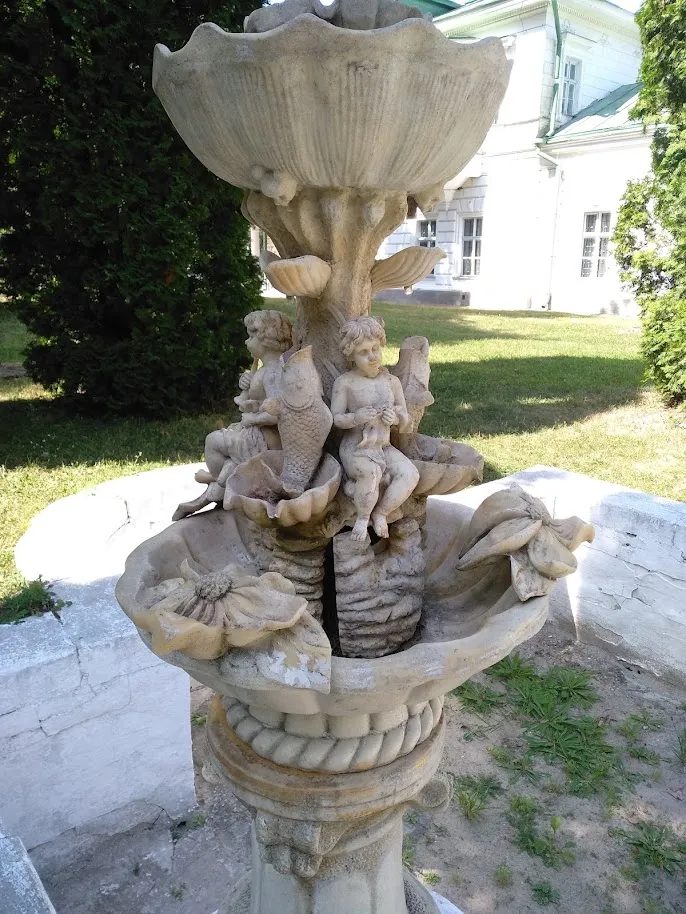
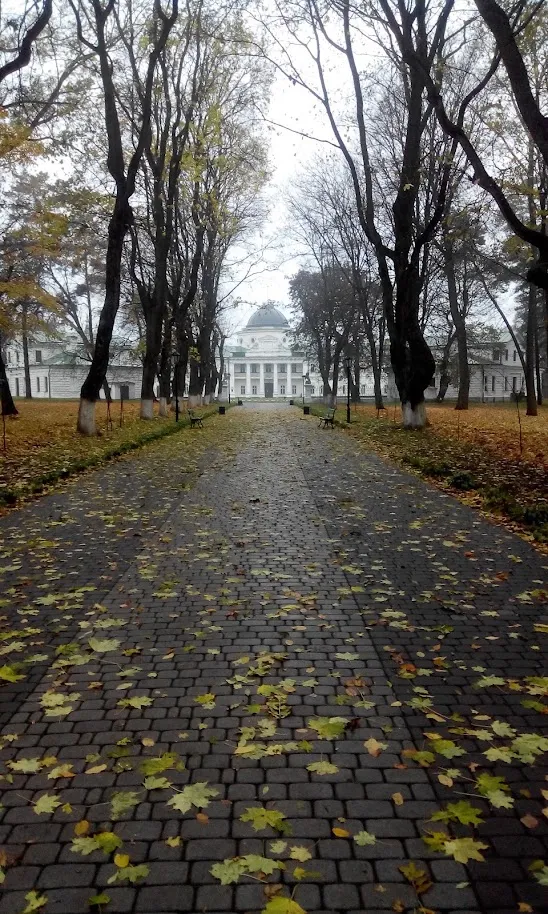
General Information
| What? | Description |
|---|---|
| Name | Tarnovsky Palace (Kachanivka Palace) |
| Address | Kachanivka settlement, Pryluky Raion (formerly Ichnia Raion), Chernihiv Oblast |
| Founded | 1770s (rebuilt and flourished from 1824) |
| Commissioned by | Petro Rumiantsev-Zadunaisky (founding); Hryhorii Tarnovsky (peak period) |
| Architect | Maksym Mostsepanov |
| Style | Neoclassical with historicist elements |
| Material | Brick (second floor timber, faced with brick) |
| Condition | Fair, restoration ongoing |
| Status | National Historical and Cultural Reserve (since 2001) |
| Entry | Paid, per the reserve’s visiting hours |
Taras Shevchenko and a Prophecy That Came True
Shevchenko disapproved of Hryhorii Tarnovsky’s extravagance and predicted the estate would be overgrown with weeds. That’s exactly what happened: the family went bankrupt, and only a sale to sugar magnate Pavlo Kharytonenko at the end of the 19th century saved the estate. I think this coincidence — a poet’s prophecy that came true almost literally — is more interesting than any description of the palace’s architectural style.
A Park Bigger Than the Palace
The park’s landscape section covers 310 acres (125.63 ha) — groves, oak forests, and the mirrored surfaces of twelve ponds on the lower plateau. It still holds its garden bridges, the “Hills of Love and Fidelity,” and artificial “romantic ruins” on the bank of the Great Pond — an 18th-century landscape-art monument.
What Not to Expect
Don’t expect authentic 19th-century interiors throughout the palace: after looting, an orphanage, a military unit, and a spa, much of the original decor is lost, and parts of the building are still under restoration. The story about bones from the family crypt isn’t a tour-guide legend — it’s a documented fact of the Soviet period, and visitors should be prepared for an estate that carries traces of decline as much as of former luxury.
What to See Nearby and How to Fit It Into a Route
- Sokyryntsi (Galagan Palace) — roughly 28–31 miles (~45–50 km), another Chernihiv Oblast estate with its own Empire-style palace and family history.
- Ichnia — the former raion center, the nearest town with transport connections.
- Pryluky — today’s raion center, with the historic core of a former regimental town.
Practical Information
- Entry: paid; check current ticket prices on the reserve’s official website
- How to get there: drive or take a bus from Chernihiv or Pryluky to Kachanivka
- Time needed: 2–3 hours (palace and part of the park)
- Special conditions: some buildings are under restoration; access to certain rooms may be limited
Conclusion
Kachanivka is an estate that stands as both a symbol of refined 19th-century cultural life and a document of Soviet-era decline — both stories matter equally for understanding what survives here and why.