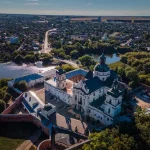
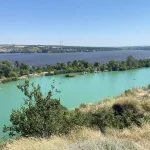
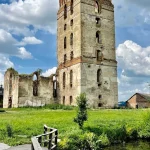
The estate got its nickname “Wolf’s Den” not from wolves in the surrounding woods, but from a psychiatric diagnosis. Sergei Pankeev grew up here — the patient Sigmund Freud, in his famous 1918 case study, anonymized as the “Wolf Man” because of a childhood dream about wolves sitting in a tree outside his bedroom window. It’s one of the most famous cases in the history of psychoanalysis, and it’s that case, not the architecture, that gave the estate its popular name.
According to legend, the estate’s first owner, Major General Vasyl Dubetsky, fell out of favor with Emperor Nicholas I — supposedly for ordering a scaled-down copy of the Winter Palace built on his own land. There’s no way to verify the story, but the family genuinely didn’t hold onto their “nest” for long: by 1885, his descendants had sold the estate to Kostiantyn Pankeev, a merchant from Kakhovka and the father of Freud’s future patient.
General Information
| What? | Description |
|---|---|
| Name | Dubetsky-Pankeev Palace (“Wolf’s Den”) |
| Address | Vasylivka village, Odesa Raion, Odesa Oblast |
| Founded | 1830–1854 |
| Commissioned by | Major General Vasyl Dubetsky |
| Architect | Possibly Franz Boffo (designer of the Potemkin Stairs); park by Ivan Dallacqua |
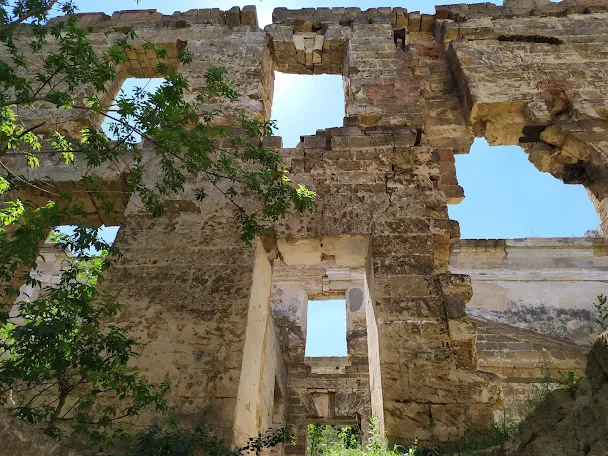
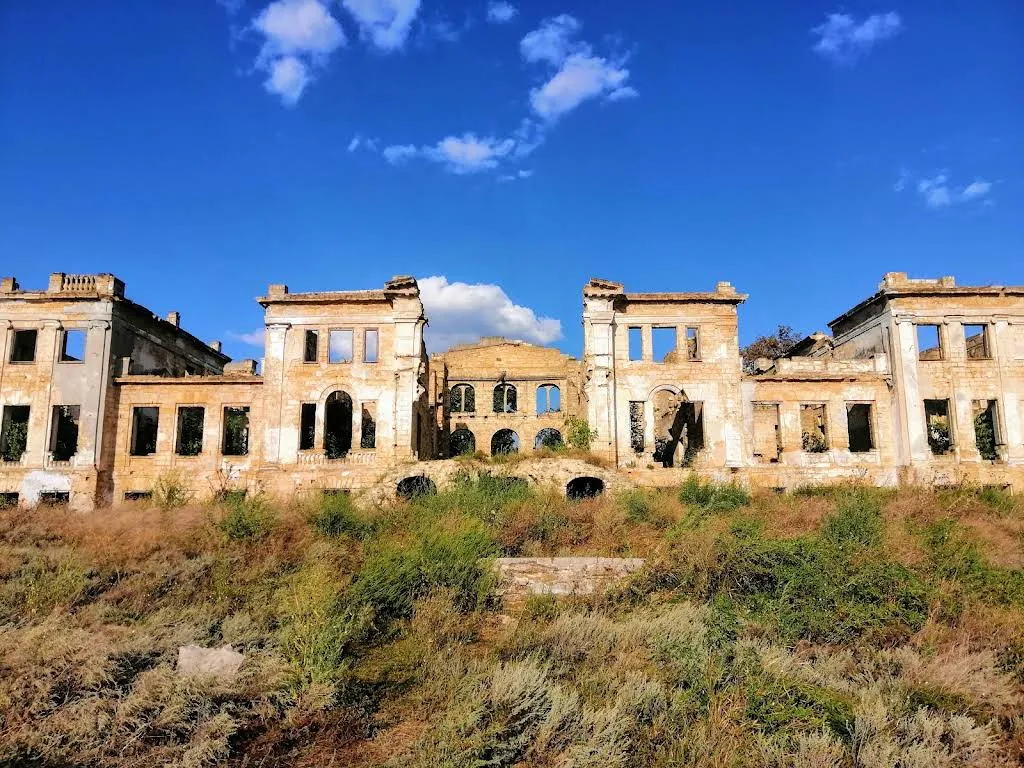
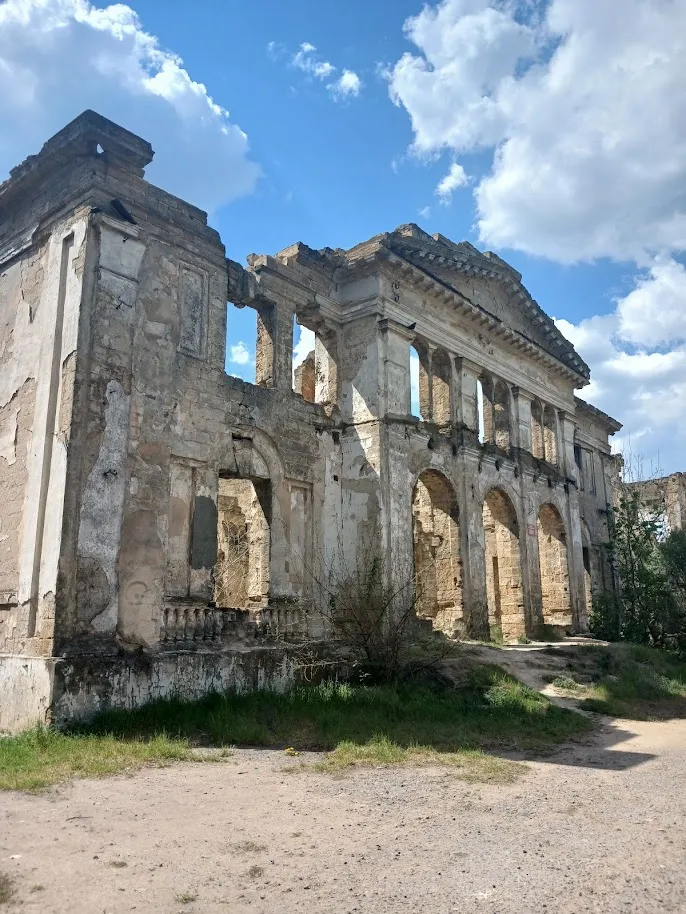
| Form/Details | Classicism, three two-story buildings connected by single-story passages |
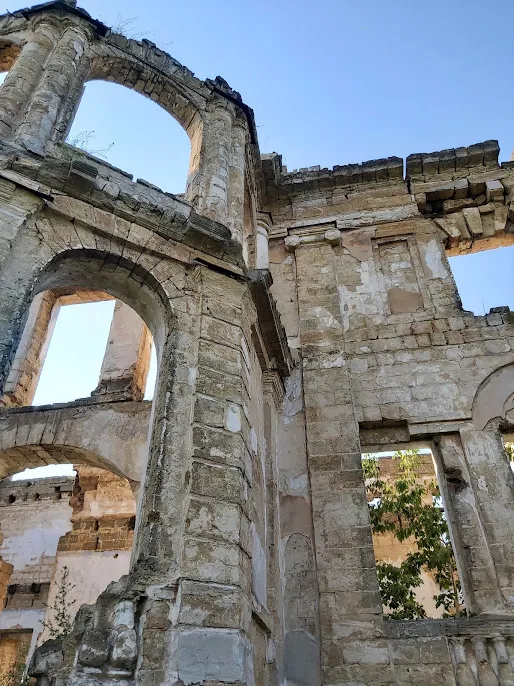
| Material | Stone, brick |
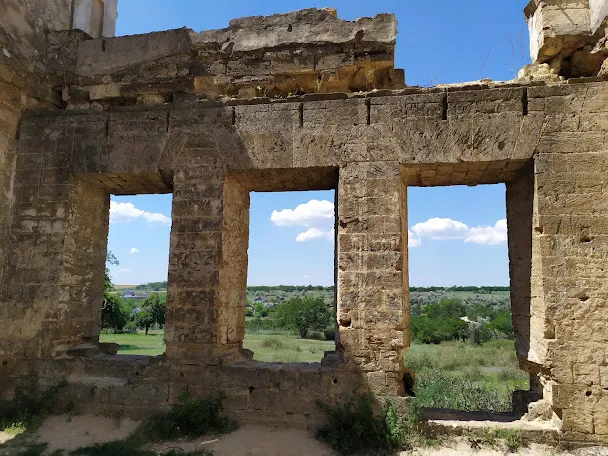
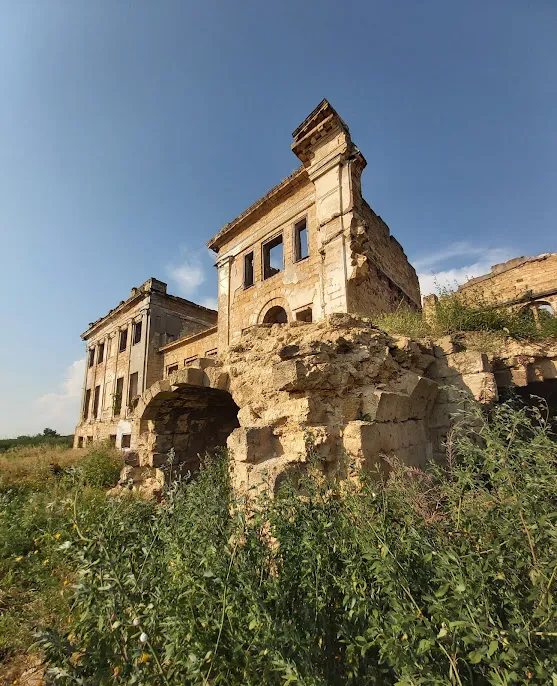
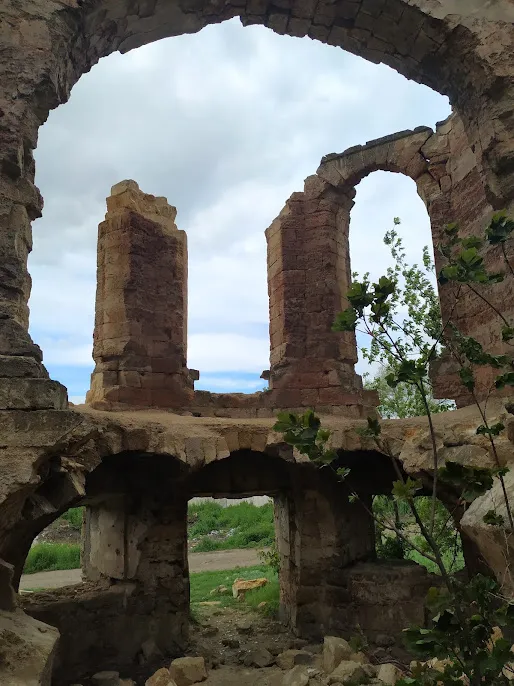
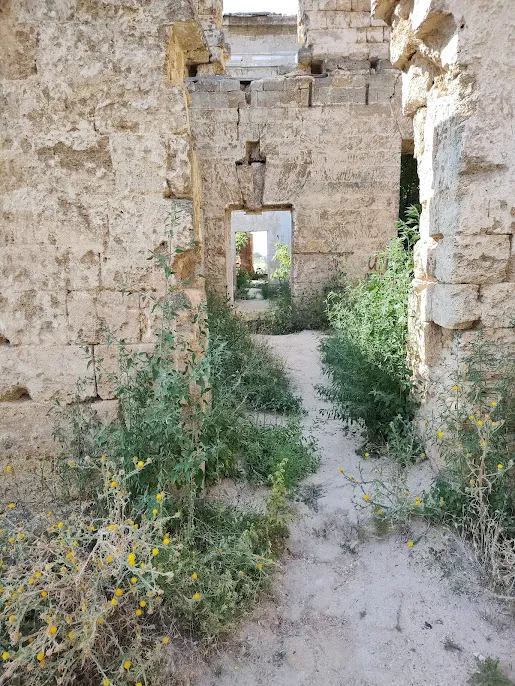
| Condition | Ruins; the park and fountain are also abandoned |
| Status | Architectural landmark, returned to state ownership by court order in 2025 |
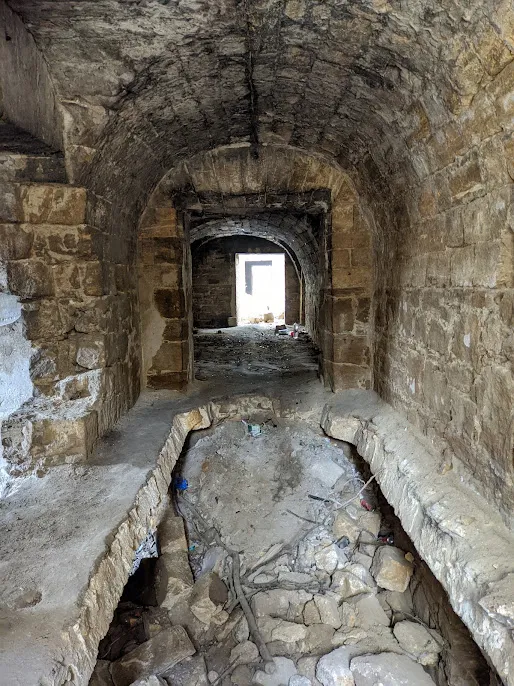
| Entry | Dangerous due to structural collapse |
The Patient Who Made the Estate More Famous Than Its Owners
I think the irony of this estate is that none of its actual owners — neither the Dubetskys nor the Pankeevs — left a mark on history to match their son’s illness, described by a doctor in Vienna who was a stranger to the family. Sergei Pankeev spent the rest of his life abroad and likely never imagined that his childhood estate in Odesa Oblast would carry a nickname tied to his psychoanalytic case a century after his death.
From the NKVD to a Property Rights Lawsuit
From 1917 to 1920 the estate housed a police precinct, later a village school and administrative offices, and in 1937 it was fully nationalized. In 2025, Odesa Oblast prosecutors won a court case returning the landmark to the local community after attempts at private appropriation — at the time it was returned, the building was in critical condition.
What Not to Expect
Don’t expect a preserved palace: today it’s a ruin, and entering is dangerous due to structural collapse. The park and fountain are equally neglected — this isn’t a tourist site with maintained grounds, but a landmark the community only just reclaimed, one that needs years of work before it’s safe to visit.
What to See Nearby and How to Fit It Into a Route
- Odesa — the oblast capital, the nearest major city.
- The Black Sea coast — accessible for a combined “estate plus beach” route, as visitors to the estate themselves note.
- Bilyaivka — the former raion center, the nearest town with transport connections.
Practical Information
- Entry: severely limited due to structural collapse; entering the ruins is dangerous
- How to get there: by car from Odesa; Vasylivka lies near the road to the coast
- Time needed: 30–45 minutes, viewed from outside
- Special conditions: don’t enter unsafe structures; view from a safe distance
Conclusion
“Wolf’s Den” is a rare case where a landmark’s name comes not from its owners or its architecture, but from their son’s psychiatric diagnosis: an estate the world knows today because of Freud more than because of the families who owned it.