The village of Rokytne belonged to the widow of a Cossack captain named Cherniak — until she married Lieutenant Colonel Kulykovsky, and it was through that marriage that the estate passed to the family that would own it right up to the 1917 revolution. The Kulykovskys were a family of Moldovan origin: the dynasty’s founder, Prokopii Kulykovsky, was a nobleman in the entourage of Moldovan Prince Dmytro Kantemir, who entered Russian imperial service after a failed war against the Ottoman Empire in the early 18th century.
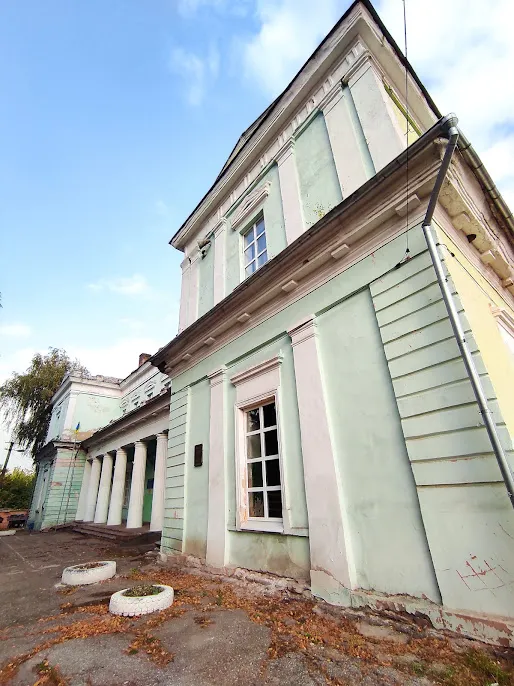
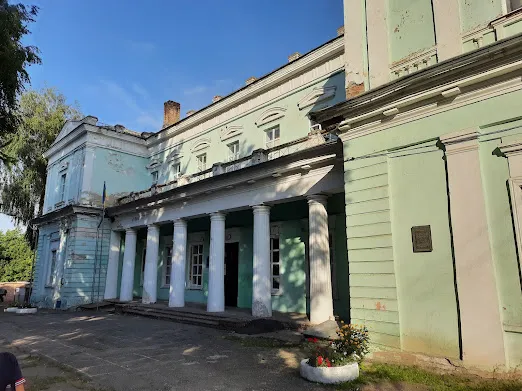
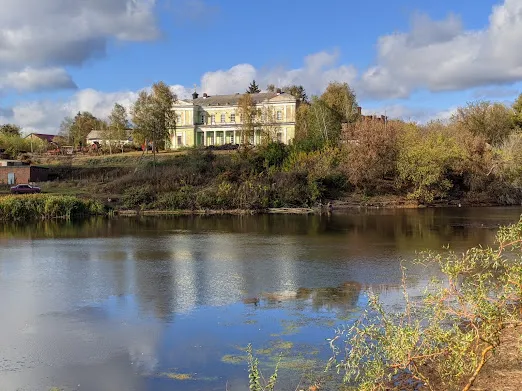
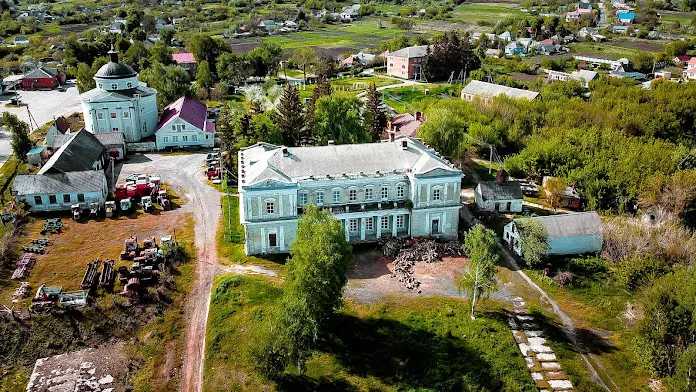
The palace, with Doric six-column porticoes on both facades, was rebuilt by the founding line’s son in Rokytne — M. Kulykovsky, leader of the Valky nobility. An entrance to an underground passage still survives on the estate grounds — a detail sources mention only in passing, without explaining its purpose or where the passage leads.
General Information
| What? | Description |
|---|---|
| Name | Kulykovsky Estate |
| Address | Rokytne village, Nova Vodolaha Hromada, Kharkiv Raion, Kharkiv Oblast |
| Founded | Second half of the 18th century, rebuilt early 19th century |
| Commissioned by | Lieutenant Colonel Kulykovsky (founding), M. Kulykovsky (rebuild) |
| Form/Details | H-shaped floor plan, Doric six-column porticoes on both facades |
| Material | Brick |
| Condition | Fair, building in active use |
| Status | Architectural landmark |
| Entry | Active agricultural lyceum, access limited by the school schedule |
A Family That Arrived Through Marriage, Not Conquest
I think this story deserves more attention than the underground passage or the colonnade: the estate came to the family not through military valor or imperial favor, but through an ordinary marriage to a widow — and that’s how a Moldovan noble family put down roots in Sloboda Ukraine for more than a century and a half.
A School in Place of a Palace
In the early 20th century, thanks to the efforts of General Zarudny, an agricultural gardening school opened on the estate, working in partnership with the local forestry service. That educational function continued after Ukraine’s independence: today the site houses the Rokytne Vocational Agricultural Lyceum, with a branch in Merefa.
What Not to Expect
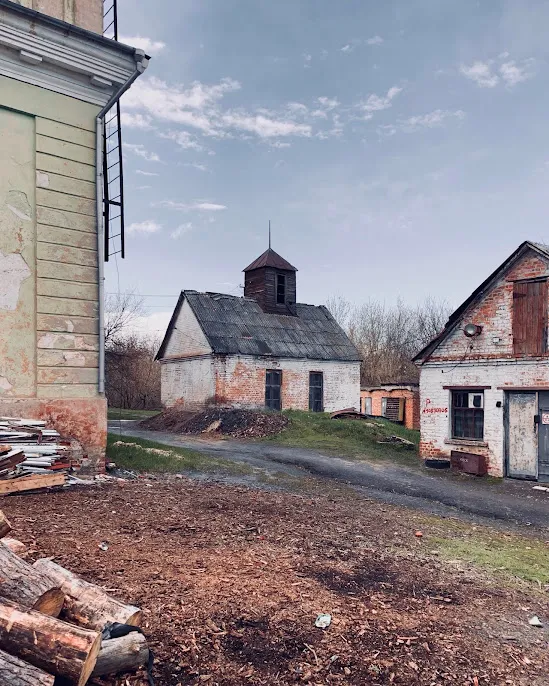
Don’t expect a landmark that gets the attention its status implies: despite its protected architectural status, both the palace and the surrounding park receive far less care than they deserve. The entrance to the underground passage exists, but no source describes what’s inside — don’t count on a tour down there.
What to See Nearby and How to Fit It Into a Route
- Merefa — the nearest town, about 6 miles (~10 km), home to a branch of the same agricultural lyceum.
- Nova Vodolaha — the hromada center, about 14 miles (~23 km).
- Kharkiv — the oblast capital, about 25 miles (~40 km).
Practical Information
- Entry: limited, since the building is an active school
- How to get there: from Kharkiv via Merefa, by car or commuter transport
- Time needed: 1 hour, including the Archangel Michael Church (1805), the family’s burial site
- Special conditions: confirm access in advance; the building doesn’t operate as a museum
Conclusion
The Kulykovsky Estate shows how a marriage, rather than conquest or imperial favor, could lay the foundation for a century and a half of family land ownership — and how an educational function granted under tsarist rule outlasted both revolution and independence.