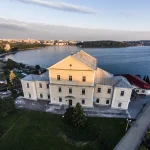
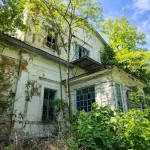
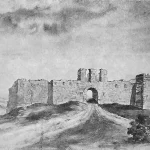
Jan Golski founded a town and named it Yaniv — after himself. He then built a castle. The name survived even after Soviet authorities renamed the town “Dolyna” — a neutral name that explains nothing.
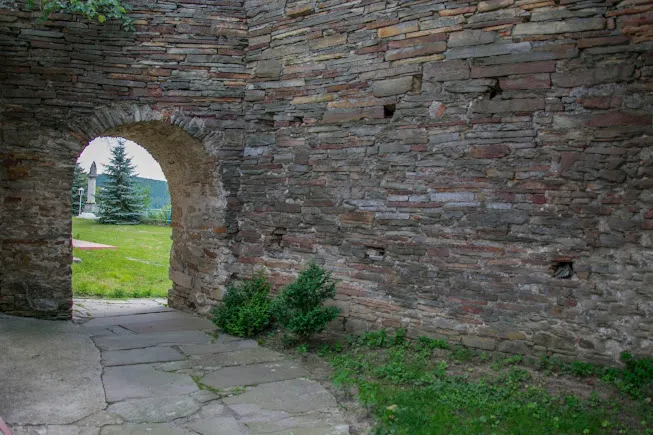
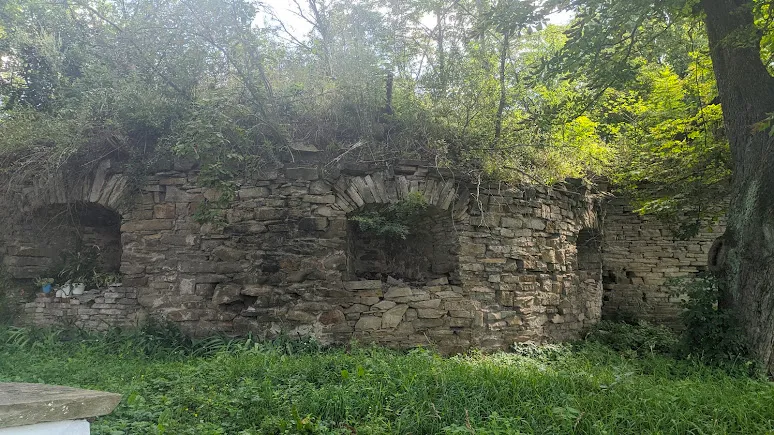
But the most unexpected part: what survives best of the castle are its walls — because they became a church’s fence. The castle largely vanished, but what remained by the church became part of the church grounds, and so it survived.
General Information
| What? | Description |
|---|---|
| Name | Yaniv Castle |
| Address | Dolyna village (Yaniv), Terebovlia district, Ternopil Oblast |
| Built | 17th century (on the site of earlier wooden fortifications) |
| Commissioned by | Jan Golski — founder of the town of Yaniv Terebovelskyi |
| Shape | rectangle; walls with firing slits; towers at the corners |
| Material | rough-hewn sandstone |
| Best-preserved tower | the northern one — round, with 6 small windows |
| Notable feature | the castle walls surround an active church |
| Status | architectural monument |
| Admission | free |
A Town Named After Itself
Jan Golski, Voivode of Podillia, received land and decided to found a town. He named it Yaniv — after his own name. This was standard practice at the time: a magnate founds a town, and the town carries his name.
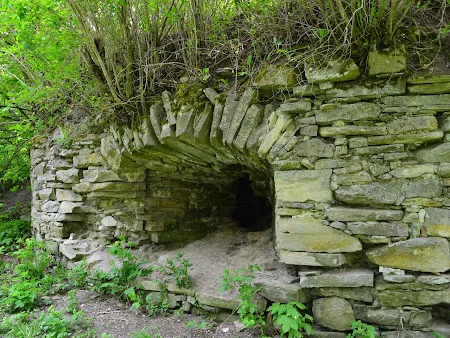
He built the castle on the site of earlier wooden fortifications — a structure typical of 17th-century Podillia in technique and material: rough-hewn sandstone, a rectangular plan, walls with firing slits, towers at the corners.
Between 1944 and 1991, the town was renamed Dolyna. “Yaniv” disappeared from official documents. But the castle is still called “Yaniv Castle” to this day.
Architecture: a Tower Beside a Church
The best-preserved element is the round northern tower, with six small windows — a powerful, rounded structure that still impresses with its mass.
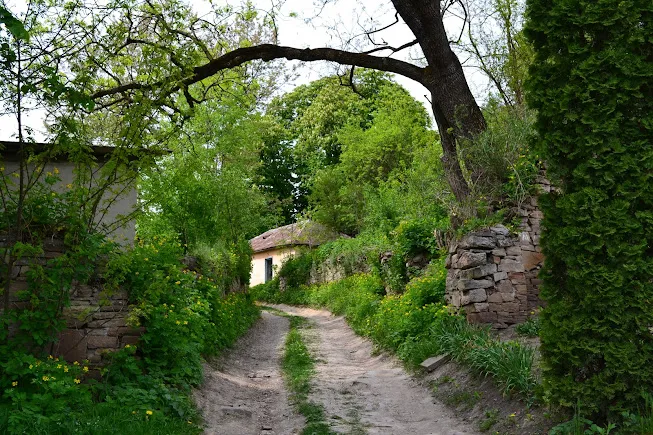
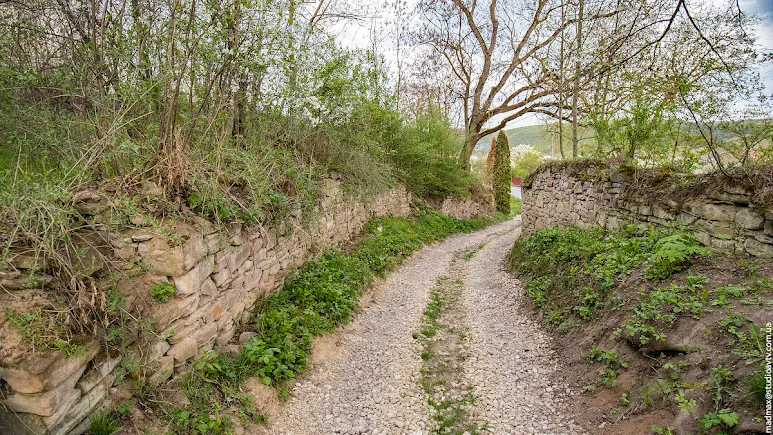
The castle’s walls, with their firing slits, enclose the church — and that’s exactly why they survived. The church kept functioning even during the Soviet period, and the walls around it were never dismantled. The castle “saved” the church — and the church “saved” the castle’s walls.
Underground Passages
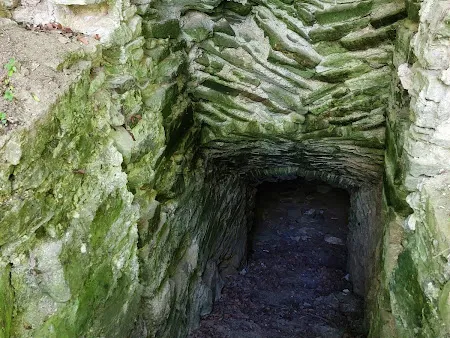
Beneath the castle lies a system of underground passages. Their exact extent and branching haven’t been fully explored. Local legend — standard for Podillia castles — speaks of a passage to the river and to a neighboring village. There’s no documentary confirmation, but the underground chambers themselves are real.
What Not to Expect
Yaniv Castle isn’t a standalone tourist site with towers and courtyards. What remains of the original castle is the walls by the church and one round tower. This is a place for those specifically touring Podillia’s castles and wanting the complete list.
But if you’re heading to Terebovlia (~9 miles / ~15 km), Dolyna is on the way.
What to See Nearby and How to Fit It Into a Route
Yaniv Castle sits at the center of a triangle of important Podillia landmarks:
- Terebovlia Castle (~9 miles / ~15 km) — walls 16 ft thick and Anna Chrzanowska
- Buchach (~12 miles / ~20 km) — Meretyn’s town hall and castle ruins
- Zbarazh (~22 miles / ~35 km) — Khmelnytsky’s 1649 siege
Practical Information
- Admission: free
- Condition: church-enclosing walls plus a round tower; underground passages
- Time needed: 15–20 minutes
- From Terebovlia: ~9 miles (~15 km)
- From Ternopil: ~31 miles (~50 km)
Conclusion
Jan Golski named a town after himself, built a castle, and passed into obscurity.
The castle walls became a church fence, and survived.
Soviet authorities renamed the town — the castle stayed Yaniv Castle regardless.