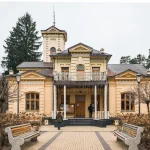
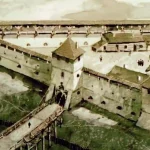
In 1839, during restoration, workers found a human skeleton in one of the castle’s walls.
A medieval tradition: wall a living person into a structure to give it supernatural strength. Who this person was remains unknown.
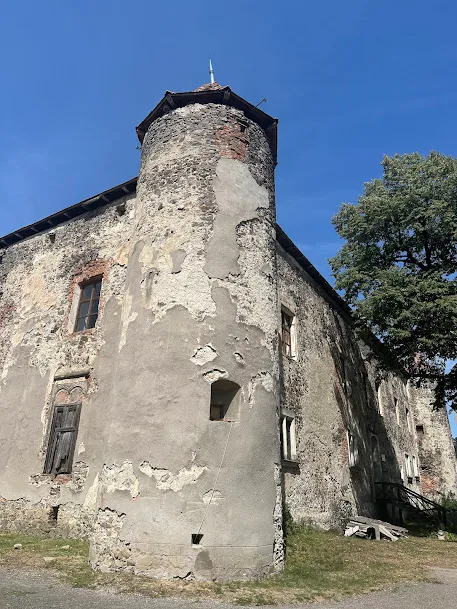
A hundred and sixty years after that discovery, the castle stood half-ruined: a village council, a military unit, a bus depot warehouse. By 2001, its condition was critical.
That’s when painter Yosyp Bartosh and his wife took it on lease. They lived in a cold room with no running water. They sold paintings to pay for restoration. Sometimes they had nothing to eat.
That’s the real story of how St. Miklós Castle was saved.
General Information
| What? | Description |
|---|---|
| Name | St. Miklós Castle (Chynadiiovo Castle) |
| Address | 53B A. Voloshyna St., Chynadiiovo urban-type settlement, Mukachevo district, Zakarpattia Oblast |
| Distance from Mukachevo | ~7 miles (~12 km) |
| First written mention | 1214 (as “Szent Miklós” — “St. Nicholas”) |
| Stone fortress | 14th century (Baron Perényi) |
| Two stories, 13 rooms | walls about 3.3 ft (1 m) thick, 2 towers |
| Main owners | Perényi → Telegdi → Rákóczi → Schönborn |
| Current condition | leased to painter Yosyp Bartosh (since 2001); restoration ongoing |
| Status | architectural monument of national significance (No. 183) |
| Admission | paid (a symbolic price; funds go toward restoration) |
Why “St. Miklós”
This Hungarian name means “St. Nicholas” — borrowed from the village itself, which carried that name until 1944. The name first belonged to the feudal estate, and only later passed to the castle.
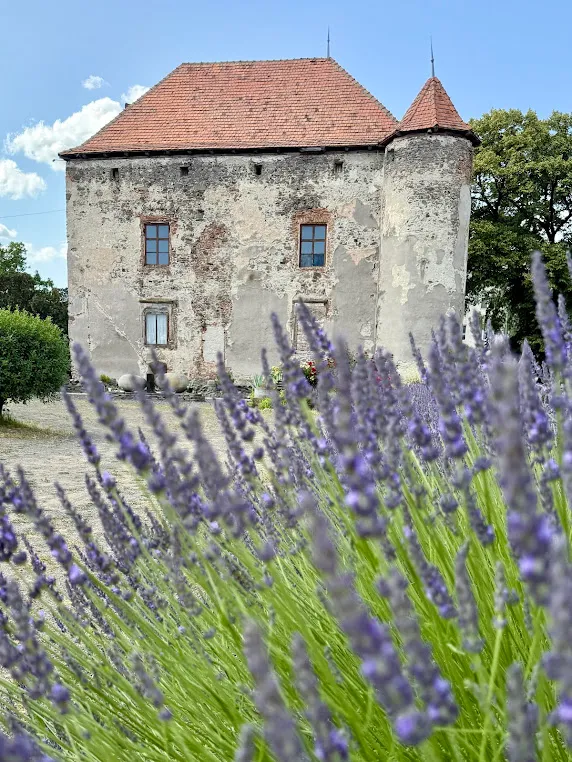
In 1214, the first written mention of St. Miklós as a locality appears. In the 14th century, Baron Perényi built a stone, two-towered fortress here — the very one whose walls still stand today.
Walls about a meter thick. Two corner towers. A rectangular shape. A typical Hungarian fortress for controlling the trade route through the Latorytsia valley.
Ilona Zrínyi and Thököly: “the Castle of Love”
St. Miklós entered Hungarian romantic legend through one meeting.
Ilona Zrínyi — the same woman who held the defense of Palanok for three years, widow of Ferenc I Rákóczi — first saw Imre Thököly, leader of the anti-Habsburg uprising, right here, at Chynadiiovo Castle. He was 14 years younger than her.
Their love, by contemporary accounts, astonished all of Europe. Their wedding in Mukachevo in 1682 lasted a week: 25 barrels of vodka, 300 of wine, 40 casks of beer.
It ended in tragedy: Ilona was exiled to a monastery, then to Turkey — along with her children, without her husband. Thököly lost his uprising and also ended up in exile.
That’s why the castle is called “the Castle of Love” — not for a happy ending, but for a beginning.
Timeline: from Fortress to Warehouse and Back
14th century — the Perényi family’s stone fortress.
1657 — Polish forces under Count Lubomirski badly damaged the castle, in revenge on the Hungarians for György II Rákóczi’s campaign against Poland. It was rebuilt soon after.
1729 — Emperor Charles VI granted the castle to Count Friedrich Schönborn. 1734 — a rebuild: the defensive fortress became a palace residence. The fortifications were leveled.
1839 — restoration under architect Herman Ignác. During the demolition of a wall, a skeleton was found.
World War II — a Nazi prison within the castle walls.
1944–2001 — a village council, a forestry management office, a military unit, a bus depot warehouse.
2001 — painter Yosyp Bartosh and his wife Tetiana took the castle on lease. They lived in one room without heating or running water, painting and selling their work to pay for restoration.
The first funding — a million forints — came from the Hungarian Ministry of Cultural Heritage. Full restoration requires €1.3 million. Work continues.
What’s Inside Today
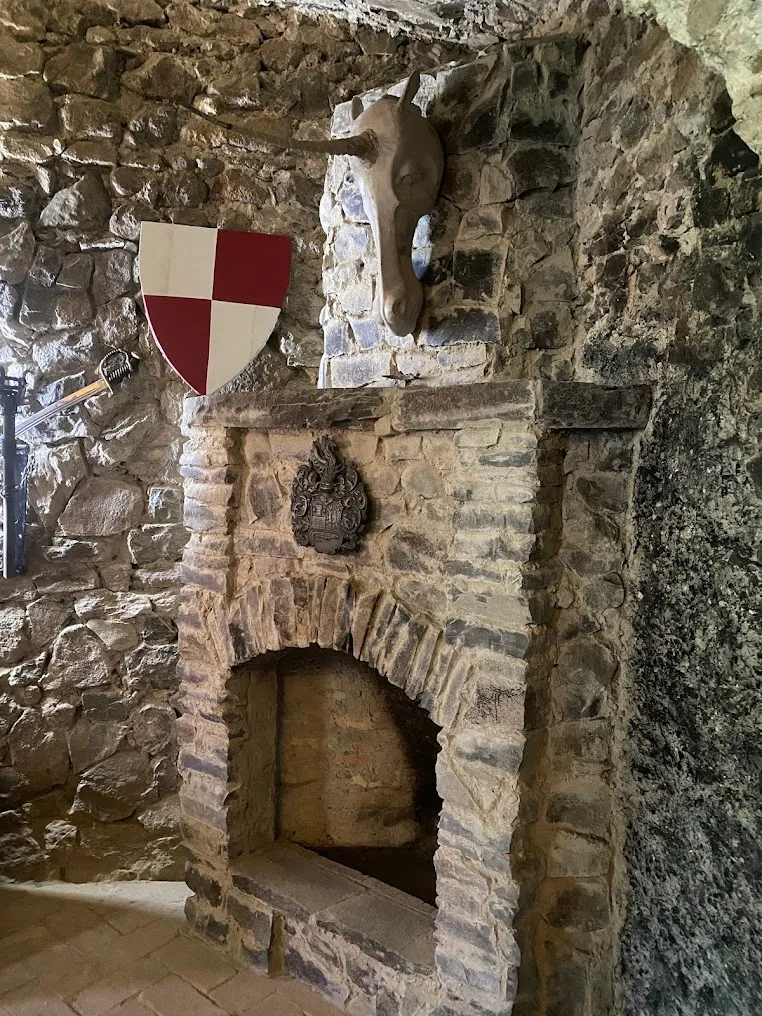
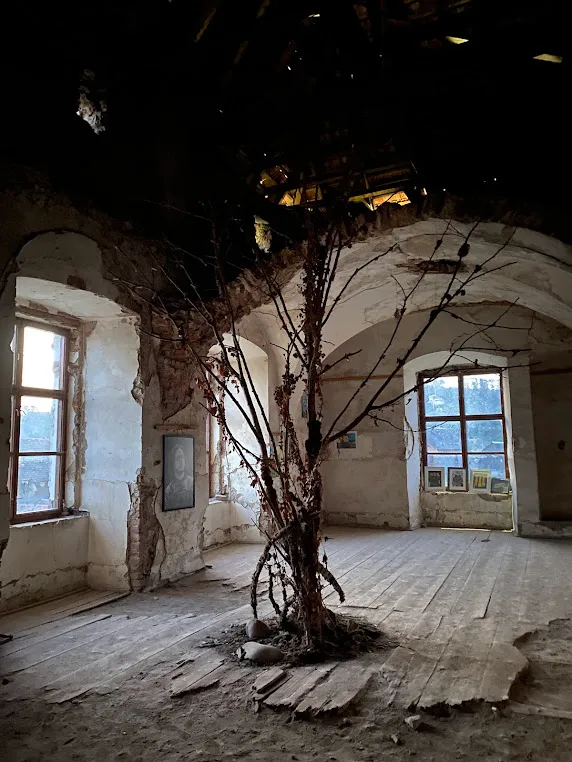
The first floor — restored. Six rooms: portraits of every owner of the castle, artifacts of Celtic and Scythian culture (an archaeological museum), books from Count Schönborn’s library, paintings by artists who came for international plein-air events.
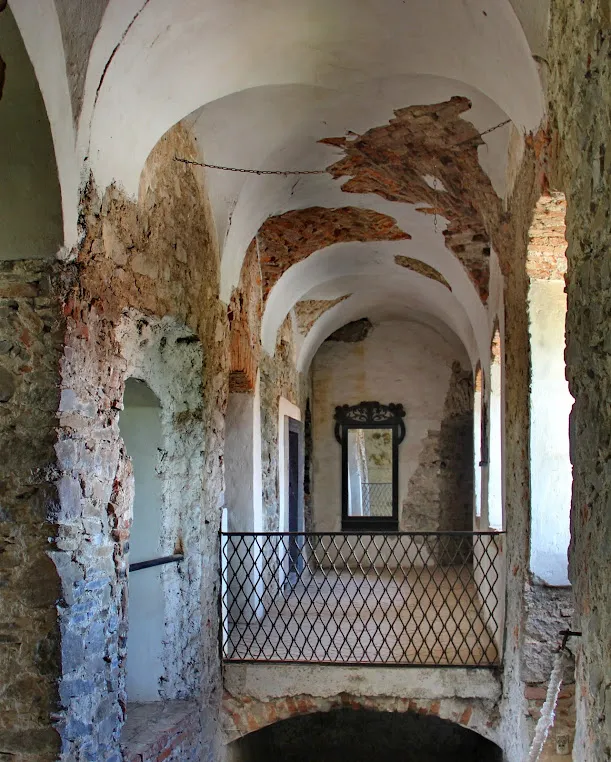
The second floor — partially restored, open to visitors.
Two secret passages within the double walls — guests can walk through them unaccompanied.
The Knights’ Hall for concerts and ceremonies.
The park — first laid out in 1749.
What Not to Expect
St. Miklós isn’t Palanok or Uzhhorod Castle. It’s comparatively small: two floors, 13 rooms. If you’re looking for scale and state-funded polish, this isn’t the place.
But if what interests you is a castle where restoration is literally funded through sold paintings, this is exactly it.
What to See Nearby and How to Fit It Into a Route
St. Miklós stands between two significant landmarks:
- Palanok Castle (~7 miles / ~12 km, Mukachevo) — by contrast, large and fully restored
- the Schönborn Palace (~4 miles / ~7 km, Karpaty urban-type settlement) — built by the same Schönborn family that rebuilt St. Miklós; now a sanatorium with a park and mineral water
Three points on one route make an ideal day in the Latorytsia valley.
Also nearby: Skakalo Waterfall (a walk from the castle).
Practical Information
- Address: 53B A. Voloshyna St., Chynadiiovo urban-type settlement
- Admission: paid, a symbolic sum; proceeds go toward restoration
- Hours: daily (confirm)
- From Mukachevo: ~7 miles (~12 km) via the M06 highway, or by train (Chynadiiovo station)
- Time needed: 1–1.5 hours
Conclusion
St. Miklós is a castle where Ilona Zrínyi fell in love, where a skeleton was found in the wall, where a painter sold his work to keep a roof over the place.
Three different eras, the same meter-thick walls.
The castle is small. But it holds a great deal.