Vorzel is known as a resort suburb of Kyiv, with pine-scented air and old dachas. But among them are houses that aren’t just old — they remember specific people.
Countess Uvarova’s house remembers a countess who trained as a midwife. A schoolboy who would grow up to be one of the finest prose writers of his generation. And a cinema that won an all-Union competition.
General Information
| What? | Description |
|---|---|
| Name | Countess Uvarova’s House (the “Uvarov House”) |
| Location | 37A Kurortna St., Vorzel urban-type settlement, Bucha district, Kyiv Oblast |
| Coordinates | 50.542037, 30.153090 |
| Built | 1902 |
| Style | dacha art nouveau, romantic direction |
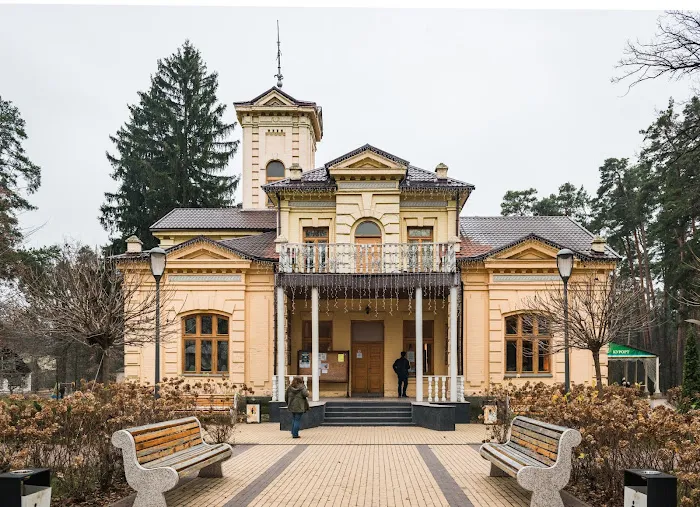
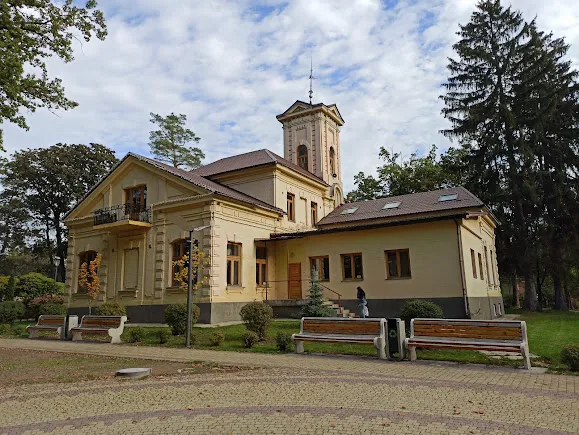
| Appearance | a two-story house with a three-story tower and weathervane, yellow façade |
| Status | architectural monument of local significance |
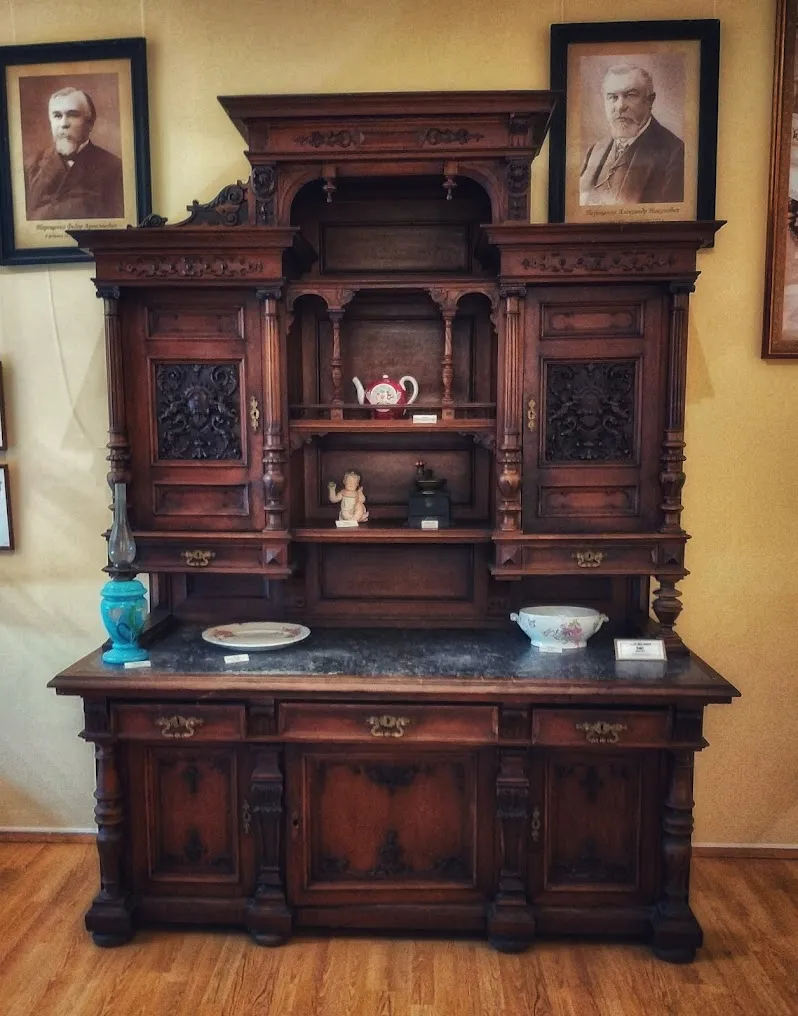
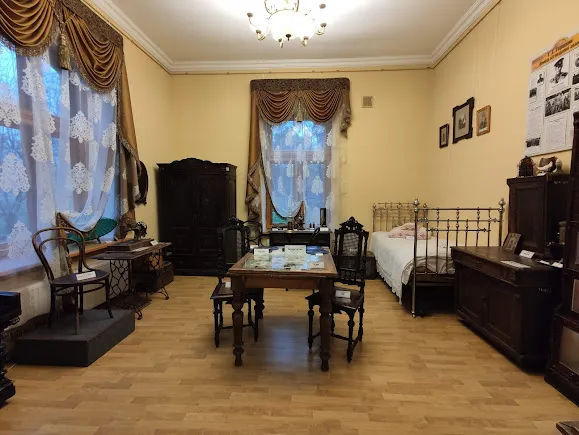
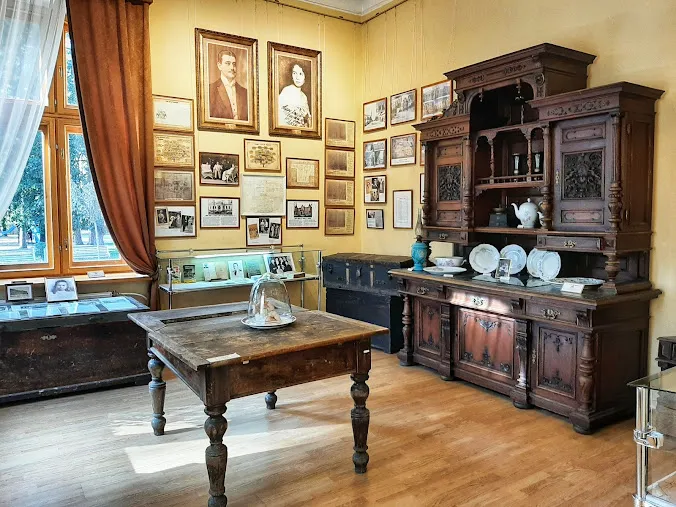
| Current use | the Vorzel Museum of History and Culture, “The Uvarov House” |
How This House Came to Be
Vorzel emerged as a dacha settlement in 1900, on the initiative of local landowner Yosyp Pekhovsky, along the newly built Kyiv–Kovel railway. Wealthy residents of Kyiv quickly took to the pine-forest climate and began building summer residences here.
One of the first to build was Karl Septer, a Kyiv manufacturer and merchant of the first guild. In 1902, he built a house with a romantic three-story tower and weathervane, following the fashion of the time for “castle-style” dacha architecture. The building stood out for its bright yellow façade and tower-like superstructure.
Soon after, the house was purchased by Fedir Tereshchenko, a Kyiv sugar manufacturer and patron of the arts, who gave it to his daughter Natalia.
Natalia Uvarova: a Countess and Midwife
Natalia Fedorivna Uvarova (1890–1987) was Tereshchenko’s daughter and wife of Serhii Uvarov, marshal of the nobility of Berdychiv district in Volhynian Governorate, and one of the directors of the Kyiv branch of the Russian Musical Society.
This woman didn’t fit the mold of her class.
Despite her aristocratic status and considerable wealth, she trained as a midwife — a rare choice for a woman of her circle. In Kyiv, she built a maternity hospital at her own expense. In Vorzel, she personally assisted local women during childbirth.
In summer, the countess would come to Vorzel with her children and husband. She looked after the park, planting exotic species and rare tree varieties, set up a fountain in front of the house, and had the paths laid with gravel.
Natalia Uvarova lived 97 years — from 1890 to 1987. She lived through the revolution in emigration.
The Tulip Tree
Beside the Vorzel estate grows a tulip tree (Liriodendron tulipifera), a natural monument in its own right.
The tree was planted in 1914 — by one account, connected to the Uvarov estate. It stands 82 ft (25 m) tall, with a trunk 28 in (70 cm) in diameter. It’s one of about 30 liriodendrons in Ukraine, blooming every May and June.
From Dacha to Museum: the House’s Fate in the 20th Century
1917. After the revolution, the Uvarov and Tereshchenko families emigrated. The house passed into state use.
1920s. A school opened here. Among its pupils was Valerian Pidmohylny, future writer of the “Executed Renaissance” and author of the novels “The City” and “A Little Drama.” He learned to read right here in Vorzel.
1960s. The school was replaced by the “Kosmos” cinema, which took first place in an all-Union competition of school cinemas — a detail that captures something of the atmosphere of Vorzel in those years.
1990s. The house was neglected and began to deteriorate — a typical fate for small architectural monuments on the periphery.
2007. The Vorzel settlement council restored the building using its own funds. On September 18, 2007 — Settlement Day — the Vorzel Museum of History and Culture, “The Uvarov House,” opened here.
Today, the building holds a museum (4 rooms on the first floor, 1 on the second), a cultural center, and offices of the local council.
Architectural Features
The house stands out even among Vorzel’s dacha buildings.
Its defining feature is the romantic three-story tower with a weathervane on the corner section — a “castle” detail typical of 1900s dacha art nouveau: asymmetrical, decorative, aspiring to medieval grandeur, yet light and unforced. The yellow façade is visible from a distance, including from the railway.
In front of the house is a park area with gravel paths, where a fountain once stood.
What to See Nearby
Vorzel is a small settlement, but it holds a few points worth finding:
- The tulip tree — a natural monument next to the estate
- The “Ukraina” Sanatorium (a former military hospital) — a Soviet-era “resort palace” ensemble at the entrance to town, an interesting example of its era in its own right
- Vorzel railway station — an early-20th-century building
- Bucha (~1.9 miles / ~3 km), Irpin (~5 miles / ~8 km) — for a broader route
Practical Information
- Current status: an active museum, “The Uvarov House”
- Address: 37A Kurortna St., Vorzel, Bucha district
- Exterior viewing: free, around the clock
- Museum: confirm hours directly before visiting — small municipal museums can have irregular schedules
- Time needed: 30–60 minutes (exterior, park, and museum if open)
How to Get There
Vorzel is 10 miles (16 km) northwest of Kyiv, in Bucha district.
By suburban train: from Kyiv’s central station or Sviatoshyn, to Vorzel station (Kovel direction). From the station, it’s about a 10-minute walk to the house.
By car: the road to Irpin → Bucha → Vorzel. Street parking nearby.
Little-Known Details
- Natalia Uvarova lived 97 years (1890–1987) — surviving the revolution, emigration, and, from all accounts, an eventual return home.
- Valerian Pidmohylny — one of the most important 20th-century Ukrainian prose writers, known for his urban fiction, later executed in 1937. That he attended school in this very house creates a concrete link between 1900s dacha art nouveau and the tragedy of the “Executed Renaissance.”
- The “Kosmos” cinema won an all-Union competition in the 1960s — a remarkable achievement for a small suburb.
- Vorzel was founded in 1900 — the Uvarov house is nearly as old as the settlement itself.
- The tulip tree in Vorzel is one of about 30 such trees in Ukraine. It blooms in May and June — plan your visit accordingly if you want to see it flower.
Conclusion
Countess Uvarova’s house isn’t a grand monument. But it’s a place where several remarkable lives crossed paths on a small plot of Vorzel land: an aristocrat who became a midwife, a writer later executed by Soviet authorities, and a cinema that won a national competition.
For a weekend trip from Kyiv, it’s an ideal stop — especially in May, when the tulip tree nearby is in bloom.