1675. An Ottoman army under Ibrahim Shishman Pasha approached Terebovlia.
The fortress commander, Jan Samuel Chrzanowski, decided to surrender. The castle was exhausted. The garrison small. The Ottomans numbered in the tens of thousands.
Then his wife, Anna Chrzanowska, walked into the room. She took her husband’s saber. And declared that she would stab him first, then herself — if he opened the gates.
The commander didn’t surrender. The castle withstood the siege.
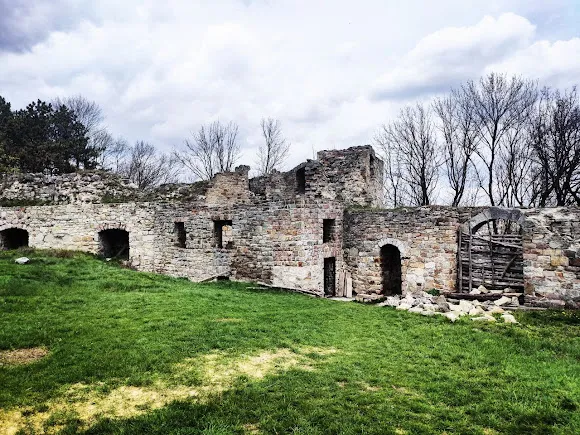
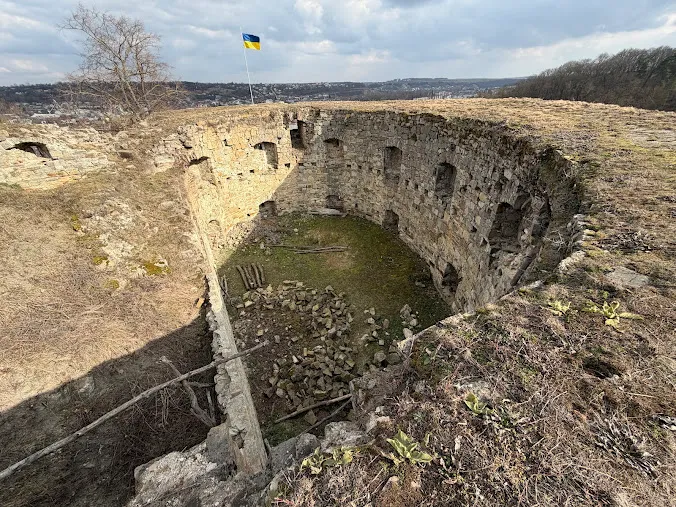
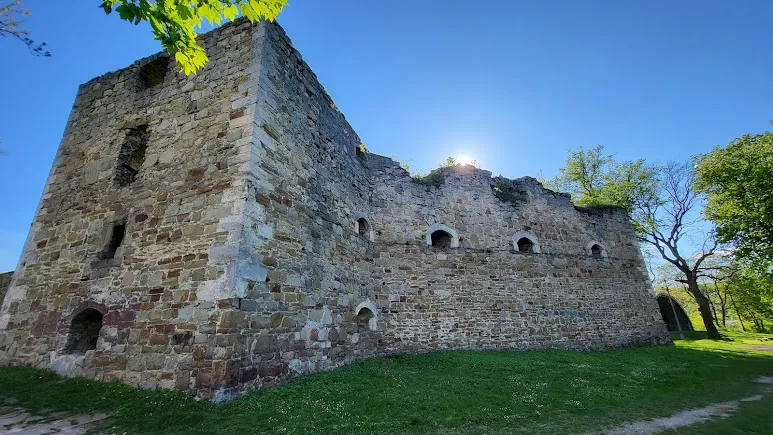
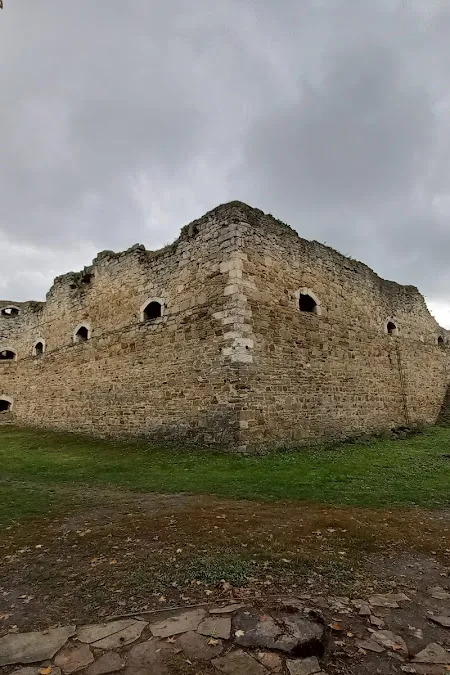
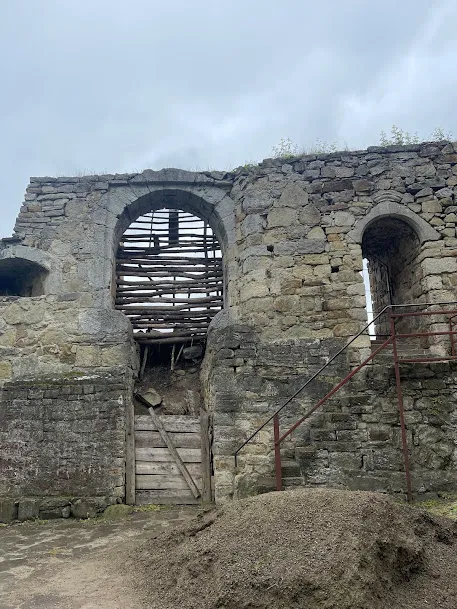
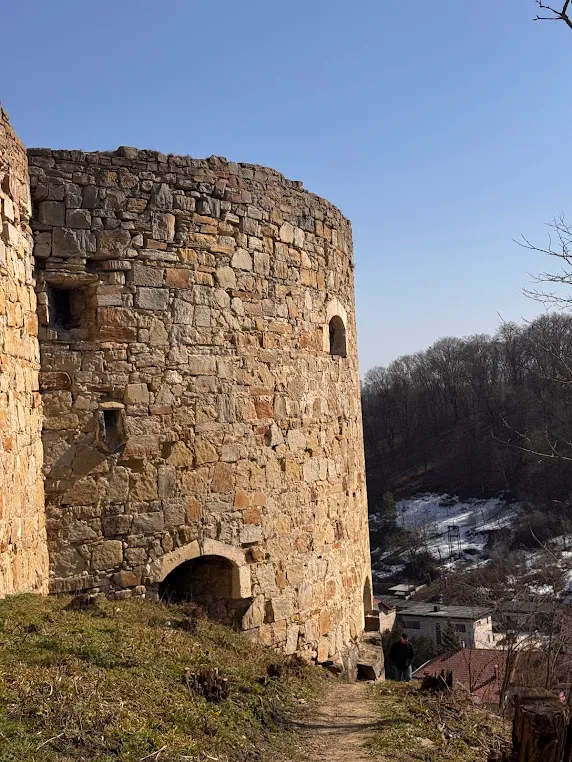
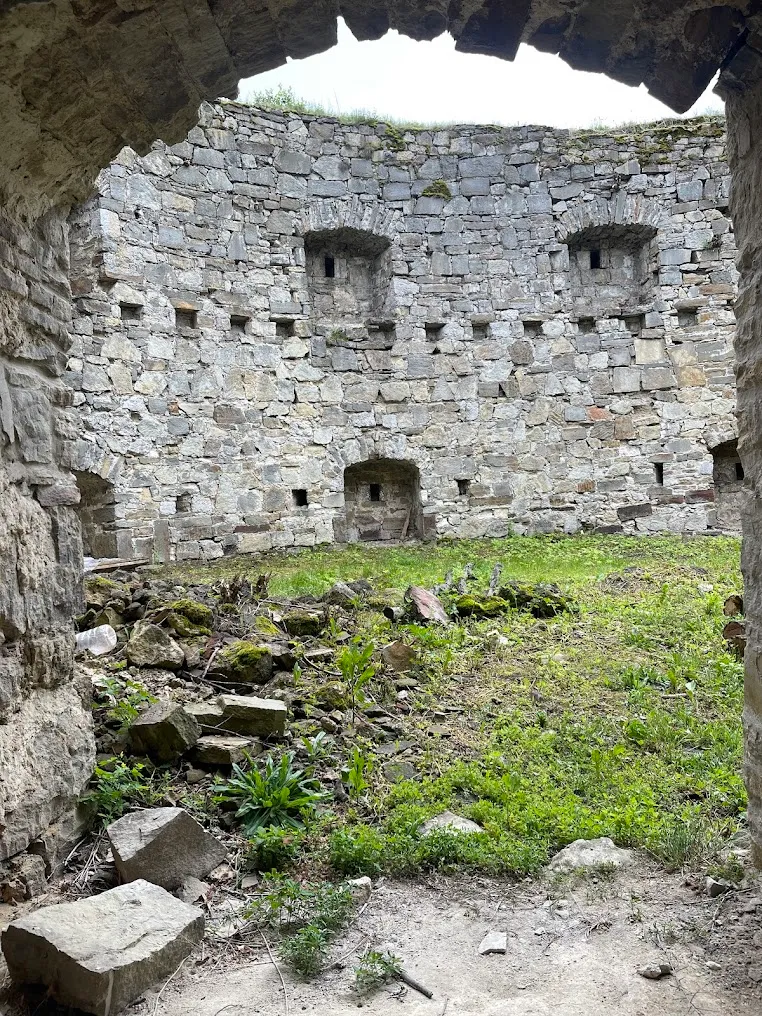
General Information
| What? | Description |
|---|---|
| Name | Terebovlia Castle |
| Address | Pidzamche St., Terebovlia, Ternopil district, Ternopil Oblast |
| Distance from Ternopil | ~20 miles (~32 km) |
| Setting | on Castle Hill, at the edge of the Hnizna River canyon |
| Current castle | 1631–1632 (Aleksander Bałaban), 9,000 gold pieces |
| Dimensions | 394 × 213 ft (120 × 65 m), walls 16 ft (5 m) thick |
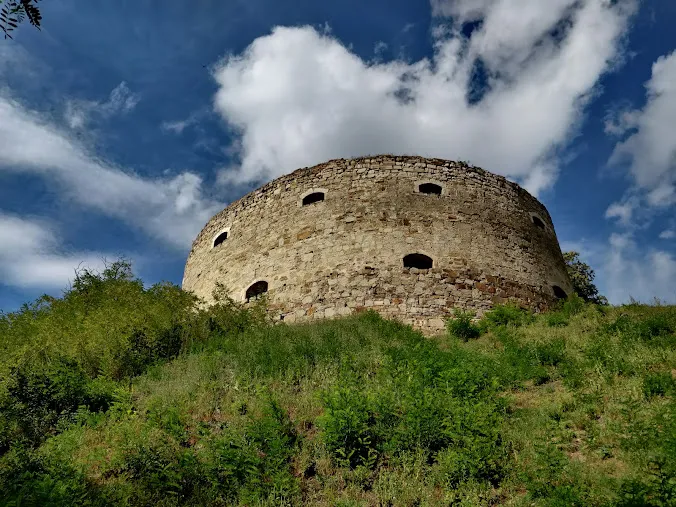
| Three towers | south, north, east |
| This is already | the fourth fortress on this same site |
| Status | part of the “Castles of Ternopil Region” National Reserve; free admission |
Four Fortresses on One Hill
On Castle Hill in Terebovlia, fortresses rose one after another — each on the ruins of the one before.
9th–10th centuries — the first hillfort, of the Cherniakhiv culture.
11th century — Prince Vasylko Rostyslavych (great-grandson of Yaroslav the Wise) builds the first known castle. Terebovlia becomes the capital of its own principality, confirmed to Vasylko at the Liubech Congress of 1097. But that same year, he was treacherously blinded — invited under the pretext of a name-day celebration and blinded on the orders of Kyivan prince Sviatopolk and Volhynian prince David. Blinded, Vasylko still held Terebovlia.
13th century — the wooden walls begin to be reinforced with stone. In 1241, the Mongols under Khan Batu completely destroy the fortress.
14th century — Polish king Casimir the Great rebuilds the castle between 1360 and 1366. Terebovlia becomes Poland’s eastern outpost.
16th century — 15 Tatar attacks in the years 1605–1625 alone. The castle falls into ruin.
1631–1632 — Aleksander Bałaban of Terebovlia builds the fourth and final castle, at his own expense, for 9,000 gold pieces. Three towers. Walls 16 ft (5 m) thick. A Renaissance gate arch of hewn white stone. A drawbridge. This is the castle that stands today.
The 1675 Defense: a Saber, and Forced Heroism
In 1675, after the fall of Kamianets-Podilskyi, Terebovlia remained the strongest stronghold on the border. Ibrahim Shishman Pasha’s Ottoman army approached its walls.
The garrison was small. Commander Chrzanowski wanted to surrender.
His wife, Anna Chrzanowska, took his saber and declared: she would stab him — then herself. Or he would fight.
He chose to fight.
The castle held. The Ottomans withdrew.
This defense entered Polish chronicles as one of the symbols of resistance to the 17th-century Ottoman invasion. Anna Chrzanowska became a folk heroine.
In 1680, the Tatars tried again to take the castle. Again, they failed.
In 1687, the Tatars finally captured and burned it. Afterward, the castle was rebuilt, but never fully.
In 1688, the Ottomans captured the town. The castle lost its defensive significance.
What Happened After
1772 — Terebovlia passes to the Austrian Empire. The Austrians dismantle the castle’s interior buildings and erect barracks in their place.
1880 — Austrian authorities allow the castle structures to be dismantled for road-building materials. Part of the walls disappeared then.
1895 — the first organized cleanup of the ruins. Excavations turn up a 16th-century burial.
1900 — a park is laid out around the castle. The founders’ names are set into the wall.
1930s — Polish authorities carry out conservation: securing the towers and walls. The donors’ names appear on plaques in the east wall as well.
2008 — the castle is included in the “Castles of Ternopil Region” National Reserve.
What’s There Today
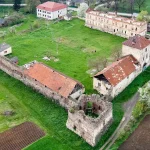
Ruins — but distinctive ones. Three towers survive in varying condition. The 16-ft-thick walls are visible in cross-section. A Renaissance gate arch. Underground chambers and cellars (partly accessible).
The best spot is the view from the castle hill over the Hnizna canyon. The river winds below, the slopes drop sharply. For photography, it’s one of the most striking viewpoints in the Ternopil region.
What Not to Expect
This isn’t a restored castle. No museum halls, no interactive plaques, no ticket booth. Ruins with free access and a panorama.
And don’t try entering the underground chambers without a flashlight or experience — it’s dark and unstable down there.
What to See Nearby and How to Fit It Into a Route
Terebovlia is 20 miles (32 km) from Ternopil, on the road to Pidhaitsi and Buchach.
- Buchach (~19 miles / ~30 km) — a unique town with a town hall and churches, birthplace of Nobel laureate Shmuel Yosef Agnon
- Zbarazh (~31 miles / ~50 km) — the castle and “With Fire and Sword”
- Ternopil (~20 miles / ~32 km) — a castle and a pond in the town center
Practical Information
- Admission: free
- Climb: a trail from Pidzamche St.; ~10–15 minutes on foot
- Time on the hill: 30–60 minutes
- From Ternopil: ~20 miles (~32 km); minibuses hourly (~40 min)
- GPS: Pidzamche St., Terebovlia
Conclusion
The fourth fortress on the same site. Walls 16 feet thick. A woman who refused to let her husband surrender.
In 1880, the Austrians allowed the walls to be dismantled for road material.
What survived still stands above the Hnizna canyon.