1392. Polish king Władysław Jagiełło granted the area to Grand Duke Švitrigaila.
1430. Švitrigaila granted the castle to his courtier, Jeło-Maliński.
Then came the Maliński family, then the Sosnowski family. Four centuries, four complete architectural styles: wood → a stone castle → baroque → romanticism.
World War II destroyed it.
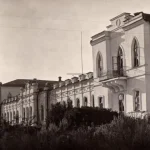
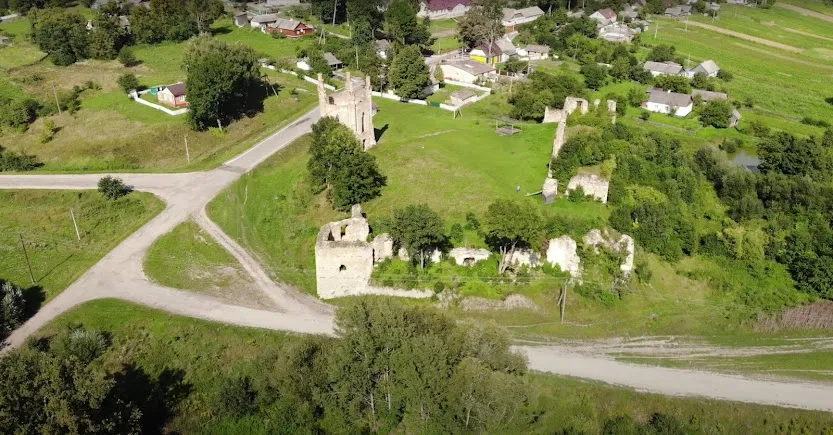
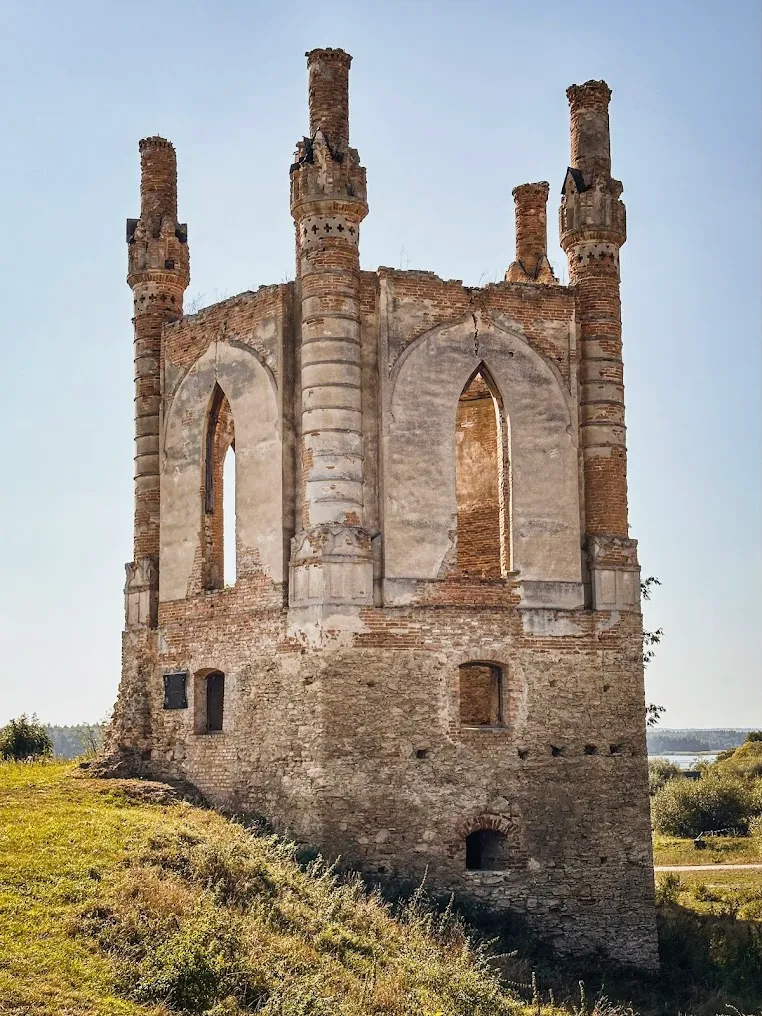
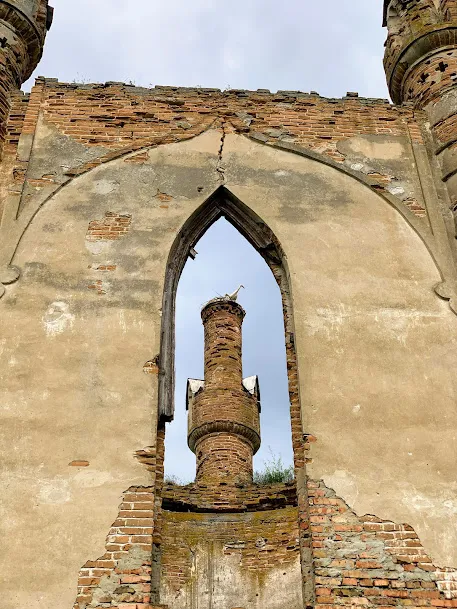
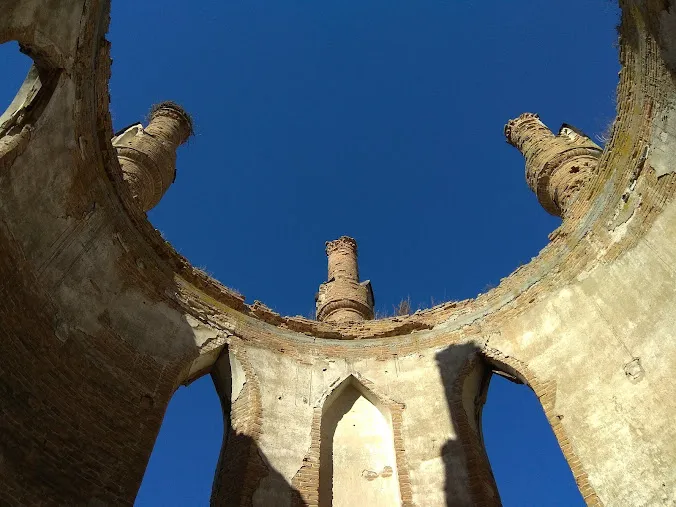
Of what was once Volhynia’s most beautiful magnate residence, two towers remain — and grass hiding sinkholes.
General Information
| What? | Description |
|---|---|
| Name | Novomalyn Castle (the Sosnowski Castle) |
| Address | Novomalyn village, Ostroh district, Rivne Oblast |
| First castle | 14th century (Švitrigaila) |
| Stone rebuild | 15th century |
| Five towers | pentagonal, connected by walls |
| Baroque rebuild | 17th century (the Maliński family) |
| Romantic-era rebuild | early 19th century (the Sosnowski family) |
| Sculptor-owner | Tomasz Oskar Sosnowski (1810–1886) — a student of Thorvaldsen |
| Destroyed | World War II |
| Surviving | two towers, wall fragments |
| Status | architectural monument |
Four Styles in One Place
Most castles carry one or two architectural layers. Novomalyn passed through four complete styles:
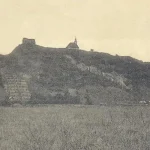
14th century — Švitrigaila’s wooden fortress on a hill above the Zbytenka River.
15th century — a stone castle. Regular in plan: five pentagonal corner towers connected by walls, a gate tower, a water-filled moat, a drawbridge.
17th century — the Maliński family adds a baroque palace within the castle’s perimeter. The defensive fortress becomes a residence.
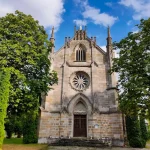
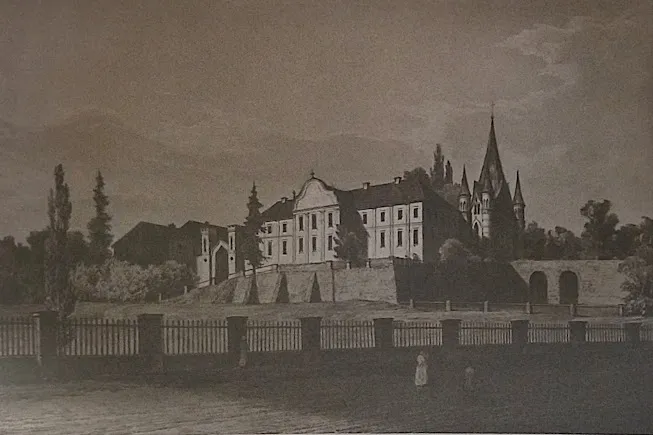
Early 19th century — the Sosnowski family rebuilds it as a romantic-style palace: neo-Gothic galleries, towers, a romantic chapel. “Volhynia’s most beautiful magnate residence,” by contemporary accounts. Water from ponds surrounded three sides; a stone bridge replaced the drawbridge.
Tomasz Oskar Sosnowski: a Sculptor at the Castle
Among Novomalyn’s owners is a man who doesn’t fit the usual “magnate–voivode–landowner” mold: Tomasz Oskar Sosnowski (1810–1886).
A Polish sculptor. A student and companion of Bertel Thorvaldsen in Rome — the Danish sculptor, one of Europe’s foremost masters of neoclassicism. Sosnowski lived and worked mostly in Rome, but was tied to Novomalyn through family connections.
His works decorated Roman churches and Polish magnate palaces — a link between Novomalyn Castle and 19th-century European artistic circles.
Napoleon Orda and a Record Preserved
Between the 1850s and 1880s, traveler and artist Napoleon Orda toured Poland, Lithuania, and Right-Bank Ukraine, drawing hundreds of castles, palaces, and landscapes. His albums remain the most important graphic record of that era’s architectural heritage.
Novomalyn Castle made it into his album.
Thanks to Orda, we know what the castle looked like at its peak.
What World War II Destroyed
The castle survived Cossacks, Tatars, and World War I. World War II destroyed it for good.
Everything found among the ruins — 16th-century slabs, bas-reliefs, decorative fencing elements — was moved to the Ostroh Museum, where it remains today.
What’s There Today
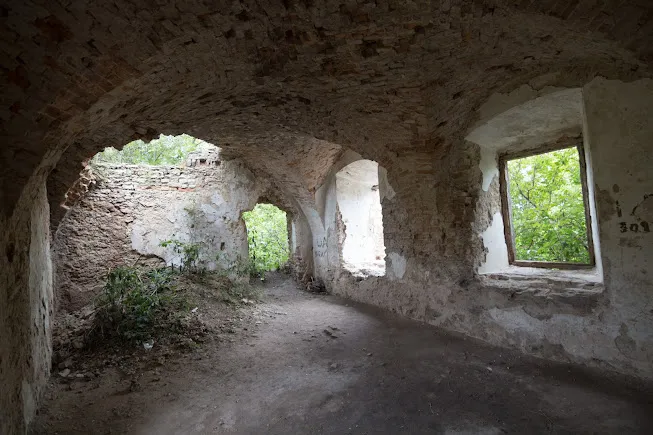
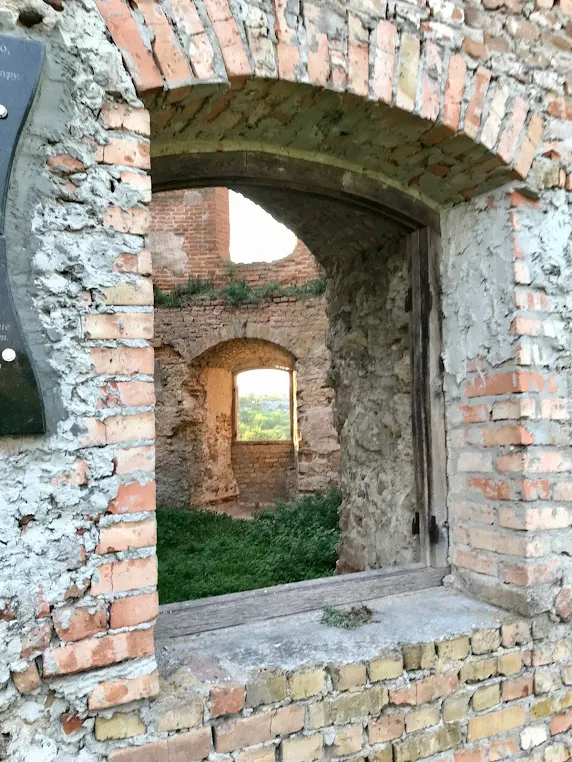
Two towers survive: the western one, pentagonal and two-tiered, relatively intact; the southern one, half-ruined. Between them, a short stretch of defensive wall with firing slits.
The sinkholes hidden in the grass pose a real hazard: underground cavities masked by vegetation. Walk carefully, and stay on the worn paths.
What Not to Expect
The road to Novomalyn is cobblestone. The castle is open ruins with dangerous sinkholes. No infrastructure of any kind.
But if you’re interested in Volhynia beyond the tourist routes, and ready for an adventure on a rough road, it’s worth the trip.
How to Fit It Into a Route
Novomalyn is 6 miles (10 km) west of Ostroh, in Ostroh district.
- Ostroh (~6 miles / ~10 km) — the Ostrozky castle, the Ostroh Academy, the first Bible
- Dubno (~28 miles / ~45 km) — the Ostrozky-Lubomirski castle
- Olyka (~22 miles / ~35 km) — the Radziwiłł castle, 365 rooms
Practical Information
- Admission: free
- Road: cobblestone, poor condition
- Safety: sinkholes hidden in the grass — take care
- Time needed: 20–30 minutes
- From Ostroh: ~6 miles (~10 km)
Conclusion
Jagiełło granted it. Švitrigaila rebuilt it. The Malińskis added baroque. The Sosnowskis, romanticism.
Napoleon Orda drew it.
World War II destroyed it.
Two towers still stand. The grass hides the rest.