The castle records of Starozaslav Castle were kept starting in 1512.
Not every castle in this series can claim that kind of bureaucratic pedigree. The records from 1572–1575 survive, and today they’re a valuable source historians use to study 70 towns and villages of the Zaslav district at the time.
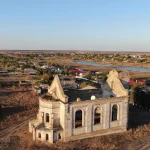
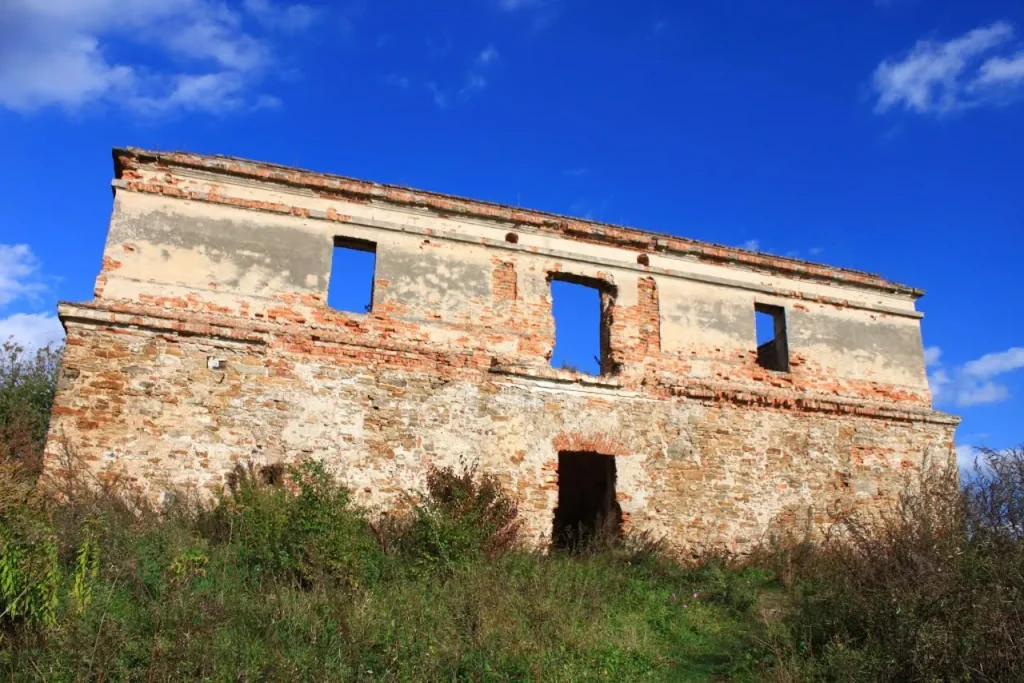
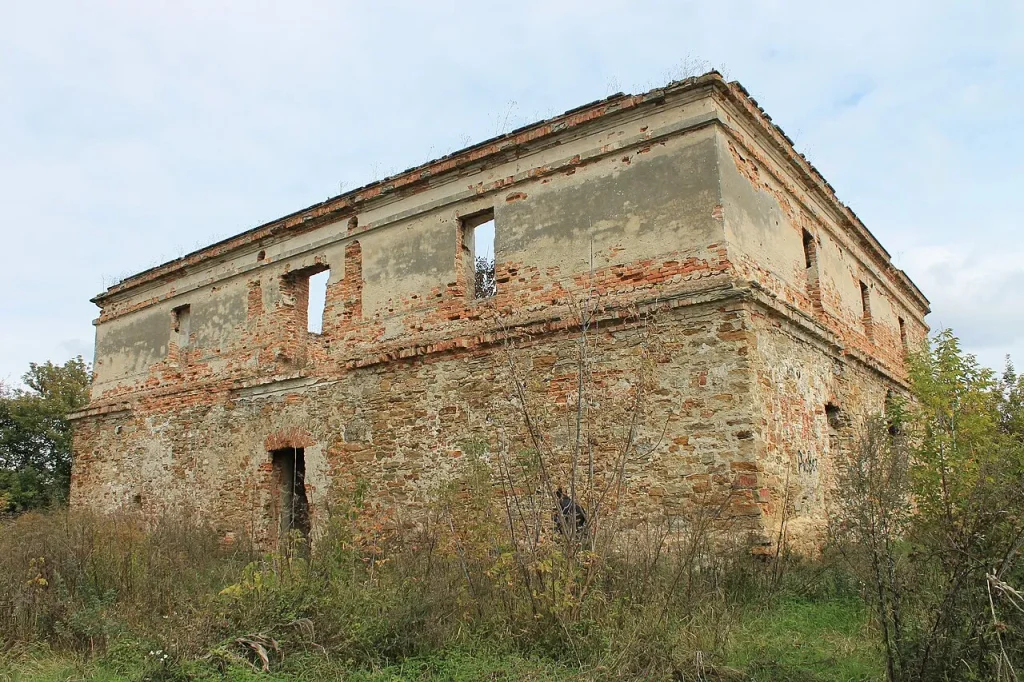
And the single building still standing on the castle grounds is, according to local tradition, the princely treasury. No one has ever found the treasure.
General Information
| What? | Description |
|---|---|
| Name | Starozaslav Castle (Old Town Castle) |
| Address | the old part of Iziaslav, at the confluence of the Soshenia and Horyn Rivers, Iziaslav district, Khmelnytskyi Oblast |
| First fortifications | 15th century (Prince Vasyl Fedorovych Krasnyi) |
| First documented mention | August 21, 1533 |
| Castle records | kept from 1512 |
| Surviving structure | a stone tower-house (possibly a treasury) |
| 1572–1575 castle records | a source covering 70 villages and towns of the Zaslav district |
| Status | architectural monument; ruins |
| Admission | free |
⚠️ Two Castles in One Town
Iziaslav has two distinct castles:
- Starozaslav Castle (15th century) — this article; in the old part of town on the Horyn’s bank; only one stone building survives
- Novozaslav Castle (16th–17th centuries) — a separate, better-preserved complex in the newer part of town
Most tourists don’t realize these are two different sites. It’s best to set your GPS with a specific address or coordinates.
From the Ostrozky Family to the Zaslavsky Family
Iziaslav is an ancient town. Its first chronicle mention dates to 1241, during the Mongol-Tatar invasion.
The Ostrozky family held the town among their Volhynian estates. When the family began dividing its inheritance, the younger son, Yurii Ostrozky, received Zaslav — and founded the Zaslavsky family, who took their name from the town.
In the 15th century, the construction of the first stone castle is attributed to Vasyl Fedorovych Krasnyi. The castle stands on a headland at the confluence of the Soshenia and the Horyn — a natural island between the two waterways. On the landward side, ramparts and a moat provided defense.
The castle had two towers, 14 timber-and-earth wall sections (horodni), a residence, and a church. The church was wooden — the Exaltation of the Cross Church.
In 1466, on the steep bank of the Horyn, Yurii built a grand castle. Locally, the site is known as Rohnida. This is where present-day Iziaslav grew from.
The Castle Records: 70 Villages and 500 Years
Evidence that the castle was already active by then comes from the fact that Zaslav’s castle records were kept starting in 1512. The records from 1572–1575 remain a valuable source on the history of the Zaslav district, which, besides the town of Zaslav itself, included another 70 towns and villages by the second half of the 16th century.
Among the castles in this series, Starozaslav is nearly unique in having preserved such early administrative documentation.
The Treasury: an Unproven Legend
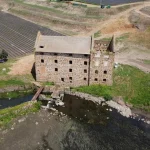
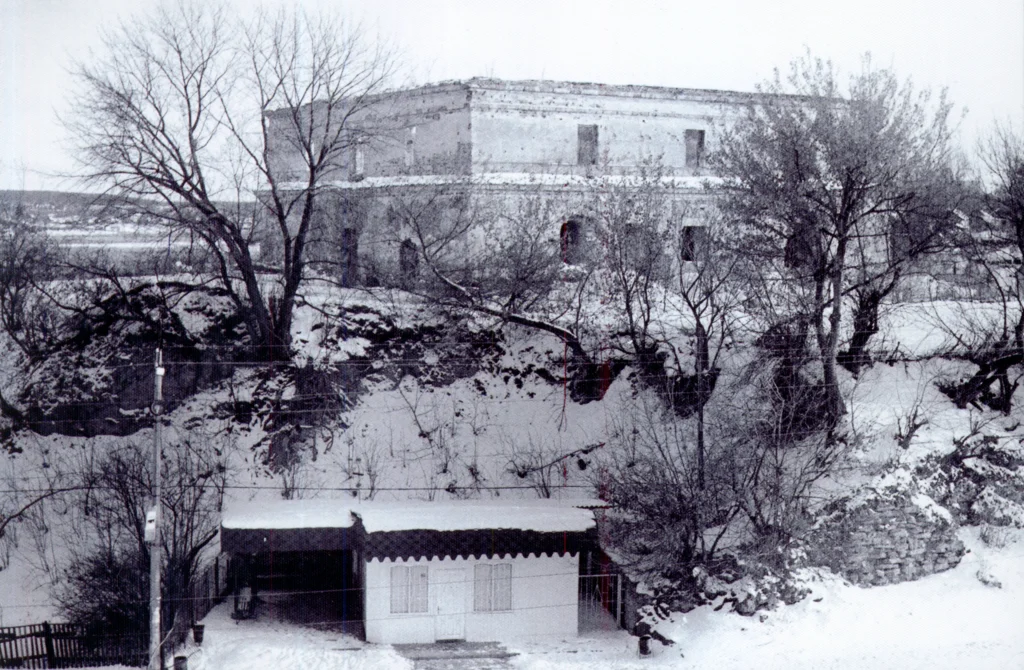
The only stone building surviving on the castle grounds is a fortified tower-house. A common theory holds that this fortified building, with its elaborate surviving cellar system, was the princely treasury.
The elaborate cellar system is real. The treasure has never been found.
The Castle’s End: a Roof, Soil, and Builders
First the roof was destroyed, and then the building was left without any upkeep at all. Over the course of the 20th century, soil was repeatedly removed from the castle grounds.
The last time — in the late 1990s — soil was taken to raise the level of a neighboring hill, where a new building was under construction. Not enemies, not time — construction crews nearby.
What Remains Today
A stone tower-house on a hill survives partially. Around it are the remains of earthen ramparts. The outline of the castle grounds is still visible.
From the hill, there’s a view over the confluence of the Soshenia and the Horyn.
What to See in Iziaslav and Nearby
Iziaslav is a rich destination for a small district center:
- Novozaslav Castle — a separate, better-preserved site from the 16th–17th centuries
- St. John the Baptist Church (1610s) — the burial place of the Zaslavsky family; still active
- The Lazarist Monastery (17th century)
- The Sanguszko Palace — later, 19th century
From Iziaslav, natural onward stops include Ostroh (~31 miles / ~50 km) and Dubno (~50 miles / ~80 km).
Practical Information
- Admission: free
- Condition: tower-house plus ramparts; ruins
- Time needed: 15–20 minutes (castle), plus a separate visit to Novozaslav Castle
- From Khmelnytskyi: ~62 miles (~100 km)
- From Rivne: ~50 miles (~80 km)
Conclusion
Castle records were kept from 1512. The Zaslav district counted 70 villages.
In the tower-house’s cellars, they say, lies a treasure. No one has found it.
In the 1990s, soil was taken from the site for a neighboring building.
The tower-house still stands.