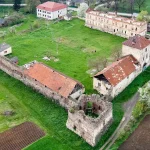
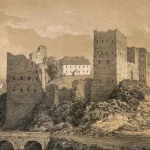
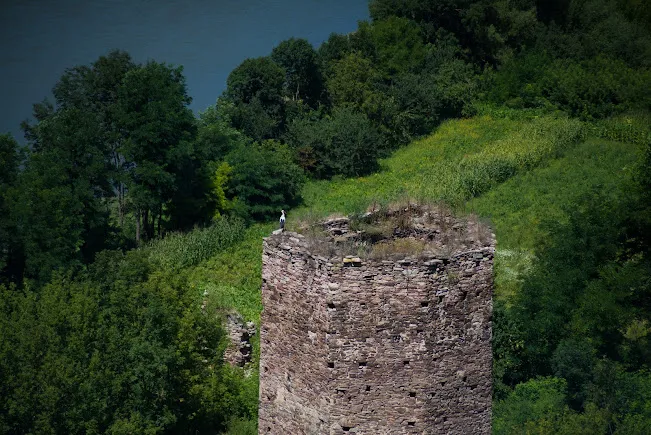
Rakovets Castle’s three towers are triangular, square, and hexagonal.
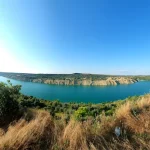
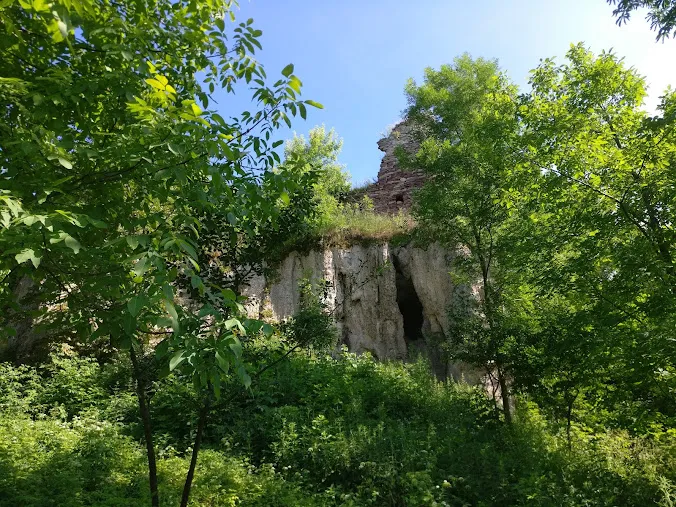
That combination wasn’t an architect’s whim. Each shape gave an optimal angle of observation and fire from its specific position on the cliff. The castle stands on a travertine cliff, 98 ft (30 m) above the Dniester — and its three different towers covered every approach to the river crossing.
The Ottomans destroyed it twice. Twice it was rebuilt.
Then a potash factory opened within its walls. That burned down too.
After that, the castle was abandoned.
General Information
| What? | Description |
|---|---|
| Name | Rakovets Castle |
| Location | Rakovets village, Horodenka district, Ivano-Frankivsk Oblast |
| Setting | a travertine cliff ~98 ft (30 m) above the Dniester |
| Built | 1640–1660 |
| Commissioned by | Dominik Wojciech Bieniowski, cupbearer of Galicia |
| Three towers | triangular, square, and hexagonal |
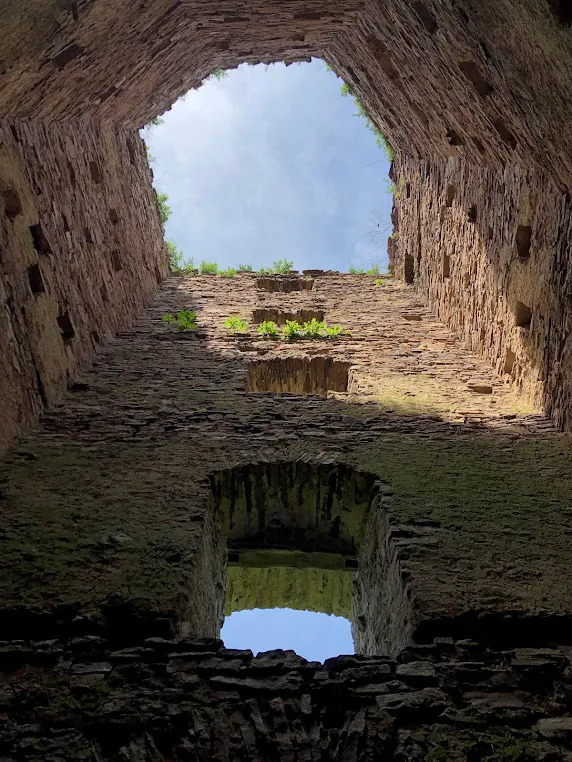
| Walls | 6.5 ft (2 m) thick, 6.5–26 ft (2–8 m) tall |
| Entrance | a two-story square gate-tower |
| Status | architectural monument of national significance |
| Condition | ruins on the cliff; free admission |
A River Crossing as the Target
The castle was built by Dominik Wojciech Bieniowski, cupbearer of Galicia — a court official of modest rank, but with resources. His goal was specific: to control a crossing over the Dniester.
River crossings in the Dniester canyon were rare and strategically valuable. Whoever held the ford controlled movement between Pokuttia and Podillia.
Construction ran from 1640 to 1660 — precisely during the years of the Khmelnytsky uprising and the Cossack wars. Still unfinished, the castle withstood a Cossack siege in 1657. Ten years later, in 1667, Tatars unsuccessfully stormed it.
In 1672, the Ottomans captured and destroyed it. It was rebuilt.
In 1676, the Ottomans came a second time. They destroyed it again. It was rebuilt again.
Three Towers and Six-Foot Walls
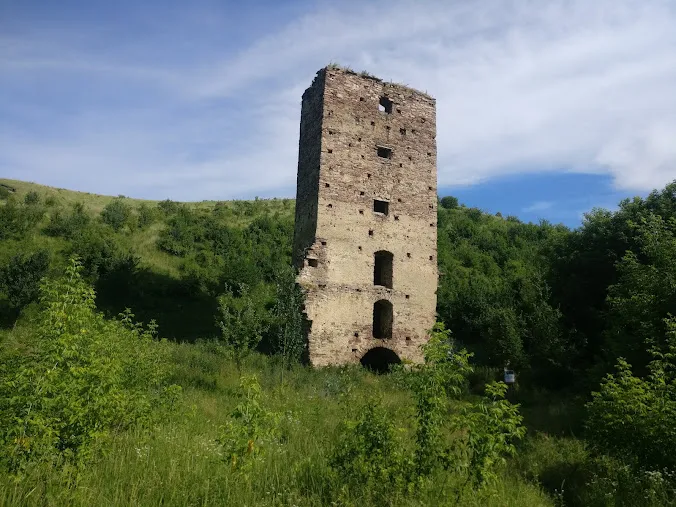
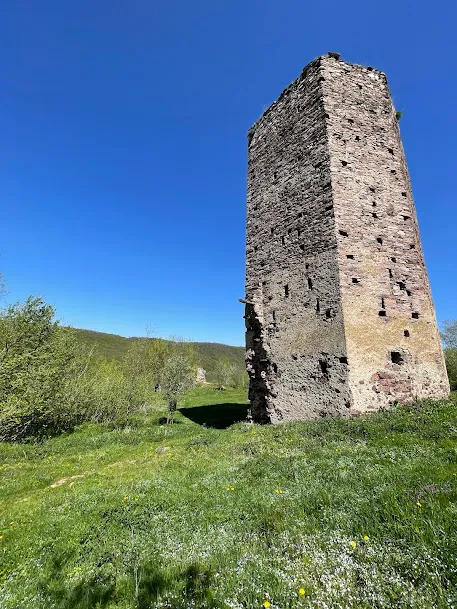
The castle’s main architectural feature is three towers of fundamentally different shapes:
- triangular — for observation along the cliff face
- hexagonal — for all-around firing coverage
- square (also serving as the gate) — the main entrance
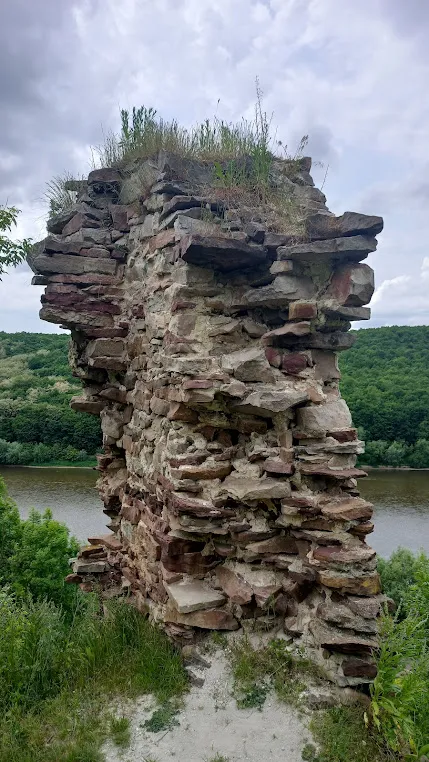
The towers are connected by walls 6.5 ft (2 m) thick and 6.5–26 ft (2–8 m) tall, depending on the terrain of the cliff. Below is a steep travertine drop to the Dniester — approach from below is impossible.
From Outpost to Factory
Between 1685 and 1691, the castle served as an outpost during Jan III Sobieski’s Moldavian campaigns against the Ottomans, storing provisions and ammunition.
In the 18th century, heavy artillery changed the logic of fortification. The castle lost its defensive purpose and began serving as housing.
In 1768, a fire struck. It wasn’t rebuilt.
In 1769, during the fighting of the Bar Confederates, Russian troops burned the castle again.
In 1840, the owners, the Dwernicki family, opened a potash factory (producing lye for glass and soap) in the castle courtyard. It soon burned down.
After that, the ruin was abandoned for good.
What Not to Expect
The castle is an open ruin on a cliff with no infrastructure whatsoever. Approaching it requires caution: the cliff is steep and the path uneven.
But the view from the cliff over the Dniester canyon is one of the best in this part of the valley.
What’s Nearby and How to Fit It Into a Route
Rakovets is in Horodenka district, Ivano-Frankivsk Oblast, near the Dniester.
- Horodenka (~6 miles / ~10 km) — the district center, with a town hall and churches
- Chernelytsia (~3 miles / ~5 km) — a neighboring castle, mentioned together with Rakovets as “important outposts”
- Bakota (~25 miles / ~40 km via Kamianets) — a cliff monastery
- Dzhurynsky Waterfall (~31 miles / ~50 km) — the largest lowland waterfall in Ukraine
Practical Information
- Admission: free
- Approach: a trail with rocky sections; take care
- Condition: ruins of three towers and connecting walls
- Time needed: 20–40 minutes
- From Horodenka: ~6 miles (~10 km)
Conclusion
Built during the Cossack wars. Cossacks besieged it while it was still unfinished.
The Ottomans destroyed it twice. Twice it was rebuilt.
Then a factory opened. The factory burned down. The castle was abandoned.
Three differently shaped towers still stand on the cliff above the Dniester.