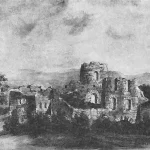
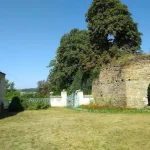
The Cossacks destroyed it. The Tatars destroyed it. The Ottomans destroyed it.
Every time, it was rebuilt.
Three destructions and three rebuildings — Skalat Castle held out longer than most others in the Ternopil region.
Then came its last owner, Count Aleksander Potocki. There was no money for restoration, so he simply gave the castle to the town council.
General Information
| What? | Description |
|---|---|
| Name | Skalat Castle |
| Address | Zamkova St., Skalat town, Ternopil district, Ternopil Oblast |
| Coordinates | 49°25′40″N, 25°58′20″E |
| Setting | the floodplain of the Hnyla River, southwestern part of town |
| Built | 1630 |
| Commissioned by | Krzysztof Wichrowski, sword-bearer and cavalry captain of Galicia |
| Shape | irregular quadrilateral (302 × 236 × 236 × 207 ft) |
| Four towers | pentagonal, four-tiered, at each corner |
| Walls | 20 ft (6 m) tall, 6.5 ft (2 m) thick |
| Status | a branch of the “Castles of Ternopil Region” national reserve (since 2003) |
| Museum | in two towers; weapons, paintings, sculptures |
| Admission | paid |
The “Stronghold of Podillia”
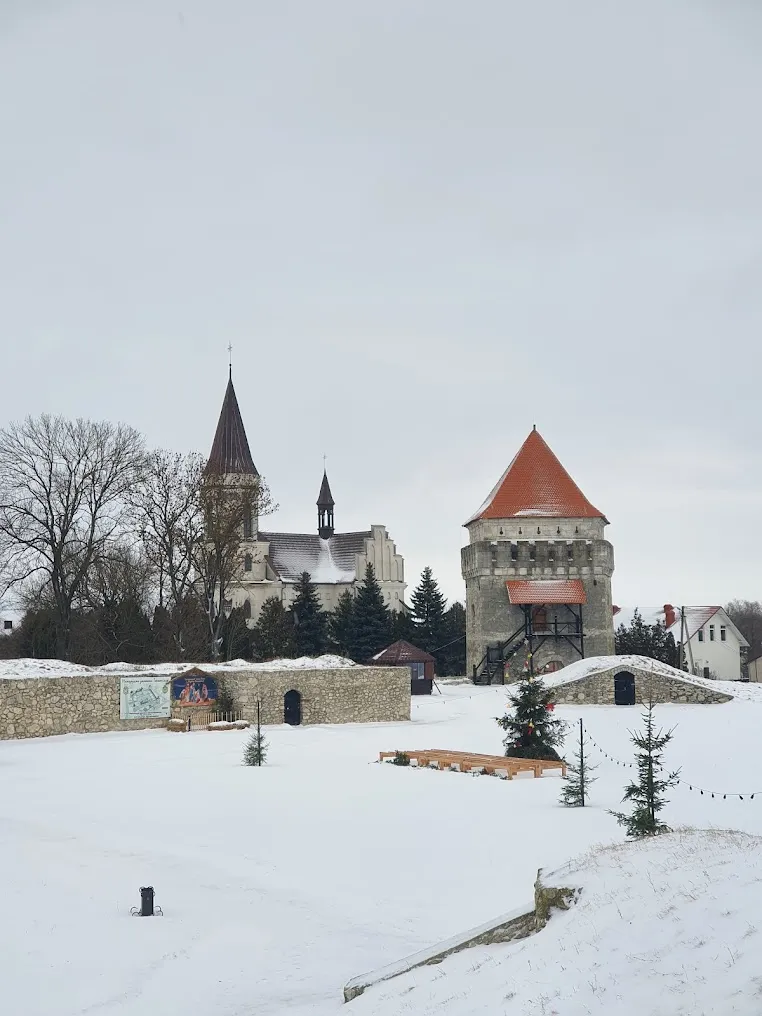
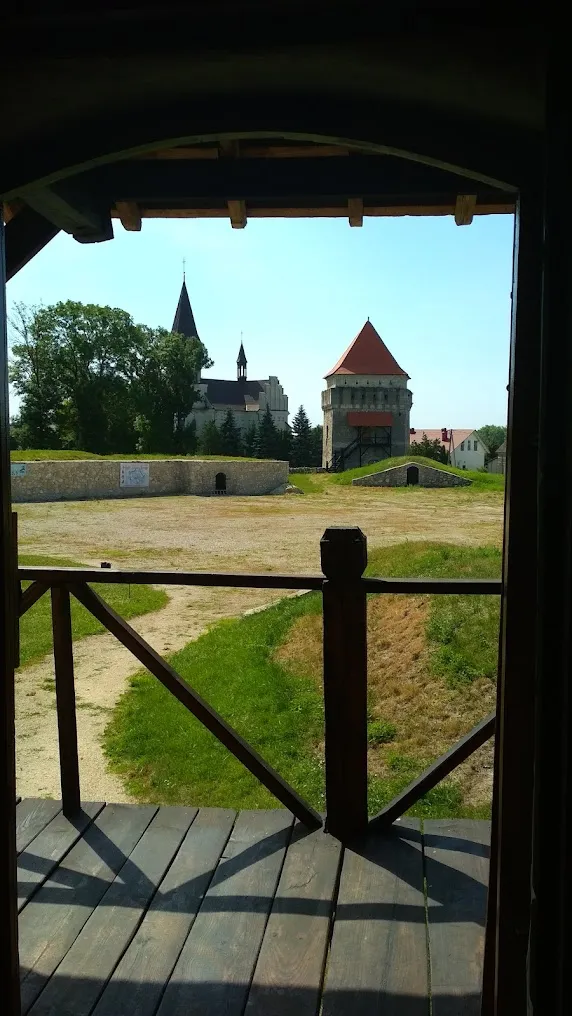
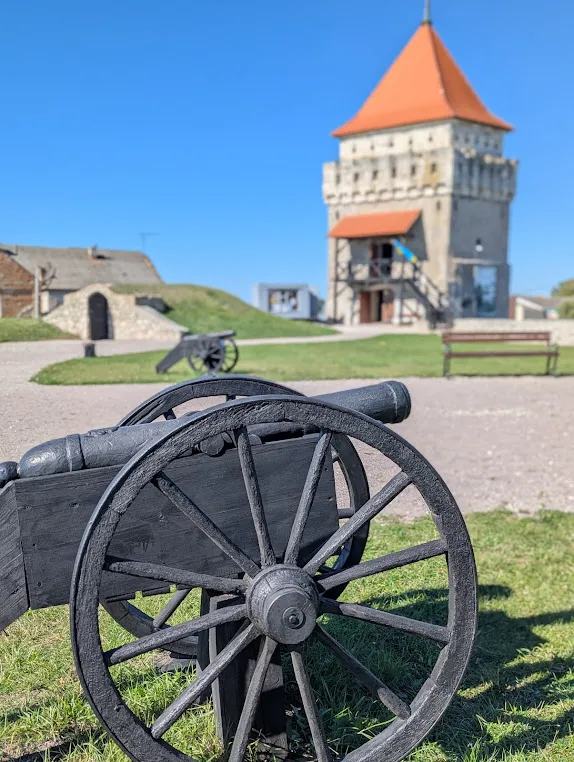
Skalat Castle was called the “stronghold of Podillia,” and not without reason. Its irregular quadrilateral, with unequal sides (302, 236, 236, and 207 ft), followed the shape dictated by the terrain. Four pentagonal, four-tiered towers stood at the corners, each with faces angled toward both the inner courtyard and the surrounding fields. Firing slits appeared on every tier. The walls were 20 ft (6 m) tall and 6.5 ft (2 m) thick. A wooden drawbridge stood on the western side.
The castle sits in the floodplain of the Hnyla River — the wet ground and a water-filled moat protected it on every side.
Three Destructions and Three Rebuildings
Between 1648 and 1650, Cossacks and local peasants destroyed the castle for the first time during Khmelnytsky’s War of Liberation. It was rebuilt.
In 1667, Tatars attacked. The castle held.
In 1672, a joint Ottoman-Tatar assault destroyed it again. It was rebuilt.
In 1675, the Ottoman vizier Ibrahim Shishman — the same commander who had stormed Terebovlia and Ternopil — destroyed the castle a third time. It was rebuilt again.
After that, the castle remained operational for several more decades.
From Fortress to Lavish Residence
In the 18th century, heavy artillery changed the logic of fortification. The castle gradually became a magnate’s residence.
By the late 19th century, its owners, the Rosensztok family, turned it into a “lavish, richly decorated residence” — though it no longer served any defensive purpose.
In the late 19th to early 20th century, its last owner, Count Aleksander Potocki, lacked the funds to restore it, so he gave the castle to the town. This is a rare case among all the castles in this series: an owner who didn’t sell, but simply gave the castle away.
The Soviet Era and 2003
After 1939, the castle passed between various institutions, and its condition deteriorated.
In 2003, Skalat Castle became a branch of the “Castles of Ternopil Region” National Reserve, and planned restoration began.
In 2004, a severe storm tore roof tiles off the towers. They were restored.
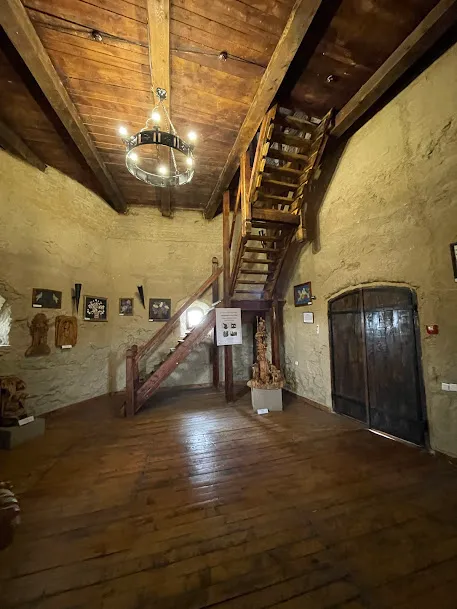
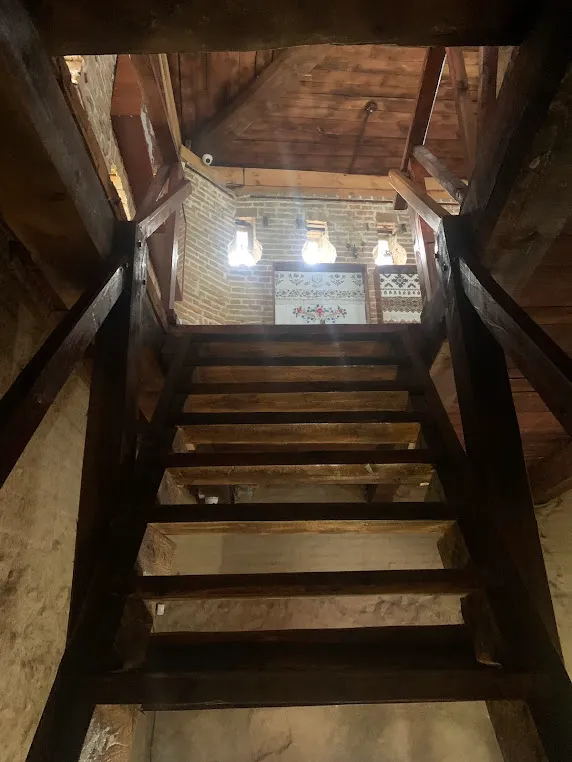
Today, a museum exhibit operates in two of the towers: medieval weapons, paintings, and sculptures. The castle is active and open to visitors.
Underground Passages to Hrymailiv?
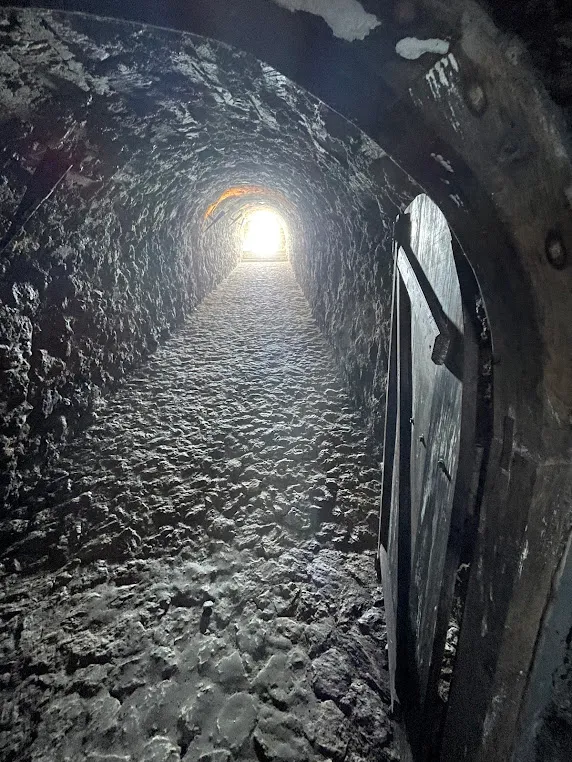
Local historians claim underground passages run from the castle to Hrymailiv, about 16 miles (~25 km) away.
A 16-mile underground passage through the Ternopil region rivals the “passage to the Maniava Hermitage” claimed at Pniv Castle (19 miles / 30 km) as the most ambitious underground legend in this series.
Real underground chambers do exist beneath the castle. Their full extent has never been surveyed.
What Not to Expect
Unlike most castles in this series, Skalat is a living, functioning site — not a neglected ruin, but an active reserve with a museum.
Still, it’s worth arranging a tour in advance — visiting without notice may find the castle closed.
How to Fit It Into a Route
Skalat is 20 miles (32 km) from Ternopil, between Ternopil and Pidvolochysk.
- Zbarazh (~19 miles / ~30 km) — the site of Khmelnytsky’s most dramatic siege, in 1649
- Ternopil (~20 miles / ~32 km) — a castle and a pond in the town center
- Kremenets (~50 miles / ~80 km) — Bona Hill and a bottomless well
Fits into the “Road Trip Through the Fortresses of Podillia” route.
Practical Information
- Address: Zamkova St., Skalat
- Status: a branch of the “Castles of Ternopil Region” reserve
- Admission: paid; museum in two towers
- Hours: confirm in advance; tours by arrangement
- From Ternopil: ~20 miles (~32 km) via route R02
Conclusion
Destroyed three times. Rebuilt three times.
Potocki gave it to the town — because he had no money left.
A storm tore off the roof tiles — they were restored.
The castle refused to die. Now it’s a museum.