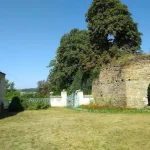
On October 18, 1672, beneath an old linden tree next to Buchach Castle, three parties signed a peace treaty.
Poland was ceding ground. The Ottoman Empire was gaining it. Hetman Petro Doroshenko received the Right-Bank Hetmanate as a separate state under the protection of the Ottoman Porte.
It was at Buchach Castle that this was declared: an independent Ukrainian state. It lasted 11 years.
Most people know Buchach through its Nobel laureate, Agnon. But above the Strypa, there’s also this place.
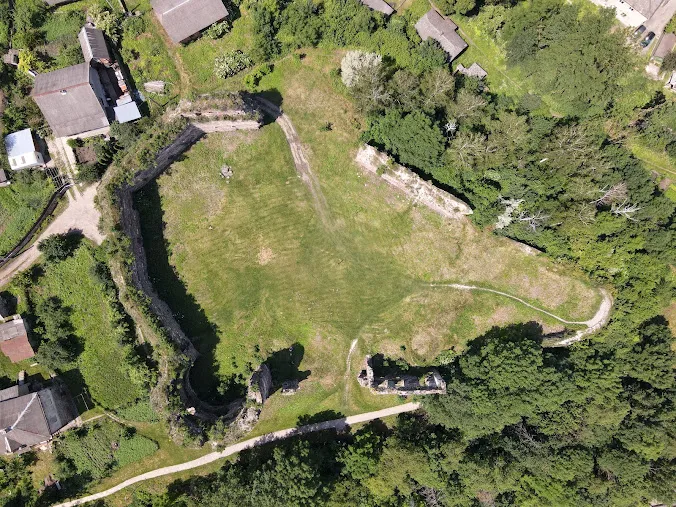
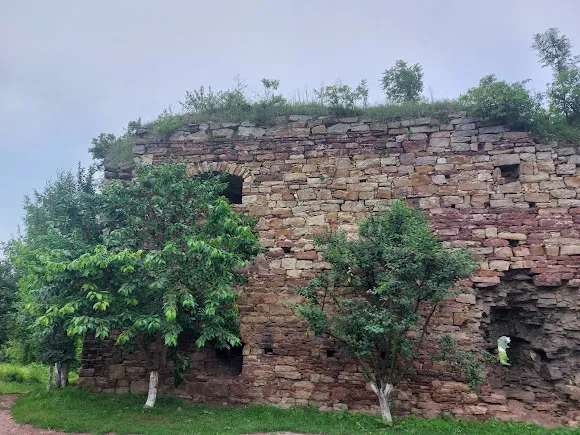
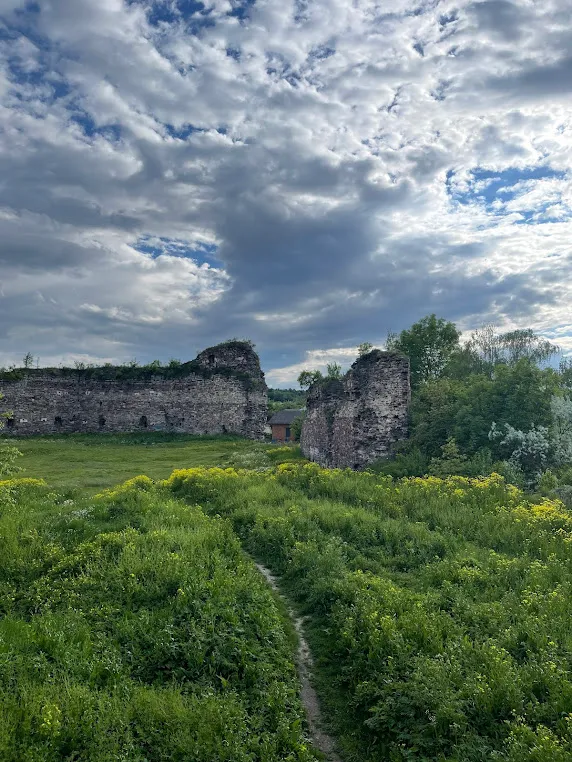
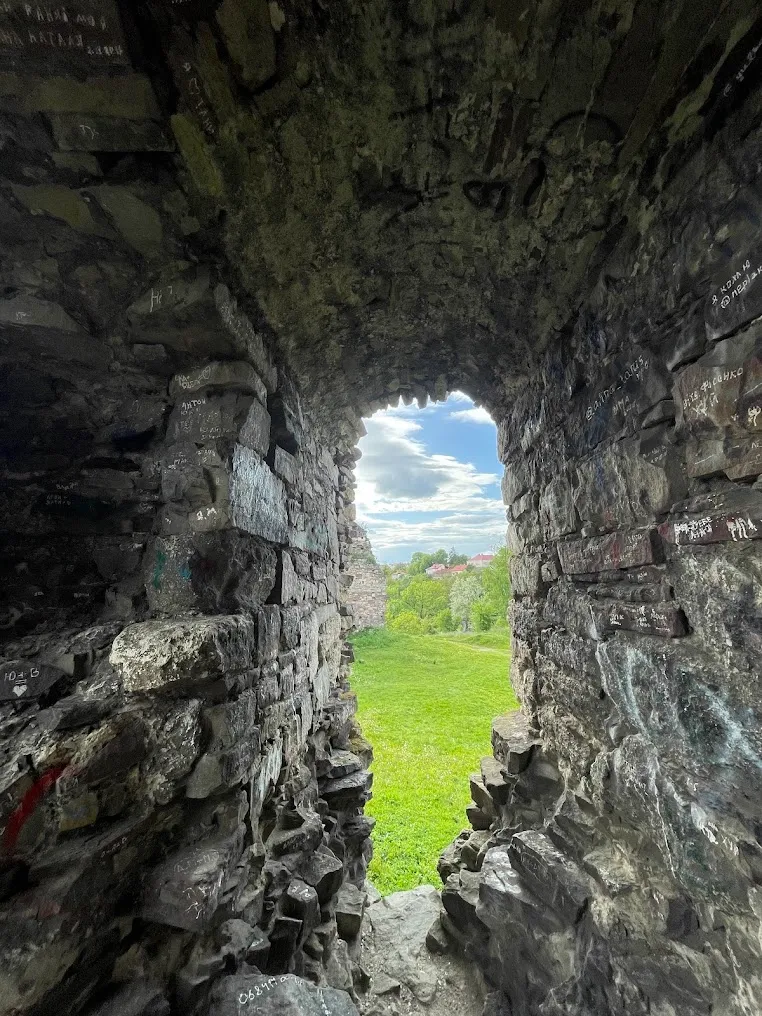
General Information
| What? | Description |
|---|---|
| Name | Buchach Castle |
| Address | Zamkova St., Buchach, Chortkiv district, Ternopil Oblast |
| Setting | a hill above the Strypa River, in the town center |
| First mention | late 14th century (Mykhailo Avdanets, of the Buczacki family) |
| Shape | a distorted oval, 3 towers |
| Wall thickness | up to 11.5 ft (3.5 m); in places 13 ft (4 m) |
| Key event | the 1672 Treaty of Buchach — an independent Hetmanate declared |
| Status | architectural monument of national significance; ruins |
| Admission | free |
The Buczacki Family and the First Castle
In the late 14th century, the nobleman Mykhailo Avdanets freed several Podillia castles from Lithuanian garrisons, and in return received Buchach from the king as his own. His sons took the family name from the town: Buczacki.
They built the first fortress above the Strypa. Later, when the Buczacki line died out, the castle passed to other owners.
Maria Mohylanka and the Building of the Towers
In the early 17th century, Buchach passed to the Potocki family. But the main figure behind the castle’s new form wasn’t from the male line.
Maria Mohylanka, wife of Stefan Potocki and sister of Petro Mohyla (the metropolitan and founder of the Kyiv-Mohyla Academy), personally oversaw the castle: she expanded its southern section and built large semicircular bastions on the east and west sides. Stone supports for defensive equipment are still visible on the walls today.
A woman from a famous family — and it was she who built the towers.
1672: a Woman in Defense, and a Signature Beneath a Linden
In 1672, the Ottoman army of Mehmed IV laid siege to Buchach.
Potocki was away on business. His wife Teresa commanded the castle. The Ottomans managed to besiege it, but the fortress held out.
In the end, the matter was settled diplomatically. On October 18, 1672, beneath an old linden tree a few hundred meters from the castle, the Treaty of Buchach was signed. Under its terms:
- Poland ceded Podillia to the Ottoman Empire
- Buchach itself was split along the Strypa: the left bank to Poland, the right bank to the Hetmanate
- Hetman Petro Doroshenko declared the Right-Bank Hetmanate an independent Ukrainian state under Ottoman protection
For 11 years — until 1683 — this state genuinely functioned.
The Polish Sejm refused to ratify the treaty, but the border existed de facto. And it all began at this castle.
The 19th Century: the Castle’s End
In 1676, the Ottomans destroyed the castle anyway, during their withdrawal. The Potocki family rebuilt it.
In 1687, by royal order, Jan and Mikołaj Potocki restored the fortress. It remained defensible until the mid-18th century.
Once the threat from the east disappeared, the Potocki family allowed the walls to be dismantled for building materials. Local residents made quick work of it.
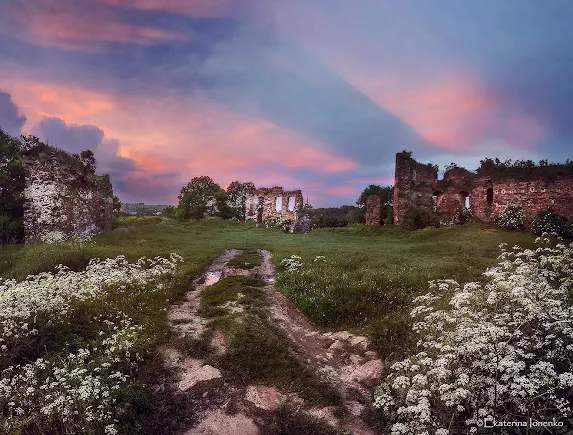
By the 19th century, the castle had ceased to function as a fortress. Its walls were dismantled. What survived: three towers and fragments of the ramparts.
Buchach and Agnon
Shmuel Yosef Agnon (1887–1970), the 1966 Nobel laureate in Literature, was born and raised in Buchach. He described the town dozens of times in his writing — for him, Buchach was “a city and mother of cities,” an archetype of the Galician Jewish shtetl.
The castle is part of his Buchach — one of the fixed points he refers to topographically. But Agnon looked at a castle that was already a ruin, and wrote about a town whose Jewish, Polish, and Ukrainian heritage ran far deeper than a single set of ruins.
What’s There Today
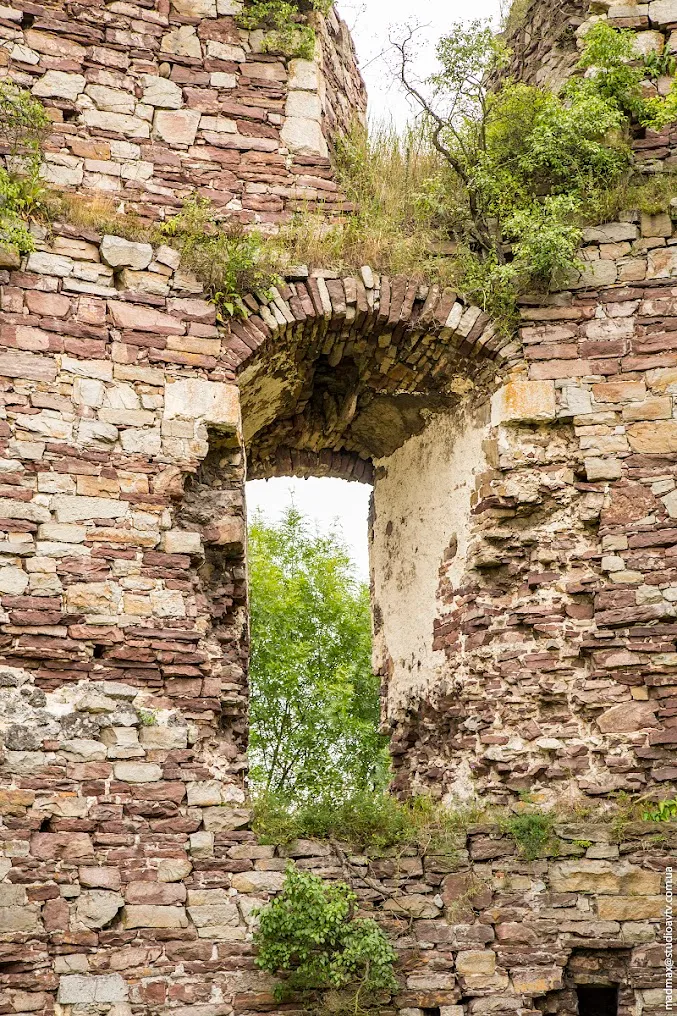
Three towers (north, southeast, and west) and fragments of the walls. Underground passages exist but are partly filled in — one open passage in the round tower allows roughly 50 ft (15 m) of exploration. Views over the Strypa and the town.
Nearby stands the most striking architecture in Buchach:
- Bernard Meretyn’s Town Hall (1751) — a rococo masterpiece, unique in the Ternopil region
- the Exaltation of the Cross Church (18th century)
- the Church of the Assumption of the Virgin Mary (1761, by Meretyn) — with sculptures by Pinzel
What Not to Expect
An organized tourist visit. These are open ruins, without a fence and without a museum. But the town around it is one of the most interesting in the Ternopil region.
How to Fit It Into a Route
Buchach is 40 miles (65 km) from Ternopil, in Chortkiv district.
- Terebovlia (~19 miles / ~30 km) — a castle and Anna Chrzanowska
- Nyrkiv (Chervonohorod Castle) (~22 miles / ~35 km) — palace ruins and a waterfall
- Chortkiv (~16 miles / ~25 km) — a castle and the old town
Fits into the “Road Trip Through the Fortresses of Podillia” route.
Practical Information
- Admission: free
- Condition: three towers and walls, underground chambers (take care)
- Time needed: 20–40 minutes (castle) plus a separate walk through town
- From Ternopil: ~40 miles (~65 km)
Conclusion
Cossacks never took the castle. The Ottomans did — but its owner was away, and his wife commanded the defense.
Beneath a linden tree nearby, a treaty was signed, and an independent Ukrainian state existed for 11 years.
Then the walls were dismantled for stone.
Agnon looked at these ruins and wrote about the town.