During renovation, workers found a pit filled with broken pottery beneath the floor of one of the monastery’s cells. The ceramics turned out to belong to the Chornolis culture, 9th–8th century BC. In other words, this site was used for ritual purposes a full thousand years before Christ.
The monks who arrived here in 1999, restoring the monastery, uncovered a pre-Christian layer beneath their own work.
General Information
| What? | Description |
|---|---|
| Name | Halytsia Cave Monastery of St. Nicholas (men’s monastery) |
| Location | Halytsia village, Dnistrovskyi district, Chernivtsi Oblast |
| Setting | the right bank of the Dniester Reservoir, 394 ft (120 m) above the water |
| Denomination | Ukrainian Orthodox Church (Moscow Patriarchate) |
| Restored | 1999 (by monks from Kyiv) |
| Caves and cavities | more than 20 (natural, artificial, and mixed) |
| Status | an active monastery |
| Admission | free |
Why Here
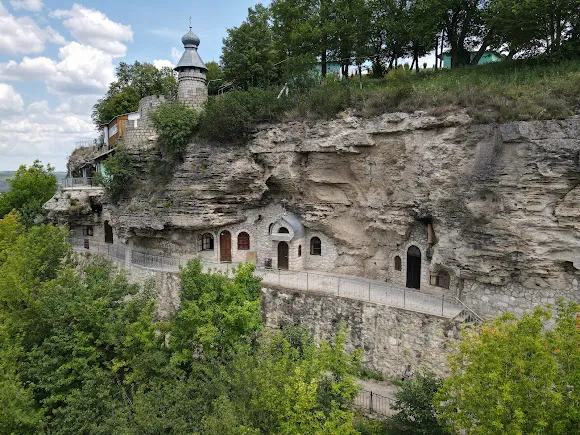
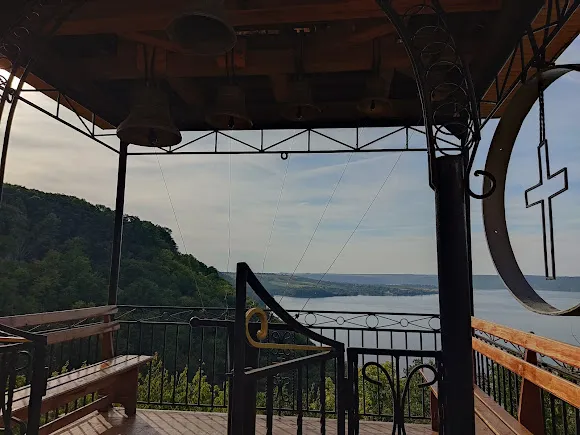
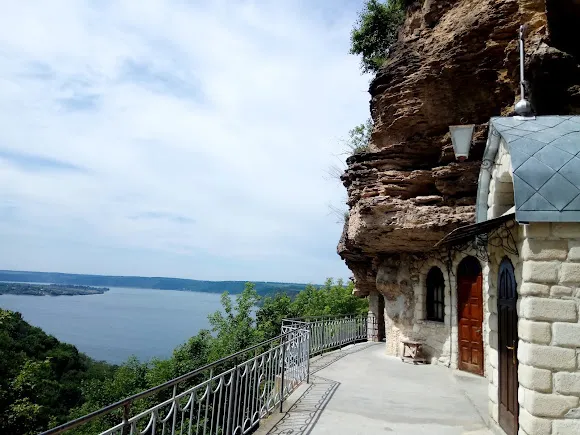
The monastery stands on a sheer right bank of the Dniester Reservoir — a 394-ft (120 m) vertical cliff above the water. This wasn’t chosen by accident: the site offered maximum natural protection and isolation.
Archaeological research in the 1990s showed that people lived here as far back as the 1st millennium BC. In the Trufanova Krynytsia tract, half a kilometer from the monastery, pagan amulets were found — evidence of an ancient shrine. And beneath the floor of one of the cells: pottery from the Chornolis culture, 9th–8th century BC.
When the first monks arrived here in 1999, they were reviving the monastery — and, at the same time, excavating what had lain hidden beneath it for far longer than the monastery had existed.
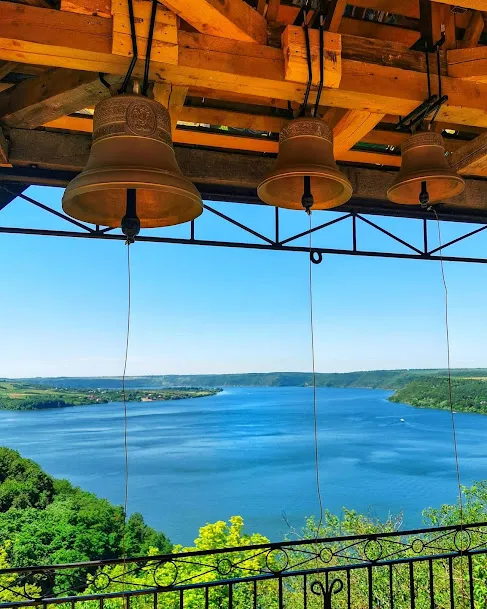
“The Only One” — Almost
There’s one specific, verifiable claim: Halytsia is the only currently active ancient monastery on the Dniester.
At Bakota (Khmelnytskyi Oblast), services are held only on certain days. At Liadova (Vinnytsia Oblast), revival is proceeding slowly. At Halytsia, monastic life is regular and ongoing.
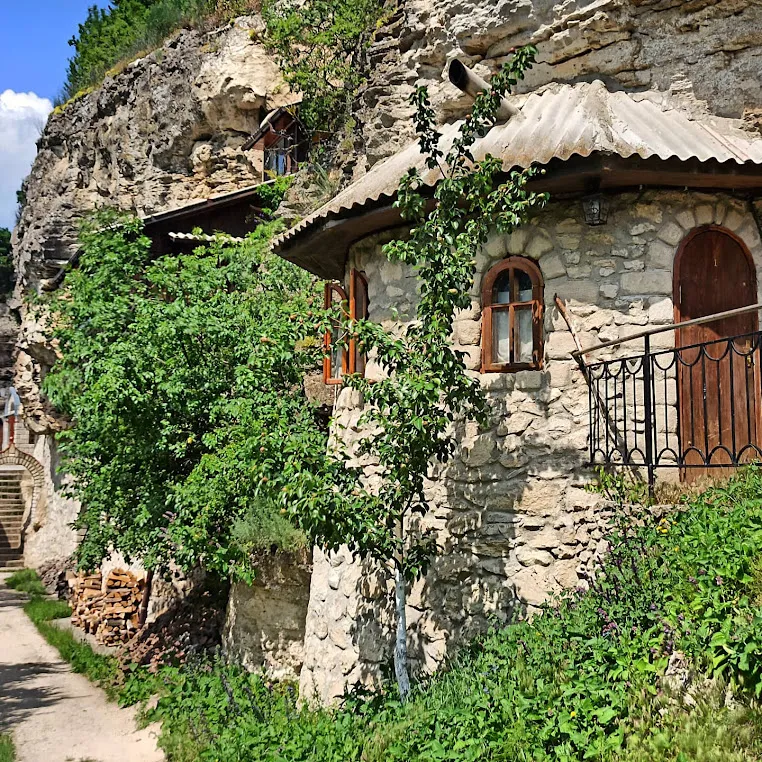
But “ancient” is a qualified word. The monks arrived in 1999 and took over caves that already existed — both natural and hand-cut, left behind by earlier occupants. More than 20 cavities, some worked, some not. An ancient site, a revived community.
What’s There
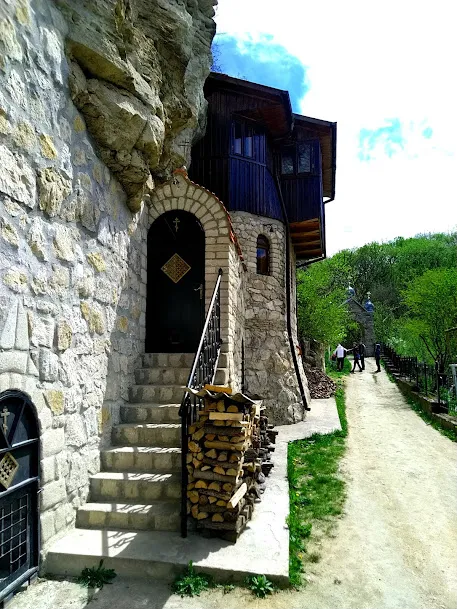
The monastery complex is built into and around the cliff:
- cave cells with finished walls
- underground prayer chambers
- terraces with paths along the slope
- a small church inside the rock
- the “Hermit’s Cave” — a separate cavity decorated with flowers and candles, with a niche for an altar and a tomb set into the floor
What Not to Expect
The road to the monastery washes out after rain. One visitor described her first trip: “the road to the hermit’s cave was completely washed away — a steep cliff on one side, a drop on the other.” If you’re going after rain, be prepared to leave the car further back and walk, or to postpone the visit entirely.
Also: “silence over the Dniester” is true, but not absolute. This is an active monastery — people live and pray here. Visiting it like a museum isn’t quite right. A dress code and a quiet voice aren’t just requests; they follow from the nature of the place.
What to See Nearby
The monastery is in the Dnistrovskyi district of Chernivtsi Oblast, next to the Khotynskyi National Nature Park. A natural route includes:
- Khotyn (~16 miles / ~25 km) — a medieval fortress on the Dniester, one of the best preserved in Ukraine
- Bakota (~31 miles / ~50 km, via Kamianets-Podilskyi) — a flooded monastery, on the opposite side of the Dniester Reservoir
- Kamianets-Podilskyi (~44 miles / ~70 km) — for a fuller day trip
The “Cliff Monasteries of Ukraine” route provides the basic context for this site. It also fits into the “Dniester Panoramas of Ukraine” route, as part of a natural chain of stops along the riverbank.
Practical Information
- Admission: free
- Dress code: modest clothing recommended (women should cover their heads)
- Road: paved as far as Halytsia village; the final stretch to the monastery is unpaved and difficult after rain
- Time needed: 40–90 minutes
- Phone: confirm current contact details for the monastery before your trip
- Best time to go: in dry weather; spring and autumn bring the fewest visitors
How to Get There
- From Chernivtsi: ~62 miles (~100 km) east, via Novodnistrovsk, then Sokyriany, then Halytsia village
- From Khotyn: ~16 miles (~25 km)
- ⚠️ Set your GPS for “Halytsia village, Dnistrovskyi district” — not the town of Halych in Ivano-Frankivsk Oblast
Conclusion
The Halytsia Monastery stands on a cliff where human layers stack one on another: a pagan shrine, Chornolis-culture pottery, medieval monks, Soviet-era emptiness, and a new brotherhood since 1999.
From the bank of the Dniester Reservoir, it rises 394 ft straight up. From the town of Halych, it’s 44 miles in an entirely different direction.