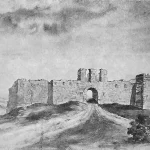
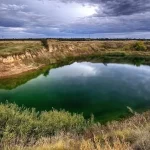
In November 2024, part of the travertine cliff at the “Maiden’s Tears” waterfall collapsed — an overhang that had jutted out nearly 16 ft (5 m) over hundreds of years, weighing more than 200 metric tons. Roughly 100 cubic meters (~3,530 cu ft) of rock came down.
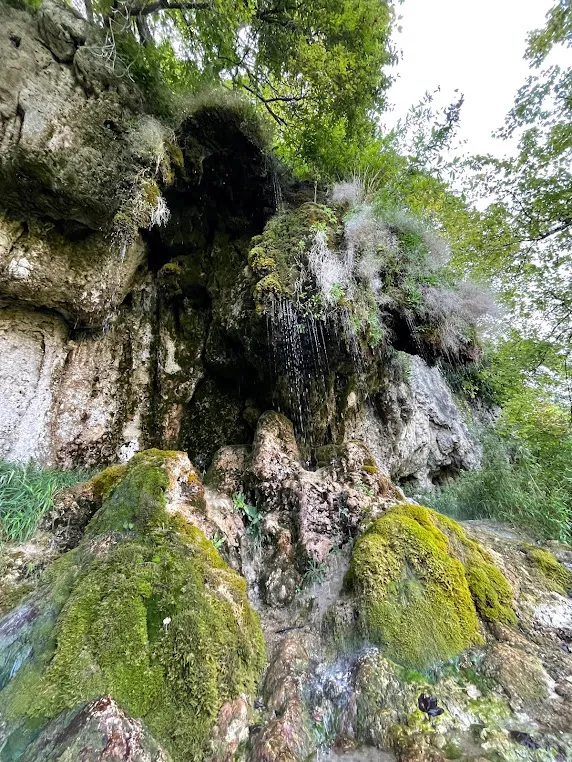
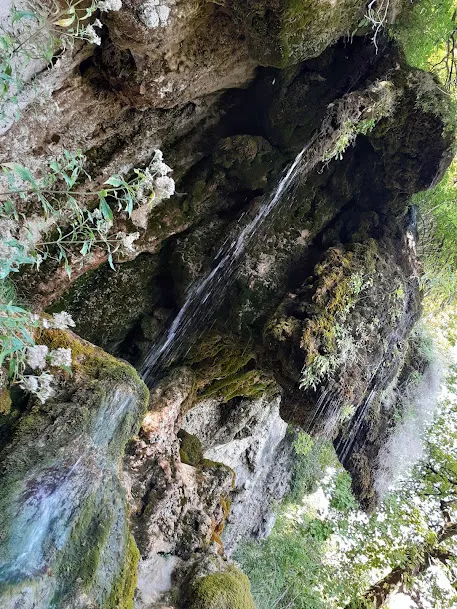
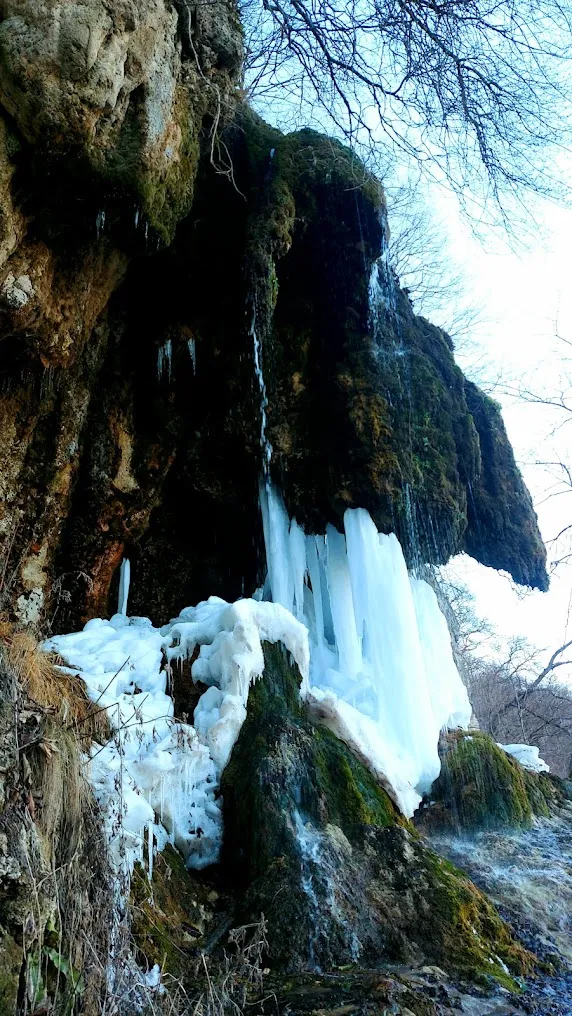
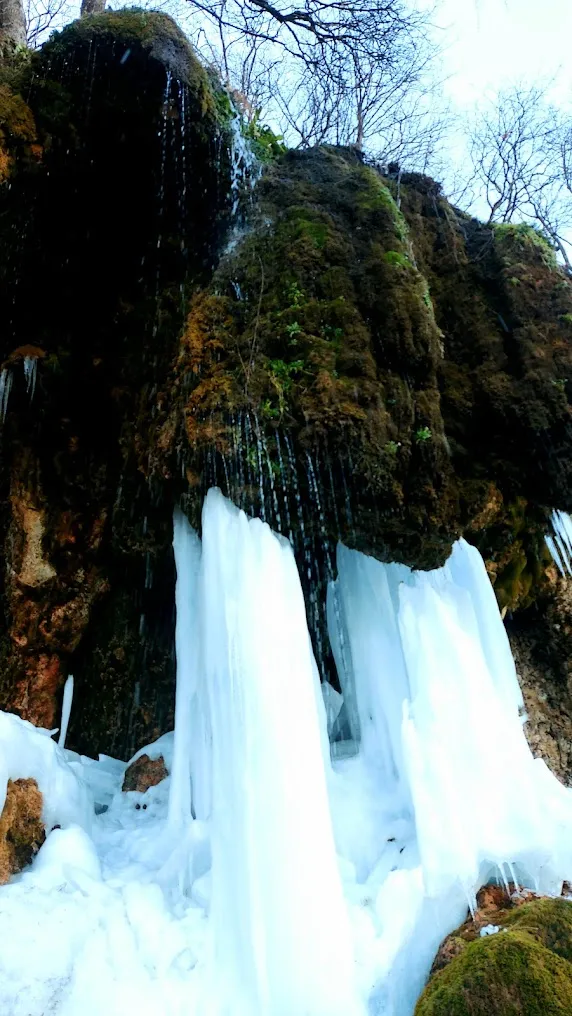
Most of the photos online were taken before this happened. The waterfall looks different now.
General Information
| What? | Description |
|---|---|
| Name | “Maiden’s Tears” Waterfall |
| Location | the Pustelnia tract, near Nyrkiv village, Chortkiv district, Ternopil Oblast |
| National park | “Dniester Canyon” |
| Type | travertine cascading waterfall |
| Rock type | travertine (limestone layers formed by moss and mineral water) |
| Admission | free; within the national park |
What Travertine Is — and Why It Matters
The “Maiden’s Tears” waterfall isn’t just water running down rock. It’s an active geological process.
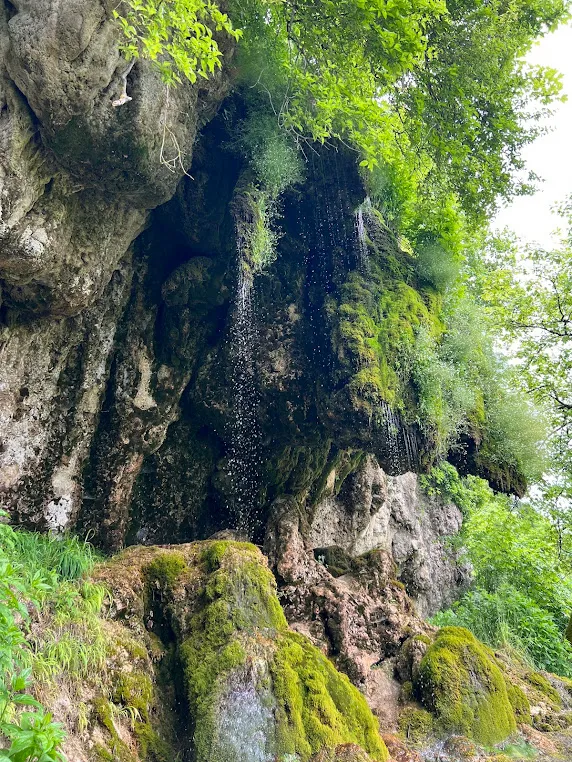
The cliff the water flows over is made of travertine — a porous limestone formed by moss. The moss grows, absorbing minerals from the water, then dies and turns to stone. A new layer builds on top of the old one. That’s how, centimeter by centimeter, over hundreds of years, the cliff grew — including the overhang that once jutted out above the water.
That’s exactly why the November 2024 collapse doesn’t surprise specialists. Once the overhang reached a critical mass and a critical projection, it broke off. The park published photos: where an overhanging slab once stood, there’s now a flat, even cut.
The waterfall keeps flowing. The rock keeps growing. In a few decades, there will be an overhang here again.
A Caution: “Maiden’s Tears” Isn’t Just One Location
“Maiden’s Tears” is a common folk name for small cascading waterfalls all across Ukraine. In the Ternopil-Precarpathian region alone, there are at least four different waterfalls with this or a similar name: in Yaremche (Carpathian National Park, on the Zhonka River), near Isakiv (Tlumach district, Ivano-Frankivsk Oblast), near Shutrominsti (Chortkiv district), and this one — in the Pustelnia tract near Nyrkiv.
If you simply type “Maiden’s Tears” into your GPS, you’ll end up somewhere else. Enter coordinates, or specify “Dniester Canyon, Nyrkiv.”
What It Looks Like, and How to Get There
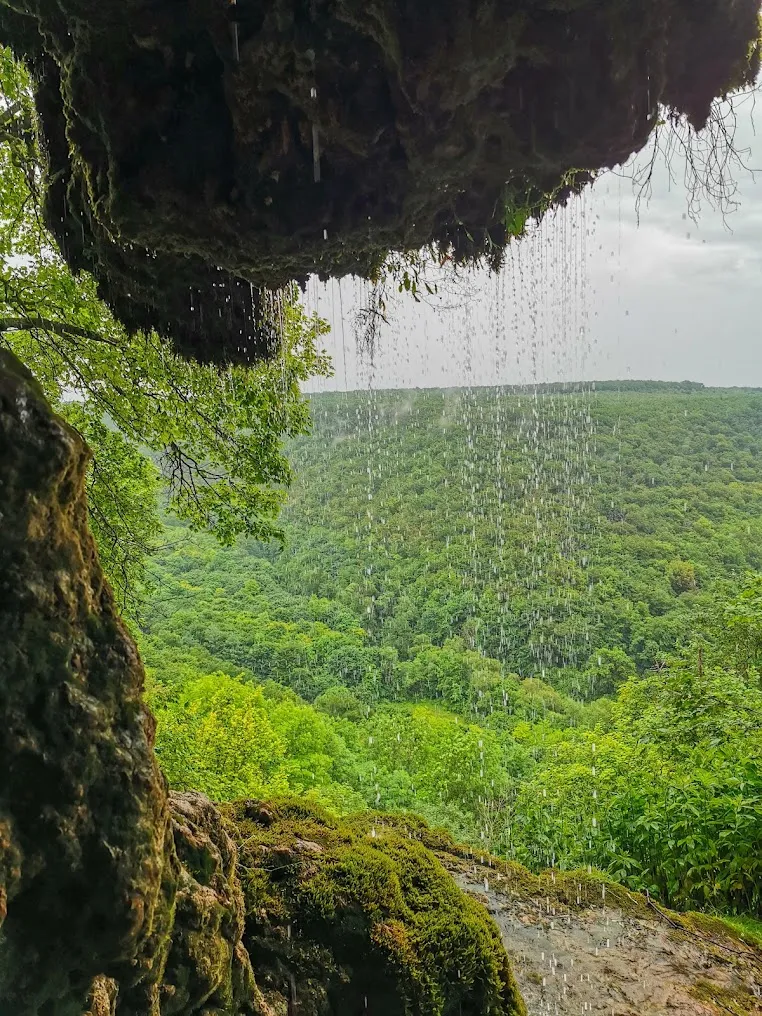
The waterfall runs down the travertine cliff in thin streams — water seeping through moss and limestone. It doesn’t fall in a rushing torrent; it slides. That’s why the cascade really does resemble even, parallel, quiet tears.
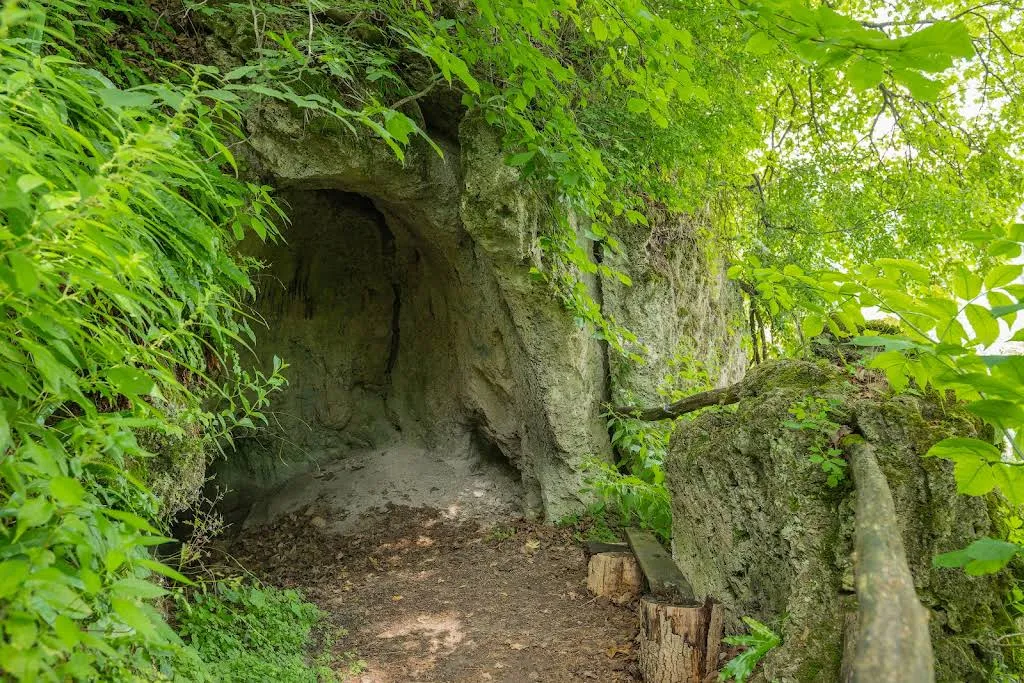
The “Pustelnia” tract sits at the very heart of the Dniester canyon — between steep slopes, damp forest, and the river.
From Nyrkiv village, it’s a walk in. The trail into the canyon is well-trodden, taking 15–25 minutes.
What to See Nearby
Nyrkiv and the Dniester canyon form one of the most tourist-rich stretches of the Ternopil region:
- Dzhurynsky (Chervonohorod) Waterfall (~22 miles / ~35 km from Nyrkiv) — Ukraine’s largest lowland waterfall
- The Hermit’s Cave (~30-minute walk from Dzhurynsky Waterfall) — a 19th-century grotto with a carved statue of St. Onuphrius
- Zalishchyky (~9 miles / ~15 km) — a resort town within the canyon’s “tropical” microclimate
Practical Information
- Admission: free; part of the “Dniester Canyon” National Nature Park
- How to get there: to Nyrkiv village, Chortkiv district; from the village, follow the trail on foot to the Pustelnia tract
- Transport: a bus from Zalishchyky (several times a day)
- Footwear: hiking shoes; the canyon slopes are damp
- Time needed: 30–60 minutes
- Condition after the collapse: the waterfall is active; the cliff’s appearance has changed; access remains open
Conclusion
The “Maiden’s Tears” waterfall exists because of moss that has been dying and turning to stone for several hundred years. The 2024 collapse isn’t a catastrophe — just another page in that same process.
The photos online are now out of date. But the waterfall hasn’t gone anywhere.