Ten to twelve million years ago, a warm, shallow sea covered this spot.
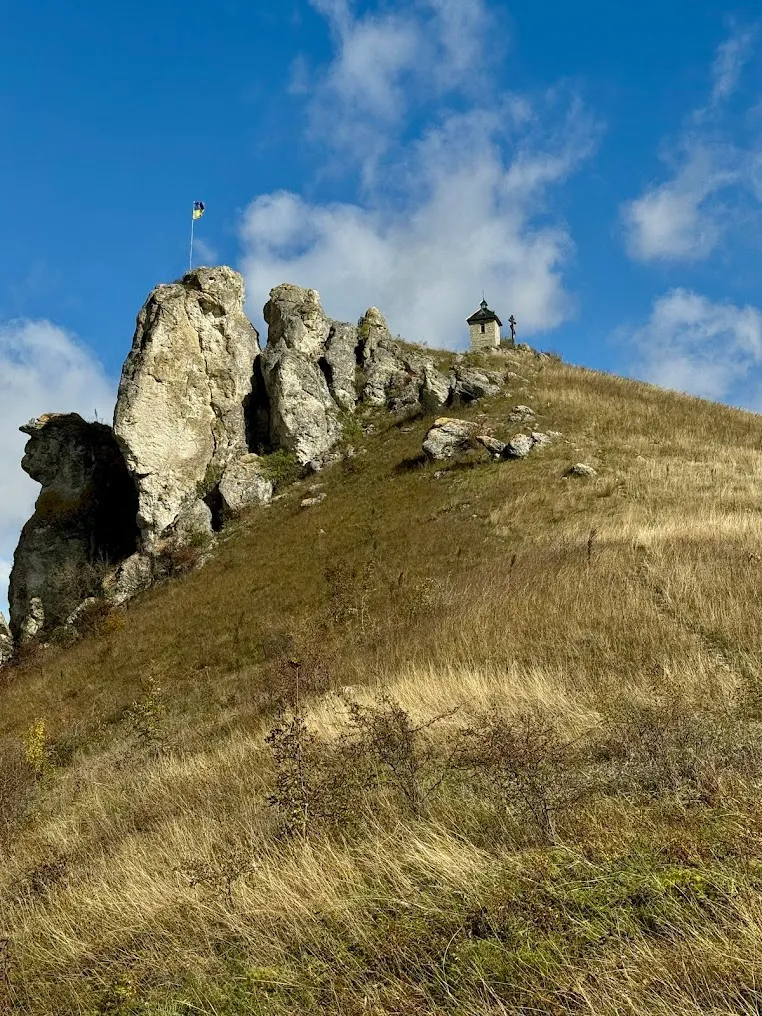
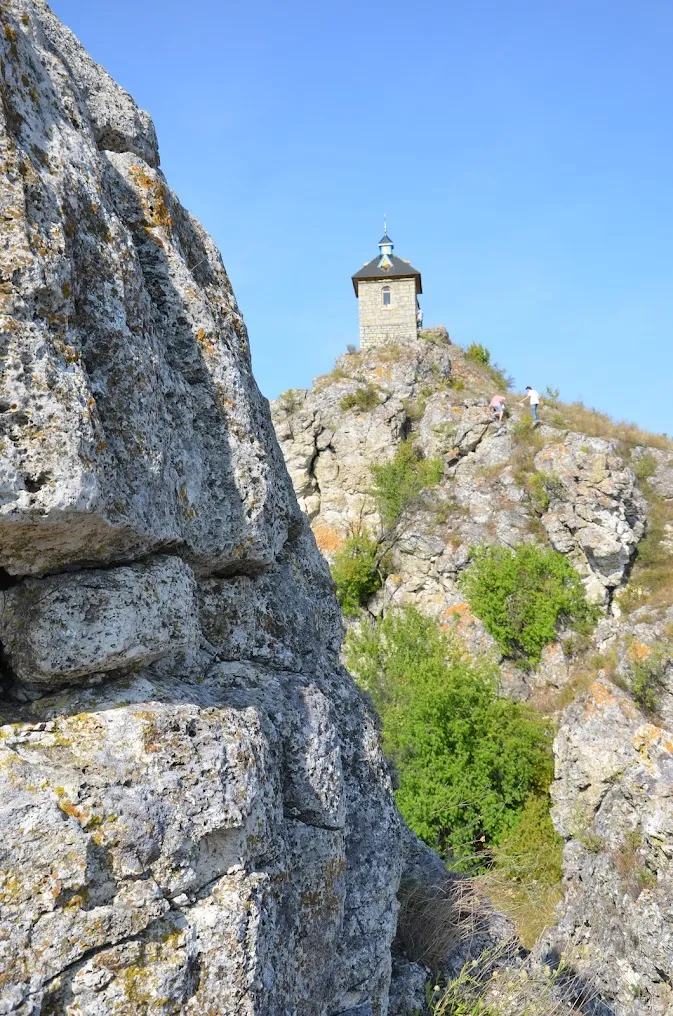
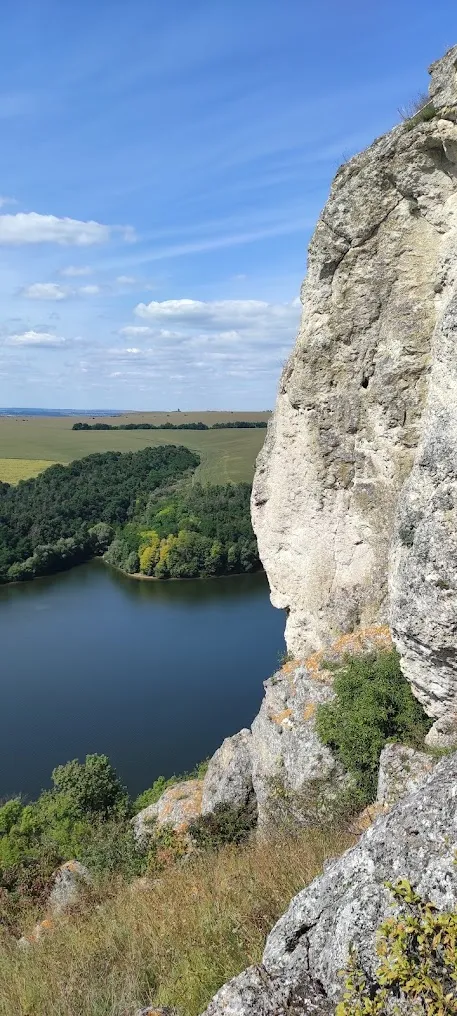
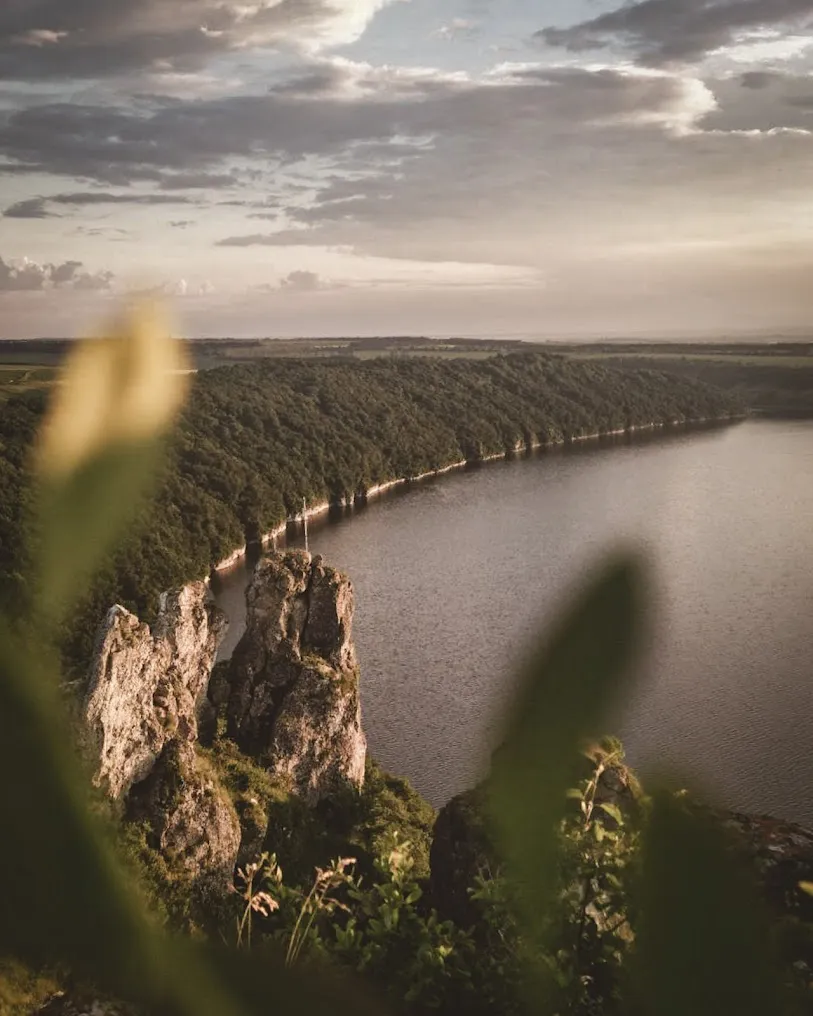
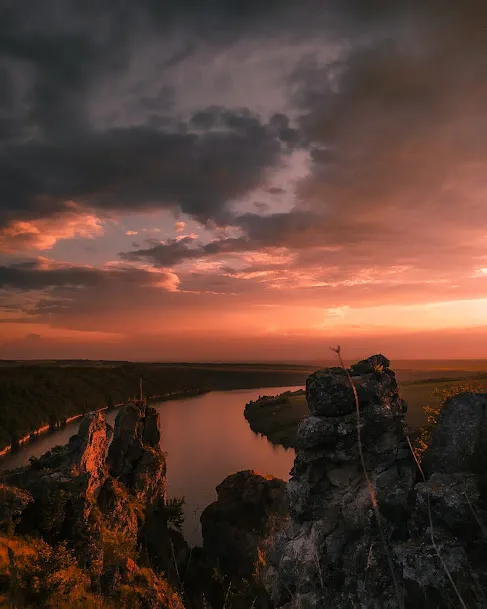
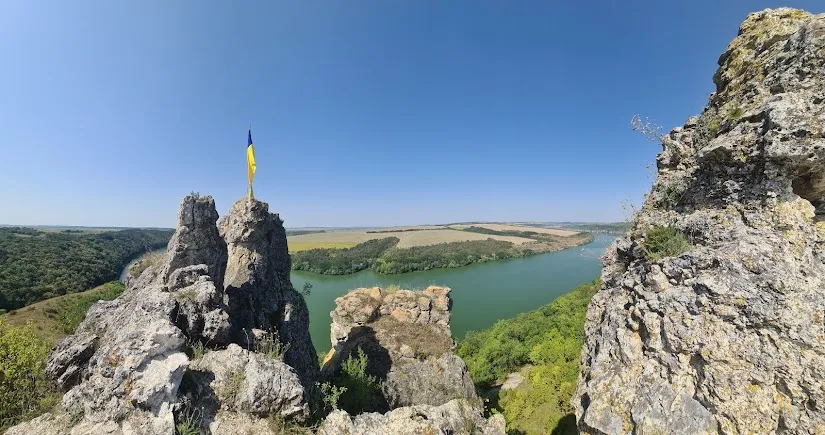
Coral polyps built reefs here. Then the sea receded, and what remained of the reef was gradually exposed by weathering and karst processes. That’s how three cone-shaped hills grew up on the bank of the Dniester — hills locals long ago named Did (Grandfather), Baba (Grandmother), and Onuchka (Granddaughter).
What you see in the photos isn’t “loess erosion” or “dunes.” It’s coral.
General Information
| What? | Description |
|---|---|
| Name | Shyshkovi Hills (Hovdy) |
| Location | Nahoriany village, Dnistrovskyi district (Kelmentsi district before 2020), Chernivtsi Oblast |
| Setting | on the right bank of the Dniester, north of the village |
| Height of the hills | 49–115 ft (15–35 m) above the surrounding terrain |
| Geology | limestone outcrops of the Toltry Ridge — remnants of a Sarmatian Sea coral reef (12–10 million years old) |
| Area | ~30 acres (12 ha) |
| Status | geological monument of nature of local significance (since 1979) |
What This Actually Is
The Shyshkovi Hills are part of the Toltry Ridge (the Podillia Toltry, or Medobory): a system of limestone ridges stretching from the Ternopil region to the Dniester borderlands. This entire chain is what remains of a barrier coral reef that existed in the Sarmatian Sea roughly 12 to 10 million years ago.
After the sea receded, the reef remained buried under later sediment. Millions of years of erosion, weathering, and karst processes gradually exposed individual sections of it — and where the reef had been thickest, distinct cones formed.
Exactly this kind of striking outcrop appears at Nahoriany.
There are three main hills here: Did, Baba, and Onuchka. They rise 49–66 ft (15–20 m) above the right bank of the Dniester, with individual rock remnants reaching 115 ft (35 m). The hills support rare lithophytic vegetation — the same plant species that lived on this limestone back when the sea still churned here.
The Best View — Not From Here
If you approach Nahoriany from Chernivtsi, you’ll come at the hills from below and see them up close.
But the most striking view of the Shyshkovi Hills is from the opposite bank of the Dniester: from the Podillia side, near the village of Vrublivtsi. From there, the whole three-ridge chain is visible in full — and it becomes clear this isn’t a set of separate hills, but part of a system running along the riverbank.
If you have the time and a car, it’s worth crossing over. These are two distinctly different impressions of the same place.
Nahoriany: One More Reason to Stop
The first written mention of Nahoriany dates to 1425. About 450 people live there today.
The village holds the only carpet-weaving museum in Chernivtsi Oblast: a living tradition kept alive by the Kytaihorodsky family since the 1930s. Carpets with a distinctive Bukovyna pattern. If you catch her there, Viktoriia Kytaihorodska, the museum’s caretaker, can tell you far more than any guidebook could.
The combination of “geology plus folk craft” here isn’t a tourist gimmick. It’s simply what exists in this one small village.
What to See Nearby
Nahoriany sits at the extreme northeast of Chernivtsi Oblast, off the main tourist routes. But nearby points are worth the detour:
- Bakota (~31 miles / ~50 km) — a flooded cliff monastery on the Dniester; a must-stop if you’re in the region
- Khotyn (~44 miles / ~70 km) — a 13th–18th-century fortress on the Dniester
- Kamianets-Podilskyi (~50 miles / ~80 km) via the Podillia bank
If you’re building a route along the Dniester, Nahoriany fits naturally into the “Dniester Panoramas of Ukraine” route, as a stop between Chernivtsi and Kamianets.
Practical Information
- Admission: free
- From Chernivtsi: ~62 miles (~100 km) toward Novodnistrovsk; about 1.5 hours by car
- Bus: Chernivtsi–Novodnistrovsk or Chernivtsi–Mohyliv-Podilskyi; get off at the highway, then it’s about 1.9 miles (3 km) to Nahoriany — buses don’t enter the village itself
- Camping: a popular spot for tent camping — stars are visible from the hills at night, the Dniester below
- Time needed: 40–90 minutes (hills and riverbank), plus a separate visit to the carpet museum
Conclusion
The Shyshkovi Hills look bizarre. That’s true. But the strangeness here isn’t an artistic effect — it’s 10 million years of work by the sea, the reef, and erosion.
Did, Baba, and Onuchka stand above the Dniester. Fish once swam around them. Now it’s tourists.