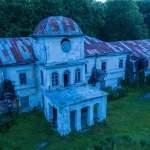
Around a bend in a small Cherkasy town: three towers, one bearing a coat of arms with a unicorn, brick from Denmark, roof tiles from the Netherlands, and tombstones by the main entrance.
The palace in Talne looks like a stage set. But behind that façade lies a real, and somewhat eerie, story: the man who commissioned it never spent a single day there.
General Information
| What? | Description |
|---|---|
| Name | The Shuvalov Palace (Shuvalov Hunting Castle) |
| Address | 48 Zamkova St., Talne, Cherkasy Oblast |
| Built | 1902–1907 |
| Architect | Andreas Clemmensen (Danish); construction supervised by Morten Rønnow |
| Commissioned by | Pavlo Petrovych Shuvalov (died October 1902, before construction was finished) |
| Completed by | Yelyzaveta Shuvalova (his wife) |
| Style | Danish national architecture (per 2022 scholarly research); popularly known as a “hunting castle in the French Renaissance style” |
| Status | architectural monument of national significance; the Talne Palace and Park Complex |
From the Potocki Family to the Shuvalovs: Who Lived Here Before the Palace
Talne and the surrounding land belonged, from 1725, to the magnate Felix Potocki. Under the Potocki family, a wooden palace in the Swiss chalet style was built here. In honor of the famous Zofia Potocka, to whom the “Sofiyivka” park in Uman is dedicated, her granddaughter was also named Sofia Naryshkina (Talne passed to her in 1823).
The beautiful Sofia married Count Petr Shuvalov, and from 1843 Talne passed to the Shuvalov family. Count Petr managed the estate actively, building a sugar refinery (1849, still operating today), a brickworks, and a brewery.
After Petr’s death, the estate passed to his only son, Pavlo Petrovych Shuvalov. The Potockis’ wooden palace burned down in 1895 (some sources suggest deliberate arson for the insurance payout). With the insurance money, Pavlo traveled to Copenhagen.
The Architect Who Never Visited
In Denmark, Pavlo Shuvalov met Andreas Clemmensen, a leading Danish architect. Clemmensen agreed to take the commission on the condition that he could work remotely.
“Andreas Clemmensen never spent a single day here. He worked remotely,” says Oleh Shataylo, director of the Talne Palace and Park Complex.
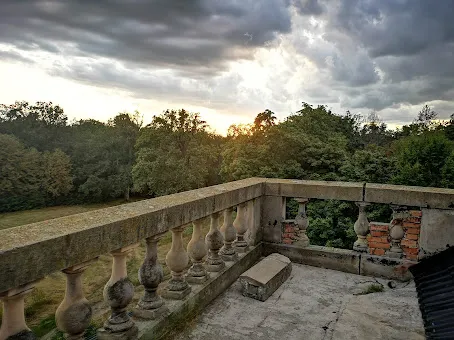
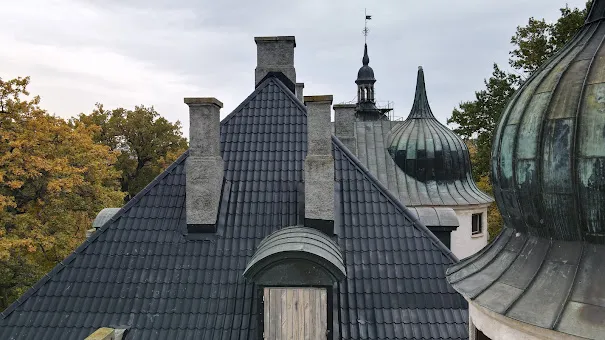
Construction was overseen by Clemmensen’s assistant, the architect and engineer Morten Rønnow. Materials were sourced from across Europe: brick from Denmark (three grades), roof tiles from the Netherlands, and sandstone for the cornices and balustrades from Yampil.
A competition was held for the design. According to tradition, Horodetsky — the architect of Kyiv’s famous “House with Chimaeras” — took part, but Clemmensen won.
Construction began in April 1902. By October 1902, Pavlo Shuvalov had died — never having seen a single wall.
The Person the Palace Really Owes Its Existence To
It was Countess Yelyzaveta Shuvalova, Pavlo’s widow, who built and completed the palace. She lived there until 1919. The name “Count Shuvalov’s Palace” was given later, by their children, in honor of their father.
The tombstones of Petr, Pavlo, and Sofia Shuvalov stand directly beside the palace’s main entrance — a detail that immediately shifts the feeling of what might otherwise seem like a beautiful stage set.
Architecture: Danish Palace Style Versus “Hunting Castle”
It’s worth being upfront here: there are two views of the palace’s architecture.
Popular tradition calls it “a hunting castle in the French Renaissance style, with elements of half-timbering, baroque, and romanticism.” This description has taken root in guidebooks and in visitors’ minds.
Scholarly conclusions (from comprehensive 2022 research) describe it as “Danish national architecture, as interpreted by Clemmensen.” The word “castle” (zamok) in its name likely arose from a mistranslation of the Danish word “slot,” which by 1900 already meant “palace” rather than “castle.” The word “hunting” likely comes simply from its location within a park.
In practice: three towers, one of which is a half-tower with a balcony and the Shuvalov coat of arms (a unicorn), crenellated details, a service wing in the style of an English cottage, and brick masonry with decorative elements. It’s a complex, eclectic, deeply personal project — whatever label we choose to put on it.
Current Condition: Restoration Underway
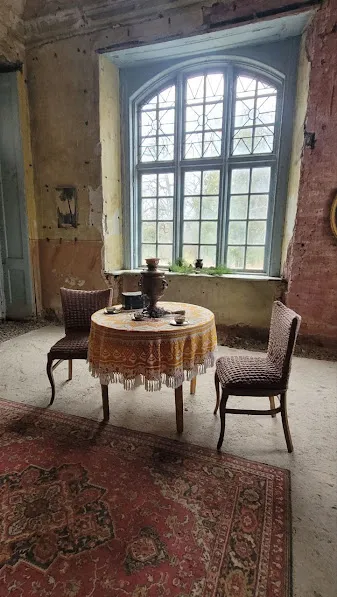
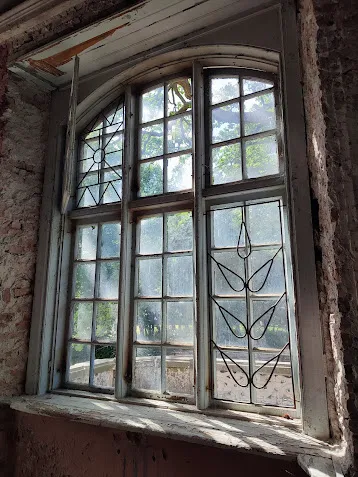
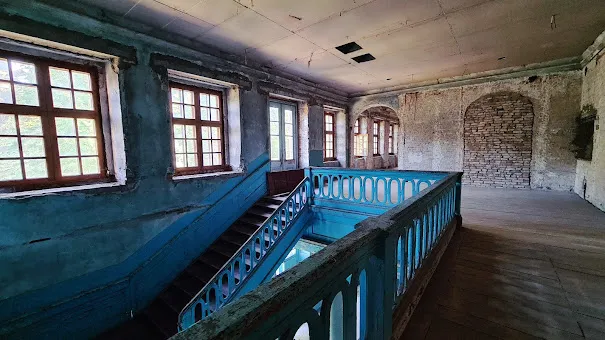
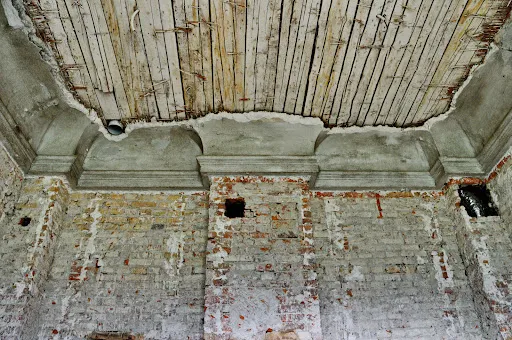
After the 1917 revolution, the estate’s contents were moved to Uman, and their trail disappears. Under Soviet rule, the building housed various institutions.
In 2014, by court decision, the palace passed into the ownership of the Talne Town Council.
Between 2021 and 2022, the palace was included in the “Great Restoration” program and in the Cherkasy Regional State Administration’s development strategy. Restorers under Anatolii Zotov (Izotov) began preservation work.
The full-scale invasion delayed those plans. But the work hasn’t stopped — the team continues to protect the building using its own resources.
Since October 2022, the municipal enterprise “Talne Shuvalov Palace and Park Complex” of the Talne Town Council has managed the site.
What to See Nearby
- St. Anne’s Church — over 300 years old, right next to the park
- Talne Park — a monument of landscape and garden art of national significance
- the Talne Local History Museum
- Uman and “Sofiyivka” (~31 miles / ~50 km) — a park tied to the same Potocka family that begins Talne’s chain of owners
- Zvenyhorodka (~19 miles / ~30 km)
The palace is part of the “Golden Horseshoe of the Cherkasy Region,” an ideal route for this area, and fits into the “Residences of Ukraine’s Magnates” route.
Practical Information
- Address: 48 Zamkova St., Talne
- Park admission: free
- Tours: confirm with the “Talne Palace and Park Complex” municipal enterprise (restoration is ongoing)
- Time needed: 60–90 minutes (palace, park, and church)
- From Uman: ~31 miles (~50 km)
- From Cherkasy: ~87 miles (~140 km)
Little-Known Details
- Pavlo Shuvalov commissioned and financed the palace, but died six months after construction began, never having crossed its threshold.
- The Danish architect Clemmensen designed the palace remotely and never once visited Ukraine.
- Building materials — brick from Denmark, tiles from the Netherlands — led to some confusion, with a few sources mistakenly calling the architect “Dutch.”
- The tombstones of three Shuvalovs have stood right by the main entrance since the 1900s.
- Reportedly, Horodetsky took part in the design competition, but Clemmensen won.
- The nickname “hunting castle” arose from a mistranslation of the Danish word “slot.” The Shuvalovs themselves called the building a “palace” or “the house in the park.”
Conclusion
The palace in Talne is architecture that wants to seem older and more ancient than it actually is.
A Dane designed it for Ukraine without ever seeing it. A count commissioned it but didn’t live to see it finished. His wife built it — and left by 1919.
Three towers, a coat of arms with a unicorn, tombstones in the park, and roof tiles from the Netherlands.
It’s worth stopping to see, while restoration is still underway and it still looks exactly like this.