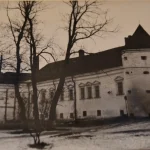
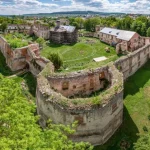
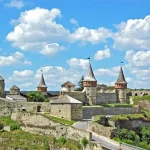
The family whose name this estate carries claimed descent from Prince Sviatopolk the Accursed — the very ruler remembered in history as the murderer of his own brothers, Boris and Hlib. No one ever documented that lineage, and the claim to the title only surfaced in the 18th century, among a Belarusian family of service gentry who previously had nothing to do with titled nobility.
Long before the Sviatopolk-Myrskys, the estate in Hiivka village (now the city of Liubotyn) belonged to Vasyl Maslovych, publisher of Ukraine’s first satirical journal, “Kharkivskyi Demokrit.” It was Maslovych and his heirs who, from the 1820s to the 1870s, built the manor, church, and park complex that Prince Dmytro Sviatopolk-Myrsky, governor-general of Kharkiv Governorate, bought in 1881.
General Information
| What? | Description |
|---|---|
| Name | Sviatopolk-Myrsky Estate (Maslovych Estate, Hiivka) |
| Address | Liubotyn, Kharkiv Oblast, about 27 km from Kharkiv |
| Founded | 1802 (manor house 1815–1820, palace 1840s) |
| Commissioned by | Vasyl Maslovych (founding); Prince Dmytro Sviatopolk-Myrsky (rebuild from 1881) |
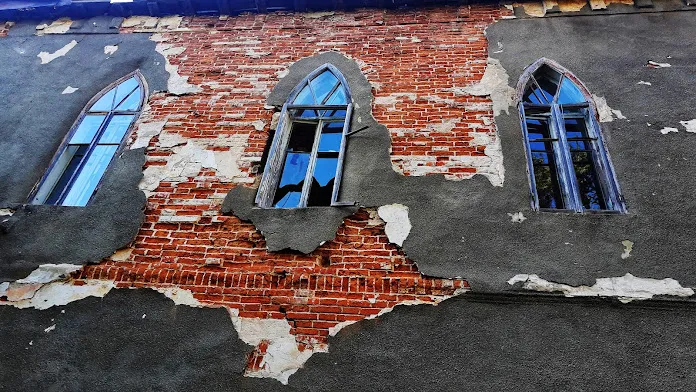
| Form/Details | Elements of Classicist, Romanesque, and Gothic styles |
| Material | Stone, brick |
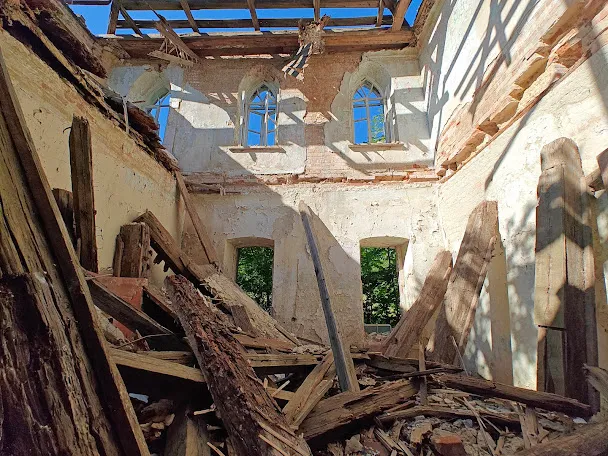
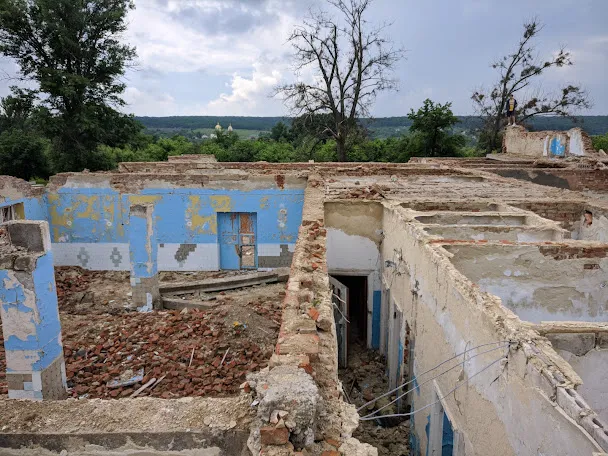
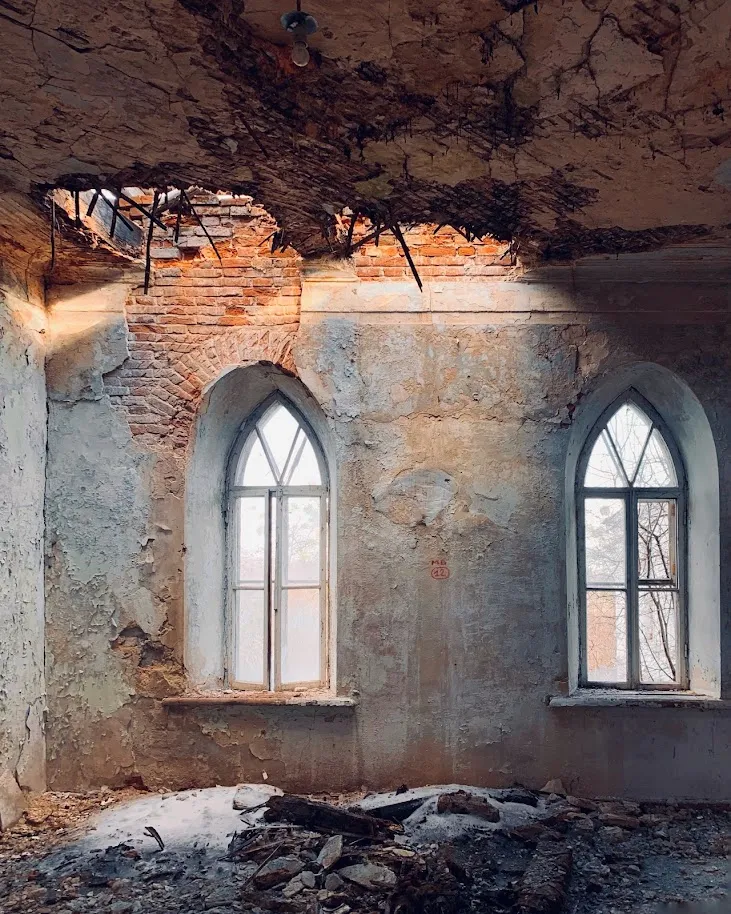
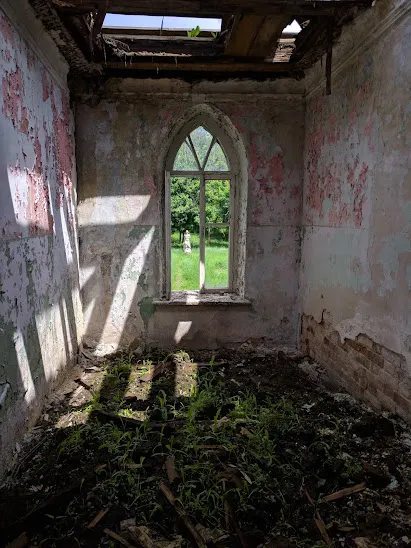
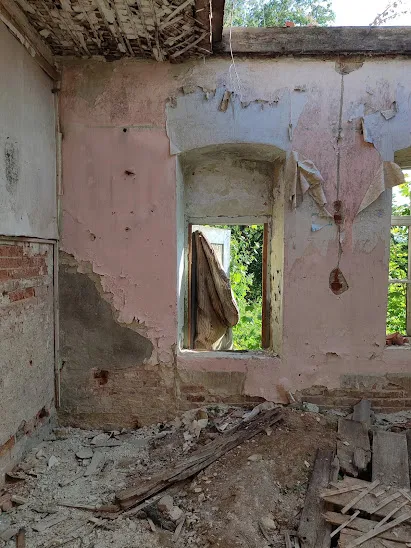
| Condition | Structurally unsafe, largely lost after a 2006 fire |
| Status | Architectural landmark, abandoned |
| Entry | Unsafe to enter; events are held in the courtyard |
A Lineage That Can’t Be Proven
I think this claimed lineage is more interesting than any architectural detail of the estate: the family that owned the manor longest, and gave it its current name, built its legitimacy just as inventively as it built its palace. Dmytro Sviatopolk-Myrsky, for what it’s worth, was a genuine Crimean War hero — his own merits needed no invented ancestry, yet the family insisted on princely descent from Sviatopolk regardless.
The Building’s Long Decline
The estate suffered heavy damage during World War II, part of it was restored in 1995 for use as a boarding school, and a 2006 fire nearly destroyed the building entirely. Only St. Nicholas Church, on the complex grounds, remains restored.
What Not to Expect
Don’t expect to go inside: the building is structurally unsafe, and any events or tours take place strictly in the courtyard. What remains of the former grandeur is little more than a shell of a building and one restored church — this isn’t a museum in the usual sense, but a landmark in need of rescue rather than a tourist route.
What to See Nearby and How to Fit It Into a Route
- Liubotyn — the city that now includes former Hiivka, with its own railway station.
- Kharkiv — the oblast capital, about 17 miles (~27 km) away.
- Kholodna Hora metro station (Kharkiv) — bus No. 1502 runs directly to the estate from there.
Practical Information
- Entry: free to the courtyard grounds; entering the building itself is unsafe
- How to get there: bus No. 1502 from Kharkiv’s Kholodna Hora metro station
- Time needed: 30–45 minutes
- Special conditions: the building is structurally unsafe — don’t enter without event organizers present
Conclusion
The Sviatopolk-Myrsky Estate is a landmark that tells two stories at once: one about a genuine Crimean War hero, and another about a family that didn’t hesitate to claim descent from a fratricide to shore up its title.